
 로그인
로그인

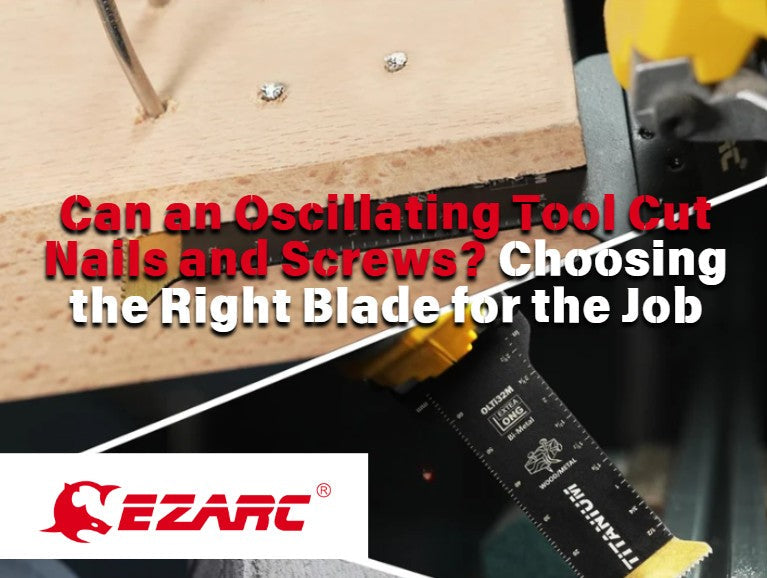
Finding an old nail hidden inside a piece of wood can turn a simple cut into a frustrating one. The same goes for screws, fasteners, and other bits of metal left behind during demolition or renovation.
This is where an oscillating tool can be remarkably useful.
Unlike a conventional wood saw, an oscillating tool can be fitted with blades designed for different materials, allowing it to handle certain cuts involving wood, plastic, drywall, nails, screws, and metal profiles. But the tool itself isn't the whole story. The blade you install determines what materials you can reasonably cut and how well it will handle the job.
So, can an oscillating tool cut nails and screws?
Yes, with the appropriate blade and under the right conditions. The important part is choosing a blade designed for the material you're cutting rather than assuming every oscillating blade can handle metal fasteners.
- Can an Oscillating Tool Really Cut Through Nails?
- Can an Oscillating Tool Cut Screws?
- Why the Blade Matters More Than the Tool
- What Materials Can the EZARC Blade Cut?
- When Cutting Nails Is Useful
- What About Cutting Screws?
- Why Extra Length Can Help With Fasteners
- Choosing the Right Oscillating Tool Blade for Nails and Screws
- Standard vs. Extra-Long Blades for Fastener Cutting
- How to Cut Nails and Screws With an Oscillating Tool
- Safety Considerations Before Cutting Fasteners
- Why a Multi-Material Blade Can Be Useful
- When Should You Use an Extra-Long Blade?
- The Bottom Line
Can an Oscillating Tool Really Cut Through Nails?
Yes. One of the useful applications of an oscillating tool is cutting through exposed or embedded fasteners when the blade is designed for that purpose.
A nail doesn't necessarily have to be removed before you can continue cutting. During demolition or repair work, you may encounter nails holding pieces of wood together, protruding nails left behind after removing trim, or fasteners embedded inside material.
Trying to pull every fastener out isn't always practical.
Instead, a suitable metal-cutting or multi-material blade can cut through the fastener so you can continue the job.
EZARC's Extra Long Titanium Oscillating Blade is specifically designed for cutting non-hardened nails and screws in addition to wood, plastic, plasterboard, and steel profiles.
That makes it particularly relevant for renovation work, where you're often dealing with materials and fasteners that have already seen better days.
Can an Oscillating Tool Cut Screws?
An oscillating tool can cut certain screws when paired with a blade intended for the material and application.
However, not all screws are alike.
The size, hardness, and position of the screw affect how the cut should be approached. A small exposed screw is a different job from a hardened fastener buried deep inside a thick piece of material.
For that reason, you shouldn't treat “cuts screws” as a blanket statement that applies to every screw you encounter.
The EZARC blade is specified for screws and non-hardened nails, making it appropriate for the types of fasteners commonly encountered in repair, installation, and renovation applications.
If you encounter a fastener that is particularly hard, oversized, or outside the blade manufacturer's stated applications, choose a blade specifically rated for that material rather than forcing a general-purpose blade through it.
Why the Blade Matters More Than the Tool
The oscillating tool provides the motion.
The blade does the cutting.
That's why two people can use the same oscillating tool and get completely different results simply because they're using different blades.
Wood-cutting teeth are designed differently from blades intended to deal with metal. A blade that performs well on soft wood isn't automatically suitable for cutting through a screw.
When fasteners are involved, look for a blade whose material compatibility specifically includes the type of metal you're likely to encounter.
EZARC's extra-long model uses titanium-coated teeth designed for heat resistance, durability, and chip evacuation. EZARC states that the titanium-enhanced design can provide up to twice the life of standard bi-metal blades under its stated comparison.
This construction is intended to help the blade handle applications beyond ordinary wood cutting.
What Materials Can the EZARC Blade Cut?
One reason the EZARC Extra Long Titanium Oscillating Blade stands out is its intended material range.
The blade is designed for:
- Wood
- Plastic
- Plasterboard
- Non-hardened nails
- Screws
- Steel profiles
That combination makes it useful for jobs where you don't know exactly what you'll encounter until you start cutting.
Consider a renovation project involving an old wooden frame. You may begin by cutting through wood, encounter a screw, continue through another section of timber, and then run into a metal profile.
Having a blade intended for multiple materials means you don't necessarily need to stop and change blades every time the workpiece changes.


When Cutting Nails Is Useful
Cutting a nail may sound like a very specific task, but it comes up surprisingly often.
Demolition
During demolition, old nails can hold pieces of wood together long after the surrounding material has deteriorated.
Rather than trying to remove every fastener individually, you can cut through accessible nails with an appropriate blade.
Flush Cutting
A nail sticking out from a wooden surface can interfere with another component being installed over it. An oscillating tool can be useful for trimming the protruding portion flush with the surrounding material.
Removing Trim
Old trim is often secured with nails. After removing the trim, some fasteners may remain embedded in the framing.
Cutting those remnants can be easier than trying to extract every one.
Renovation
Older structures can contain a mixture of nails, screws, wood, and other materials. A multi-material blade can be useful when the composition of the workpiece isn't completely predictable.

What About Cutting Screws?
Screws present a slightly different challenge because their geometry and hardness vary considerably.
For ordinary non-hardened screws within the blade's intended application range, an oscillating tool can be useful for trimming exposed fasteners or cutting through screws encountered during renovation.
The key is to avoid assuming that every screw is equivalent.
If you're dealing with a specialized hardened fastener, check the blade manufacturer's specifications first. Using a blade outside its intended application can lead to poor cutting performance and unnecessary wear.
When in doubt, identify the fastener before cutting.
Why Extra Length Can Help With Fasteners
Cutting through a nail or screw is one thing.
Reaching it is another.
Fasteners aren't always sitting in a convenient, open location. They can be tucked beneath trim, behind cabinetry, inside framing, or near another surface that prevents the tool from getting close.
That's where the extended design of EZARC's blade becomes useful.
The blade measures 2-3/4 inches in its extra-long design, providing additional reach for deep and plunge-cut applications.
Instead of forcing the tool body into the same cramped space as the fastener, the longer blade can extend farther into the work area.
EZARC specifically identifies applications such as undercutting door jambs, cutting beneath kitchen kick plates, and flush cutting tongue-and-groove material for this blade.
These are all situations where access can be as important as the cutting itself.
Choosing the Right Oscillating Tool Blade for Nails and Screws
Before you start cutting a fastener, consider a few important factors.
1. Check the Material Rating
The blade should be designed for the material you're cutting.
For the EZARC blade, that includes non-hardened nails and screws as well as wood, plastic, plasterboard, and steel profiles.
2. Consider Fastener Hardness
Not every nail or screw has the same composition or hardness.
A blade designed for non-hardened fasteners shouldn't automatically be used on hardened specialty fasteners.
If the material falls outside the manufacturer's stated application range, use a blade designed specifically for that material.
3. Look at the Blade Construction
Tooth construction matters when metal is involved.
EZARC's blade uses titanium-coated teeth designed with heat resistance and durability in mind. The company also highlights chip evacuation as part of the tooth design.
4. Consider Reach
Where is the fastener?
If it's exposed and directly in front of the tool, a standard blade may work perfectly well.
If it's recessed or behind an obstruction, an extra-long blade may be the more practical choice.
5. Verify Compatibility
Always make sure the blade's interface matches your oscillating tool.
EZARC states that this blade uses a universal interface compatible with many major oscillating tool brands, including Fein, Ryobi, Milwaukee, Rockwell, Black & Decker, Porter Cable, and Craftsman. EZARC notes that it is not recommended for Starlock interface systems.
Checking compatibility before installation can save you from buying a blade that doesn't fit your tool.
Standard vs. Extra-Long Blades for Fastener Cutting
Both blade types have their place.
A standard blade can be convenient when the nail or screw is exposed and easy to reach. Its shorter profile may be all you need for routine trimming and accessible cuts.
An extra-long blade becomes more useful when the fastener is recessed or positioned behind another component.
| Situation | Standard Blade | Extra-Long Blade |
| Exposed nail | Excellent | Suitable |
| Exposed screw | Excellent | Suitable |
| Fastener in accessible wood | Excellent | Suitable |
| Fastener behind trim | More difficult | Better reach |
| Recessed fastener | Limited by access | Better suited |
| Deep plunge cutting | More limited | Better suited |
| Cutting beneath kick plates | Can be restrictive | Better access |
| Door-jamb work | Depends on access | Extended reach |
The choice comes down to where the fastener is located and how much reach you need.
How to Cut Nails and Screws With an Oscillating Tool
Once you've selected a suitable blade, technique matters.
First, make sure the fastener is within the blade's intended material range. Position the blade so you can approach the fastener without forcing the tool into an awkward angle.
Start the cut with controlled pressure.
Don't lean heavily on the blade and don't try to rush through the fastener. Let the oscillating motion and teeth gradually work through the material.
Keep the blade as aligned as practical with the cut. Excessive twisting or side loading can make cutting more difficult and place unnecessary stress on the blade.
If the fastener is embedded in wood, be prepared for the cutting characteristics to change as the teeth move between wood and metal.
Most importantly, know what is behind the fastener. A nail or screw can be holding material together, and cutting it may cause a component to shift or fall.
Safety Considerations Before Cutting Fasteners
Fasteners can hide in places you can't see, particularly during demolition.
Before plunging an oscillating tool into an unknown section of material, inspect the area and consider what may be behind it.
Be especially cautious around walls, floors, cabinets, and framing where electrical wiring, plumbing, or other concealed components may be present.
Wear appropriate eye protection and follow the safety instructions for your specific oscillating tool and blade.
And don't assume that a blade rated for nails and screws can cut every piece of metal you encounter. Pay attention to the manufacturer's material specifications.
Why a Multi-Material Blade Can Be Useful
The biggest advantage of a multi-material blade is convenience.
Imagine removing an old wooden structure. You start cutting through timber and encounter a screw. A few inches later, there's another fastener. Further along, you encounter a metal profile.
Switching between separate blades for every material can interrupt the job.
A blade designed for wood, plastic, plasterboard, non-hardened nails, screws, and steel profiles gives you a broader range of intended applications from one blade.
That's particularly useful for remodeling, demolition, installation, and repair work where the material composition isn't always obvious before the cut begins.
When Should You Use an Extra-Long Blade?
Extra-long oscillating tool blades aren't necessary for every fastener.
If the nail or screw is exposed and easy to reach, a standard blade may be the simplest choice.
But when access becomes the problem, additional length can be valuable.
EZARC's 2-3/4-inch extra-long design is intended for deep and plunge-cut applications, giving the blade additional reach for situations where a standard blade may leave you struggling to position the tool.
That makes it particularly useful for:
- Door-jamb undercuts
- Flooring installation
- Cutting beneath kick plates
- Recessed fasteners
- Flush cutting tongue-and-groove material
- Fasteners located behind obstructions
- Renovation and repair work
The extra length doesn't make every cut faster. It simply gives you more room to reach the material.
The Bottom Line
So, can an oscillating tool cut nails and screws?
Yes, provided you're using a blade designed for the fastener and the specific application.
The oscillating tool itself provides the motion, but the blade determines what materials it is designed to cut. For nails and screws, look for a blade with the appropriate material rating and tooth construction rather than relying on a general-purpose wood blade.
EZARC's Extra Long Titanium Oscillating Blade is designed for wood, plastic, plasterboard, non-hardened nails, screws, and steel profiles. Its 2-3/4-inch extended design adds reach for deep and recessed applications, while its titanium-coated teeth are designed for durability and heat resistance.
For straightforward fastener cuts, a standard blade may be all you need.
But when that stubborn screw is hiding behind a trim piece, or a nail is sitting just beyond comfortable reach, an extra-long blade can make the difference between fighting the workspace and simply getting the job done.
Sometimes the hardest part of cutting a fastener isn't the metal.
It's getting the blade to it.