
 Oscillating Multi-Tool Blades
 Reciprocating Saw Blades
 Cutting & Grinding
 Hole Saw
 Drilling
 Sanding & Polishing
 Socket & Driver Set
 Hand Tools
 Metal Worker & Fabrication
 Woodworking & Carpentry
 Electrical & Plumbing
 Automotive
 Concrete & Masonry
 Demolition
 NEW ARRIVALS
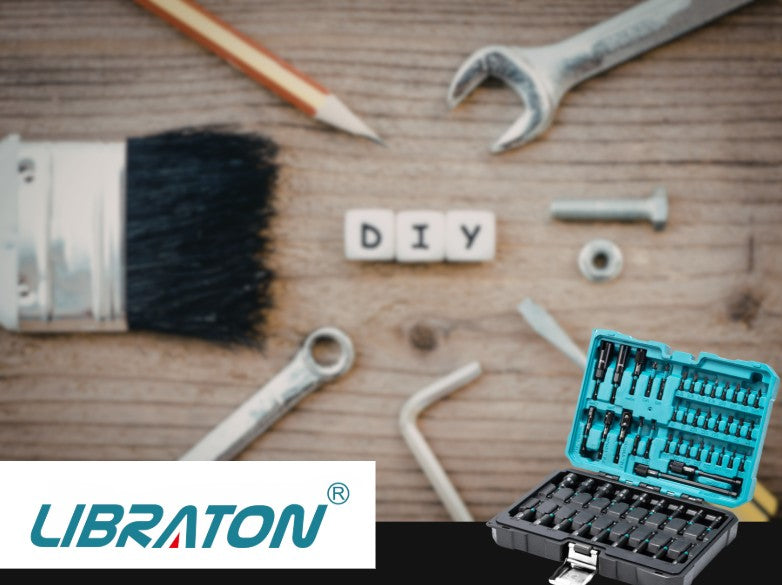
A drill can handle much more than simply making holes. With the right accessories, a compatible drill can become a useful part of a home repair setup for drilling, fastening, furniture assembly, and maintenance tasks.
The challenge is knowing which accessories are actually worth keeping on hand. There are countless attachments and bits available, but most DIY projects rely on a relatively small group of practical accessories.
The most useful drill accessories for DIY are generally the ones that help you perform common tasks more efficiently while matching the material, fastener, and tool you are working with. Here's what to consider when building a practical drill accessory collection.
- 1. Drill Bits for Different Materials
- 2. Driver Bits for Screws
- 3. Nut Driver Bits
- 4. Socket Adapters
- 5. Extension Holders
- 6. Magnetic Nut Drivers
- 7. Quick-Release Bit Holders
- 8. Extension and Reach Accessories
- How Do You Choose the Right Drill Accessories?
- Do You Need Impact-Rated Accessories?
- A Practical Drill Accessory Setup
- Safety and Tool-Control Tips
- Final Thoughts
1. Drill Bits for Different Materials
Drill bits are one of the most fundamental accessories for any drill. They create holes in materials, but the appropriate bit depends on what you are drilling.
For basic home repairs, you may encounter wood, metal, and other materials that require different bit designs. Using a bit intended for the material can make the drilling process more controlled and help avoid unnecessary wear.
A useful collection does not need every possible size. Instead, keep several commonly useful diameters and add specialized sizes when a particular project requires them.
When choosing drill bits, consider three things:
- The material you need to drill
- The diameter of the required hole
- Whether the bit's shank is compatible with your drill
These considerations are more important than simply choosing the largest assortment available.
2. Driver Bits for Screws
If drilling creates the hole, a driver bit helps you complete the fastening job.
Driver bits are designed to engage compatible screw-head profiles. Common examples include Phillips, slotted, and Torx designs, among others.
Having several driver profiles available is useful for DIY projects because different furniture, hardware, appliances, and fixtures can use different types of screws.
The most important rule is to match the driver bit to the screw head. A bit that does not fit properly can make it harder to control the tool and may damage the fastener.
Driver bits are therefore some of the most practical drill accessories for DIY, especially if you regularly assemble furniture or perform small repairs around the house.
3. Nut Driver Bits
Nut driver bits are useful when a project involves compatible hex-head fasteners.
Unlike a conventional driver bit, which fits into a recess in a screw head, a nut driver engages the outside of a hex-shaped fastener.
This makes nut driver bits useful for tasks involving nuts and hex-head screws. As with any fastening accessory, the size needs to match the fastener.
For homeowners who work with a variety of fasteners, adding nut driver bits to a collection of home repair tools can expand what a compatible drill can handle.
4. Socket Adapters

Sometimes the fastener calls for a socket rather than a conventional driver bit. A socket adapter can provide a connection between a compatible drill or power tool and a compatible socket.
The basic arrangement is:
Drill → Socket Adapter → Socket → Fastener
Socket adapters are available for different socket drive sizes, including 1/4-inch, 3/8-inch, and 1/2-inch connections.
The important thing to remember is that drive size describes the physical socket connection. It does not automatically establish the torque capacity or heavy-duty suitability of the complete setup.
Before using an adapter, verify that its tool-side interface matches your drill and that the socket has the appropriate drive connection.
5. Extension Holders
Not every fastener is easy to reach with a short accessory. Recessed areas, brackets, panels, and other obstacles can make access more difficult.
A quick-release extension holder can provide additional reach between the tool and a compatible accessory.
For example, the LIBRATON 54-Piece Nut Driver Set includes quick-release extension holders in 60 mm, 100 mm, and 150 mm lengths. These provide different reach options depending on the working area.
The shortest compatible setup that provides adequate access is generally the appropriate choice. A longer extension is not automatically better for every application.
The extension holders are separate components, so they should not be confused with dedicated long-shank nut drivers.
6. Magnetic Nut Drivers
Magnetic nut drivers can be useful when working with compatible hex fasteners because the built-in magnet can help retain the fastener during positioning and normal use.
This can be particularly helpful when working in locations where holding a small fastener by hand is inconvenient.
However, magnetic retention should not be treated as a guarantee that a fastener cannot fall out. The fit, orientation, fastener condition, and working environment can all affect retention.
As with other drill accessories for DIY, make sure the nut driver size matches the fastener before operating the tool.
7. Quick-Release Bit Holders
A quick-release bit holder can make switching between compatible screwdriver bits more convenient.
Instead of repeatedly changing the tool's chuck, a compatible holder can remain attached to the drill while the user changes compatible bits through the holder.
The exact retention mechanism varies by product. For normal use, the holder is designed to retain a compatible bit and allow it to be released for changes. Before operating the tool, make sure the bit is fully seated.
This type of accessory can be particularly useful during projects where you need to switch between different driver bits repeatedly.
8. Extension and Reach Accessories
Extra reach can be valuable during home repairs, but it is important to distinguish between different types of extension accessories.
A separate extension holder adds distance between the drill and compatible accessory. This can help reach recessed fasteners or work around obstacles.
The appropriate extension length depends on the working space. A longer setup can provide access to a deeper location, while a shorter setup may provide a more compact connection.
When using an extension, maintain alignment with the fastener and avoid forcing the accessory sideways.
How Do You Choose the Right Drill Accessories?
The best way to choose drill accessories for DIY is to start with the jobs you actually perform.
If you regularly drill holes, prioritize appropriate drill bits. If you assemble furniture, driver bits may be more useful. If you work with hex-head fasteners, consider nut driver bits. If you frequently use sockets, socket adapters can expand your options.
You should also check the interface between every component.
For example:
Drill → Adapter or Holder → Accessory → Fastener
Every connection needs to be compatible. A component fitting physically does not necessarily mean that it is appropriate for every application.
Do You Need Impact-Rated Accessories?
Not necessarily. It depends on the tool and application.
A standard drill and an impact driver are different tools, and accessories should be selected according to their stated compatibility.
Do not assume that an accessory is impact-rated simply because it has a 1/4-inch hex shank or because it can physically fit into an impact driver.
If you plan to use an impact driver, verify that the specific adapter, socket, bit, or holder is rated for impact use. If that rating is not confirmed, follow the accessory manufacturer's stated compatibility instead.
This distinction is particularly important when choosing drill accessories for DIY because a product's physical connection does not automatically establish its operating limits.
A Practical Drill Accessory Setup
You do not need a workshop full of accessories to handle ordinary home projects.
A practical setup might include:
- Several appropriately sized drill bits
- Common driver bit profiles
- Nut driver bits for compatible hex fasteners
- Socket adapters for compatible sockets
- A quick-release bit holder
- Extension holders when additional reach is needed
The exact selection can be expanded as your projects become more varied.
The LIBRATON 54-Piece Nut Driver Set is one example of a multi-accessory kit. It combines magnetic nut drivers, screwdriver bits, socket adapters, quick-release extension holders, and wing nut drivers in one set.
Rather than relying on one accessory for every job, a selection like this lets you choose the component that matches the fastener and application.
Safety and Tool-Control Tips
Even straightforward DIY fastening jobs require appropriate tool control.
Before starting, check that the accessory is properly seated and that the size matches the fastener. Keep the drill aligned with the workpiece or fastener and start at a controlled speed.
Avoid forcing a damaged, seized, or incorrectly sized fastener with a powered tool. If a particular application requires a specified torque value, use an appropriate torque-controlled tool rather than assuming that a drill setting or accessory size provides an exact torque value.
Inspect accessories periodically as well. Damaged or excessively worn bits and adapters may not engage correctly and should be replaced when necessary.


Final Thoughts
The most useful drill accessories for DIY are not necessarily the most specialized ones. A practical collection should cover the jobs you are most likely to encounter, from drilling holes and driving screws to working with compatible hex fasteners and sockets.
Start with appropriately sized drill bits and common driver bits. From there, nut driver bits, socket adapters, quick-release holders, and extension accessories can add further flexibility for suitable applications.
The key is compatibility. Match the accessory to the material or fastener, verify that the connection fits your drill, and follow the manufacturer's guidance for the intended application.
With a thoughtfully selected set of drill accessories, a compatible drill can become a versatile part of your home repair toolkit without requiring a separate tool for every small job.


댓글 남기기
이 사이트는 hCaptcha에 의해 보호되며, hCaptcha의 개인 정보 보호 정책 과 서비스 약관 이 적용됩니다.