
 Oscillating Multi-Tool Blades
 Reciprocating Saw Blades
 Cutting & Grinding
 Hole Saw
 Drilling
 Sanding & Polishing
 Socket & Driver Set
 Hand Tools
 Metal Worker & Fabrication
 Woodworking & Carpentry
 Electrical & Plumbing
 Automotive
 Concrete & Masonry
 Demolition
 NEW ARRIVALS
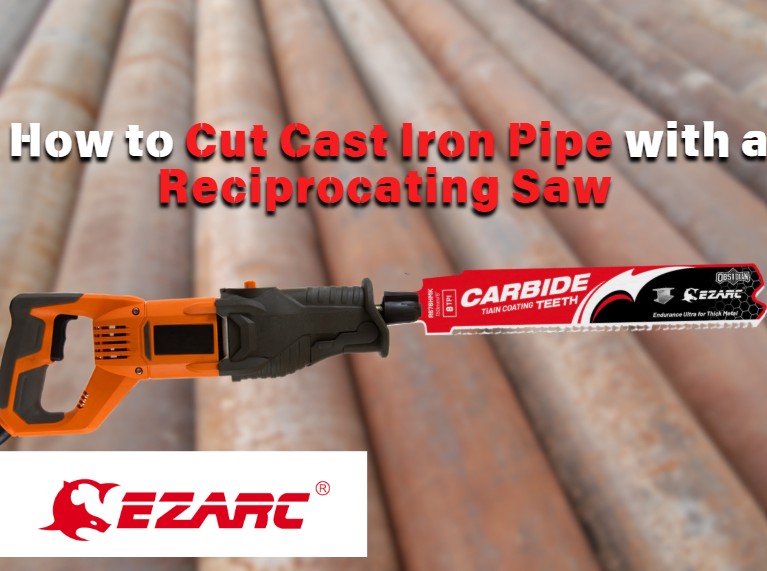
Cast iron pipe has a reputation, and it's earned it. It's heavy, brittle in the wrong spots, and tough as nails in the wrong way for a standard saw blade. If you've ever tried cutting it with whatever blade happened to be in the toolbox, you already know the story: teeth chip out, the blade dulls in a few strokes, and the cut takes three times longer than it should.
The good news is that cutting cast iron pipe with a reciprocating saw is completely doable, and honestly pretty fast, as long as you're using reciprocating saw blades built for the job and the right technique. This guide walks through exactly how to do it, from prep to final cut, along with the blade choices that actually make a difference.
Why Cast Iron Is So Hard on Blades
Cast iron isn't like steel pipe or copper. It's a harder, more brittle material with a coarse grain structure that chews up standard bi-metal teeth almost immediately. A blade that cruises through steel conduit can go dull in a single cut on cast iron, and once the teeth start rounding off, every cut after that gets slower and hotter.
This is exactly why most general purpose Sawzall blades struggle here. They're built for sheet metal, rebar, or thin-wall steel, not for a material that's dense, abrasive, and unforgiving on standard bi-metal edges. To cut cast iron efficiently, you need a blade built with a tougher cutting edge, and that usually means carbide.
What You'll Need
- A corded or high-torque cordless reciprocating saw
- Carbide-tooth reciprocating saw blades rated for cast iron (more on this below)
- Safety glasses and hearing protection
- Work gloves
- A pipe cutter clamp, C-clamp, or vise to stabilize the pipe if it isn't already fixed in place
- A permanent marker or chalk for marking the cut line
Having the right reciprocating saw blades on hand before you start is really the whole game here.
Step 1: Choose the Right Blade for Cast Iron
This is the single biggest factor in how smooth this job goes. Standard bi-metal blades don't have the edge hardness to handle cast iron's abrasive grain without dulling almost instantly. You want carbide-tipped reciprocating saw blades built specifically for thick metal and cast iron.
For most jobs, EZARC's 8 TPI Carbide Reciprocating Saw Blade is a strong, dependable pick. It's engineered with individually welded and precision-ground carbide teeth built to last up to 50 times longer than standard bi-metal blades. The 8 TPI tooth count is optimized for cutting smoothly through hard metals like cast iron, high-alloy steel, and rebar, and it's available in both 6 inch and 9 inch lengths depending on your pipe diameter. The universal 1/2 inch shank fits major brands like Milwaukee, Bosch, and DeWalt, so there's no compatibility guesswork.
If you're dealing with particularly thick cast iron, boiler teardown, or you just want the longest possible blade life on a big job, it's worth stepping up to the Obsidian Carbide Reciprocating Saw Blade. This one uses a TiAlN-coated carbide tip specifically engineered to resist annealing (softening from heat), which is one of the main reasons standard blades lose their edge on cast iron. EZARC rates it for up to 100 times the life of a standard bi-metal blade, with lab testing showing over 50 percent higher cutting efficiency. It comes in 8 TPI and 18 TPI options, so you can match the tooth count to how thick or thin the cast iron actually is, and both 6 inch and 9 inch lengths are available.
As a rule of thumb, use the coarser 8 TPI reciprocating saw blades for thicker cast iron pipe and heavier material, and reach for the finer 18 TPI option when you're cutting thinner-walled sections where a coarser blade might grab or chatter.
Step 2: Mark and Secure the Pipe
Before you make a single cut, mark your cut line clearly around the full circumference of the pipe with a marker or chalk. This gives you a visual guide to follow and helps keep the cut square, which matters if the pipe needs to connect to a new fitting afterward.
If the pipe isn't already fixed in place, secure it with a clamp or vise. Cast iron transmits vibration more than you'd expect, and a pipe that shifts mid-cut is both dangerous and a fast way to snap a tooth off your Sawzall blades.
Step 3: Set Up the Saw
Fit your reciprocating saw with the carbide blade you've chosen, making sure it's seated fully in the clamp. Set your saw to a moderate stroke speed rather than maxing it out. Cast iron doesn't need blazing speed, it needs consistent, controlled contact from Sawzall blades that are actually built to handle it, and running too fast just generates excess heat that shortens blade life even with carbide teeth.
Position the saw shoe flush against the pipe. This keeps the blade stable and reduces wobble, which is one of the most common causes of premature tooth chipping on brittle materials like cast iron.
Step 4: Make the Cut
Start the cut at a low angle, letting the teeth bite in gradually rather than plunging straight down. Once your reciprocating saw blades have established a groove, straighten out and let the saw run at a steady, even pace all the way around the marked line.
A few things to keep in mind while cutting:
- Let the blade do the work. Pushing harder doesn't cut cast iron faster, it just increases heat and wears down the carbide edge prematurely.
- Keep the stroke consistent. Long, even strokes clear metal shavings more efficiently than short, jerky ones.
- Rotate the pipe if possible. Cutting from one fixed position all the way around tends to leave a rougher edge than rotating the pipe as you go.
- Watch for heat buildup. If the blade starts smoking or you notice a burning smell, ease off and let it cool before continuing.
Step 5: Clean Up the Cut Edge
Once you're through, cast iron often leaves a slightly rough or burred edge. A metal file or deburring tool will smooth this out, which matters if you're connecting to a new coupling or fitting afterward. Take a moment to inspect your reciprocating saw blades too. Carbide teeth are far more durable than bi-metal, but it's still good practice to check for any chipped or damaged teeth before the next cut.

Common Mistakes to Avoid
Using a bi-metal blade to save money. It might seem cheaper upfront, but bi-metal reciprocating saw blades dull on cast iron in a fraction of the cuts a carbide blade delivers, so you end up buying far more blades in the long run.
Rushing the cut. Forcing the saw through cast iron increases the odds of a chipped tooth and a rougher cut. Slow and steady wins here.
Skipping eye and ear protection. Cast iron shavings and the noise of carbide teeth working through dense material both deserve real protection.
Not securing the pipe. A pipe that vibrates or shifts mid-cut is one of the fastest ways to snap a tooth off good reciprocating saw blades.
For more general guidance on matching blade types and TPI to different materials, take a look at our guide on how to select the right sawzall blade, which covers everything from wood to metal in more depth.
Final Thoughts
Cutting cast iron pipe with a reciprocating saw isn't complicated once you have the right blade in hand. Standard bi-metal reciprocating saw blades simply aren't built for cast iron's abrasive, brittle grain, but a carbide-tipped blade changes the whole experience, turning a slow job into a clean, efficient one. Whether you go with the dependable 8 TPI Carbide blade or step up to the longer-lasting Obsidian Carbide for heavier jobs, having the right Sawzall blades loaded up before you start makes all the difference.
Ready to get started? Browse EZARC's full lineup of reciprocating saw blades and find the right one for your next cast iron job.
FAQ
Can a regular reciprocating saw blade cut cast iron? Technically yes, but it will dull extremely fast and the cut will be slow and rough. Carbide-tipped reciprocating saw blades are strongly recommended for cast iron specifically because of how abrasive and brittle the material is.
What TPI is best for cutting cast iron pipe? 8 TPI works well for most cast iron pipe thicknesses. For thinner-walled sections, an 18 TPI blade offers more control and a cleaner cut.
Why does my blade keep chipping when cutting cast iron? Chipping usually comes from excess pressure, an unsecured pipe that's vibrating, or reciprocating saw blades that aren't rated for cast iron's hardness. Carbide teeth handle the abrasiveness far better than standard bi-metal.
How long does a carbide blade last compared to a standard one on cast iron? EZARC's carbide blades are rated for up to 50 times the life of a standard bi-metal blade, and the Obsidian Carbide line is rated for up to 100 times the life, depending on cutting conditions.


댓글 남기기
이 사이트는 hCaptcha에 의해 보호되며, hCaptcha의 개인 정보 보호 정책 과 서비스 약관 이 적용됩니다.