
 Oscillating Multi-Tool Blades
 Reciprocating Saw Blades
 Cutting & Grinding
 Hole Saw
 Drilling
 Sanding & Polishing
 Socket & Driver Set
 Hand Tools
 Metal Worker & Fabrication
 Woodworking & Carpentry
 Electrical & Plumbing
 Automotive
 Concrete & Masonry
 Demolition
 NEW ARRIVALS
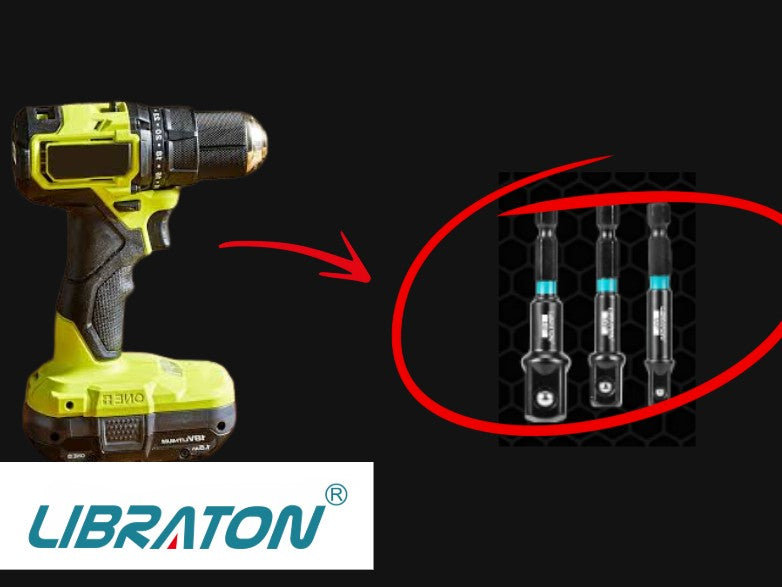
Choosing the right socket adapter for a drill can seem confusing when you see options such as 1/4-inch, 3/8-inch, and 1/2-inch drive sizes. The good news is that choosing between these socket adapter sizes is mostly about matching the adapter to the socket you want to use.
A socket adapter connects a compatible drill or other power tool to a socket. Once the connection is established, the drill can rotate the socket for suitable fastening tasks. However, the adapter size does not automatically determine how much torque the setup can handle. The socket, adapter, drill, and application all need to be compatible.
So, what size should you choose? Let's break down the most common options and when each one makes sense.
- What Do Socket Adapter Sizes Mean?
- 1/4-Inch Socket Adapters
- 3/8-Inch Socket Adapters
- 1/2-Inch Socket Adapters
- How Do You Know Which Size You Need?
- Can One Adapter Work With Different Socket Sizes?
- Does a Bigger Socket Adapter Give You More Power?
- What About Impact Drivers?
- Using Multiple Socket Adapter Sizes in One Kit
- Tips for Choosing the Right Adapter
- Final Thoughts
What Do Socket Adapter Sizes Mean?
When discussing socket adapter sizes, the measurement usually refers to the drive end that connects to the socket. Common drive sizes include 1/4 inch, 3/8 inch, and 1/2 inch.
For example, a 1/4 socket adapter is designed to connect a compatible power tool interface to a socket with a matching 1/4-inch drive connection.
The same principle applies to a 3/8 socket adapter and a 1/2 socket adapter. The drive size tells you about the physical connection between the adapter and socket. It does not tell you that one adapter is automatically stronger, more powerful, or suitable for heavier applications.
Before choosing an adapter, check both sides of the connection:
Drill interface → Adapter → Socket
The drill and adapter need compatible interfaces, while the adapter and socket need matching drive sizes.
1/4-Inch Socket Adapters
A 1/4 socket adapter is a common choice when you need to connect a compatible drill or power tool to smaller 1/4-inch-drive sockets.
This size can be useful for various fastening jobs where a smaller socket is appropriate. It can also be convenient when working with compact hardware or when space around the fastener is limited.
However, the socket drive size should not be confused with the size of the fastener itself. A 1/4-inch drive socket can come in different socket sizes for different fasteners.
When choosing this option, make sure the socket's drive connection matches the adapter. Also check that the adapter's tool-side interface matches your drill or quick-change chuck.
3/8-Inch Socket Adapters
A 3/8 socket adapter connects a compatible power tool to sockets with a 3/8-inch drive.
This is another common option for general fastening work. If your existing sockets use a 3/8-inch drive, selecting an adapter with a matching connection allows those sockets to be used with a compatible drill or power tool.
The important thing to remember is that 3/8 inch describes the socket drive connection, not the size of the fastener.
For example, two sockets can have different socket openings for different fasteners while sharing the same 3/8-inch drive. In that situation, the same appropriately sized adapter can connect either compatible socket to the tool.
1/2-Inch Socket Adapters
A 1/2 socket adapter is designed for sockets with a 1/2-inch drive connection.
If your socket collection primarily consists of 1/2-inch-drive sockets, this is the adapter size you would look for when connecting them to a compatible drill or power tool.
It is important not to interpret the larger drive size as a guarantee that the adapter is suitable for high-torque or heavy-duty work. Drive dimensions describe compatibility between components. They do not establish the torque capacity of the complete setup.
For applications involving substantial torque, always follow the specifications and limitations provided for the tool, adapter, and socket.
How Do You Know Which Size You Need?

The easiest way to choose between socket adapter sizes is to start with the socket rather than the drill.
Look at the sockets you already have or plan to use. Determine whether they have a 1/4-inch, 3/8-inch, or 1/2-inch drive. Then select an adapter with the corresponding socket-side drive size.
For example:
- Have 1/4-inch-drive sockets? Look for a 1/4 socket adapter.
- Have 3/8-inch-drive sockets? Look for a 3/8 socket adapter.
- Have 1/2-inch-drive sockets? Look for a 1/2 socket adapter.
You should then check the opposite end of the adapter to make sure it is compatible with your drill's chuck or quick-change interface.
This approach is more reliable than choosing an adapter simply because its number looks similar to the size of the fastener you're working with.
Can One Adapter Work With Different Socket Sizes?
It depends on the adapter and the socket connection.
An adapter with a particular drive size can generally connect compatible sockets that use that same drive size. For example, a 3/8-inch-drive adapter can be used with compatible 3/8-inch-drive sockets of different socket-opening sizes.
However, it cannot directly turn into every other drive size. A 3/8-inch-drive socket and a 1/2-inch-drive socket have different connection dimensions, so they require the appropriate adapter or another compatible connection solution.
This is why having multiple socket adapter sizes can be useful if your socket collection contains different drive sizes.
Does a Bigger Socket Adapter Give You More Power?
No. A larger drive size does not automatically mean more power.
The size of the adapter's socket connection describes how components fit together. It does not establish the torque capacity of the adapter, socket, or drill.
For example, choosing a 1/2 socket adapter instead of a 1/4 socket adapter does not automatically make your drill capable of applying more torque safely.
The actual limits depend on the individual components and the application. Always use accessories within their stated specifications, particularly when working with powered tools.
What About Impact Drivers?
Impact drivers require additional care when selecting socket adapters.
Do not assume that an adapter is suitable for impact use simply because it has a compatible hex interface. If you intend to use an impact driver, the adapter and socket should be specifically rated for impact applications.
If an adapter's specifications do not confirm impact compatibility, use it according to its stated compatibility rather than assuming that it can withstand impact operation.
For a standard drill, focus on matching the adapter's tool interface and socket drive size and follow the manufacturer's intended-use guidance.
Using Multiple Socket Adapter Sizes in One Kit
If you regularly work with different sockets, having several socket adapter sizes available can reduce the need to purchase a separate adapter every time you encounter a different drive size.
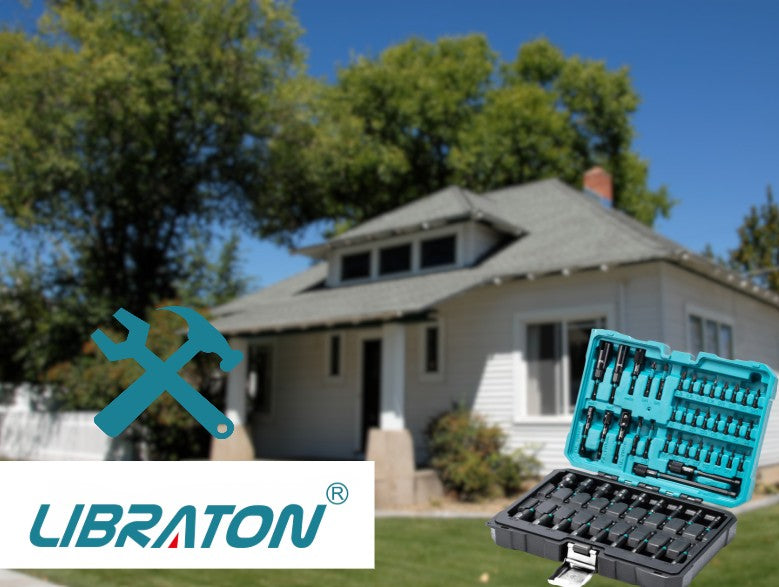
The LIBRATON 54-Piece Nut Driver Set includes three socket adapters, along with magnetic nut drivers, screwdriver bits, quick-release extension holders, and wing nut drivers.
Having multiple adapter sizes lets users connect compatible sockets with different drive connections to a power tool with a compatible interface. This can be particularly useful when a project involves a mixture of socket sizes.
The key is to treat each adapter as a connection component rather than assuming that every socket or power tool will work with every adapter.
Tips for Choosing the Right Adapter
Before buying or using an adapter, take a few seconds to check the complete setup.
First, identify the socket drive size. Then check the adapter's socket-side connection. Finally, verify that the tool-side interface is compatible with your drill.
It is also worth checking the condition of the adapter and socket. Damaged or poorly fitting components can make fastening more difficult and may damage the fastener.
When using a drill, start at a controlled speed and keep the tool aligned with the fastener. If a fastener is seized or corroded, avoid assuming that increasing power is the appropriate solution.
For applications that require a specific torque value, use a suitable torque-controlled tool rather than relying on adapter size or drill settings to provide an exact torque value.


Final Thoughts
Understanding socket adapter sizes makes it much easier to choose the right connection for your drill. The three common options, 1/4 inch, 3/8 inch, and 1/2 inch, correspond to different socket drive connections.
Choose a 1/4 socket adapter when you need to connect compatible 1/4-inch-drive sockets, a 3/8 socket adapter for compatible 3/8-inch-drive sockets, and a 1/2 socket adapter for compatible 1/2-inch-drive sockets.
Just remember that drive size is about compatibility, not an automatic measure of strength or torque capacity. Check the tool interface, socket drive, accessory specifications, and intended application before putting the setup to work.
With the right match, a drill and socket adapter can provide a practical powered fastening setup for suitable jobs around the home, garage, workshop, and furniture-assembly projects.

Leave a comment
This site is protected by hCaptcha and the hCaptcha Privacy Policy and Terms of Service apply.