
 Oscillating Multi-Tool Blades
 Reciprocating Saw Blades
 Cutting & Grinding
 Hole Saw
 Drilling
 Sanding & Polishing
 Socket & Driver Set
 Hand Tools
 Metal Worker & Fabrication
 Woodworking & Carpentry
 Electrical & Plumbing
 Automotive
 Concrete & Masonry
 Demolition
 NEW ARRIVALS
Stainless steel is known for its sleek look, durability, and corrosion resistance. It is a staple in kitchens and architectural designs. Using the wrong blade on a sink cutout or pipe causes frustrating bottlenecks. Multi-tools are appealing when traditional saws or bulky angle grinders cannot reach tight corners. But can it actually handle this demanding alloy?
The short answer is yes. You must use a specialized oscillating tool blade for high-stress metal applications. The right accessory ensures a clean, professional slice. Otherwise, you may ruin the metal. We will examine why stainless steel is difficult to cut. We will explore how the EZARC Obsidian Carbide oscillating tool blade helps. We also share essential tips to avoid common mistakes.
Why Stainless Steel is Uniquely Difficult to Cut
Look at the metallurgy of stainless steel to understand why ordinary attachments fail. Stainless steel contains high levels of chromium and nickel. This gives it exceptional strength and rust-proofing. However, these properties make the material prone to work-hardening.
Friction and heat build up during a cut. The steel ahead of the edge rapidly increases in hardness. Standard bi-metal attachments will burn out or dull instantly. Their teeth cannot dissipate heat effectively. This leads to thermal failure and destruction of the accessory. You need an industrial-grade accessory for stainless steel. Use an advanced oscillating tool blade to maintain edge integrity.
The Ultimate Solution: EZARC Obsidian Carbide Blade
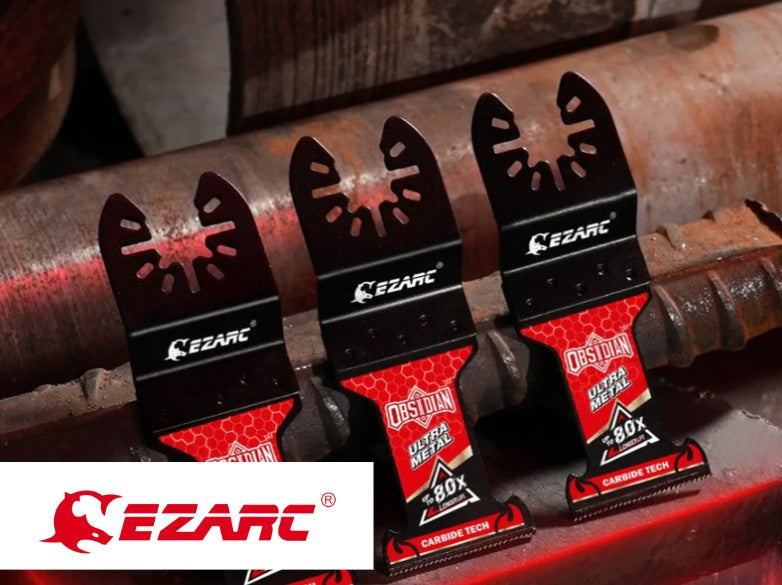
To overcome the brutal nature of stainless steel, you need high-performance engineering. This is where upgraded accessories like the EZARC Obsidian Carbide oscillating tool blade completely change the game.
This specialized oscillating tool blade features a TiAlN coating and precision tooth geometry. It delivers stable, heat-resistant performance under severe stress. The TiAlN coating improves surface hardness and thermal stability. This allows the metal to be sliced cleanly without losing the edge.
Key Performance Advantages:
- Industrial Carbide Teeth: Built for extreme loads, the teeth handle abrasive metal cutting with ease, ensuring consistent control when slicing through hardened fasteners and stainless profiles.
- 80X Longer Life: Laboratory data indicates this premium oscillating tool blade delivers up to 80 times longer service life compared to standard bi-metal alternatives, saving you time and frequent replacement costs.
- Up to 2X Faster Cuts: Enhanced tooth geometry and increased cutting length yield up to 2 times faster cutting speeds compared to regular carbide competitors.
- Universal Compatibility: Fits most major multi-tool brands on the market, including Milwaukee, Ryobi, Fein, Rockwell, Black & Decker, Porter Cable, and Craftsman. (Note: Not compatible with Starlock interface systems).
Optimal Cutting Speeds and Techniques
Having a top-tier metal-cutting accessory gives you the hardware advantage, but your technique dictates the final outcome. When cutting stainless steel, velocity, pressure, and thermal management matter immensely.
- Control Your Tool Speed: Do not run your multi-tool at maximum velocity if it causes excessive vibration or friction. A moderate, steady oscillation speed allows the carbide teeth of the oscillating tool blade to shear the metal cleanly rather than sliding and generating destructive friction heat.
- Maintain Light, Steady Pressure: Let the multi-tool do the work. Pressing down too hard causes the oscillating tool blade to bind, generating intense heat that accelerates work-hardening and burns out the motor.
- Utilize a Sweeping Motion: Instead of forcing the accessory straight down into a single point, pivot the multi-tool slightly from side to side across the cutting line. This distributes wear evenly across the oscillating tool blade and prevents localized overheating.
- Incorporate Cooling Pauses: For deeper or longer cuts, pause periodically to let the material and the oscillating tool blade cool down. A little patience goes a long way in preserving your equipment.
- Secure the Workpiece: Unstable metal will vibrate wildly, causing the oscillating tool blade to chatter, skip, or bind. Clamp the stainless steel securely before starting your cut.
Common Mistakes to Avoid
Even experienced DIYers and contractors sometimes stumble when cutting stainless steel. Avoid these frequent pitfalls to ensure a clean result every time:
- Using Standard Accessories: Never attempt this job with wood or bi-metal attachments. A dedicated carbide accessory is mandatory for survival against stainless steel.
- Ignoring Heat Buildup: If the metal turns blue or glowing hot, stop immediately. Excessive heat ruins both the workpiece and the oscillating tool blade.
- Overlooking Interface Compatibility: Always verify your tool's mounting system. Ensure your machine matches the universal fit requirements of your chosen oscillating tool blade before starting the job.
- Rushing the Cut: Trying to force a fast cut through hard alloy steel leads to binding, slipping, and immediate tooth damage. Let the teeth do the work at a controlled pace.
Conclusion
Cutting stainless steel no longer has to be a frustrating ordeal. Choose a high-performance accessory like the EZARC Obsidian Carbide oscillating tool blade. You gain the heat resistance and speed required for tough metal. This works for professional installers, plumbers, or meticulous DIYers. The right oscillating tool blade transforms a difficult obstacle into a manageable task.


Leave a comment
This site is protected by hCaptcha and the hCaptcha Privacy Policy and Terms of Service apply.