
 Oscillating Multi-Tool Blades
 Reciprocating Saw Blades
 Cutting & Grinding
 Hole Saw
 Drilling
 Sanding & Polishing
 Socket & Driver Set
 Hand Tools
 Metal Worker & Fabrication
 Woodworking & Carpentry
 Electrical & Plumbing
 Automotive
 Concrete & Masonry
 Demolition
 NEW ARRIVALS
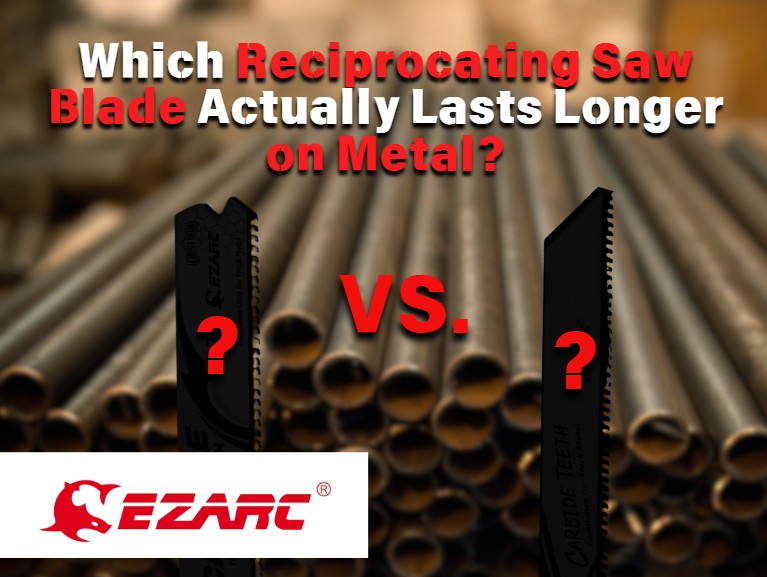
If you've ever stood in the tool aisle staring at a wall of reciprocating saw blades, you've probably asked yourself this exact question. Bi-metal or carbide? They look similar, they cost different amounts, and the packaging on both claims to be built for tough jobs. So which one actually holds up when you're cutting real metal, day after day?
The short answer is that carbide wins on durability, sometimes by a wide margin, but that doesn't mean bi-metal is a bad choice for every job. The real answer depends on what you're cutting, how often you're cutting it, and how much you value not having to swap blades every twenty minutes. Let's break down the actual differences so you can spend your money on the right reciprocating saw blades instead of guessing.
- 1. What Makes Bi-Metal and Carbide Reciprocating Saw Blades Different
- 2. Durability: Where Carbide Pulls Ahead
- 3. Cost Per Cut: Why Carbide Often Wins Even at a Higher Price
- 4. Which Reciprocating Saw Blades Should You Actually Choose?
- 5. A Few Tips for Getting the Most Out of Either Blade Type
- 6. Final Thoughts
- 7. FAQ
What Makes Bi-Metal and Carbide Reciprocating Saw Blades Different
Bi-metal blades are made from two types of steel fused together. The body of the blade is a flexible, high-speed steel that resists snapping under stress, while the teeth are a harder steel welded onto the flexible spine. This combination gives you a blade that bends without breaking and holds a reasonably sharp edge, which is why bi-metal has been the standard choice for general-purpose cutting for decades.
Carbide-tipped blades take that idea a step further. Instead of hardened steel teeth, each tooth is made from tungsten carbide, one of the hardest cutting materials available outside of diamond. The carbide teeth are individually welded and precision ground onto the blade body, giving you an edge that resists wear at a level standard steel simply can't match.
The tradeoff is straightforward. Bi-metal reciprocating saw blades are cheaper upfront and flex a bit more, which some people prefer for awkward angles. Carbide blades cost more per blade but hold their edge dramatically longer, especially on harder materials.
Durability: Where Carbide Pulls Ahead
This is where the difference stops being theoretical and starts showing up in your wallet and your work schedule.
On standard sheet metal, thin conduit, or softer alloys, good bi-metal reciprocating saw blades will get the job done reasonably well and won't dull instantly. But once you move into thicker, harder material, like cast iron, high-alloy steel, or rebar, bi-metal teeth start rounding off fast. Each pass generates heat and friction that the steel simply can't hold up against for long.
Carbide changes the equation completely. EZARC's 8 TPI Carbide Reciprocating Saw Blade is rated for up to 50 times the life of a standard bi-metal blade. That's not a small improvement, that's the difference between buying a box of blades every month and buying one every year for the same amount of cutting. Each tooth is individually welded and precision ground for impact resistance, which matters a lot when you're cutting stainless steel, high-alloy construction steel, or automotive steel where a standard blade would round off within minutes.
For the toughest jobs, EZARC's Obsidian Carbide Reciprocating Saw Blade takes it even further. It uses a TiAlN-coated carbide tip specifically engineered to resist annealing, which is the softening that happens to metal edges under sustained heat. That coating is a big part of why EZARC rates this blade for up to 100 times the life of a standard bi-metal blade, with lab testing showing more than 50 percent higher cutting efficiency along the way. If you're doing regular demolition work involving cast iron pipe, angle iron, or heavy rebar, this is the kind of blade that turns an all-day job into a half-day job.
Cost Per Cut: Why Carbide Often Wins Even at a Higher Price
It's easy to look at the price tag on carbide reciprocating saw blades and assume they're not worth it, especially when bi-metal options sit right next to them at half the cost. But the real number that matters isn't the price of one blade, it's the cost per cut over time.
If a bi-metal blade costs less but needs replacing every few cuts on hard metal, while a carbide blade costs more upfront but lasts 50 to 100 times longer, the math flips fast. Add in the time you save not swapping blades mid-job, plus the more consistent cut quality carbide delivers as it stays sharp longer, and carbide reciprocating saw blades often end up being the cheaper option overall for anyone doing regular metal work.
Where bi-metal still makes sense is occasional, light-duty cutting. If you're cutting thin conduit once a month or handling the odd DIY project, the lower upfront cost of bi-metal reciprocating saw blades might outweigh the long-term savings of carbide, simply because you're not putting enough cuts through the blade to notice the difference.
Which Reciprocating Saw Blades Should You Actually Choose?

Here's a simple way to think about it based on what you're cutting:
Choose bi-metal if:
- You're cutting thin sheet metal, conduit, or soft alloys occasionally
- Budget matters more than long-term durability for your use case
- You need a blade with more flex for awkward cutting angles
Choose the 8 TPI Carbide blade if:
- You're regularly cutting thick metal, cast iron, or high-alloy steel
- You want a blade that lasts significantly longer without sacrificing performance
- You're doing demolition, automotive, or fabrication work on a routine basis
Choose the Obsidian Carbide blade if:
- You're working with cast iron specifically, where heat resistance really matters
- You need maximum blade life for heavy, ongoing demolition work
- You want the fastest, smoothest cuts available in a carbide option, with tooth counts (8 or 18 TPI) to match different material thicknesses
A Few Tips for Getting the Most Out of Either Blade Type
Regardless of which reciprocating saw blades you choose, a few habits help extend their life:
- Don't force the cut. Let the teeth do the work. Excess pressure generates heat, which is the fastest way to dull any blade, bi-metal or carbide.
- Match TPI to material thickness. Coarser TPI (like 8) works better on thicker material, while finer TPI (like 18) gives you more control on thinner sections.
- Keep your stroke steady. Long, even strokes clear metal shavings more efficiently than short, choppy ones, which reduces friction and heat buildup.
- Secure your material. Vibration from an unsecured workpiece is one of the fastest ways to chip a tooth, especially on carbide reciprocating saw blades where the teeth are more brittle than flexible bi-metal.
For a deeper look at matching blade types and TPI to different materials and jobs, check out our guide on how to select the right sawzall blade.
Final Thoughts
For occasional, light-duty cutting, bi-metal blades still do the job and cost less upfront. But if you're regularly cutting thick metal, cast iron, or high-alloy steel, carbide reciprocating saw blades win in almost every practical sense. They last dramatically longer, cut more efficiently, and end up costing less over time despite the higher price per blade. Between EZARC's 8 TPI Carbide blade for everyday tough metal work and the Obsidian Carbide blade for the heaviest cast iron and demolition jobs, there's a carbide option built for whatever you're cutting next.
Ready to upgrade? Browse EZARC's full lineup of reciprocating saw blades and find the right fit for your next metal cutting job.
FAQ
Are carbide reciprocating saw blades worth the extra cost? For regular metal cutting, yes. Carbide reciprocating saw blades can last 50 to 100 times longer than bi-metal on hard materials like cast iron, which usually makes them cheaper over time despite the higher upfront price.
Can I use a bi-metal blade on cast iron? You can, but it will dull very quickly. Cast iron's abrasive, brittle grain is exactly the kind of material carbide-tipped blades were designed to handle.
Do carbide blades cut faster than bi-metal? Often yes, especially as the cut continues. Bi-metal teeth dull and slow down over the course of a job, while carbide holds its edge and keeps cutting efficiently for far longer.
Is there a downside to carbide blades? The main tradeoff is upfront cost and slightly less flexibility than bi-metal. For occasional, light-duty cutting, that extra cost may not be worth it, but for regular metal work it almost always pays off.

Leave a comment
This site is protected by hCaptcha and the hCaptcha Privacy Policy and Terms of Service apply.