
 Log in

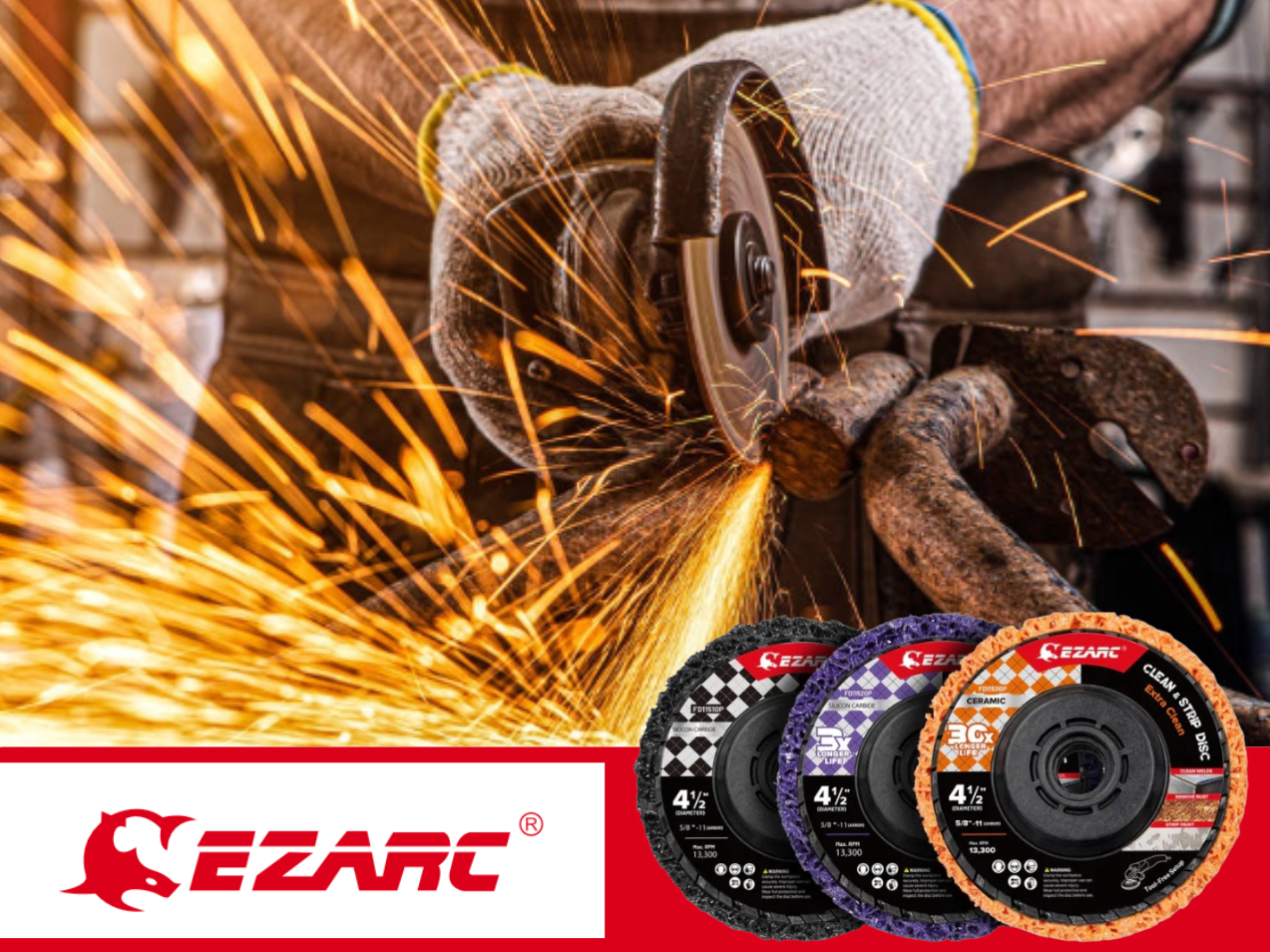
Got a rusty trailer frame? A paint-flaked fence? Or a farm implement that's seen too many winters? An angle grinder is your fastest stripping tool. It's louder and dustier than hand sanding. But it saves hours. This matters for car restoration, gate fixing, or metal prepping.
This guide covers angle grinder rust removal and paint stripping. Learn about discs to buy. Master the technique to avoid gouging. Follow safety steps to stay in one piece.
Why Use an Angle Grinder for Rust and Paint Removal?
Wire brushes, sandpaper, and chemical strippers all work. But they are slow. An angle grinder with the right disc works fast. It clears a square foot of rust or paint in minutes. This makes it the go-to choice for many tasks.
- Automotive restoration — quarter panels, frame rails, wheel wells
- Farm equipment — plow blades, tractor frames, gates
- Trailers — frames, fenders, hitch assemblies
- Fences and railings — chain-link posts, wrought iron
- Garage and workshop projects — old tool boxes, shelving, brackets
The trade-off is control. An angle grinder removes material fast, and "fast" can mean "too much" if you're not paying attention. The rest of this guide is about getting speed without wrecking your metal.
Choosing the Right Disc
The disc you put on your grinder matters more than the grinder itself. Here's a rundown of what's out there.

Flap Discs
Flap discs have overlapping abrasive flaps. They are versatile for rust removal. They conform to surfaces, reducing gouging risk. A 40- or 60-grit disc removes heavy rust. Switch to 80 or 120 grit for smoothing before painting.
Wire Wheels and Wire Cup Brushes
Wire wheels are gentler on base metal. They are good for flaky surface rust. Cup brushes cover more area on flat panels. Wheel-style wire brushes work in corners. They are slower than flap discs on heavy corrosion. But they leave a more even finish.
Paint Stripping Wheels (Poly Strip Discs)
These nylon-and-abrasive discs are for stripping paint. They remove paint, coatings, and light rust. They preserve base metal thickness. This is ideal for classic car panels or thin sheet metal.
Rust Removal Discs / Surface Conditioning Discs
Some are sold as "rust removal discs." These are non-woven abrasive discs. They are like stripping wheels but for corrosion. They are a middle ground. They are more aggressive than wire wheels. They are gentler than flap discs.
Which One Should You Buy First?
If you buy one disc, get a 40-grit flap disc. Use it for heavy lifting. Get a poly strip wheel for finishing touches. Use it near seams and edges. This combination handles most workshop jobs.
Step-by-Step: Removing Rust and Paint With an Angle Grinder
1. Set Up Your Work Area
Work outdoors or in a well-ventilated garage. Rust and old paint (especially on anything pre-1980s) can contain lead, so dust control matters. Clear the area of flammables — grinding throws sparks.
2. Gear Up
Non-negotiable safety gear:
- Safety glasses or a full face shield (sparks and metal fragments fly)
- Hearing protection
- A respirator rated for fine particulates, or better, an N100/P100 mask if you suspect lead paint
- Leather gloves
- Long sleeves, no loose clothing or jewelry that could catch on the disc
3. Secure the Workpiece
Clamp it down. A grinder can grab and kick if the metal shifts mid-pass, and that's how injuries and gouges happen. Never hold a piece in one hand while grinding with the other.
4. Start With a Test Pass
Run the grinder at a low angle. Keep it roughly 15 to 20 degrees to the surface. Make a light pass on an inconspicuous spot first. This shows how aggressively the disc cuts. Then commit to the visible parts.
5. Work in Overlapping Passes

Keep the grinder moving. Letting it sit in one spot, even for a second, digs a groove into the metal. Move in long, overlapping strokes, following the grain of the metal where there is one (like on a car panel).
6. Switch Discs as You Go
Start heavy rust removal with a 40-grit flap disc. A rust removal disc works too. Once bulk is gone, use a finer grit (80–120). Or use a poly strip wheel. This smooths the surface. It clears residue from pits and seams.
7. Clean Up the Dust
Wipe the surface down with a tack cloth or degreaser before priming or painting. Grinding leaves fine metal and abrasive dust that will show up in your paint job if you skip this step.
Common Mistakes to Avoid
- Pressing too hard. Let the disc do the work. Excess pressure heats the metal, warps thin panels, and burns through flap discs faster.
- Using the wrong grit for the job. Coarse grit on thin sheet metal can cut through it. Match the disc to the material thickness.
- Grinding at too steep an angle. A near-vertical angle concentrates the cut into a narrow line and gouges the surface. Flatter angles spread the abrasion out.
- Skipping eye and lung protection. Rust and old paint dust is not something you want to breathe, and grinding sparks travel farther than people expect.
- Not securing the workpiece. This is the single biggest cause of kickback injuries with an angle grinder.
Angle Grinder vs. Other Rust and Paint Removal Methods

| Method | Speed | Control | Best For |
| Angle grinder | Fast | Moderate | Large flat or curved surfaces, heavy rust |
| Wire brush (hand) | Slow | High | Small spots, detail work |
| Chemical stripper | Slow | High | Delicate parts, intricate shapes |
| Sandblasting | Very fast | Moderate | Large batches, full-panel restoration |
An angle grinder is great for most home projects. It's faster than hand tools. It's more accessible than sandblasting rigs. It's precise enough with practice.
Final Thoughts
An angle grinder turns a long job into an afternoon task. Use a flap disc for heavy corrosion. Finish with a paint stripping wheel. Or use a fine-grit disc for a clean surface. Do not skip the safety gear. Secure the piece first. Work in light, overlapping passes. Let the disc do the cutting.