
 Oscillating Multi-Tool Blades
 Reciprocating Saw Blades
 Cutting & Grinding
 Hole Saw
 Drilling
 Sanding & Polishing
 Socket & Driver Set
 Hand Tools
 Metal Worker & Fabrication
 Woodworking & Carpentry
 Electrical & Plumbing
 Automotive
 Concrete & Masonry
 Demolition
 NEW ARRIVALS
Introduction
A tough cut has a way of exposing weak Reciprocating Saw Blades fast: the blade slows down, starts smoking, chatters in the kerf, and suddenly you’re swapping blades mid-task with a half-finished cut. So what actually helps a blade last when the work gets rough—green wood, nail-embedded framing, or thick metal that eats teeth for breakfast?
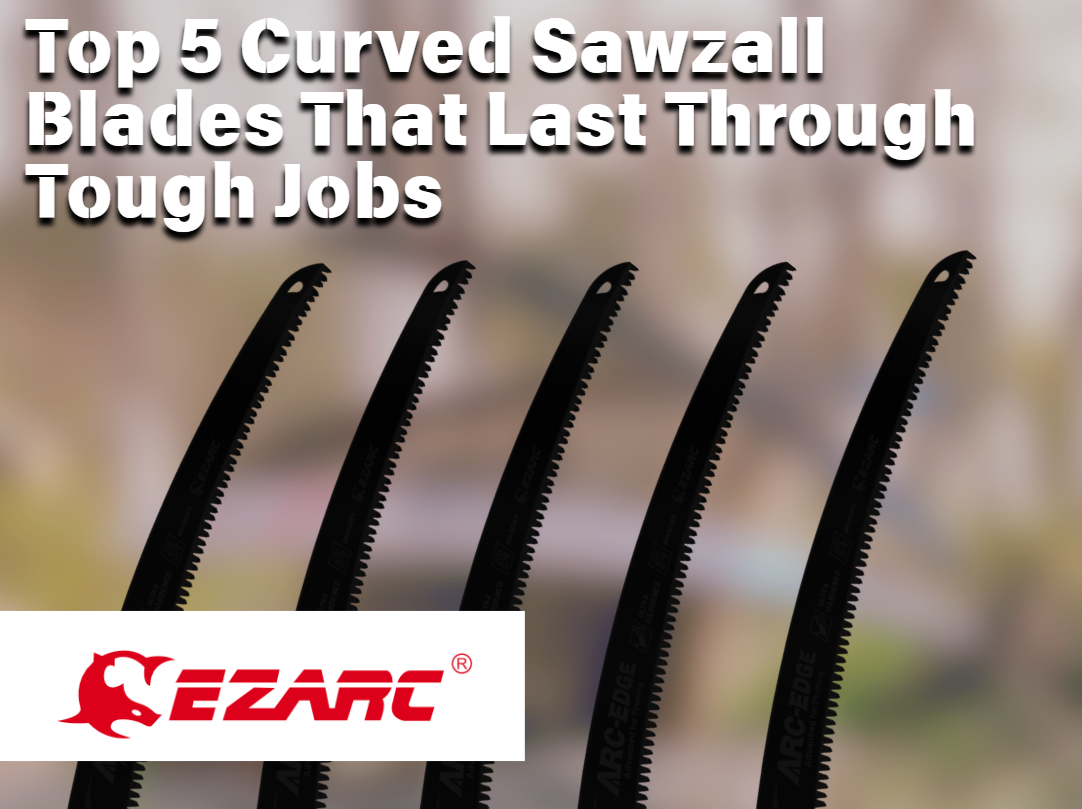
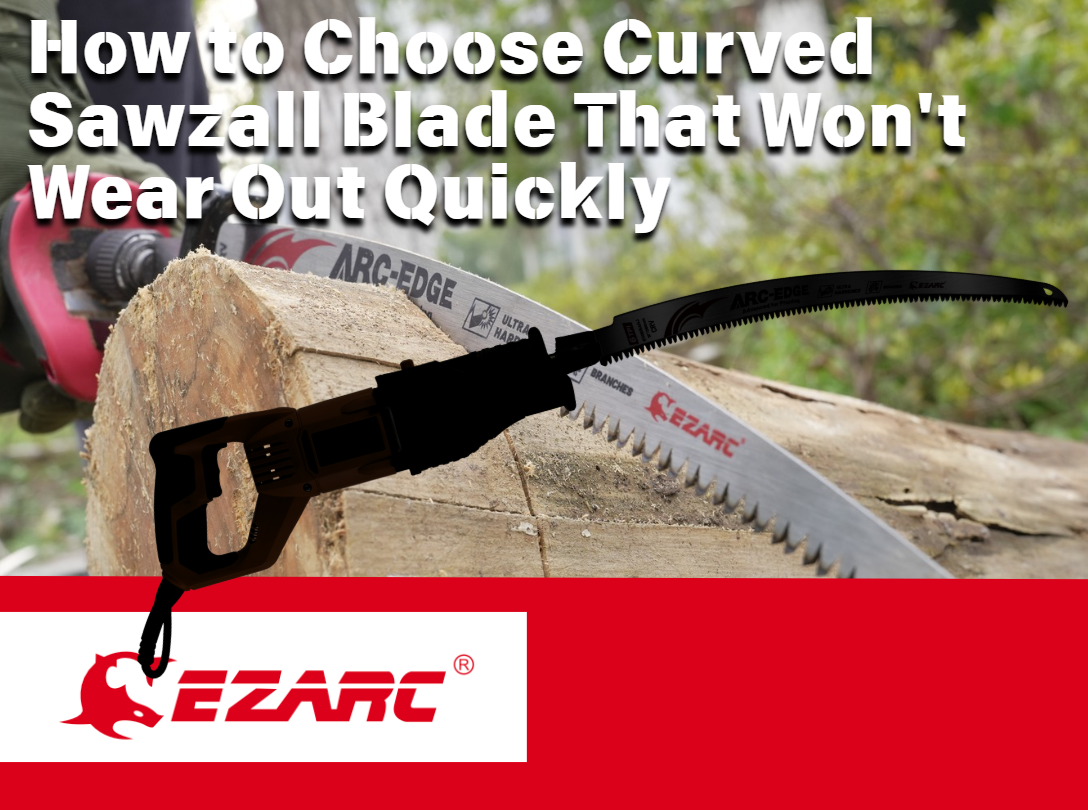
Curved (arc-edge) blades are popular for one simple reason: when the cutting edge follows an arc, more teeth can stay engaged through the stroke, which can smooth the cut and reduce the “grab-and-stall” feel that burns blades early.
Below are five long-lasting, curved-style picks from EZARC. They’re organized by real job scenarios (pruning, demolition, thick metal), so you can match the blade to what you’re actually cutting—then keep moving.
Top Picks for Long-Lasting Curved-Style Cuts
1) Tree Trimming/Wood Cutting
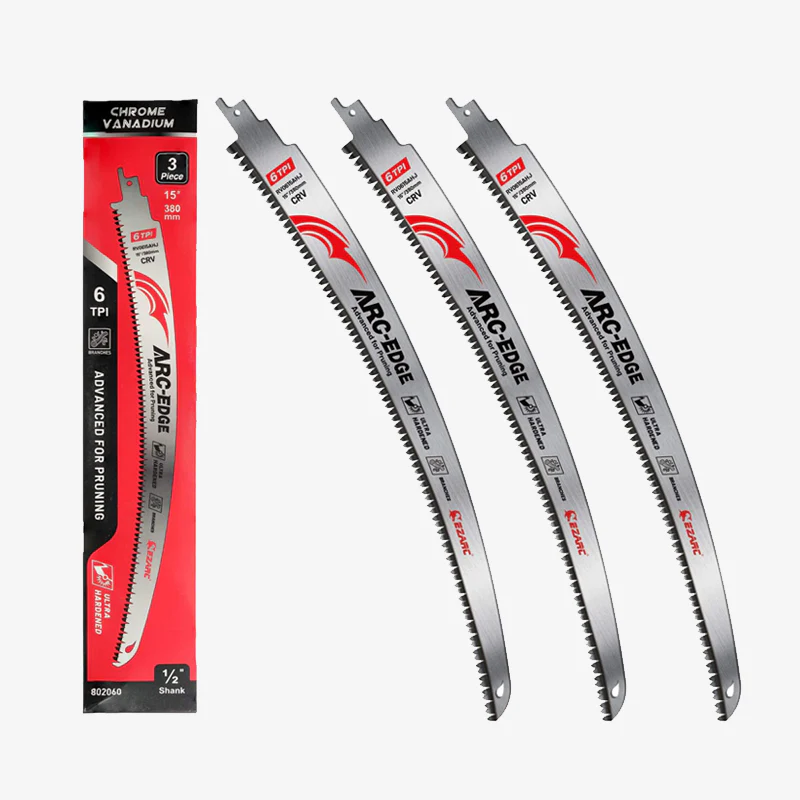
Japanese Teeth 6 TPI Reciprocating Saw Blade
If your “tough job” is thick limbs, storm cleanup, or fast takedown pruning where a dull blade costs time (and battery), this curved arc-edge pruning blade is the right kind of aggressive. The 15-inch length helps you keep the saw’s shoe planted while reaching deeper into branches, and the 6 TPI tooth spacing is tuned for rapid chip clearing in green wood.
- Best for: thick branches, green wood, fast pruning passes, yard cleanup where speed matters
- Tooth style: “Japanese teeth” with aggressive fleam-ground teeth for fast bite and smoother pull-through
- Geometry: innovative arc edge design to keep more teeth engaged through the stroke
- Key spec: 6 TPI, 15 in length (reach + stability for limb work)
- Performance focus: fast material removal with less clogging in wet/green fibers
- Trade-offs: the long length can flex in tight spaces; it’s less suited to precise flush cuts against a wall
Why it wins: For pruning, longevity often comes from avoiding heat and binding—not just “harder steel.” The arc edge helps the blade track without forcing, while the low TPI clears chips so the teeth keep cutting instead of rubbing. If you’ve ever felt a saw bog down in a sappy limb, this style of blade is designed to keep the kerf open and moving.
2) Multi-Material Cutting
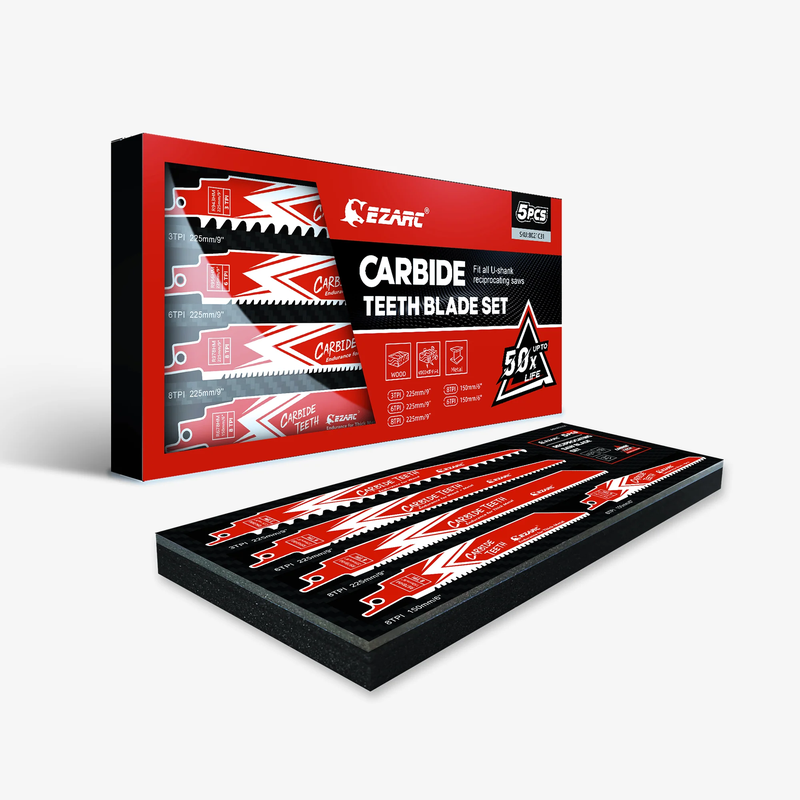
Carbide Reciprocating Saw Blade Set
Renovation days rarely stay “single material.” You start in drywall and studs, hit fasteners, then jump to pipe, thin metal, or mixed debris. This carbide set is built for exactly that rhythm: fewer blade swaps, fewer surprises, and better durability when the cut line isn’t clean.
- Best for: remodel/demolition days with mixed materials (wood + nails, thin metal, plastics)
- Set format: multi-blade kit designed to cover multiple tasks without a bag full of random blades
- Tooth technology: carbide teeth aimed at abrasion resistance and longer usable life in tough contact
- Coverage idea: multiple TPIs in one kit so you can switch by material thickness instead of “forcing it”
- Workflow benefit: helps crews stay productive when jobs jump between materials frequently
- Trade-offs: carbide sets are overkill for clean, knot-free lumber-only work; choose them when you expect fasteners or metal contact
Why it wins: A “blade that lasts” is often the blade that matches the real job. Multi-material kits reduce the temptation to run the wrong TPI or wrong tooth material just to avoid changing blades. Over a long day, that can mean fewer overheated teeth, fewer bent blades, and cleaner results—especially when the job includes surprise fasteners.
3) Pruning/Wood
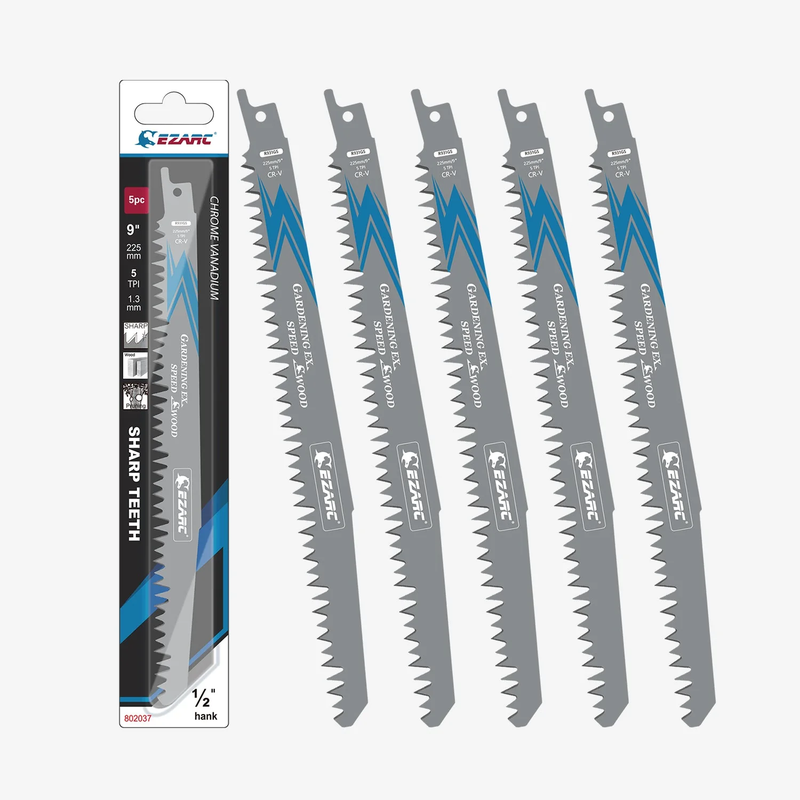
CRV, 9/12 in, 5 TPI Reciprocating Saw Blade
For routine pruning, brush clearing, and firewood prep, you typically want a blade that bites fast but still tracks predictably. This CRV option uses 5 TPI—a classic “fast in wood” range—and gives you 9-inch or 12-inch length choices so you can balance control vs reach.
- Best for: shrubs, limbs, yard maintenance, general wood cutting where speed matters
- Tooth count: 5 TPI for aggressive cutting and chip evacuation in wood
- Sizes: 9 in and 12 in options for control vs reach
- Material: CRV (chrome vanadium) steel positioning for toughness in wood-pruning tasks
- Fit: designed as a universal-fit shank style for common reciprocating saws
- Trade-offs: not intended for heavy nail-embedded demolition; repeated fastener hits will shorten life versus bi-metal/carbide
Why it wins: A pruning blade that lasts is one that doesn’t overheat or bind. With 5 TPI and a purpose-built tooth grind, this blade is meant to clear chips fast, which reduces friction and “polishing” of the teeth. If you’re doing weekly yard work, that consistent, low-drag cutting is what keeps performance stable from cut one to cut fifty.
4) Thick Metal/Cast Iron Cutting
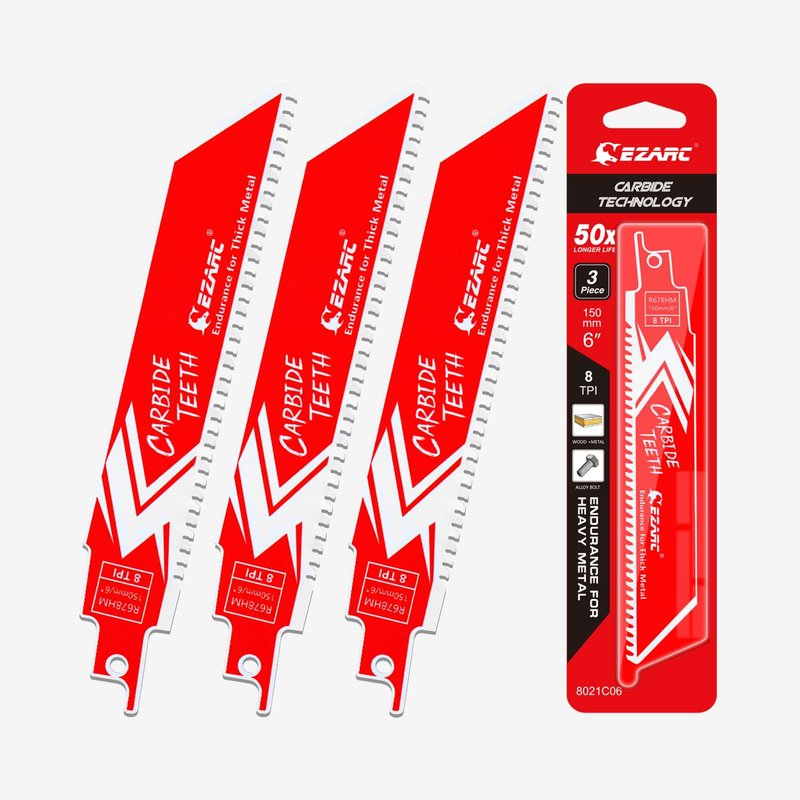
Carbide, 6/9 in, 8 TPI Reciprocating Saw Blade
If you’ve ever tried pushing a general-purpose bi-metal blade through thick-wall metal, you already know the failure mode: the teeth dull from heat and abrasion, then the blade starts rubbing instead of cutting. This carbide blade is designed for the jobs where standard blades tap out—especially thick metal, cast iron, alloy steel, and other tough materials.
- Best for: rebar, stainless, cast iron pipe, heavy-gauge metal where tooth wear is the main problem
- Tooth material: carbide technology targeting abrasion resistance in hard metals
- Tooth count: 8 TPI—a practical choice for thicker metals where you need tooth strength and controlled feed
- Sizes: 6 in and 9 in options for access vs stability
- Stated cutting range: designed to cut 3/16 in to 1/2 in metal
- Trade-offs: slower feed rates are normal for thick metal; forcing the cut will overheat any blade and can chip carbide teeth
Why it wins: Thick metal “kills blades” because it creates sustained heat and abrasion at the tooth edge. Carbide holds an edge longer in these conditions, but longevity still depends on technique: keep the shoe braced, reduce speed when the blade is fully engaged, and let chips clear. In other words, carbide buys you margin—then good control makes it pay off.
5) Wood Demolition
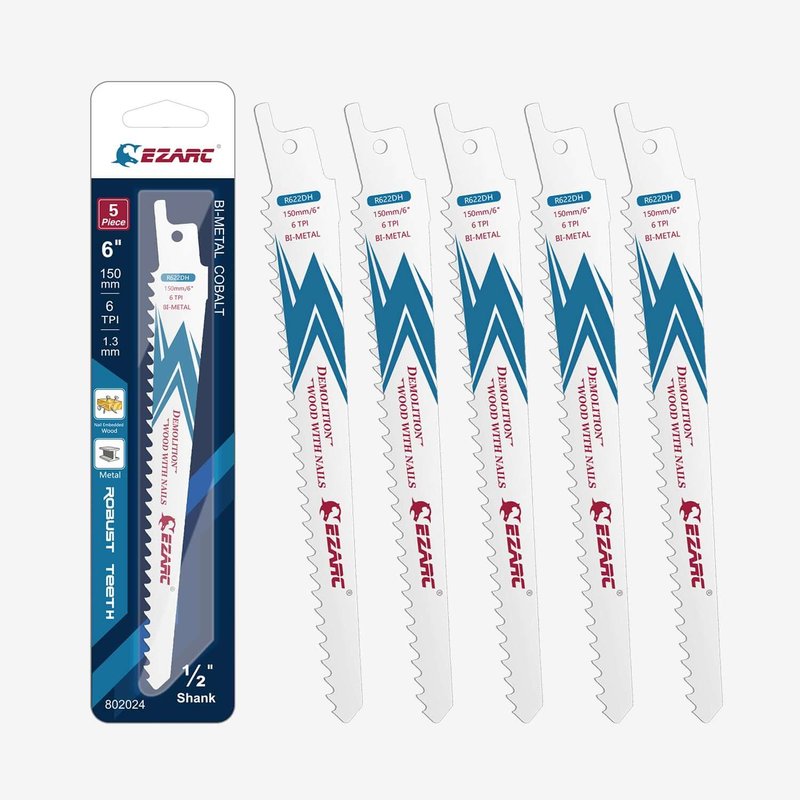
Bi-Metal, 6/9/12 in, 6 TPI Reciprocating Saw Blade
For nail-embedded studs, pallet tear-out, and framing demo, you want a blade that accepts abuse: impacts, vibration, twisting starts, and occasional fasteners you didn’t see. A bi-metal demolition blade is often the best “backup plan” because it’s built for jobsite reality—especially when wood isn’t clean.
- Best for: nail-embedded wood, framing demolition, pallets, rough cuts where durability matters more than finish
- Tooth count: 6 TPI for fast removal in wood while staying tough enough for demolition work
- Length options: 6 in, 9 in, 12 in so you can choose the shortest blade that still reaches
- Use strategy: run shorter blades for tighter control and less flex; step up in length when you need reach
- Durability angle: bi-metal construction is commonly chosen when intermittent fastener contact is expected
- Trade-offs: not a metal-specialist blade; thick metal will shorten life quickly compared with carbide
Why it wins: Demolition longevity is about resisting failure—not just staying sharp. A bi-metal demo blade is typically chosen because it tolerates shock and flex better than many wood-only blades, which helps it survive in nail-wood and rough plunge starts. Pair it with good shoe contact and the right length, and it becomes the “keep-going” blade when conditions are messy.
Buying Guide: How to Pick a Blade That Won’t Quit
Factor 1: What material are you really cutting?
Are you cutting clean lumber, green branches, nail-embedded studs, or thick metal? This question matters more than brand names because the wrong tooth material fails in predictable ways. Wood blades die early when they hit fasteners, while metal blades can clog and overheat in wet wood. If your day includes multiple materials, consider keeping a small “job-ready” rotation in the truck so you’re not forcing one blade to do everything.
Also, don’t ignore contamination. Dirty bark, sand, or embedded grit can dull teeth faster than the wood itself, and demolition lumber often contains hidden screws that chip teeth instantly. If you expect that kind of contact, pick a tougher tooth technology and plan for controlled feed, not maximum speed.
Factor 2: TPI—fast bite or clean control?
Do you need speed, or do you need the blade to track straight and stay cool? Low TPI (like 5–6 TPI) removes material fast in wood because gullets are larger and chips evacuate better. That usually means less heat buildup, which can translate to longer blade life in pruning and demo.
On the other hand, thick metal usually rewards a more controlled approach. If the tooth spacing is too aggressive for the wall thickness, teeth can snag and strip; if it’s too fine, the blade rubs, overheats, and dulls. Matching TPI to thickness keeps the cut efficient—and efficiency is what prevents premature wear.
Factor 3: Blade material—CRV vs bi-metal vs carbide
If you’re choosing between “it’s sharp today” and “it still cuts next week,” blade material is a big lever. CRV pruning blades are a solid choice for wood-focused work because they’re built around fast cutting and predictable tracking in branches. Bi-metal is a common demolition pick because it’s meant to tolerate shock, vibration, and intermittent fastener contact better than wood-only blades.
Carbide is the durability upgrade when the material is abrasive or hard—especially thick metal, cast iron, stainless, and mixed demolition where tooth edges get punished. One practical way to think about it: carbide is less about making every cut faster and more about staying effective when the cut would otherwise destroy standard teeth.
Factor 4: Length and reach for safer cuts
Should you grab a 6-inch, 9-inch, 12-inch, or 15-inch blade? Use the shortest blade that still reaches through your material, because shorter blades flex less and track straighter. When you step up to 12-inch or 15-inch lengths, you gain reach and stability on deeper cuts—especially in pruning—because you can keep the shoe planted while the tip stays engaged.
However, longer blades can amplify wobble if you start the cut too aggressively or cut in awkward positions. If the job requires long reach, start slower, establish the kerf, and keep the saw aligned to reduce side loading.
Practical tips that extend blade life
Want your Reciprocating Saw Blades to last longer without changing brands? Technique matters.
- Keep the shoe planted: firm shoe contact reduces vibration, chatter, and tooth micro-chipping.
- Don’t run full speed by default: start slower to establish the kerf, then increase speed as the cut stabilizes.
- Let chips clear: in wood, if chips pack the gullets, the blade rubs and heats up; back out briefly and re-enter.
- Use light, steady pressure: forcing the cut increases heat and bends blades, especially on long lengths.
- For thick metal, use controlled strokes: consistent feed reduces tooth stripping and keeps carbide working efficiently.
For jobsite safety, OSHA highlights that reciprocating saws (among other handheld powered tools) should be equipped with a constant-pressure switch/control that shuts off when pressure is released. (osha.gov)
Common mistakes that kill blades early
Most “blade durability problems” are actually mismatch problems.
- Using wood blades on thick metal: you’ll overheat and round the teeth quickly because the edge isn’t built for abrasion.
- Using fine-tooth blades on thick stock: too many teeth engaged can cause rubbing instead of cutting, creating heat.
- Twisting the blade in the kerf: side-loading bends blades and chips teeth—especially on plunge starts.
- Starting too aggressively on demolition cuts: jumping straight to maximum speed can cause wobble and tooth damage before the cut stabilizes.
If you want to build a more complete cutting setup around your reciprocating system, it helps to organize your kit by task: keep Oscillating Multi-Tool Blades for flush cuts and detail work, Cutting and Grinding Discs for angle grinder material removal, Hole Saw Kits for clean penetrations, and Drill Bits and Sets for pilot holes and fast drilling. Then round out the workflow with Sanding and Polishing Abrasives, Socket and Driver Sets, and durable Hand Tools so you’re not improvising mid-job.https://www.loriano.pt/blog/avoid-these-7-reciprocating-saw-mistakes-upgrade-your-diy-game-with-precision-and-safety
Comparison Table
| Pick | Material focus | TPI | Length options | Pack size | Standout feature | Best-use scenario | Limitations / trade-offs |
| Japanese Teeth 6 TPI Arc Edge | Green wood / pruning | 6 | 15 in | 3 pcs | Arc-edge + aggressive fleam-ground teeth | Fast limb removal and storm cleanup | Long blade can flex in tight spaces; not ideal for precision flush cuts |
| Carbide Multi-Material Set | Mixed materials | Mixed | (Set includes multiple blades) | 5 pcs | One kit for varied jobs | Renovation days with frequent material changes | Overkill for clean wood-only work; best when you expect nails/metal |
| CRV Pruning 5 TPI | Wood / pruning | 5 | 9 in / 12 in | (Varies by selection) | CRV + sharp ground teeth | Routine yard work, brush, firewood prep | Not meant for sustained nail-wood demolition |
| Carbide Thick Metal 8 TPI | Thick metal / cast iron | 8 | 6 in / 9 in | 3 pcs | Carbide tooth durability + thick-metal range | Rebar, stainless, thick-wall pipe | Needs controlled feed; forcing cuts can damage teeth |
| Bi-Metal Wood Demolition 6 TPI | Nail-embedded wood | 6 | 6 in / 9 in / 12 in | 5 pcs | Demo-focused durability | Framing tear-out, pallets, nail-wood | Not a thick-metal specialist; will wear faster in heavy metal |
FAQ
1) What TPI is best for pruning thick branches?
For thick branches and green wood, 5–6 TPI is usually a strong starting point because larger gullets clear chips quickly and reduce heat buildup. If you notice the saw bogging down, it’s often chip packing rather than “not enough power,” so a lower TPI helps keep the kerf open. For stability, choose a longer blade when the branch diameter is large so you can keep the shoe planted. Finally, avoid twisting the blade mid-cut—side load is a fast way to dull teeth and bend long blades.
2) Why does my reciprocating saw blade overheat and dull quickly?
Overheating usually happens when the blade is rubbing instead of cutting—often from the wrong TPI for the thickness, too much speed, or too much pressure. If you see discoloration on the blade or smell burning, back off and reduce speed so chips can clear and the teeth can bite. In wood, packed gullets create friction; in metal, forcing the cut spikes heat at the tooth edge. Bracing the shoe firmly also helps because it reduces vibration, which accelerates wear.
3) What blade length should I pick: 6-inch vs 9-inch vs 12-inch vs 15-inch?
Use 6-inch blades when you want maximum control and minimal flex—especially in tight demolition bays or when plunge cutting. A 9-inch blade is a versatile middle ground for remodeling and moderate pruning where you still want good tracking. Choose 12-inch or 15-inch lengths when you need reach (thick branches, deeper cuts) and want to keep the shoe planted for stability. Just remember that longer blades magnify wobble, so start slower and avoid side-to-side rocking.
4) Can I cut cast iron or stainless steel with any metal blade?
Not reliably, especially when the wall thickness is substantial. Tough metals like cast iron and stainless generate heat and abrasion that can dull standard teeth quickly, so carbide-focused blades are often the better match for sustained cutting. Use controlled speed and steady pressure—if you force the cut, you can strip teeth or chip the cutting edge regardless of blade type. Clamp the workpiece securely to reduce shock loads, which is one of the fastest ways to shorten blade life.
5) How do I stop blade wobble on tough demolition cuts?
Wobble usually comes from poor shoe contact, using an overly long blade for the cut, or starting at full speed before the blade is guided. Press the shoe firmly against the work, begin at a lower speed to establish the kerf, then ramp up once the blade is tracking straight. Pick the shortest blade that still reaches through the material, because reduced length reduces flex. Also, check that the workpiece is supported—movement during the cut increases chatter and bends blades.
Conclusion
The “best” curved-style Reciprocating Saw Blades depend on what you’re truly cutting: green wood pruning benefits from aggressive 5–6 TPI options, demolition work rewards tougher bi-metal choices, and thick metal is where carbide durability can be the difference between one clean cut and a burned-out blade.

EZARC’s lineup covers that full reality—from arc-edge pruning to multi-material kits and thick-metal carbide—so you can pick a blade that matches the job and lasts longer because it’s working in its intended zone. If you’re building a complete jobsite cutting system, pair your reciprocating blades with task-specific Oscillating Multi-Tool Blades, Cutting and Grinding Discs, Hole Saw Kits, and Drill Bits and Sets, then finish the workflow with Sanding and Polishing Abrasives, Socket and Driver Sets, and dependable Hand Tools.
Table of Contents
- Introduction
- Top Picks for Long-Lasting Curved-Style Cuts1) Tree Trimming/Wood Cutting2) Multi-Material Cutting3) Pruning/Wood4) Thick Metal/Cast Iron Cutting5) Wood Demolition
- Buying Guide: How to Pick a Blade That Won’t QuitFactor 1: What material are you really cutting?Factor 2: TPI—fast bite or clean control?Factor 3: Blade material—CRV vs bi-metal vs carbideFactor 4: Length and reach for safer cutsPractical tips that extend blade lifeCommon mistakes that kill blades earlyComparison Table
- FAQ1) What TPI is best for pruning thick branches?2) Why does my reciprocating saw blade overheat and dull quickly?3) What blade length should I pick: 6-inch vs 9-inch vs 12-inch vs 15-inch?4) Can I cut cast iron or stainless steel with any metal blade?5) How do I stop blade wobble on tough demolition cuts?
- Conclusion

댓글 남기기
이 사이트는 hCaptcha에 의해 보호되며, hCaptcha의 개인 정보 보호 정책 과 서비스 약관 이 적용됩니다.