
 Oscillating Multi-Tool Blades
 Reciprocating Saw Blades
 Cutting & Grinding
 Hole Saw
 Drilling
 Sanding & Polishing
 Socket & Driver Set
 Hand Tools
 Metal Worker & Fabrication
 Woodworking & Carpentry
 Electrical & Plumbing
 Automotive
 Concrete & Masonry
 Demolition
 NEW ARRIVALS
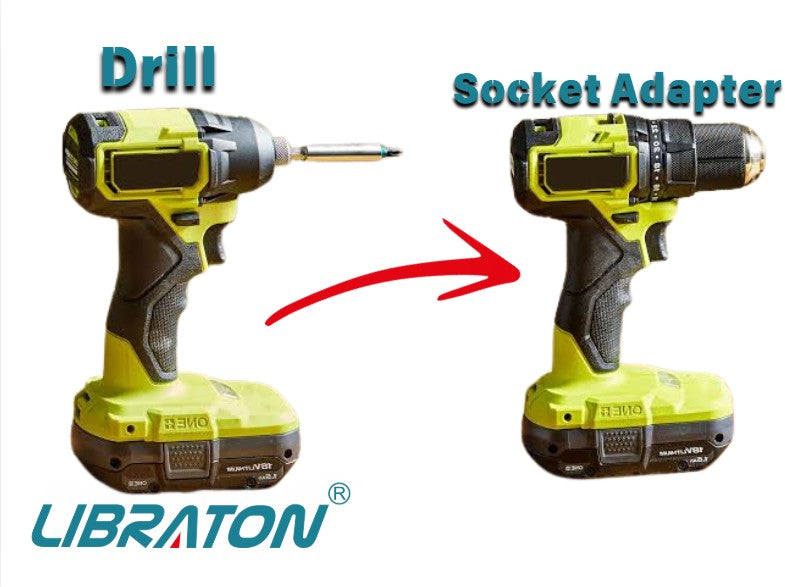
A drill is one of the most versatile tools in a workshop, but its usefulness does not have to stop at drilling holes or driving screws. With the right accessory, you can use a drill to work with compatible sockets for a range of fastening tasks. The key component is a drill socket adapter, which creates a connection between the drill's chuck or quick-change interface and a socket.
This setup can be useful for furniture assembly, home maintenance, garage work, and other fastening jobs where a socket is more suitable than a screwdriver bit. However, choosing the right adapter and using it correctly matters. A socket connection alone does not determine how much torque a setup can safely handle.
- What Is a Drill Socket Adapter?
- How Do You Use a Drill Socket Adapter?
- Why Use a Drill Instead of a Ratchet?
- Choosing the Right Drill Socket Adapter
- Using Extension Holders for Extra Reach
- What Does the LIBRATON 54-Piece Set Offer?
- Can You Use Any Socket With a Drill Socket Adapter?
- Tips for Safer Powered Socket Use
- Final Thoughts
What Is a Drill Socket Adapter?

A drill socket adapter is an accessory designed to connect a power tool with a compatible hex interface to a socket. One end fits the tool, while the other provides a drive connection for a compatible socket.
The basic idea is simple: instead of turning a socket manually with a ratchet, you can use a compatible drill or other power tool to rotate it.
A typical setup looks like this:
Drill → Drill Socket Adapter → Socket → Fastener
Before using one, check that the adapter matches the tool interface and the socket drive size. A 1/4-inch, 3/8-inch, or 1/2-inch drive describes the socket connection size. It does not by itself indicate the torque capacity or heavy-duty suitability of the adapter, socket, or drill.
How Do You Use a Drill Socket Adapter?
Using a drill socket adapter is straightforward when all of the components are compatible.
1. Check the tool connection
First, identify the interface on your drill. Many compatible accessories use a 1/4-inch hex shank, but you should check your particular tool and accessory before installation.
If the drill uses a standard chuck, open the chuck, insert the adapter, and tighten it securely. If your tool has a quick-change chuck, make sure the adapter is designed for that interface.
2. Select the correct socket
Choose a socket that matches the fastener. The socket should fit the fastener properly without excessive play.
Do not assume that a larger socket drive automatically means that the setup is suitable for higher torque. Drive size is primarily a connection dimension.
3. Attach the socket
Insert the appropriate socket onto the drive end of the drill socket adapter. Make sure the socket is properly seated before operating the drill.
The connection should be secure enough for normal operation, but the exact retention method depends on the adapter and socket design.
4. Set the drill appropriately
For fastening, begin at a controlled speed rather than immediately using the drill at maximum speed. Keep the tool aligned with the fastener and maintain steady pressure.
When loosening a fastener, avoid relying on the drill alone to overcome a seized or heavily corroded fastener. A hand tool may be more appropriate when significant force is required.
Why Use a Drill Instead of a Ratchet?
A drill socket adapter can make certain fastening jobs more convenient because it allows a compatible power tool to rotate a socket instead of requiring repeated manual turns.
This can be useful when you have multiple fasteners to install or remove and the application is suitable for powered fastening. A drill can also be useful when you already have one available and do not want to switch between several different tools for relatively straightforward tasks.
However, a drill-and-socket setup is not a universal replacement for a ratchet or other hand tool. For delicate fasteners, seized hardware, or applications requiring carefully controlled torque, a manual tool may provide better control.
The goal is to use the powered setup where it makes sense, rather than treating every socket job as a drilling application.
Choosing the Right Drill Socket Adapter
Not every drill socket adapter is designed for every combination of tool and socket. Pay attention to three basic points: the tool interface, the socket drive size, and the intended application.
For example, a kit with several socket adapters can let you connect compatible sockets with different drive sizes to a power tool with a compatible hex interface. This gives you more flexibility when working with different fasteners.
It is also important to consider the accessory's intended use. If you plan to use an impact driver, do not assume that an adapter is impact-rated simply because it has a hex shank. The adapter and socket should be specifically rated for impact use before they are used in that application.
For ordinary drill use, follow the manufacturer's compatibility guidance and stay within the appropriate application limits.
Using Extension Holders for Extra Reach
Sometimes the challenge is not the fastener itself but getting the socket into position. This is where an extension holder can be useful.
The LIBRATON 54-Piece Nut Driver Set includes three quick-release extension holders in 60 mm, 100 mm, and 150 mm lengths. These provide different reach options when working around recessed fasteners, brackets, panels, pipes, or other obstacles.
The 150 mm holder provides the longest reach of the three included holders. However, the appropriate choice depends on the working area. In general, use the shortest compatible setup that provides adequate access.
This is different from having extra-long nut drivers. The set's 18 magnetic nut drivers are standard-length components, while the extension holders provide additional reach as separate accessories.
What Does the LIBRATON 54-Piece Set Offer?
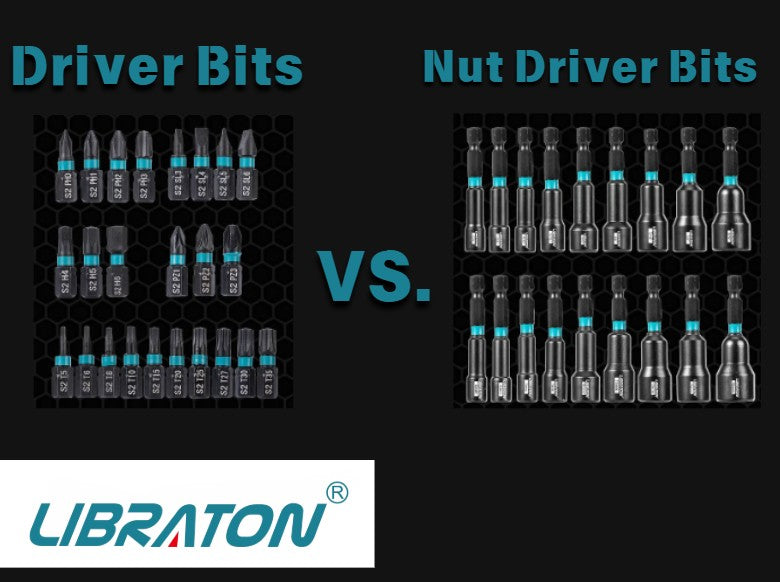
The LIBRATON 54-Piece Nut Driver Set combines several fastening accessories in one kit. According to the supplied product information, the set includes:
- 18 magnetic nut drivers
- 28 screwdriver bits
- 3 socket adapters
- 3 quick-release extension holders
- 2 wing nut drivers
The 18 nut drivers include nine Metric sizes and nine SAE sizes. The Metric selection is 5, 6, 7, 8, 10, 11, 12, 13, and 14 mm, while the SAE selection is 3/16", 1/4", 9/32", 5/16", 11/32", 3/8", 7/16", 1/2", and 9/16".
The nut drivers are approximately 65 mm long. For additional reach, the included extension holders provide 60 mm, 100 mm, and 150 mm options.
That combination allows users to switch between compact nut-driver work and applications where additional reach is necessary.
Can You Use Any Socket With a Drill Socket Adapter?
No. A drill socket adapter must be matched with a compatible socket and tool interface.
For example, an adapter intended to connect a power tool to a particular socket drive size cannot automatically accommodate every socket. The socket must match the adapter's drive connection.
You should also consider the condition and size of the fastener. A socket that does not fit correctly can slip, potentially damaging the fastener or making the job more difficult.
If an application involves an impact driver, verify that both the adapter and socket are specifically suitable for impact use. Compatibility should be based on the manufacturer's specifications rather than simply assuming that all metal adapters can withstand impact operation.
Tips for Safer Powered Socket Use
A drill socket adapter is simple to use, but good tool control still matters.
Start at a controlled speed and keep the socket aligned with the fastener. Make sure the socket is fully seated before applying power. Avoid forcing a fastener that is seized or badly corroded, particularly when using a powered tool.
For installation, stop when the fastener is appropriately seated rather than continuing to apply unnecessary power. For applications where a specific torque value is required, use a suitable torque-controlled tool instead of assuming that the drill's speed or clutch setting provides an exact torque value.
Also inspect the adapter, socket, and tool connection before use. If an accessory is damaged, worn, or does not fit correctly, replace it rather than forcing the connection.


Final Thoughts
Turning a drill into a socket-driving tool is largely a matter of using the correct drill socket adapter between the power tool and a compatible socket. Once the connection is established, the drill can provide powered rotation for suitable fastening tasks around the home, garage, workshop, and furniture-assembly projects.
The important part is matching the tool, adapter, socket, and application. The LIBRATON 54-Piece Nut Driver Set adds flexibility with its selection of nut drivers, screwdriver bits, socket adapters, wing nut drivers, and quick-release extension holders. Its 60 mm, 100 mm, and 150 mm extension options can also provide additional reach when a fastener is recessed or obstructed.
Used with the right components and appropriate tool control, a drill socket adapter can turn a familiar power tool into a practical option for compatible socket-based fastening jobs.

댓글 남기기
이 사이트는 hCaptcha에 의해 보호되며, hCaptcha의 개인 정보 보호 정책 과 서비스 약관 이 적용됩니다.