
 Oscillating Multi-Tool Blades
 Reciprocating Saw Blades
 Cutting & Grinding
 Hole Saw
 Drilling
 Sanding & Polishing
 Socket & Driver Set
 Hand Tools
 Metal Worker & Fabrication
 Woodworking & Carpentry
 Electrical & Plumbing
 Automotive
 Concrete & Masonry
 Demolition
 NEW ARRIVALS

Which Tools Cut Through Metal, Wood, and Concrete Best?
Introduction
Choosing the right cutting setup is less about buying “stronger” tools and more about matching geometry and abrasive science to the material in front of you. When you cut steel with a wood blade, the teeth overheat and round over quickly; when you cut concrete dry without dust control, the job gets slower, messier, and riskier; and when you force the tool, you invite binding, kickback, and prematurely worn consumables. This guide breaks down which tools cut through metal, wood, and concrete best by focusing on the consumable that actually does the work—Reciprocating Saw Blades, Oscillating Multi-Tool Blades, Cutting and Grinding Discs, Hole Saw Kits, and Drill Bits and Sets—and how to choose them for speed, safety, durability, and clean results.
EZARC’s approach is practical: advanced materials, heat treatment, and purpose-built tooth/abrasive designs that reduce friction and vibration so your tool can maintain speed without burning the edge. Instead of treating “cutting” as one category, we’ll treat it as a system: tool + consumable + setup + technique. By the end, you’ll have a clear decision framework and a simple way to build a small kit that covers metal fabrication, pruning and rough framing, masonry demo, tile/stone work, and precise cutouts.
Core Foundations
Tool Types That Matter Most for Mixed-Material Cutting
Choosing the right platform for the job is key.
- Angle Grinders are best for fast, straight cuts in metal, paired with Cutting and Grinding Discs. They quickly remove material thanks to thin kerfs and high surface speed.
- Reciprocating Saws excel in demolition and pruning, especially in awkward positions, with long strokes that reach corners and cut flush. The right tooth pattern or carbide blade makes all the difference.
- Oscillating Multi-Tools are precision specialists, ideal for plunge cuts, trim work, grout, and tight cutouts, though slower, they offer excellent depth control with Oscillating Multi-Tool Blades.
Mental model: Grinders = speed and straight lines, Reciprocating Saws = reach and abuse tolerance, Oscillating Tools = control and access. Choose the consumable first, as it dictates what the platform can safely do.
Edge systems: tooth pitch vs grit vs segment
Cutting edges come in three broad families:
- Tooth cutting (saws): Tooth pitch (TPI), gullet depth, and tooth grind control aggressiveness and chip removal. Coarse TPI with deep gullets clears sawdust in green wood; finer TPI keeps multiple teeth engaged in thin metal to reduce snagging.
- Abrasive cutoff (resin-bonded discs): Instead of teeth, abrasive grains fracture and expose new sharp points. Thin discs cut faster and straighter with less burr, but they require correct RPM matching and stable technique.
- Diamond cutting (wheels/blades): Diamonds don’t “slice” stone; they grind it. Segment design, bond hardness, and cooling determine how clean the edge is and how long the wheel lasts.
The practical takeaway: for wood, you often win by moving chips out; for metal, you win by controlling heat and tooth engagement; for masonry, you win by selecting an edge that resists abrasion and managing dust.
Setup basics: speed, pressure, cooling, and PPE
Good cutting is controlled energy transfer. Keep the tool at a speed it can sustain, use moderate pressure, and let the edge do the work. On metal, too much pressure overheats the edge and creates blueing and rapid dulling; on masonry, forcing the cut can glaze a diamond wheel or snap carbide teeth in impact-like loading.
Safety is part of performance. For abrasive wheels, OSHA requirements emphasize guarding, inspection, and not exceeding the wheel’s rated maximum speed (for example, see OSHA’s abrasive wheel machinery standard). (osha.gov) For silica-producing tasks (concrete, mortar, brick), OSHA’s construction silica rule includes Table 1 controls such as integrated water delivery that continuously feeds water to the blade for certain saw applications. Treat PPE and dust controls as “cut quality tools”—because they keep visibility high and reduce fatigue, which directly improves accuracy.
Metal Fast Clean Cuts
Steel and stainless steel cutting requires the right combination of disc thickness, abrasive type, and tool stability. For fast, clean cuts on materials like rebar, angle iron, and conduit, an angle grinder with thin Cutting and Grinding Discs is typically the most efficient setup. Unlike toothed blades, abrasive cut-off wheels don’t snag on thin tubing and leave a predictable kerf.
Technique matters: mark the cut line, clamp the work, and start the disc at full speed before making contact. Use a shallow, consistent feed—think “guiding,” not “pushing.” If heavy sparks and grinding occur, reduce pressure or change the disc. For stainless, heat control is critical—using a sharp disc minimizes dwell time, reducing discoloration and cleanup.
EZARC’s Metal Cut Off Disc is designed for thin-kerf cutting and durability. Available in multiple sizes, including 4.5" x 0.45" x 7/8" (115 mm x 1.1 mm x 22.2 mm), it operates up to 13,300 RPM and 80 m/s. The “ultra-thin” design ensures fast, precise cuts with minimal burrs, while its reinforced construction helps keep cuts straight and reduces binding.
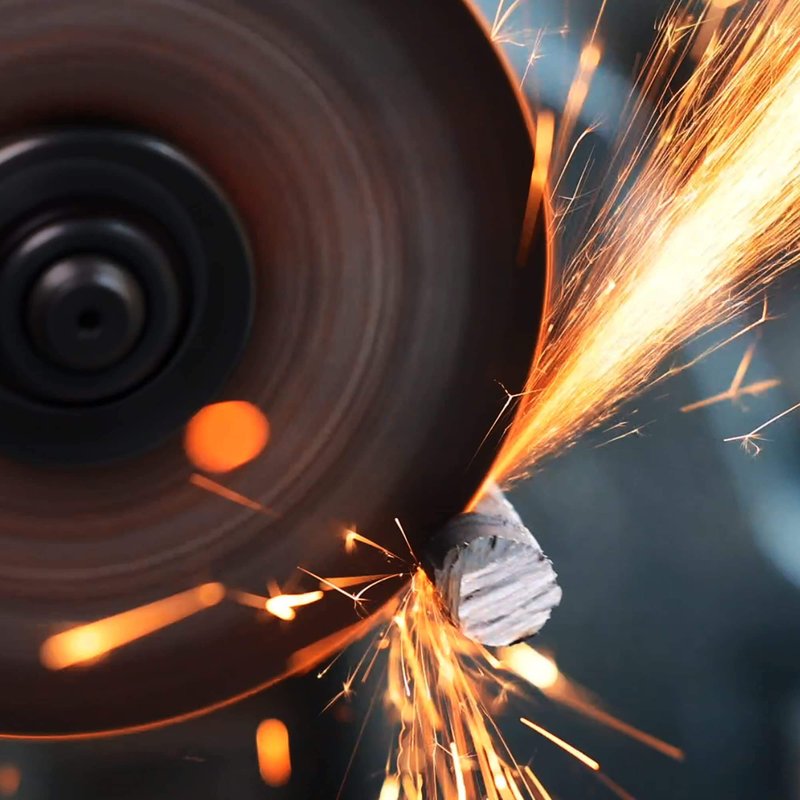
Metal Cut Off Disc
Wood Pruning and Rough Framing
Cutting wood may seem simple, but it gets tricky when working overhead or cutting green limbs that pinch the blade. For pruning and rough cuts, Reciprocating Saw Blades often outperform circular saws because they can handle imperfect angles, reach tight spots, and cut flush without repositioning.
The key to fast pruning is tooth aggression and anti-binding geometry. Coarse teeth with deep gullets remove wet chips quickly, preventing the blade from heating up or stalling. Blade length is also crucial—longer blades provide clearance for smoother cuts, especially in the 3-8 inch branch range where chip evacuation matters more than motor power.
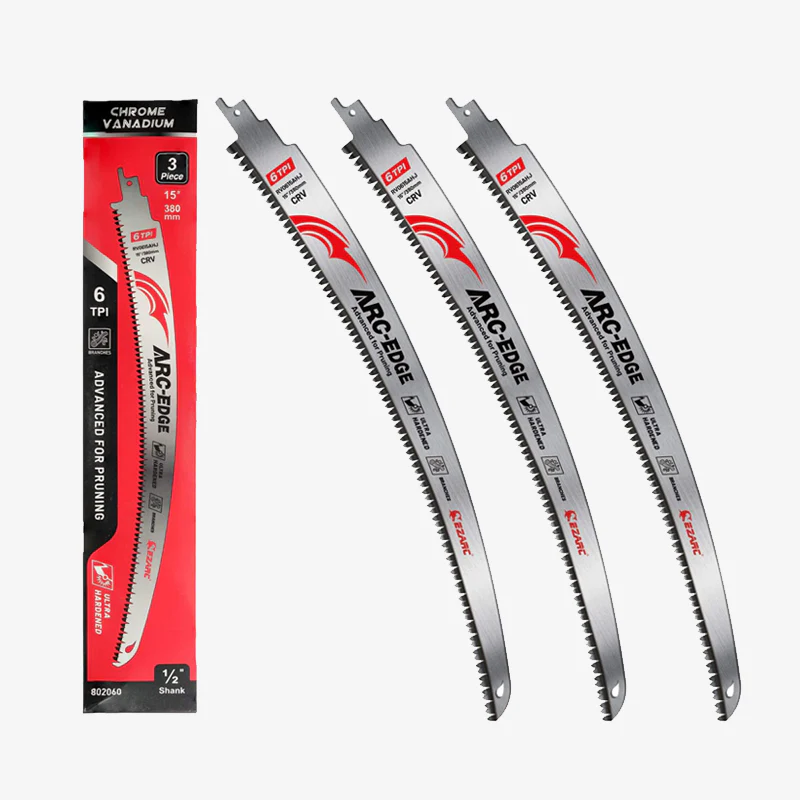
EZARC’s Tree Trimming/Wood Cutting – Japanese Teeth 6 TPI Reciprocating Saw Blade is perfect for this. With a 15-inch curved profile, aggressive Japanese-style teeth, and deep gullets, it's ideal for pruning and green timber. Its Cr-V steel construction and fleam-ground teeth reduce friction and vibration, allowing better control in tight spots.
Use-case tip: For cleaner cuts on live trees, stabilize the branch and start slow to establish a kerf. Then, increase speed while keeping the shoe against the wood. For demolition framing lumber with nails, switch to a bi-metal blade to avoid tooth damage.
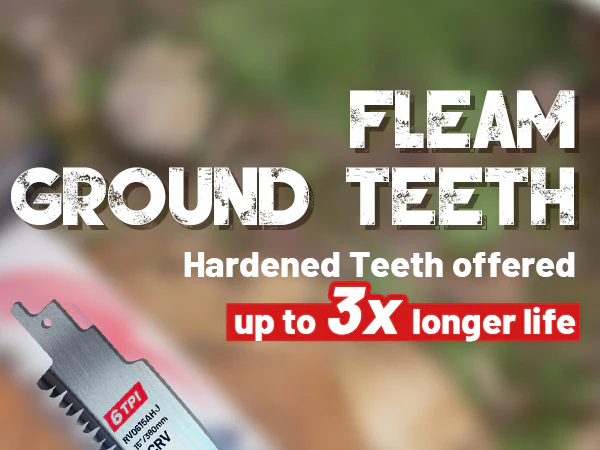
Japanese Teeth 6 TPI Reciprocating Saw Blade
Concrete and Masonry Demolition
Concrete and brick “kill” standard teeth because they behave like abrasive stone. When you need demolition cuts—brick openings, removing porous concrete, trimming blocks, or cutting aerated concrete—carbide is usually the entry ticket. The goal is not a polished edge; it’s a controllable cut that stays effective despite grit.
A practical workflow is to score the line, control dust, and plan for hidden reinforcement. Reciprocating saws shine in masonry demo when you can’t fit a bigger saw, when you need flush cuts, or when you’re working in remodel spaces. That said, don’t expect a reciprocating saw to replace a dedicated concrete saw for long straight slab cuts; it’s a targeted tool for openings, removals, and awkward geometry.
EZARC’s Brick & Concrete Cutting – Carbide, 12 & 18 in Demolition Reciprocating Saw Blade is designed around abrasion resistance and debris clearing. The product description specifies tungsten carbide-tipped (TCT) teeth brazed to a steel body, a coarse 2 TPI pattern with deep gullets, and blade-body thickness listed at 1.5 mm, plus a wide body design noted at 50 mm for stability. It also states that the 18" length can handle material thickness up to 370 mm, while the 12" version targets up to 225 mm, which helps you match reach to the cut depth rather than forcing a short blade into a deep kerf.
Dust control is not optional for good work. Silica-containing dust is a serious health risk, and OSHA’s silica standard provides task-based controls (including water delivery for certain saw applications). (osha.gov) When water isn’t feasible, local exhaust ventilation and HEPA collection often become the performance-and-safety solution.
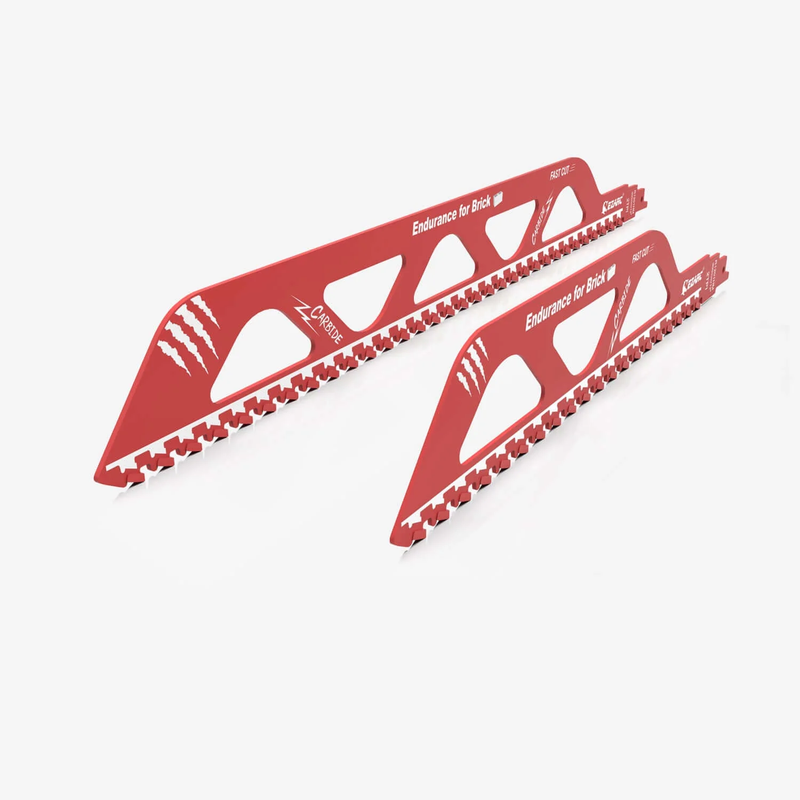
Carbide, 12 & 18 in Demolition Reciprocating Saw Blade
Tile, Stone, and Hard Surfaces Cutting
Cutting tile, stone, and hard surfaces requires a different approach, focusing on managing chipping and heat rather than cutting speed. Diamond abrasives are the go-to solution, as they grind cleanly without relying on a tooth edge. The best tool depends on the cut type:
-
Straight cuts in tile: Use an angle grinder with a diamond wheel or a wet tile saw for chip control.
-
Plunge cutouts (e.g., outlet boxes, notches): Use an oscillating tool with diamond grit Oscillating Multi-Tool Blades for controlled depth.
-
Edge cleanup: Use Sanding and Polishing Abrasives matched to the stone type to reduce micro-chips and improve finish.
Key Pitfalls
Avoid rushing the first 10 seconds of the cut. Start with a light scoring pass to create a track, then deepen gradually. Pushing too hard causes the wheel to chatter, chip the glaze, and overheat. Dust is another concern: dry cutting ceramic and stone generates airborne particles, so ensure proper dust control, especially for silica-containing materials. (https://www.osha.gov/silica%E2%80%91crystalline)
Selection Logic
Match the abrasive system to the surface hardness, then choose the tool with the control you need. For cutting metal, stone, or tile, diamond cutting wheels and diamond grit oscillating blades are ideal.
Precision Cutouts and Drilled Openings
Many projects involve holes (plumbing, electrical boxes, anchors, etc.). This is where Hole Saw Kits and Drill Bits and Sets become critical for productivity. A clean hole requires the right combination of pilot stability, tooth/grit type, speed, and chip removal.
-
Wood: Standard hole saws work fast but can tear the exit side—back the work with scrap and slow down at breakthrough.
-
Metal: Use slower speeds, cutting fluid, and avoid aggressive "pecking" to prevent chatter and tooth damage.
-
Masonry: Use carbide grit or diamond core solutions and manage dust carefully.
Selection Decision Guide
For better results, follow this order:
Material → Edge System → Tool Platform → Size/Fit → Technique. The aim is to reduce heat, binding, and rework while improving safety.
-
Material Match: Choose the right tooth or grit. If abrasion dominates, use carbide or diamond; for heat and thin sections, use a thin cut-off disc or fine-tooth blade.
- Tool Compatibility: Ensure proper arbor size, RPM rating for grinders, stroke length for reciprocating saws, and shank type for drill bits.
Quick scenario framework table
| Application scenario | Primary risk | Best edge system | Best tool platform | What to optimize |
| Cutting rebar/angle iron | Heat + wheel failure | Thin abrasive cutoff | Angle grinder | Clamp work, keep straight feed |
| Pruning thick green limbs | Binding + tearing | Coarse teeth, deep gullets | Reciprocating saw | Blade length, shoe contact |
| Brick/concrete demo cuts | Abrasion + dust | Carbide (TCT) or diamond | Recip saw / saw w/ dust control | Dust control, steady stroke |
| Tile notch/outlet cutout | Chipping | Diamond grit | Oscillating tool | Scoring pass, depth control |
| Holes for plumbing/electrical | Wander + breakout | Hole saw/bit matched to material | Drill/driver | Speed control, backing support |
Best Practices and Pitfalls

Best Practices
-
Check Maximum RPM Ratings and Guarding
Always match the tool to the wheel’s RPM rating and ensure proper guarding. This prevents the tool from exceeding the wheel's capacity and reduces injury risk if a wheel fails. -
Clamp the Work and Stabilize the Line
Clamping your work reduces vibration, helps maintain a steady cut, and prevents the workpiece from shifting, which could cause binding or disc twist. -
Let the Tool Cut—Avoid Forcing
Excess pressure creates heat (for metal), glaze (for diamond), and deflection (for reciprocating blades). A steady, consistent feed usually results in faster cuts and avoids stalls or blade changes. -
Use Dust Control on Masonry and Silica-Containing Materials
For safety, always use dust control when cutting masonry or materials containing silica. OSHA recommends wet methods or local exhaust ventilation to reduce airborne dust. (osha.gov)
Common Pitfalls to Avoid
-
Using a Wood Blade on Metal
A wood blade will round quickly, overheat, and create a slow, wandering cut. This increases the risk of snagging and losing control. -
Dry-Cutting Concrete Without Dust Control
Cutting without dust control reduces visibility, makes the cut line harder to follow, and increases cleanup time. It also increases exposure risk and reduces job quality. -
Exceeding Disc Speed or Cutting at Extreme Angles
Thin cut-off wheels are designed for straight cuts. Twisting or side-loading the wheel can break it. Keep the disc square and avoid prying with the wheel. -
Choosing the Wrong Size Consumable
Using a too-short reciprocating blade can cause heat buildup and binding, while a too-large wheel for a delicate tile notch increases the risk of chipping due to loss of control.


Frequently Asked Questions
What cuts metal fastest at home without specialized equipment?
A thin cut-off wheel on an angle grinder is usually the fastest option for common home metal tasks like threaded rod, angle iron, and steel tubing because the abrasive edge doesn’t snag on thin sections. Focus on Cutting and Grinding Discs that match your grinder size and have a rated maximum speed at or above your tool’s no-load RPM. Clamp the work firmly and make a shallow scoring pass first to keep the cut straight. If you see the grinder bogging or the disc burning the metal, reduce pressure and let the wheel maintain speed. https://www.osha.gov/laws-regs/regulations/standardnumber/1910/1910.215
Can reciprocating saw blades cut concrete and brick effectively?
Yes, but only if you use a carbide or grit-based design intended for masonry—standard bi-metal teeth dull rapidly in abrasive material. Carbide-tipped demolition blades with coarse TPI are built to clear grit and resist wear in brick, porous concrete, and block. Use moderate pressure and let the blade work; forcing the cut increases deflection and can damage teeth. Also plan dust control, because masonry cutting can generate hazardous respirable crystalline silica.
What’s the difference between abrasive cut-off discs and grinding discs?
Cut-off discs are typically thinner and designed for straight-through cuts with minimal burr and less material waste. Grinding discs are thicker and designed to remove material from a surface at an angle, tolerating side loads better than a cut-off wheel. If you try to grind with a cut-off wheel, you risk overheating and disc failure because side-loading is not its job. A simple rule is: cut-off wheel for separation cuts, grinding disc for shaping and beveling.
How do I choose the right hole saw or drill bit for mixed materials?
Start with the hardest or most abrasive material you might hit: nail-embedded wood requires tougher tooth designs, while masonry often requires carbide grit or dedicated bits. Control speed—wood generally tolerates faster RPM, while metal needs slower RPM and lubricant to manage heat. Use a pilot hole and keep the tool square to prevent wobble, which ruins teeth quickly. If the opening must be very precise, rough the hole with Hole Saw Kits and finish edges with Hand Tools or an oscillating tool.
When should I use an oscillating tool instead of a reciprocating saw?
Use an oscillating tool when you need precise depth control, a clean plunge cut, or access in tight spaces where a reciprocating saw can’t fit. Oscillating Multi-Tool Blades are ideal for trimming openings, undercutting, grout removal, and small cutouts in tile or trim work. A reciprocating saw is better when you need reach, fast removal, or demolition tolerance, especially with longer blades. If the job has both rough and finish steps, it’s common to rough with a reciprocating saw and finish with an oscillating tool.
Conclusion
The best tools for cutting metal, wood, and concrete are the ones that match the material’s failure mode: heat in metal, binding in wood, and abrasion plus dust in masonry. Build your kit around edge systems—Cutting and Grinding Discs for fast metal cuts, purpose-built Reciprocating Saw Blades for pruning and demolition, and the right drilling and finishing accessories for precision work. Then lock in the fundamentals: clamp the work, respect RPM limits, manage dust, and let the tool maintain speed instead of forcing it. With that approach, you’ll cut faster, safer, and with cleaner results across almost any jobsite scenario.

Table of Contents
Which Tools Cut Through Metal, Wood, and Concrete Best?
- Introduction
- Core FoundationsTool Types That Matter Most for Mixed-Material CuttingEdge systems: tooth pitch vs grit vs segmentSetup basics: speed, pressure, cooling, and PPE
- Metal Fast Clean Cuts
- Wood Pruning and Rough Framing
- Concrete and Masonry DemolitionTile, Stone, and Hard Surfaces CuttingKey PitfallsSelection LogicPrecision Cutouts and Drilled OpeningsSelection Decision GuideQuick scenario framework table
- Best Practices and PitfallsBest PracticesCommon Pitfalls to Avoid
- Frequently Asked QuestionsWhat cuts metal fastest at home without specialized equipment?Can reciprocating saw blades cut concrete and brick effectively?What’s the difference between abrasive cut-off discs and grinding discs?How do I choose the right hole saw or drill bit for mixed materials?When should I use an oscillating tool instead of a reciprocating saw?
- Conclusion


Laisser un commentaire
Ce site est protégé par hCaptcha, et la Politique de confidentialité et les Conditions de service de hCaptcha s’appliquent.