
 Oscillating Multi-Tool Blades
 Reciprocating Saw Blades
 Cutting & Grinding
 Hole Saw
 Drilling
 Sanding & Polishing
 Socket & Driver Set
 Hand Tools
 Metal Worker & Fabrication
 Woodworking & Carpentry
 Electrical & Plumbing
 Automotive
 Concrete & Masonry
 Demolition
 NEW ARRIVALS
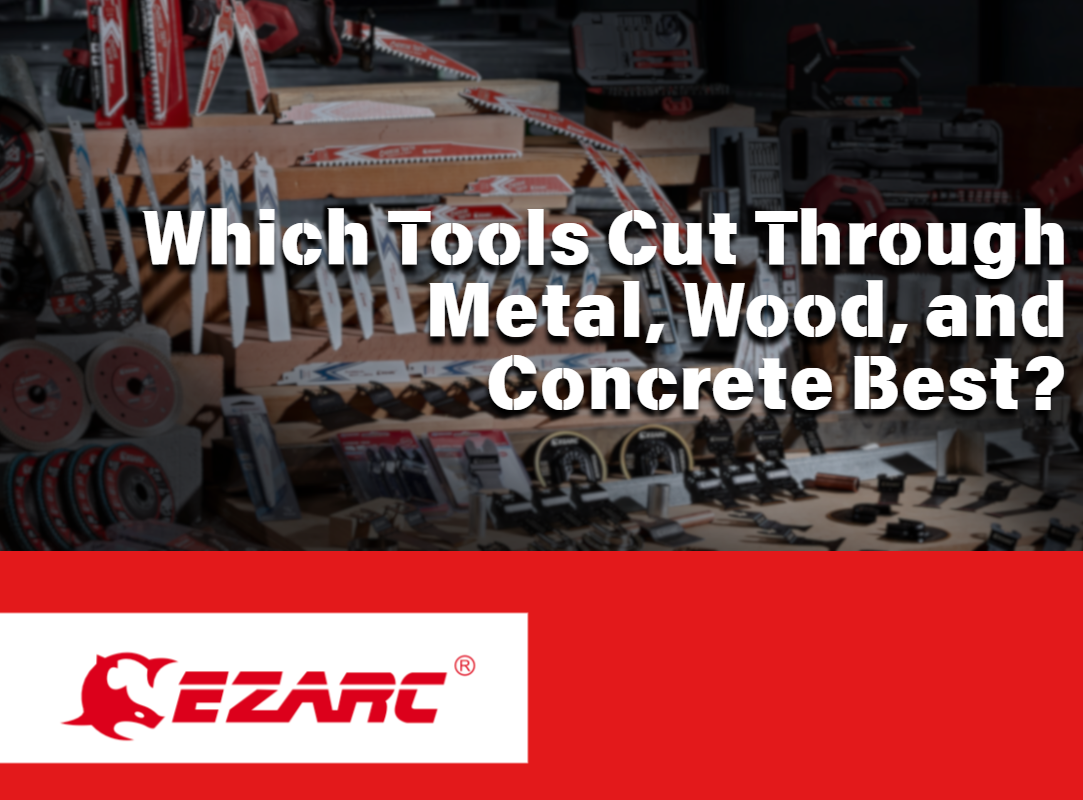
Best Tools for Cutting Wood, Metal, and More
Introduction
Blade dulled mid-cut and the whole job comes to a halt? If you've ever seen a Reciprocating Saw Blade glaze over in nail-filled lumber or an angle-grinder disc bog down and smoke, you know the real cost isn’t the accessory, but the downtime.
In 2025 and early 2026, contractors and DIYers are prioritizing value-per-cut: longer-lasting edges (carbide, diamond, advanced coatings) and safer consumables that maintain size and stay predictable. This practical, jobsite-ready kit from EZARC covers Oscillating Multi-Tool Blades, Reciprocating Saw Blades, Cutting and Grinding Discs, Hole Saw Kits, Drill Bits, Sanding Abrasives, Socket and Driver Sets, and select Hand Tools.
Remember, safety matters. Always use eye/face protection when hazards are present, and follow OSHA guidelines for mechanical irritants and hazards. (osha.gov)
Top EZARC Picks for Every Material
Cutting wood fast (construction, pruning, demo)
1) Tree Trimming/Wood Cutting
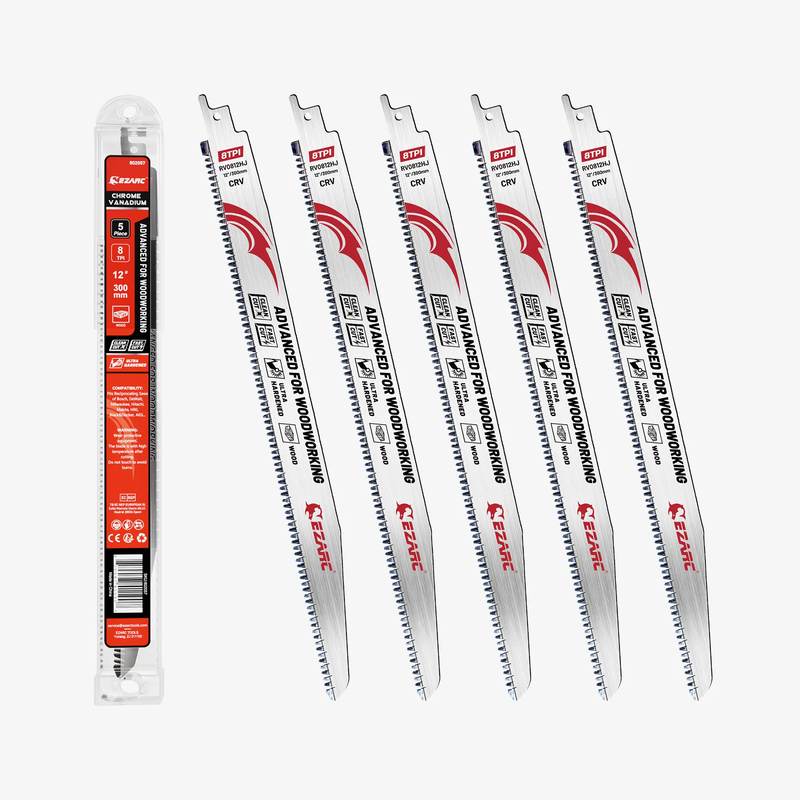
Japanese Teeth, 8 TPI Reciprocating Saw Blade
When you want a reciprocating setup that pulls itself through green wood instead of rattling and stalling, an aggressive tooth pattern and good chip clearance matter more than almost anything else. This EZARC pruning-focused option is built around an arc-edge profile to reduce friction and keep the cut tracking, which helps especially in wet, sappy, or knotty branches.
- Best for: pruning and outdoor cleanup where speed matters more than a finish-grade surface
- Tooth style: Japanese-tooth style with 8 TPI balance for control and fast removal
- Cut range guidance: designed for branches roughly 2–12 inches in diameter
- Body concept: arc-edge reduces binding and helps guide the blade through dense wood
- Debris handling: deep gullets move sawdust out to reduce clogging on long strokes
- Fit: universal reciprocating saw fit (typical for standard recip platforms)
Why it wins: For pruning and rough wood cuts, the “feel” of the blade matters—less chatter, fewer stalls, and cleaner chip evacuation. The arc-edge profile and gullet depth help keep momentum in the cut, which can save time when you’re working overhead, on a ladder, or in awkward landscaping angles where restarting cuts is the real productivity killer.
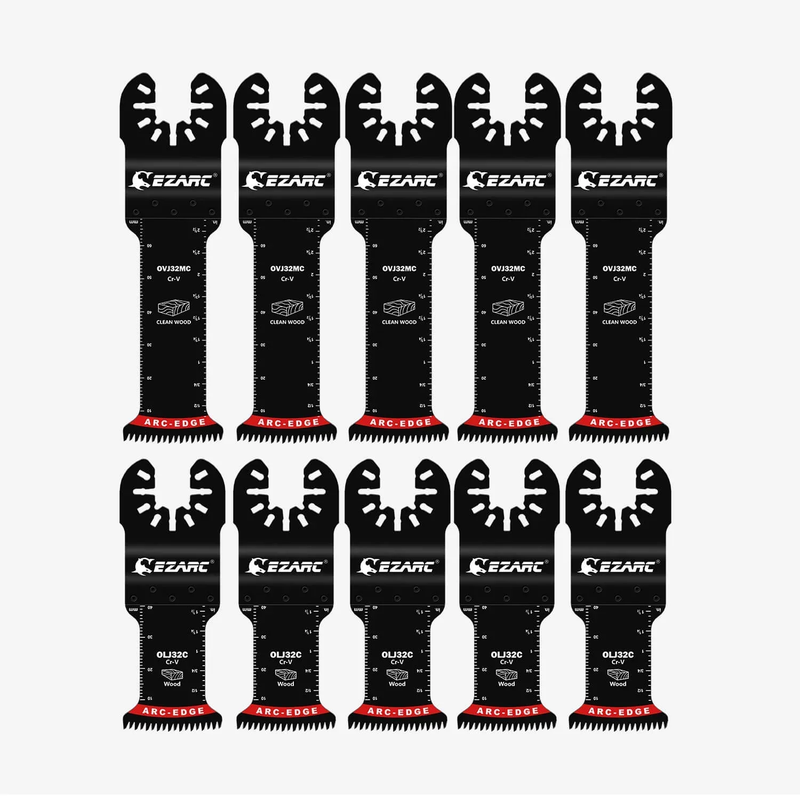
2) Arc-Edge Japanese Tooth Oscillating Multi Tool Blade for Wood, Plastic
Oscillating Multi-Tool Blades
Need clean, controlled cuts where a recip is too aggressive—baseboards, door casings, drywall reveals, trim notches, or plunge cuts in plywood? This is where Oscillating Multi-Tool Blades shine. EZARC’s arc-edge concept is aimed at smoother starts and reduced vibration, which helps keep the kerf on your line.
- Best for: plunge cuts, flush cuts, and trim work in wood and plastic
- Cutting edge: triple-ground Japanese teeth to improve surface finish and reduce tear-out
- Design: Curved-Tec “arc edge” supports smoother engagement and better stability
- Claimed speed: positioned as 2× faster cutting speed vs typical baseline blades
- Pack options: offered in standard and extra-long configurations depending on the bundle
- Compatibility: universal interface system (note: generally not for Starlock systems)
Why it wins: In remodel work, accuracy and access beat raw speed. An arc-edge oscillating blade can reduce “skitter” at the start of a plunge cut, and the Japanese tooth grind is a practical advantage when you’re trying to avoid splintering finished edges or tearing veneer on visible surfaces.
Cutting metal without burning time (bolts, nails, rebar)
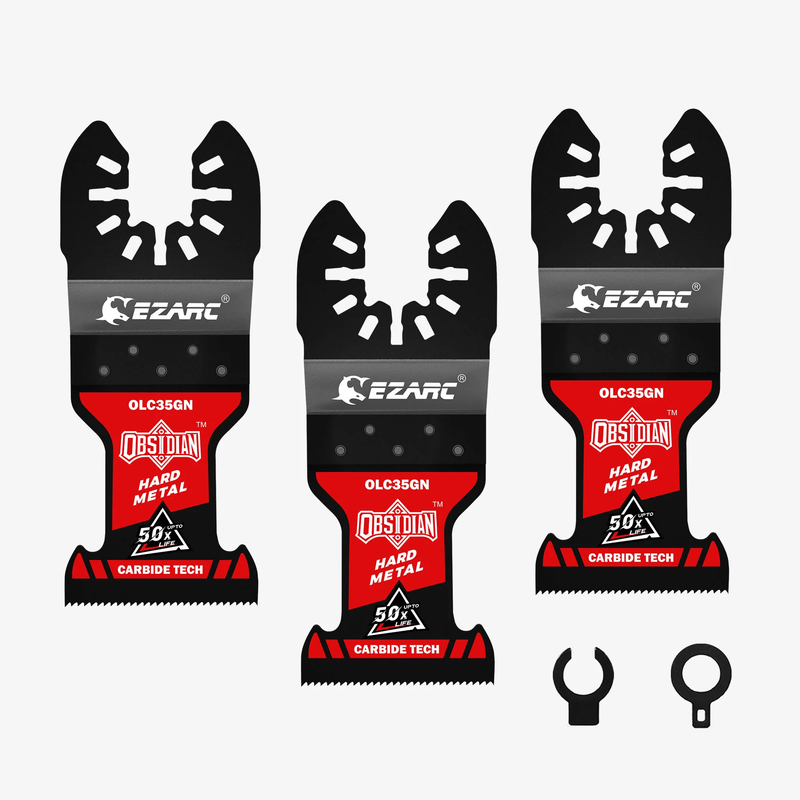
3) Saw Blades for Hard Metal, Nails, Bolts and Screws (3pcs)
EZARC Obsidian Carbide Oscillating Saw Blades
If your day includes repeated fastener cuts—masonry nails, screws, bolts, rebar ties, or copper pipe—bi-metal oscillating blades often die fast, especially when the cut becomes heat-soaked. This carbide-focused set is built specifically for hard metal work, and it adds a TiCN coating to reduce wear.
- Best for: hard metal, nails/bolts/screws, wood-with-fasteners situations where standard bi-metal burns out
- Coating: TiCN (Titanium Carbo-Nitride) coating for durability under metal-cutting heat
- Teeth: optimized carbide blend + tooth geometry aimed at repeated plunge cuts in metal
- Longevity claim: positioned as up to 50× longer life than standard bi-metal in similar use
- Speed claim: described as 20% thinner than typical carbide blades, aiming for up to 50% faster cutting
- Fit: universal interface system (note: not recommended for Starlock interfaces)
Shop: https://www.ezarctools.com/products/ezarc-obsidian-carbide-oscillating-saw-blades
Why it wins: Carbide oscillating blades are often the difference between “one cut and done” and “a whole afternoon of consistent performance.” When you’re working inside cabinets, at thresholds, or near finished surfaces, the control of an oscillating tool plus carbide durability is a strong combo—especially for removing stubborn fasteners without opening up the surrounding material.
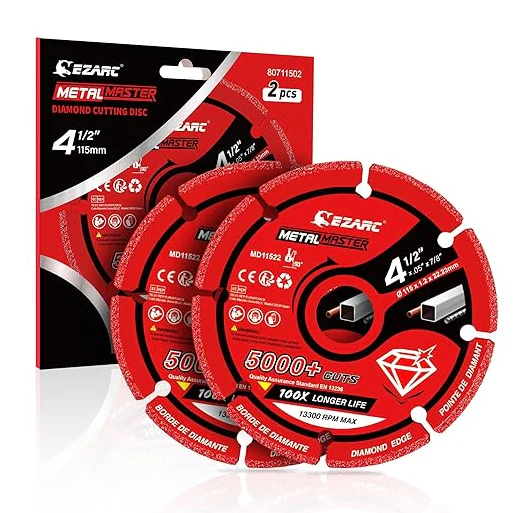
4) Cutting Wheel For Rebar/Steel/Iron/Inox
Diamond Metal Cutting Wheel
For cutoff work, the biggest headaches are disc wear (changing diameter mid-job), dust, and the risk of bonded wheels failing under side load or incorrect angle. EZARC’s diamond-style metal wheel uses a solid steel body with a diamond cutting edge, with positioning focused on safety and staying consistent over the disc’s life.
- Best for: dry cutting rebar, steel, iron, pipes, sheet metal, and mixed metal tasks
- Body: solid steel core designed to reduce shatter risk vs bonded cut-off wheels
- Consistency: maintains original wheel diameter through life for more predictable control
- Longevity positioning: marketed as 100× longer life vs bonded wheels in metal cutting applications
- Cut volume claim: described as delivering 5,000+ more cuts vs bonded cut-off wheels
- Sizes: offered in multiple diameters (including a common 4-1/2 in. option)
Shop: https://www.ezarctools.com/products/diamond-cutting-wheel
Why it wins: For fabrication touch-ups and jobsite demo, a steel-core diamond wheel can reduce the “surprise factor” of an accessory changing behavior as it wears. When the wheel stays closer to full diameter, it’s easier to keep your guard setup consistent and maintain cut depth without constantly re-indexing your stance.
Drilling clean holes and pro finishes
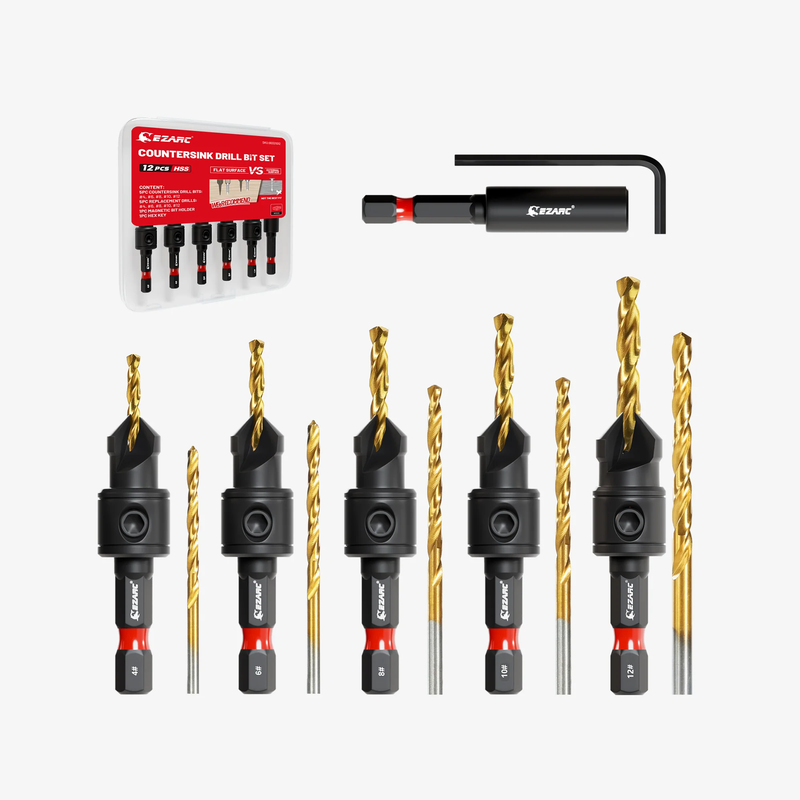
5) 12PCS Two-Flute Titanium-coated Countersink Drill Bit Set with Storage Box
Two-Flute Titanium-coated Countersink Drill Bit Set
Countersinking is where “almost right” becomes visible forever: screw heads sit proud, wood fibers tear, and hardware looks sloppy. This EZARC set combines replaceable drill bits with countersink bodies, plus an 82-degree angle that matches common screw head standards in woodworking and general fastening.
- Best for: clean pilot holes + countersink + counterbore in one workflow for wood projects
- Design: two-flute cutting style aimed at reducing chatter and improving finish
- Angle: 82-degree countersink angle for consistent seating
- Set contents: includes countersink bits (#4/#6/#8/#10/#12), replaceable drill bits, magnetic extension holder, Allen wrench, and case
- Shank: 1/4" hex for quick-change in drills/impact drivers
- Real trade-off: extended use on hardwood is noted as not recommended—plan to pace cuts and avoid overheating
Shop: https://www.ezarctools.com/products/12pcs-countersink-drill-bit-set-with-storage-box
Why it wins: Time savings come from repeatability. When your depth and angle stay consistent from hole to hole, you spend less time re-drilling or correcting misaligned screw heads—especially important on cabinets, trim, and any visible hardware where the finish is judged immediately.
Grinding and finishing (welds, rust, edges)
6) For Stainless Steel, Sheet Metal, 40/60/80/120 Grits
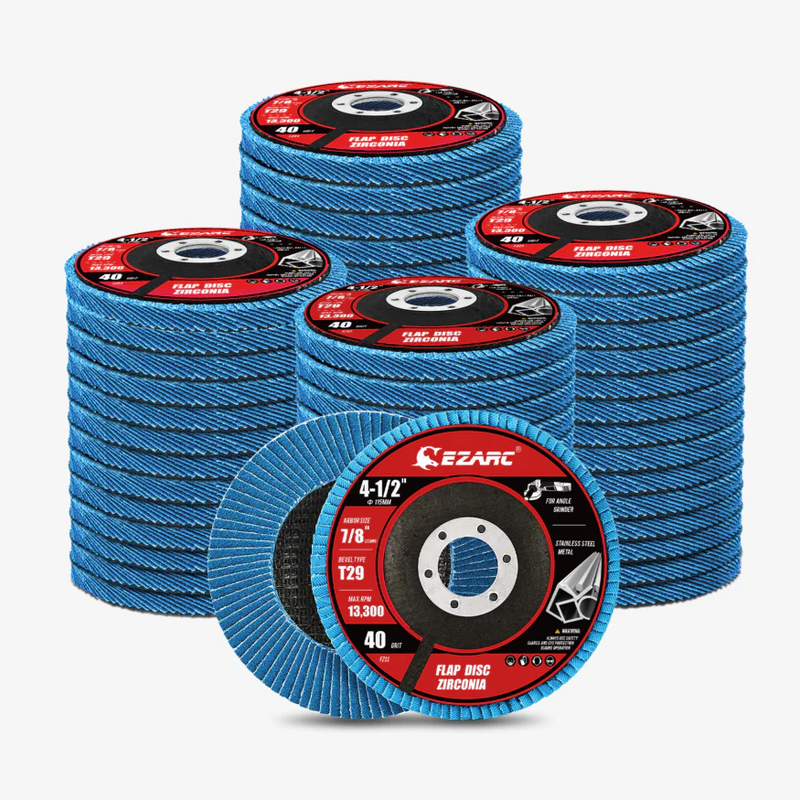
4-1/2 In. T29 Flap Sanding Discs
Flap discs are the everyday answer for blending, beveling, cleaning welds, and removing rust without switching between a hard wheel and sandpaper. This EZARC option uses a Type 29 bevel profile, which is particularly useful for edges and weld toes.
- Best for: weld cleanup, beveling, edge deburring, rust removal, and general metal finishing
- Abrasive: zirconia material (positioned for longer life vs standard aluminum oxide)
- Disc style: T29 beveled design for working angles around 5–15°
- Size: 4-1/2" diameter with 7/8" arbor
- Speed rating: designed for angle grinders up to 13,300 RPM
- Grit options: 40/60/80/120 to step from stock removal to finish blending
Shop: https://www.ezarctools.com/products/grit-flap-discs
Why it wins: The fastest finishing workflows use a grit “ladder.” Start at 40 or 60 for shaping and weld knockdown, then step to 80/120 for blending and surface prep. The T29 profile helps keep contact stable on corners and weld seams, which can reduce gouging and rework.
Tight-access oscillating cuts (multi-material jobs)
7) Oscillating Blade for Metal, Wood Nails, Screws Cutting, Plastic
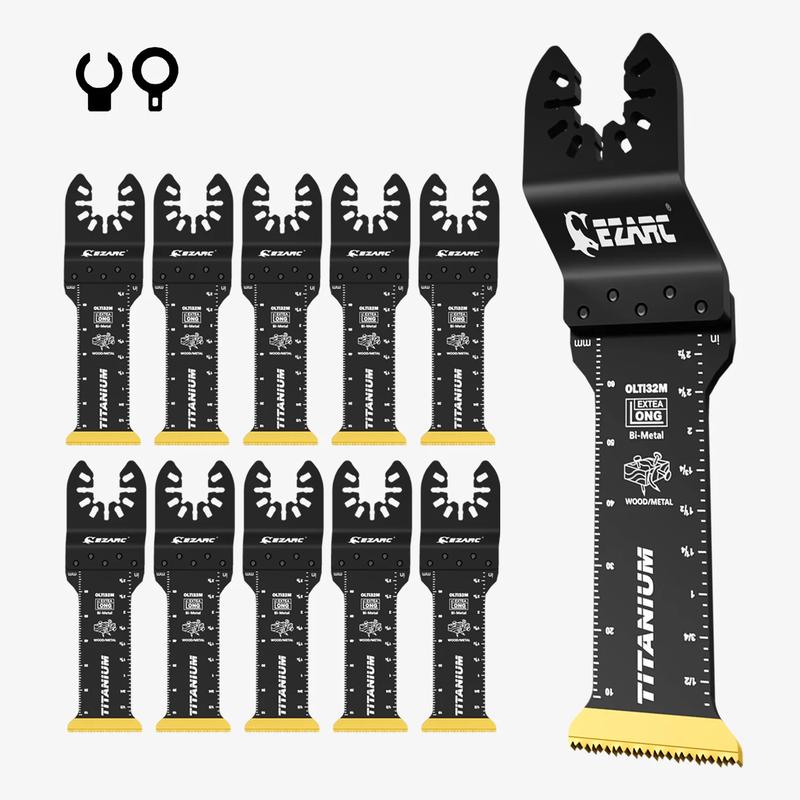
Extra Long Titanium Oscillating Blade
Some oscillating cuts are less about the material and more about the access: toe-kick undercuts, door jamb trimming, flush-to-wall cuts, and plunge cuts where your hands can’t get the tool body close. An extra-long blade gives you the reach; titanium-coated teeth help hold up when you hit the inevitable hidden fastener.
- Best for: deep plunge cuts and flush cuts in tight spaces, remodel work, and mixed-material trim situations
- Design: extended reach form factor to reach corners and undercuts
- Teeth/coating: titanium-enhanced cutting edge for heat resistance and longer life
- Use cases: wood, plastic, non-hardened nails/screws, and some steel profile scenarios
- Pack options: offered in 3-piece and larger boxed configurations depending on your needs
- Practical tip: let the tool oscillate at steady speed; forcing increases heat and shortens edge life
Why it wins: Reach changes your cut plan. Instead of removing trim or disassembling obstacles “just to fit the tool,” an extra-long oscillating blade often lets you cut in-place and keep surrounding finishes intact—especially useful in flooring installs and casing undercuts.
Fastening support (when the cut is done, the install begins)
8) Driver Set with Socket Adapters, Wing Nut Setter, S2 Bits & Extension
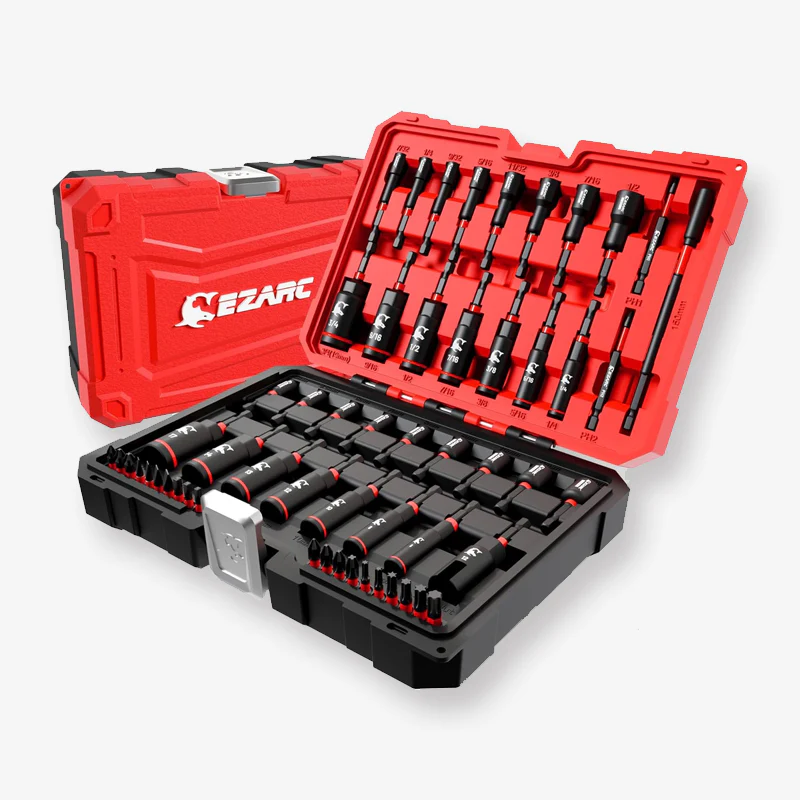
55PCS Magnetic Impact Nut Driver Set
Cutting is only half the job; fastening is what closes it out. A labeled, portable nut driver and bit setup reduces the “where’s the right size?” scramble, especially in HVAC, electrical rough-in, automotive work, and general construction where you’re moving fast between hardware types.
- Best for: impact-driver fastening workflows across common SAE/metric hex hardware
- Kit size: 55 pieces total in a labeled storage case
- Shallow nut drivers: 17 magnetic shallow drivers (metric 5–13 mm, SAE 7/32"–1/2")
- Deep nut drivers: 14 deep drivers (metric 6–17 mm, SAE 1/4"–3/4")
- Steel/material: Cr-V steel with heat treatment for torque and wear resistance; S2 impact bits listed
- Shank: 1/4" hex quick-change format for fast swaps with drills/impact drivers
Why it wins: The real benefit is organization and fewer dropped fasteners. Magnetic shallow drivers help when you’re working overhead or in awkward bays, while the deep drivers cover long-stud situations. The labeled case speeds up repetitive work where seconds add up across an entire install day.
Buying Guide: How to Choose the Right Cutting Tool
Choosing the “best tool” usually means choosing the best cut style first—then matching the accessory to the material. Ask yourself a few jobsite-real questions before you grab a blade.
Match tool type to cut style: plunge, flush, rip, or cutoff
- Need long, open demolition cuts (studs, limbs, framing)? Start with Reciprocating Saw Blades—they clear chips well and remove material quickly.
- Need controlled, finish-friendly work (jamb undercuts, baseboard notches, outlet cut-ins)? Reach for Oscillating Multi-Tool Blades for precision and access.
- Need to separate metal stock, rebar, or pipe? Consider Cutting and Grinding Discs—and for repeated metal cutoff, a steel-core diamond wheel can keep diameter consistent.
Choose teeth/edge based on material (and heat)
- Wood: lower TPI and aggressive gullets reduce clogging, especially in green or wet wood.
- Metal fasteners: carbide teeth and hard coatings (like TiCN) are your friend when heat builds.
- Mixed materials: assume you’ll hit nails—choose blades designed for wood-with-nails or carbide options to avoid instant dulling.
Pick reach/length based on access constraints
- Extra-long oscillating blades are often the difference between a clean, in-place cut and tearing apart trim or flooring for access.
- For reciprocating work, longer blades help with pruning and thicker stock, but they also flex more—so keep pressure moderate and let the saw’s stroke do the work.
Practical tips
- Let the tool work: pushing harder usually increases heat and dulls edges faster.
- When switching materials, switch accessories too: cutting wood with a metal accessory (or vice versa) is a fast path to wasted consumables.
- Use “girt ladders” for finishing: start coarse, then step down to refine rather than trying to do everything with a fine grit.
Common mistakes to avoid
- Using wood teeth on nail-embedded lumber: it may cut at first, then dull instantly on the first fastener.
- Overheating metal cuts: long continuous cuts without pausing can glaze teeth and heat-soak discs.
- Skipping chip clearing: for hole saws and step bits, backing out to clear chips reduces binding and preserves edges.
Comparison Table
| EZARC pick | Category | Best materials | Key feature | Trade-offs / limitations |
| Japanese Teeth 8 TPI Reciprocating Saw Blade | Reciprocating Saw Blades | Green wood, pruning limbs, rough wood | Arc-edge profile + chip-clearing gullets | Not a finish blade; aggressive cuts can splinter on exit and aren’t ideal for fine trim |
| Arc-Edge Japanese Tooth Oscillating Blade | Oscillating Multi-Tool Blades | Wood, plastic | Curved-Tec arc edge + triple-ground teeth | Not intended for metal; oscillating cuts are slower for long demolition lines |
| Obsidian Carbide Oscillating Blades (3pcs) | Oscillating Multi-Tool Blades | Hard metal, nails, bolts, screws | TiCN coating + carbide tooth design | Carbide excels on metal but can be overkill for soft wood-only tasks |
| Diamond Metal Cutting Wheel | Cutting and Grinding Discs | Rebar, steel, iron, pipe, sheet metal | Steel core + diamond edge, consistent diameter | Requires correct grinder setup/guard; not a sanding tool—use a flap disc for finishing |
| 12PCS Countersink Drill Bit Set | Drill Bits and Sets | Wood projects, cabinetry | 82° angle + replaceable drills | Extended use on hardwood not recommended; best results require steady alignment |
| T29 Flap Sanding Discs (4-1/2") | Sanding and Polishing Abrasives | Stainless, sheet metal, rust | Type 29 bevel profile for edges/welds | Coarse grits remove fast but can gouge if you dwell in one spot; needs light, moving pressure |
| Extra Long Titanium Oscillating Blade | Oscillating Multi-Tool Blades | Wood, plastic, nails/screws (non-hardened) | Extended reach for tight-access cuts | Extra reach can amplify flex if forced; best with moderate pressure |
| 55PCS Magnetic Impact Nut Driver Set | Socket and Driver Sets | Fastening tasks (SAE/metric hardware) | Magnetic shallow drivers + organized case | Deep sockets are non-magnetic by design; not a substitute for a full impact-socket set |
FAQ


1) Should I use oscillating multi-tool blades or reciprocating saw blades for demolition?
Reciprocating saw blades are typically faster for long, open cuts like studs, branches, and rough tear-out because the stroke clears chips aggressively. Oscillating multi-tool blades are better when you need controlled flush cuts, plunge cuts, and tight-corner access where a recip can’t fit. If you’re doing mixed demo, keep one aggressive recip option for bulk removal and one carbide or titanium oscillating option for detail work around utilities. Choosing based on access and cut style usually reduces wasted blades and rework. https://en.wikipedia.org/wiki/Reciprocating_saw
2) What’s the difference between carbide and bi-metal blades in real jobsite terms?
Bi-metal blades are a good general-purpose choice and can be cost-effective when you’re mostly cutting wood-with-occasional nails or thin metals. Carbide teeth hold up far better when the cut becomes heat-soaked or when you’re repeatedly cutting hard fasteners like bolts and screws. In practice, carbide often saves time by avoiding mid-task blade swaps, especially in remodel work where you can’t easily reposition. The trade-off is that carbide is usually best reserved for the tough tasks rather than “everything.”
3) Why does my blade slow down or start smoking when cutting metal?
Most slowdowns come from a mismatch between accessory and material or from excess feed pressure that overheats the cut. If you’re cutting bolts, nails, or screws, switching to a carbide oscillating blade can stabilize performance because the teeth resist heat wear better. For cutoff discs, keep the tool at speed and use light, consistent pressure rather than “leaning” on the grinder, which can overheat and bind. If smoke is consistent, pause every 20–30 seconds to cool and clear chips or dust from the kerf.
4) Which TPI should I choose for pruning and fast wood removal?
Lower-to-mid TPI is generally better for fast removal because the gullets are larger and clear sawdust more efficiently, especially in wet or green wood. An 8 TPI pruning-oriented blade is a practical middle ground: fast enough to move through limbs while still offering some control on the cut line. If you go too fine, the blade can clog and heat up, which feels like stalling and increases vibration. If you go too coarse, the cut can get rougher and more grabby on smaller branches.
5) What grit flap disc should I use for weld cleanup vs finishing?
Start with a coarse grit like 40 when you need to knock down weld reinforcement or remove heavy rust quickly, then step to 60 or 80 for blending. If you want a more refined surface for paint prep or a cleaner appearance, finish with 120 using light pressure and steady motion. A Type 29 flap disc profile is helpful on weld seams and edges because it maintains contact at a working angle rather than forcing you flat. Avoid staying in one spot—heat and gouging happen fast, especially on thinner sheet.
Conclusion
If you want a small but capable kit for cutting wood, metal, and mixed materials, build around two realities: access and heat. Keep one fast wood solution (recip pruning/wood blade), one control-first option (Oscillating Multi-Tool Blades for flush/plunge work), and one tough metal strategy (carbide oscillating + a durable cutoff wheel).
From there, round out the workflow with drilling and finishing essentials—Drill Bits and Sets, Hole Saw Kits, and Sanding and Polishing Abrasives—so the job doesn’t stall when it’s time to install, fit, and finish. Finally, add a compact Socket and Driver Sets kit so fastening is as efficient as cutting. Together, these tools reduce downtime, blade swaps, and rework—exactly what modern 2026 jobsite efficiency is all about.

Table of Contents
Best Tools for Cutting Wood, Metal, and More
- Introduction
- Top EZARC Picks for Every MaterialCutting wood fast (construction, pruning, demo)1) Tree Trimming/Wood Cutting2) Arc-Edge Japanese Tooth Oscillating Multi Tool Blade for Wood, PlasticCutting metal without burning time (bolts, nails, rebar)3) Saw Blades for Hard Metal, Nails, Bolts and Screws (3pcs)4) Cutting Wheel For Rebar/Steel/Iron/InoxDrilling clean holes and pro finishes5) 12PCS Two-Flute Titanium-coated Countersink Drill Bit Set with Storage BoxGrinding and finishing (welds, rust, edges)6) For Stainless Steel, Sheet Metal, 40/60/80/120 GritsTight-access oscillating cuts (multi-material jobs)7) Oscillating Blade for Metal, Wood Nails, Screws Cutting, PlasticFastening support (when the cut is done, the install begins)8) Driver Set with Socket Adapters, Wing Nut Setter, S2 Bits & Extension
- Buying Guide: How to Choose the Right Cutting ToolMatch tool type to cut style: plunge, flush, rip, or cutoffChoose teeth/edge based on material (and heat)Pick reach/length based on access constraintsPractical tipsCommon mistakes to avoid
- Comparison Table
- FAQ1) Should I use oscillating multi-tool blades or reciprocating saw blades for demolition?2) What’s the difference between carbide and bi-metal blades in real jobsite terms?3) Why does my blade slow down or start smoking when cutting metal?4) Which TPI should I choose for pruning and fast wood removal?5) What grit flap disc should I use for weld cleanup vs finishing?
- Conclusion

1 commentaire
Tom Henry
I need to order some oscillating blades to remove some ceramic tile and grout. I am leaving the backsplash but lower is going to now be butcher block so need to cut that division. Please give me a way of ordering it from you.
Thanks
Tom
Laisser un commentaire
Ce site est protégé par hCaptcha, et la Politique de confidentialité et les Conditions de service de hCaptcha s’appliquent.