
 Oscillating Multi-Tool Blades
 Reciprocating Saw Blades
 Cutting & Grinding
 Hole Saw
 Drilling
 Sanding & Polishing
 Socket & Driver Set
 Hand Tools
 Metal Worker & Fabrication
 Woodworking & Carpentry
 Electrical & Plumbing
 Automotive
 Concrete & Masonry
 Demolition
 NEW ARRIVALS
Introduction
Pallet dismantling looks simple until it is not. One hidden nail can turn a smooth cut into a sudden grab, a bent blade, or a hard kick that shifts your stance. If you are shopping for Reciprocating Saw Blades with the best safety features for pallet dismantling, think in terms of control: steady tracking in nail-embedded wood, predictable bite in metal fasteners, and fewer mid-cut blade swaps that tempt rushed handling.
The good news is that you can build a safer teardown setup by matching tooth pitch (TPI) to what you are actually cutting and by adding a few support categories that reduce handling risk after the cut: Oscillating Multi-Tool Blades for tight, flush work; Sanding and Polishing Abrasives for splinters and sharp edges; and Drill Bits and Sets for cleaner reassembly. OSHA guidance also highlights how binding and poor blade condition increase kickback risk, so blade selection and inspection are not optional habits for 2026 jobsite expectations (OSHA).
Top EZARC picks for safer pallet dismantling
Built for control when nails appear
1. Wood Demolition
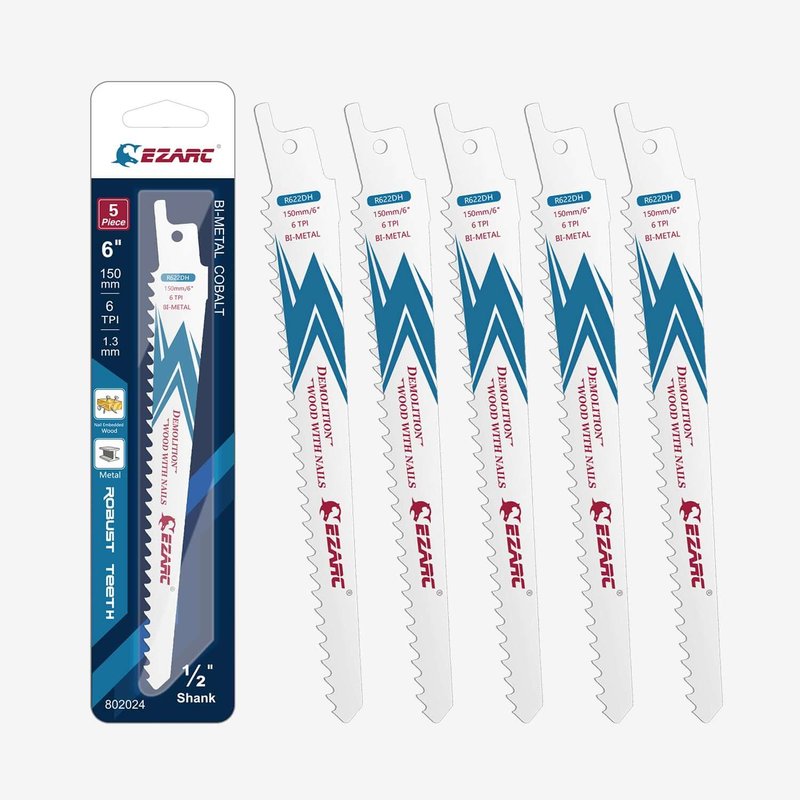
- Best for: fast separation cuts through deck boards and stringers where you expect nail strikes.
- What makes it safer: a coarse 6 TPI clears chips fast so the blade is less likely to stall and jerk the saw when wet or dirty pallet wood packs the kerf.
- Key specs: 6, 9, or 12 inch length options; 6 TPI tooth pitch; bi-metal construction.
- How to use it on pallets: start by cutting the outer deck boards to open access, then run the shoe tight to the wood so the blade does not hop.
- Pair it with: a higher-TPI metal blade for nail clusters, plus Hand Tools (pry bar, nail puller) so you are not forcing the saw to do extraction work.
- Trade-off: aggressive teeth can catch harder when they hit dense knots, so it rewards a controlled start and a planted shoe.
Why it wins: For most pallets, speed is safety. Fewer stalls means fewer moments where you instinctively twist the saw or reposition hands mid-cut. The length options also let you pick reach without over-flexing a long blade in tight gaps.
2. Heavy Metal Cutting
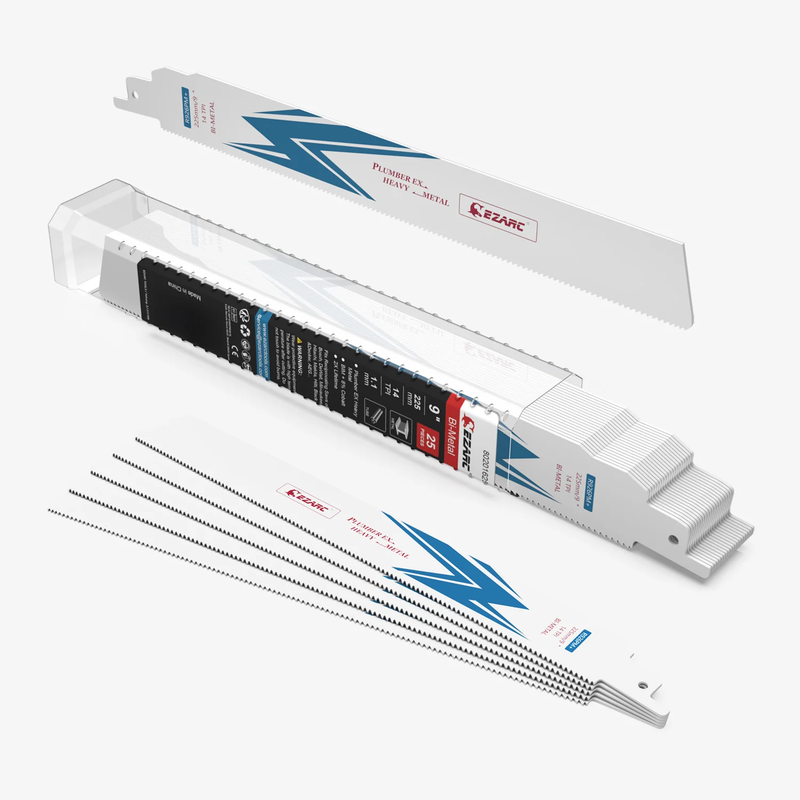
- Best for: thick nails, metal straps, corner brackets, and hardware that a coarse wood blade will snag on.
- What makes it safer: 14 TPI gives a steadier bite on metal, reducing the sudden hook-in you can get when a low-TPI blade catches a nail head.
- Key specs: 6, 9, or 12 inch options; 14 TPI; bi-metal construction.
- Practical tip: if you feel the saw pulsing, back off pressure and let the teeth work; forcing it is a common path to bending and binding.
- Where it fits in the workflow: switch to this blade for fastener-dense areas instead of trying to muscle through with a demolition wood blade.
- Trade-off: slower in pure wood, so it is a second blade rather than your main cutter.
Shop: https://www.ezarctools.com/products/heavy-metal-cutting-bi-metal-sawzall-blades-14tpi
Why it wins: Pallet injuries often happen when the cut suddenly changes material. A dedicated heavy-metal tooth pitch keeps the cut predictable when you hit nails, and predictable cuts are easier to control.
3. Thin Metal Cutting
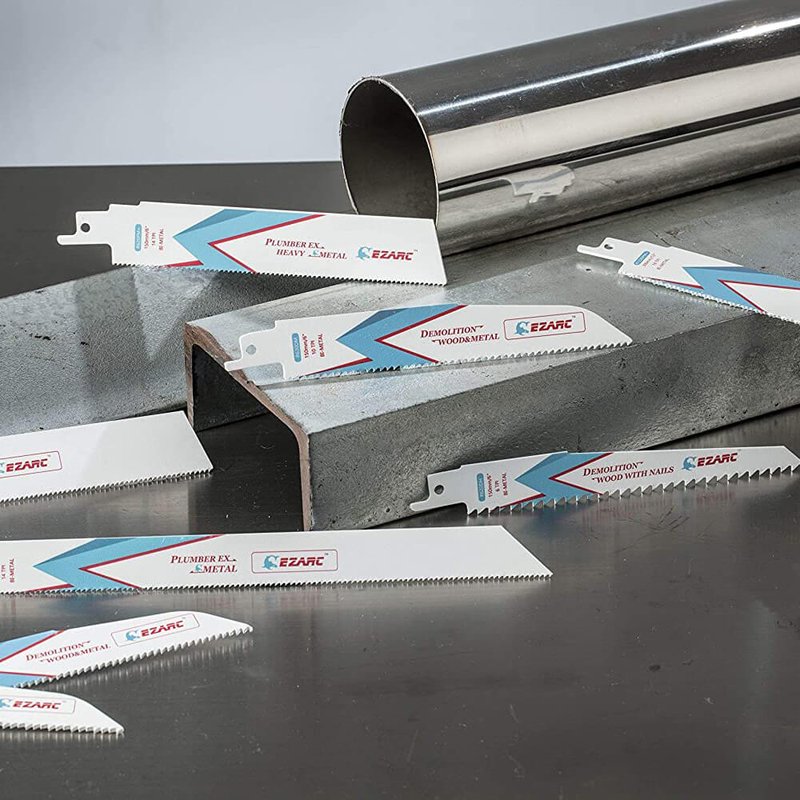
- Best for: lighter gauge metal pieces around pallets (thin straps, sheet metal offcuts, small brackets) and stubborn nails where you want maximum control.
- What makes it safer: higher TPI reduces tooth bite per stroke, which can lower grab and chatter on thin materials.
- Key specs: 6 or 9 inch length options; 18 TPI; bi-metal construction.
- When to choose 6 inch: tight pallet gaps and inside stringer pockets where a longer blade can flex and wander.
- Work technique: run moderate speed with steady pressure; pausing occasionally clears swarf that can heat and drag.
- Trade-off: not the fastest option for thick nails, but it is often the calmest.
Why it wins: If your priority is reducing snagging more than raw speed, 18 TPI is a practical safety-first choice. It is especially useful when you are cutting close to your support hand or bracing point.
Supporting gear that improves safety and finish
4. Nail-Embedded Wood/Pallet Dismantling
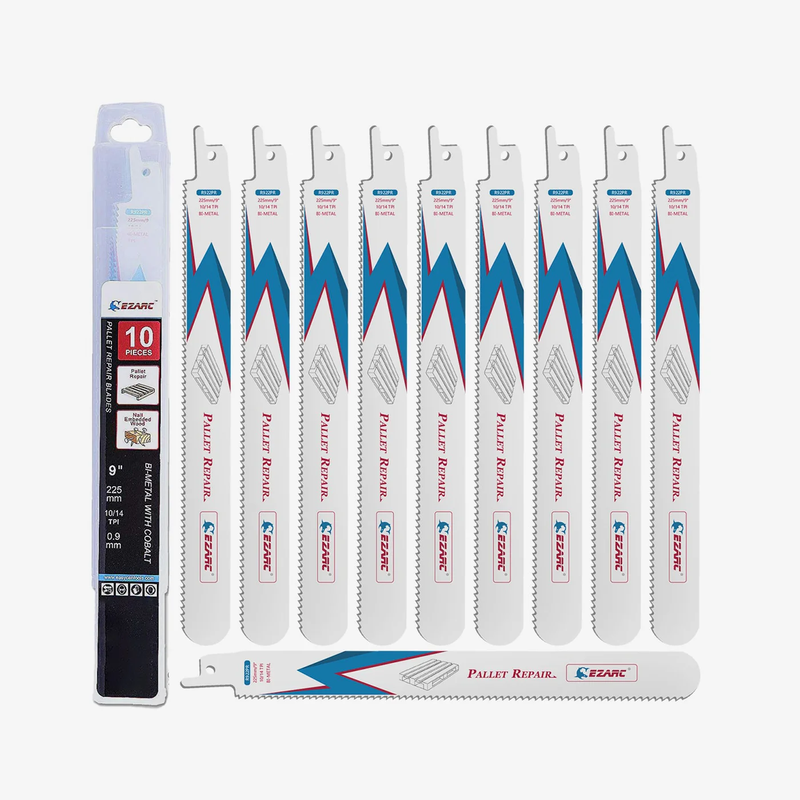
- Best for: mixed cuts where you alternate between wood fibers and nail shanks in the same pass.
- What makes it safer: a mixed 10/14 TPI style is a compromise pitch that helps reduce hook-in on metal while still moving through wood at a practical pace.
- Key specs visible in the product image: 9 inch length; 10/14 TPI; labeled for pallet repair; designed for nail-embedded wood.
- How to use it: start with this blade when you do not know the nail pattern yet, then switch to the more specialized wood or metal blades once you see what the pallet is made of.
- Trade-off: it will not be the fastest in clean wood or the calmest in thick metal, but it is a strong first-blade choice.
Why it wins: The safest blade is often the one that prevents surprise. Mixed TPI blades reduce the likelihood of a dramatic behavior change when you hit the first nail.
5. Extra-Long Arc-Edge Bi-Metal Japanese Tooth Oscillating Multi Tool Blade
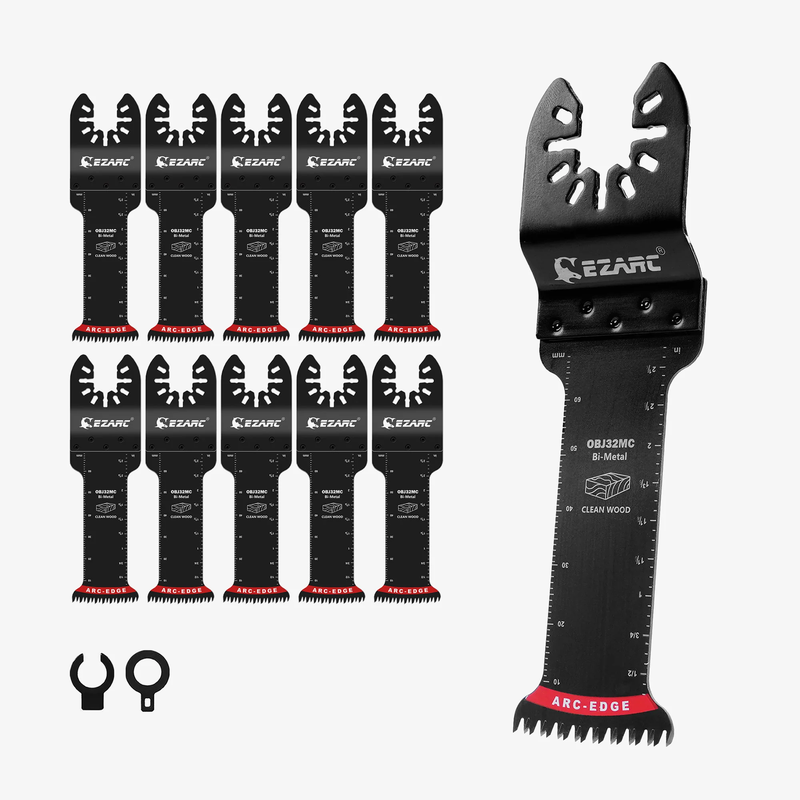
- Best for: reach into corners for flush cuts near stringers, trimming plugs, or cutting wood cleanly where a recip blade would overtravel.
- Safety angle: extra reach plus short oscillating stroke helps you keep hands farther from the cutting zone while still controlling the tool with two points of contact.
- What to look for when using it: let the teeth do the work and avoid side-loading, which can heat the blade and make it walk.
- Trade-off: long oscillating blades can flex; if you feel wandering, slow down and re-seat your stance.
Why it wins: When a pallet board is trapped tight to a block, controlled flush capability can be safer than trying to angle a reciprocating saw into a cramped gap.
6. 4-1/2 in Integrated Hub Ceramic Grain Flap Sanding Disc
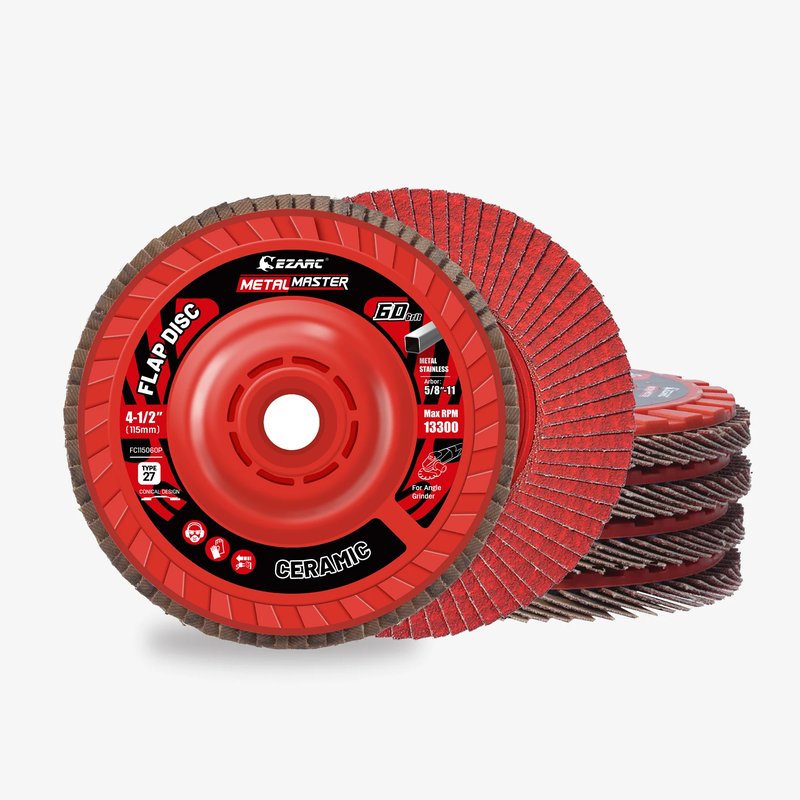
- Best for: deburring sharp metal corners, smoothing cut nail ends, and knocking down splintered edges after teardown.
- Why it supports safer handling: most cuts from pallets happen after dismantling, when you are carrying boards with splinters or sharp strap remnants.
- Key specs: 4-1/2 inch size; ceramic grain; integrated hub for fast swaps.
- Where it fits: after cutting, run quick passes to remove razor edges before stacking or transporting.
- Trade-off: grinders demand discipline; keep guards and PPE in place and avoid grinding on unstable pieces.
Why it wins: Sanding and Polishing Abrasives are not just for looks. Smoother edges reduce the chance of punctures and lacerations while you sort, stack, and reuse reclaimed wood.
7. 15/24PCS Countersink Drill Bit Set with Storage Box
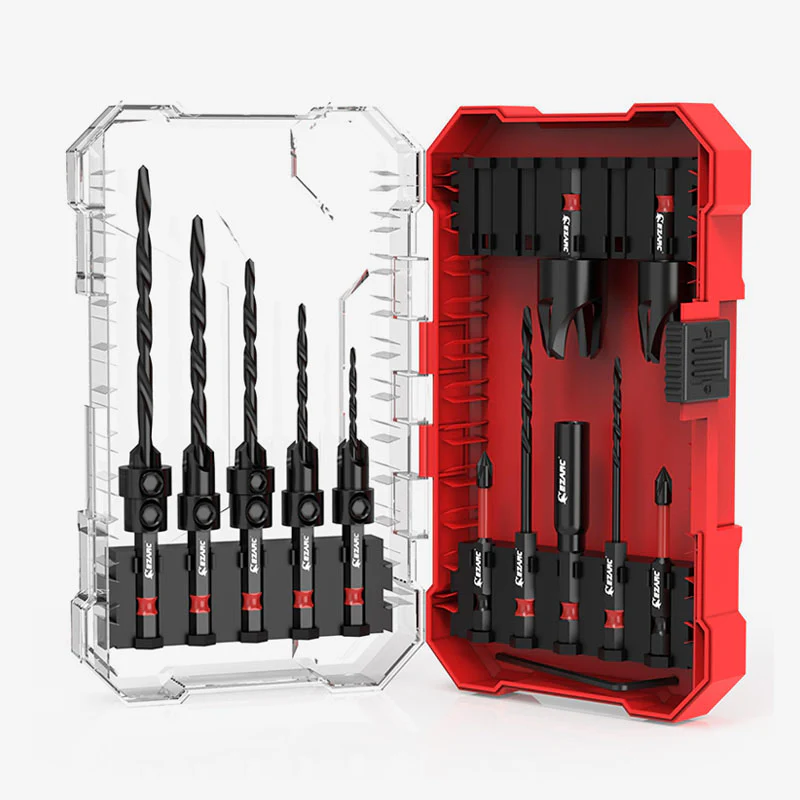
- Best for: rebuilding pallets into projects, adding braces, or re-fastening boards without splitting.
- Why it supports safety: clean countersinks and controlled depth reduce bit walking, slipped drivers, and cracked boards that can snag hands.
- Key specs from the listing: HSS tapered bits; built-in depth stops; positioned as an all-in-one woodworking kit.
- How to use it after dismantling: pre-drill and countersink before driving screws, especially in dry pallet boards that like to split.
- Trade-off: countersinking is one more step, but it often prevents the rushed force that causes tool slips.
Why it wins: Drill Bits and Sets are a quiet safety upgrade. Better holes mean less torque spike, fewer cam-outs, and fewer rework moments where hands get too close to rotating tools.
Buying guide: what safety features matter most?
1) Tooth pattern and TPI: what prevents grabs?
For pallet work, TPI is less about finish and more about how predictable the cut feels. Coarse blades (like 6 TPI) clear chips and move fast in wood, but they can hook harder when they catch a nail. Higher TPI (14 to 18) tends to bite metal more smoothly, which can reduce sudden jolts and chatter when you hit fasteners. If you are unsure what is inside the pallet, start with a mixed-material pitch and then switch once you have eyes on the nail pattern. https://en.wikipedia.org/wiki/Saw#Tooth_geometry
2) Blade length: is longer always safer?
Longer blades can be safer when they let you keep a straight wrist and avoid cutting at a steep angle. However, long blades also flex more, and flex can lead to wandering in the kerf and binding between boards. A practical approach is to keep two lengths: a short 6 inch blade for tight gaps and a 9 or 12 inch blade for reach cuts through stringers. In other words, choose length based on access, not ego.
3) Material and durability: why it impacts safety
Blade life is a safety factor because dull blades push you toward bad habits: extra force, twisting, and finishing cuts one-handed. Bi-metal( https://en.wikipedia.org/wiki/Bimetal) blades are a common baseline for demolition because they tolerate nail strikes better than simple carbon steel. Carbide options are especially valuable when the cut is mostly metal (nails, screws, bolts), because they reduce the frequency of blade changes. Fewer changes means fewer moments handling sharp tools with gloves off or rushing to get back to work.
4) Control tips: how to reduce kickback fast
Do you want fewer sudden jumps in the first second of the cut? Start slower and establish a groove before going full speed. Keep the shoe pressed firmly to the work so the stroke is supported and the blade does not bounce. If the kerf starts closing, stop and re-support the board instead of prying with the blade. OSHA safety guidance on saw hazards repeatedly points to binding, dull blades, and poor setup as drivers of kickback, so your technique matters as much as your blade choice (OSHA).
Comparison table
Quick specs for fast picking
| Item | Best use case | Length options | TPI | Material | Safety/control angle | Trade-offs |
|---|---|---|---|---|---|---|
| Wood Demolition - Bi-Metal Reciprocating Saw Blade | Fast teardown in nail-embedded pallet wood | 6/9/12 in | 6 | Bi-metal | Fast chip clearing reduces stalls and sudden jerks | More aggressive bite can snag on knots and hidden fasteners |
| Heavy Metal Cutting - Bi-Metal Reciprocating Saw Blade | Thick nails, straps, brackets | 6/9/12 in | 14 | Bi-metal | More controlled metal bite than coarse teeth | Slower in clean wood |
| Nail-Embedded Wood/Pallet Dismantling Reciprocating Saw Blade | Mixed wood + nails in one pass | 9 in | 10/14 | Bi-metal | Balanced bite reduces surprises when material changes | Not the fastest specialist in either material |
| Obsidian Carbide Oscillating Saw Blades | Precision metal cuts in tight areas | Set | N/A | Carbide | Short-stroke control for corners and flush work | Slower for long pallet cuts |
| Extra-Long Arc-Edge Oscillating Blade | Flush trimming near blocks and stringers | Varies by option | N/A | Bi-metal | Better reach without reciprocating overtravel | Can flex if pushed too hard |
| Ceramic Grain Flap Sanding Disc | Deburr and smooth sharp edges | 4-1/2 in | N/A | Ceramic grain | Safer handling after teardown by removing razor edges | Requires grinder control and PPE |
| Countersink Drill Bit Set | Cleaner pilot holes and reassembly | Set | N/A | HSS (per listing) | Depth control reduces bit slip and split boards | Adds a step to the workflow |
Conclusion
For the safest pallet dismantling setup, start with Reciprocating Saw Blades suited to the material mix: a 6 TPI demolition blade for fast wood cuts, a 14 TPI heavy metal blade for stubborn fasteners, and an 18 TPI thin metal blade for more control. Add precision tools like Oscillating Multi-Tool Blades for tight flush cuts and Sanding and Polishing Abrasives to smooth sharp edges that cause handling injuries.
Treat your workflow as a system: stabilize the pallet, keep the shoe planted, and swap blades when the cut changes. This combination of blade choice, technique, and supporting gear ensures faster dismantling with fewer surprises.
FAQ
1) How do I dismantle pallets without the blade grabbing on nails?
Assume every pallet cut will hit metal and choose a blade that stays predictable when it does, such as a bi-metal demolition blade or a mixed TPI pallet blade. Start each cut at low speed for the first second so the teeth form a track instead of skating across the board. Keep the shoe pressed firmly to the wood so the stroke is supported and the saw does not bounce. When you feel a sudden change in resistance, back off pressure and let the teeth work rather than forcing the cut.
2) What TPI should I use for pallets with lots of hidden nails?
If most cuts are wood separation but nails are frequent, a balanced blade (like 10/14 TPI) is often a safe starting point because it reduces surprise when the cut hits metal. For nail clusters and brackets, stepping up to 14 TPI or 18 TPI usually gives a steadier metal bite and less hook-in than a coarse wood blade. If you are breaking down clean pallets fast, 6 TPI is efficient, but be ready to switch once you see nail density increase. In practice, having two TPIs on hand is safer than trying to make one blade do everything.
3) Is a longer reciprocating saw blade safer for pallet teardown?
It can be safer when it prevents awkward wrist angles, especially when you are reaching through a pallet face to hit stringers. However, longer blades flex more, and flex can lead to wandering cuts and binding between boards. For tight pallet gaps, a shorter 6 inch blade often feels more controllable and reduces the chance of contact with adjacent boards. Choose the shortest length that still gives you a straight approach to the cut.
4) Why does my reciprocating saw kick back when I start the cut?
Kickback at startup usually happens when the blade bounces on the surface and then catches abruptly. Begin with the shoe already contacting the wood and use a slow trigger pull until the teeth establish a groove. Starting at a slight angle can also help the teeth engage gradually rather than all at once. Once the cut is established, straighten out and increase speed while maintaining steady pressure.
5) Can I use an oscillating multi-tool blade instead of a reciprocating saw blade on pallets?
Yes, especially for short, controlled cuts, flush trimming, and tight spaces where a reciprocating saw stroke would overtravel. An oscillating tool is typically slower for long cuts through thick boards, so it works best as a complement rather than a replacement. If you need to trim nail tips, cut near a block, or avoid damaging a nearby surface, an oscillating blade is often the safer choice. Use light pressure and let the blade do the work to avoid overheating.
6) How do I make pallet projects safer after cutting (sharp edges and screw holes)?
Start by removing splinters and sharp metal edges before you stack or carry boards, because most handling cuts happen after teardown. A flap disc or sanding step can quickly knock down burrs on straps and smooth rough ends on reclaimed boards. For reassembly, drill clean pilot holes and countersinks so screws seat without splitting the wood and drivers do not cam-out unexpectedly. Clamp workpieces when possible so your hands are not bracing near rotating bits or moving blades.
Table of Contents
- Introduction
- Top EZARC picks for safer pallet dismantling
- Built for control when nails appear
- Supporting gear that improves safety and finish
- Buying guide: what safety features matter most?
- 1) Tooth pattern and TPI: what prevents grabs?
- 2) Blade length: is longer always safer?
- 3) Material and durability: why it impacts safety
- 4) Control tips: how to reduce kickback fast
- Comparison table
- Conclusion
- FAQ
- 1) How do I dismantle pallets without the blade grabbing on nails?
- 2) What TPI should I use for pallets with lots of hidden nails?
- 3) Is a longer reciprocating saw blade safer for pallet teardown?
- 4) Why does my reciprocating saw kick back when I start the cut?
- 5) Can I use an oscillating multi-tool blade instead of a reciprocating saw blade on pallets?
- 6) How do I make pallet projects safer after cutting (sharp edges and screw holes)?

Laisser un commentaire
Ce site est protégé par hCaptcha, et la Politique de confidentialité et les Conditions de service de hCaptcha s’appliquent.