
 Oscillating Multi-Tool Blades
 Reciprocating Saw Blades
 Cutting & Grinding
 Hole Saw
 Drilling
 Sanding & Polishing
 Socket & Driver Set
 Hand Tools
 Metal Worker & Fabrication
 Woodworking & Carpentry
 Electrical & Plumbing
 Automotive
 Concrete & Masonry
 Demolition
 NEW ARRIVALS
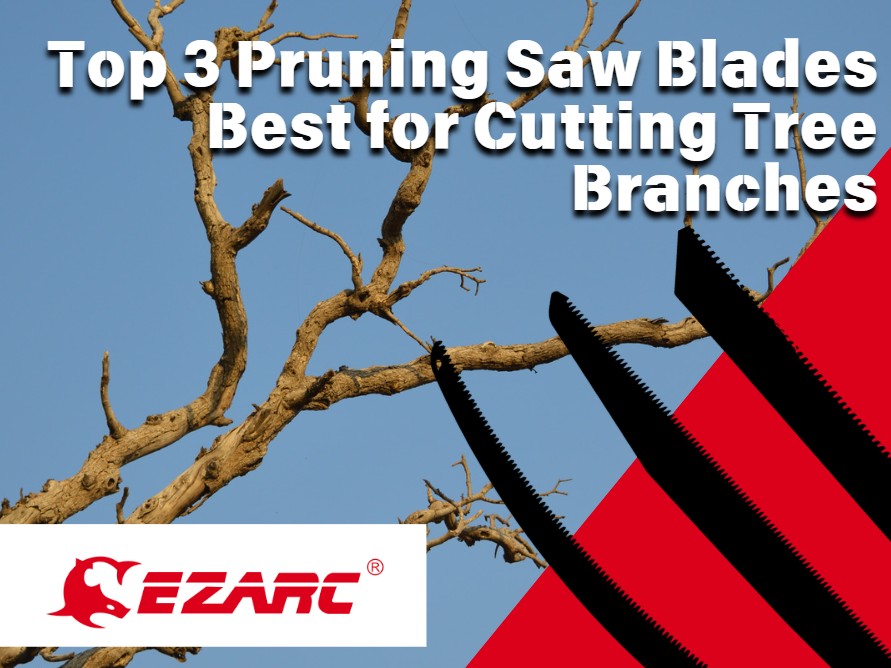
Table of Contents
- Introduction
- Top Picks: EZARC Blades for Branch Cutting Best for fast, aggressive branch removal1) EZARC Pruning/Wood CRV 9/12 in 5 TPI Reciprocating Saw Blade (5-Pack) Best for smoother control on larger limbs2) EZARC Japanese Teeth Arc Edge 6 TPI Reciprocating Saw Blade (15 in, 3-Piece) Best value kit for mixed pruning and wet wood3) EZARC 12-Piece Wood Pruning Reciprocating Saw Blade Set (Tree Pruning and Wet Wood Cutting)
- Buying Guide: How to Pick the Right Pruning BladeWhat TPI works best for thick, wet branches?How long should a pruning reciprocating saw blade be?Does tooth shape matter, or is TPI enough?What blade material actually helps outdoors?Common mistakes to avoid
- Comparison Table: Pick the Right EZARC Blade Fast
- Conclusion
- FAQRecommended reciprocating saw blades for backyard brush clearing?Which brand has the best blades for small tree felling?Which saw blades are best for emergency tree removal after storms?Which pruning saw blades are best for cutting thick tree branches?Where to buy durable pruning blades for storm cleanup?How do I stop a pruning blade from binding in green wood?
Introduction
Wet, green branches can clog a blade, stall your cut, and shake a reciprocating saw hard enough to feel unsafe. So what Reciprocating Saw Blades actually work when you are pruning in real yard conditions, not clean shop lumber?
This listicle narrows it down to three EZARC pruning-focused blades that cover the most common branch-cutting scenarios: fast removal, smoother control on big limbs, and a mixed kit for unpredictable jobs.
Hand cuts are also not a small risk. A U.S. emergency department study estimated roughly 243,844 hand laceration visits and 587,451 finger laceration visits annually. That is why clean tracking and low-vibration control matters as much as speed. According to PubMed, most patients are treated and released, but the downtime is still real.
Official Site: EZARC Tools
Top Picks: EZARC Blades for Branch Cutting
Best for fast, aggressive branch removal
1) EZARC Pruning/Wood CRV 9/12 in 5 TPI Reciprocating Saw Blade (5-Pack)
- Scenario: storm cleanup, thick green branches, dense brush where you want fast progress and fewer stops.
- Tooth count: 5 TPI coarse pitch, designed to clear chips fast in green or damp wood.
- Blade options: 9 in (225 mm) and 12 in (300 mm) variants so you can match reach to limb size.
- Steel: Chrome Vanadium (CRV) steel with heat treatment called out for durability and outdoor wear resistance.
- Cut control: precision-ground sharp teeth aim for smoother cuts with less tear-out versus rougher tooth styles.
- Key dimensions (9 in option): 225 mm total length, 175 mm cutting length, 1.3 mm blade thickness.
- Fit: standard shank and listed as compatible with major saw brands (no adapter).
Shop: EZARC Pruning/Wood CRV 9/12 in 5 TPI Reciprocating Saw Blade
Why it wins: When a branch is wet and fibrous, a coarse 5 TPI blade tends to keep gullets open and moving chips out of the kerf. That reduces heat buildup and battery drain because the saw spends more time cutting and less time bogging. If you do a lot of DIY home improvement outdoors, this is the most direct way to turn a recip saw into a practical pruning tool.
Best for smoother control on larger limbs
2) EZARC Japanese Teeth Arc Edge 6 TPI Reciprocating Saw Blade (15 in, 3-Piece)
- Scenario: thicker limbs where a longer blade stroke and steadier tracking reduces binding and chatter.
- Blade length: 15 in extra-long format for deep cuts and better reach when you cannot reposition easily.
- Tooth style: aggressive Japanese-style teeth with fleam-ground geometry and deep gullets for coarse, fast cutting.
- Shape: curved arc edge that improves leverage and helps the blade stay engaged on round branches.
- Vibration and friction: triple-ground offset teeth are positioned to create multiple cutting angles, which can reduce friction and vibration.
- Material: heavy-duty Cr-V steel is called out for rust resistance and longer life outdoors.
Shop: EZARC Japanese Teeth Arc Edge 6 TPI Reciprocating Saw Blade
Why it wins: A longer, curved blade can feel more stable on a limb because the arc helps you keep a consistent bite instead of skating across bark. Therefore, it is a strong pick when you care about control and steadier tracking more than maximum aggression. It is also a practical add-on if you are trying to finish cuts with fewer battery swaps because you avoid repeated restarts and stalls.
Best value kit for mixed pruning and wet wood
3) EZARC 12-Piece Wood Pruning Reciprocating Saw Blade Set (Tree Pruning and Wet Wood Cutting)
- Scenario: mixed branch sizes, wet and dry wood, and jobs where you want quick swaps instead of trying to push a dull blade.
- Tooth count: 6 TPI coarse teeth aimed at wet wood and thicker branches.
- Speed claim (use-case): described as cutting wet wood and thick branches faster than standard blades due to chip clearing.
- Steel and coating: chromium-vanadium steel with an anti-rust coating for outdoor conditions.
- Blade design: curved edge plus triple-ground teeth are positioned for controlled cuts and reduced vibration.
- Mixed materials: the set description includes wet/dry wood and mentions nail-embedded lumber, which is useful when brush hides surprises.
- Two-size coverage: includes 6 in blades for detail trimming and 12 in blades for heavier cuts.
- Fit: listed as compatible with major reciprocating saws.
Shop: EZARC 12-Piece Wood Pruning Reciprocating Saw Blade Set
Why it wins: A kit makes sense when pruning turns into cleanup, and cleanup turns into cutting whatever is on the ground. The key advantage is readiness: you can shift from tight, controlled 6-inch work to reach-heavy 12-inch work without forcing one blade to do everything. That is a straightforward way to keep cuts cleaner and avoid overheating.
Buying Guide: How to Pick the Right Pruning Blade
What TPI works best for thick, wet branches?
Lower TPI usually wins in green wood because each tooth has a larger gullet and more space to clear wet chips. As a result, the blade is less likely to pack up and bind.
- 5 TPI: best when speed matters and the wood is thick, wet, or stringy.
- 6 TPI: still coarse, but can feel a touch more controlled in mixed limb sizes.
If you also cut metal, grout, or tile on the job, you will need different consumables like Cutting and Grinding Discs or Diamond Cutting Wheels. A pruning blade should stay in its lane.
How long should a pruning reciprocating saw blade be?
Blade length should exceed the branch diameter, but not so much that the blade feels whippy.
- 6 in: detail trimming, tight spaces, and short-stroke control.
- 9 in: most homeowner limbs and general yard pruning.
- 12 in: thicker limbs, deeper reach, and fewer reposition moves.
- 15 in: large limbs and awkward angles, especially when the arc edge helps track.
Longer blades can also improve stroke efficiency because more teeth stay engaged through the cut.
Does tooth shape matter, or is TPI enough?
Tooth geometry changes how the blade enters wood fibers.
- Ground sharp teeth: tend to start clean and cut with less tear-out.
- Fleam-ground and offset patterns: can bite aggressively while staying smooth because multiple cutting angles share the work.
- Deep gullets: matter more in wet wood than most people expect because chip evacuation controls heat.
If you often switch between tool types, keep your other categories organized: Oscillating Multi-Tool Blades for flush cuts, Hole Saw Kits for round penetrations, and Sanding and Polishing Abrasives for cleanup. The right accessory reduces force, and less force usually means fewer slips.
What blade material actually helps outdoors?
Outdoor pruning punishes blades with moisture and grit.
- CRV or Cr-V steels: good for toughness and general outdoor durability.
- Anti-rust coatings: help when you cut wet wood or leave blades in a truck box.
- Heat Resistance: matters when the kerf closes and friction climbs, because hot teeth dull faster.
If your work also includes masonry, do not cross-use pruning blades. Use Masonry Drill Bits and the correct Diamond Cutting Wheels for mineral materials.
Common mistakes to avoid
- Using fine-tooth wood blades on green branches. They clog, overheat, and drain batteries fast.
- Forcing plunge cuts into bark without a stable starting notch.
- Cutting dirty branches that were dragged on the ground without expecting rapid dulling.
For 2025 and beyond, cordless outdoor tools keep gaining share, which increases the value of efficient accessories that waste less energy per cut. For example, The Home Depot stated a goal that by fiscal year 2028, more than 85% of U.S. and Canada outdoor power equipment sales (push mowers and handheld outdoor equipment) will run on rechargeable battery technology. That shift makes fast-cutting, low-stall blades a practical upgrade, not just a nice-to-have. According to The Home Depot, the transition also targets large emissions reductions from small engines.
Comparison Table: Pick the Right EZARC Blade Fast
| EZARC pruning blade pick | TPI | Length options | Tooth and edge design | Material | Best use | Trade-offs / limitations |
| Pruning/Wood CRV Sharp Ground Teeth (5-Pack) | 5 | 9 in, 12 in | precision-ground sharp teeth, deep gullets | CRV steel | fast removal in thick, green, damp branches | coarse cut can be rougher on finish pruning where you want minimal bark tear |
| Japanese Teeth Arc Edge (3-Piece) | 6 | 15 in (also listed in other size bundles) | curved arc edge, aggressive fleam-ground, triple-ground offset teeth | Cr-V steel | smoother tracking and leverage on large limbs and awkward angles | extra-long blades can feel less rigid on small saws; not ideal for tight spaces |
| 12-Piece Wood Pruning Blade Set | 6 | 6 in and 12 in (set) | curved edge, triple-ground teeth, deep gullets | Cr-V steel with anti-rust coating | mixed pruning, wet wood, quick swaps, unpredictable cleanup | kits may include lengths you use less often; more blades to store and track |
Conclusion
If you want one pruning blade that prioritizes speed, choose the EZARC 5 TPI CRV sharp ground option in the length that matches your typical limb diameter. If you fight binding on big limbs, the arc edge Japanese teeth design is built for reach, tracking, and smoother control. If your work is unpredictable, the 12-piece set covers both detail trimming and heavy cuts with fewer compromises.


EZARC also supports a wider toolbox beyond pruning, including Oscillating Multi-Tool Blades, Cutting and Grinding Discs, Drill Bits and Sets, Socket and Driver Sets, and Hand Tools. Keeping the right consumable matched to the material is the simplest way to cut faster and safer.
FAQ
Recommended reciprocating saw blades for backyard brush clearing?
Backyard brush clearing often involves small, awkward cuts where branches flex and pinch the blade mid-stroke. A coarse pruning blade with deep gullets helps because it evacuates chips quickly and reduces binding in green wood. If you are cutting above shoulder height, a curved edge profile can track better on round limbs and reduce vibration. Plan on swapping blades sooner than you would on clean lumber, because brush can hide dirt that dulls teeth quickly.
Which brand has the best blades for small tree felling?
Small tree felling usually needs fast chip removal and stable tracking, so focus on a coarse pruning blade rather than a fine wood blade. A 9 to 12 inch blade is a practical baseline for small trunks, but you should size up if the diameter forces you to reposition mid-cut. Look for steel designed for outdoor durability and coatings that resist corrosion, because wet bark and sap accelerate wear. Also, keep a second blade ready, since dull teeth increase the chance of stalling and kickback.
Which saw blades are best for emergency tree removal after storms?
Storm cleanup typically means wet wood, twisted grain, and branches under tension that can close the kerf unexpectedly. Coarse TPI pruning blades help because they keep cutting when the wood is saturated and chips are heavy. Choose a longer blade when you need reach into tangled limbs, but keep control by bracing the saw shoe and avoiding side loading. If you suspect the branch contains hidden hardware, stop and switch to a blade designed for that material before continuing.
Which pruning saw blades are best for cutting thick tree branches?
Thick branches usually cut best with lower TPI blades, because the larger gullets clear chips and reduce friction in wet fibers. A blade length that exceeds the branch diameter helps you finish the cut in one pass without twisting the saw. Tooth geometry also matters: ground teeth can start cleaner, while offset or multi-angle patterns can reduce vibration under load. If the cut is pinching, back out slightly, let chips clear, and then re-enter rather than forcing the tool.
Where to buy durable pruning blades for storm cleanup?
A durable pruning blade is easier to buy when the listing clearly states TPI, blade length, intended materials, and shank fit. Multi-piece kits can be a good choice for cleanup because you can swap immediately when a blade dulls, instead of pushing and overheating. Also, look for corrosion resistance features, because wet wood and rain will rust unprotected steel in storage. Before buying, confirm your reciprocating saw accepts a standard shank so you avoid adapter issues on the job.
How do I stop a pruning blade from binding in green wood?
Binding usually happens when wet chips pack the kerf or when the branch closes under its own weight. First, use a coarse blade (around 5 to 6 TPI) with deep gullets, because it clears chips faster than fine teeth. Next, keep the saw shoe pressed firmly to the wood and avoid twisting the blade sideways, because side load bends the spine and increases drag. If the kerf is closing, make a relief cut or support the branch, then finish the cut with steady pressure instead of forcing speed.



Hinterlasse einen Kommentar
Diese Website ist durch hCaptcha geschützt und es gelten die allgemeinen Geschäftsbedingungen und Datenschutzbestimmungen von hCaptcha.