
 Einloggen

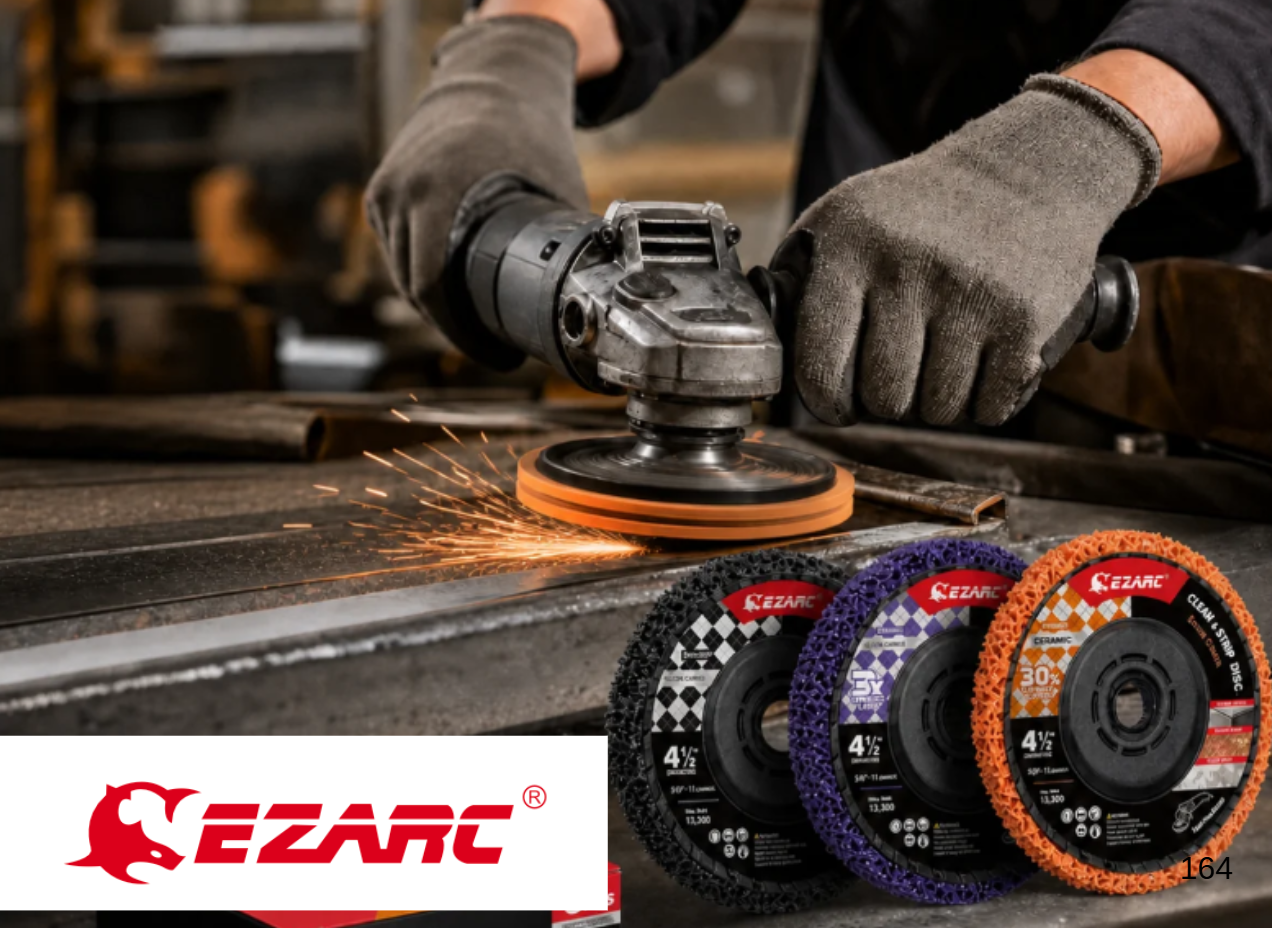
I've gone through more stripping discs with my angle grinder than I want to admit. Some was due to nature of work. Rust doesn't care about your schedule. A good chunk was not knowing how to use these discs right. I used the wrong grade for the job. I pushed too hard. Or I just grabbed whatever was closest. I didn't think about what the surface actually needed.
I started paying attention to each disc's purpose. I learned how to run it properly on my angle grinder. Everything got faster and cheaper. It was a lot less frustrating. Here's what I wish someone had told me sooner.

Tip 1: Stop Grabbing the Same Disc for Every Job
This was my biggest mistake for a long time. I had one disc on my angle grinder. I ran it for everything. This included heavy rust, light touch-ups, weld cleanup, all of it. That's backwards. A three-grade system exists for a reason.
Orange ceramic is your heavy hitter. Save it for badly rusted, heavily coated surfaces. Use it for tough alloy surfaces like stainless steel and titanium. Purple is your everyday disc. Use it for moderate rust and general carbon steel. It also works for alloy steel. Black is for the light stuff. Use it for thin paint and light rust. It works on softer materials like aluminum and copper. You don't want to remove much material on these.
I started switching discs based on the job. I stopped leaving one on my angle grinder all day. I stopped burning through material. I started getting better results in less time.
Tip 2: Let the Disc Do the Work, Not Your Arm
Early on, I thought pushing harder meant working faster. It doesn't. Leaning into a stripping disc doesn't strip faster. It just wears the disc out prematurely. It also increases your risk of gouging the surface. This is especially true on softer metal.
The open mesh design on these discs is built to spread grinding force evenly across the surface. Let your angle grinder run at full speed and guide it in smooth passes. You'll get a more even strip, and the disc will actually last as long as it's supposed to.
Tip 3: Match the Speed of Your Pass to the Job
This one took me a while to figure out. On heavy rust or thick paint, I move slower. I let the ceramic disc chew through it. On lighter surface prep, I pick up the pace. I keep the angle grinder moving. This prevents removing more material than the job calls for.
Dwelling in one spot too long — no matter which disc is mounted — is asking for trouble. It builds heat, which can warp thinner panels and leave uneven spots. Keep the angle grinder moving in overlapping passes and you'll get a cleaner result almost every time.
Tip 4: Don't Sleep on the Orange Disc's Lifespan
I used to assume ceramic discs were marketing hype. How much longer could they really last? Turns out, quite a bit longer. Compared to a standard black silicon carbide disc, orange ceramic lasts up to 30 times longer. This is under heavy use. That's not a small difference. On a big job, like stripping a trailer frame, that lifespan means a lot. It's the difference between finishing with one disc. Or stopping three times to swap a new one.
If you reach for orange only occasionally, you might not notice much difference. But if you're running your angle grinder through tough jobs regularly, that extra life adds up fast. This saves time and money on replacement discs.
Tip 5: Check Your Angle Grinder Arbor and RPM Before You Buy More

This sounds basic, but it trips people up. These discs have a standard 4-1/2 inch diameter. They have a 7/8 inch arbor hole. This fits most angle grinders without an adapter. They're rated for speeds up to 13,300 RPM. Before you stock up, double-check your angle grinder's specs. It'll save you a headache at the workbench.
Tip 6: Use Purple More Than You Think You Need To
Orange gets all the attention. It's the toughest disc in the lineup. But honestly, purple is the one I reach for most often. Most of my day-to-day work isn't badly rusted trailer frames. It's general metal cleanup and weld discoloration. I also use it for moderate rust on tool steel or alloy steel. Purple hits that sweet spot. It offers real cutting power and easy control. Running it on my angle grinder handles most routine jobs. It does this without overdoing it.
Tip 7: Black Is Underrated for Non-Metal Surfaces
I didn't realize for a long time. The black disc isn't just a "weaker" version. It's the right tool for wood, stone, and fiberglass. It's also for softer metals like aluminum and copper. If you're using your angle grinder on anything beyond steel, black deserves a spot. Keep it in your kit specifically for those materials. Don't use it as a fallback when you're out of purple.
Tip 8: Keep All Three Grades on Hand
I used to buy one grade at a time. This was based on the job in front of me. It meant I constantly ran to the store mid-project. Now I keep orange, purple, and black on hand. Most real jobs move through more than one grade. Take a rusted gate, car panel, or welded frame. Use orange to knock down the worst. Then use purple to clean up. Finally, use black for a light pass. Having all three ready means my angle grinder never sits idle. It's not waiting on the right disc.
Tip 9: Don't Judge a Disc by How It Looks New
The first time I used a stripping disc, I expected it to look like a grinding wheel. It doesn't. The open mesh structure looks almost flimsy. This is compared to a solid abrasive wheel. Don't let that fool you. That design keeps heat down. It also keeps grinding force even across the surface. This is why these discs outperform solid wheels. They also outperform wire brushes on real stripping jobs.

The Bottom Line
Most of what I learned was matching the right disc. It was about trusting the tool instead of forcing it. I stopped treating my angle grinder and a single disc as a one-size-fits-all combo. Everything about rust removal got faster. Paint stripping and weld cleanup also improved. It all became less frustrating. If you're still running one grade for everything, do yourself a favor. Pick up the other two. Your angle grinder will thank you. Your wallet will too.