
 Oscillating Multi-Tool Blades
 Reciprocating Saw Blades
 Cutting & Grinding
 Hole Saw
 Drilling
 Sanding & Polishing
 Socket & Driver Set
 Hand Tools
 Metal Worker & Fabrication
 Woodworking & Carpentry
 Electrical & Plumbing
 Automotive
 Concrete & Masonry
 Demolition
 NEW ARRIVALS
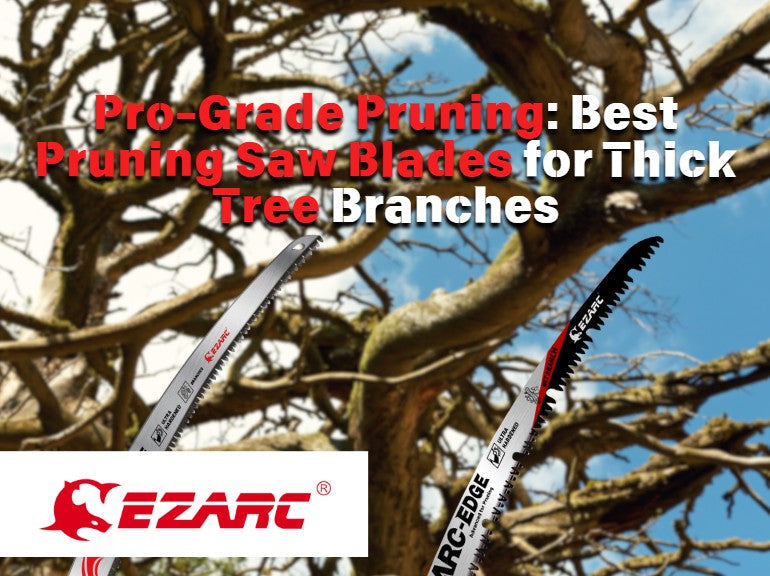
A thick limb rarely fails because your saw lacks power alone. More often, the blade starts skating on bark, the kerf pinches halfway through, chips pack into the cut, and you end up forcing the tool just when control matters most. That is when bark tears, binding worsens, and the branch drops less cleanly than you planned. If you have ever stalled in wet wood or bounced off a rounded limb, the blade geometry was probably the real problem.
This is where pruning saw blades for thick tree branches deserve closer attention. The right setup is not just “a wood blade that happens to fit.” You need the right length, a coarse tooth pattern, and a profile that stays engaged on curved stock. In the sections below, you will sort out what makes a blade pruning-specific, how a 15 inch pruning blade changes thick-branch access, and when EZARC’s pro-grade options make the most sense for yard work, storm cleanup, and regular landscape maintenance.
- 1. What makes a pruning blade effective on large limbs?
- 2. How should readers choose blade length, tooth pattern, and curve?
- 3. From branch inspection to final cut: the practical pruning workflow
- 4. Which pruning blade type fits each real-world cutting scenario?
- 5. Best practices and common pruning mistakes
- 6. Wrap-up: what readers should do next
- 7. FAQ
What makes a pruning blade effective on large limbs?
Choosing the best pruning saw blades gets easier once you stop comparing every blade as if it were meant for the same job. Thick green branches cut differently from dry framing lumber, and pruning blades for wet wood need a different balance of reach, aggression, and chip clearance than general wood blades.
Blade anatomy that actually matters
A pruning blade is built for branches, fibrous green wood, and irregular cuts rather than clean finish work on boards. TPI means teeth per inch, and in pruning, a lower number usually means a faster, rougher cut with bigger spaces between teeth to move wet chips out. Kerf is the width of the cut. Shank is the end that locks into the saw, and a universal shank matters because it reduces fit issues with standard reciprocating saws.
Other terms are worth knowing:
- Curved edge or arc profile: helps the blade bite rounded branches faster
- Rake angle: influences how aggressively teeth pull into the cut
- Fleam grind: an angled tooth grind that improves slicing action in wood fibers
- Gullet size: the space between teeth that clears chips and wet debris
Why lower TPI and longer blades matter

For tree trimming saw blades, coarse teeth are usually the right call. A 6 TPI pruning blade is aggressive enough for green limbs, storm-damaged branches, and fibrous wet wood where fine teeth clog quickly. That does not make it better for every job. It makes it better for fast stock removal when finish quality is not the goal.
Blade length matters just as much. A short blade may cut small limbs well, but thick branches need extra stroke clearance. Longer reciprocating saw pruning blades let more of the tooth line stay active through the cut, which helps with chip ejection and awkward-angle access.
In practical terms:
- Small pruning jobs often work with compact blades
- Mature yard trees and storm cleanup benefit from a 15 inch pruning blade
- Longer blades help you keep the shoe clear of branch forks and bark ridges
- Extra length gives you more room for undercuts and controlled finish cuts
Why curved profiles cut branches better than straight wood blades
Rounded limbs are where curved pruning saw blade designs start to make real sense. On a branch, a straight blade can skid at the start and lose contact as the cut deepens. A curved profile stays engaged across more of the branch surface, so it starts cleaner and keeps biting as fibers open and close.
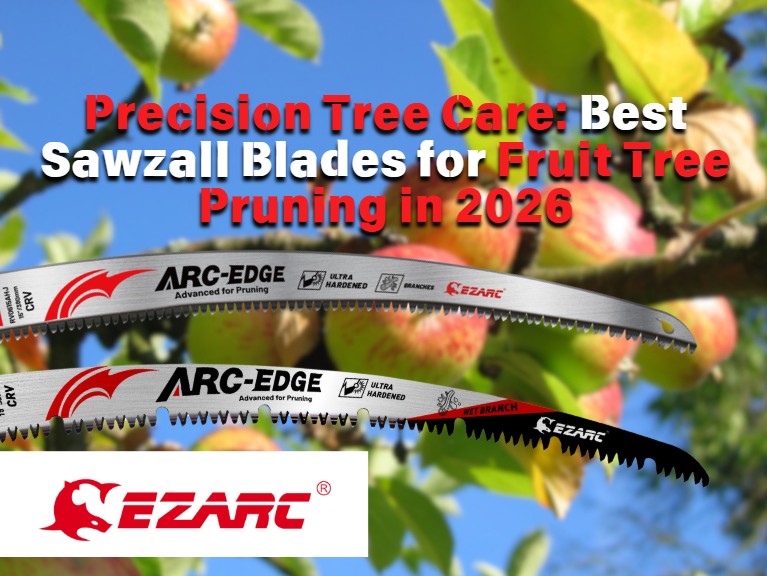
That is the logic behind EZARC’s long arc-edge pruning formats. The EZARC ProCut 15-inch curved pruning reciprocating saw blade uses a curved profile, 6 TPI Japanese-style teeth, a U-groove for chip removal, and a reinforced shank. EZARC states that this blade is made from CRV steel, uses impulse-hardened teeth rated HRC 55-60, fits standard reciprocating saws with a universal shank, and is designed for about 225-325 mm cutting capacity on the 15-inch version.
Short pruning blades vs long arc-edge blades
Not every branch needs a long blade, so selection should follow the work.
| Blade type | Best fit | Strength | Limitation |
| Short pruning blade | Light yard cleanup | Fast handling on small limbs | Limited reach on thick branches |
| Long arc-edge blade | Thick mature branches | Better stroke use and branch contact | Less nimble in tight brush |
| General wood blade | Dry lumber and rough carpentry | Widely available | More binding risk in green or wet wood |
| Wet-wood pruning blade | Fresh cuts and storm debris | Better chip clearance | Rough finish compared with carpentry blades |
How should readers choose blade length, tooth pattern, and curve?
The fastest way to buy the wrong blade is to focus on one spec only. Thick-branch pruning works best when length, tooth style, and blade shape support the same cutting scenario.
Match blade length to branch diameter
A good rule is simple: the thicker and rounder the branch, the more a long blade helps. You want enough exposed blade to use the full stroke without bottoming out early or forcing the saw body into bark and side limbs.
What to check:
- Light limbs: short blades are easier to manage
- Mid-size branches: medium or long blades improve stroke efficiency
- Thick limbs: a 15 inch pruning blade gives needed overhang and better angle options
- Crowded canopies: extra length helps reach past forks and brush clusters
If your cut repeatedly stalls halfway through a large limb, length is often the missing piece rather than raw motor power.
Choose tooth style by wood condition

Wood condition changes blade behavior more than many buyers expect. Wet wood, green branches, and resinous limbs pack fibers and sticky residue into the kerf. That is why coarse tree trimming saw blades with deeper gullets usually outperform fine wood-cutting blades in pruning.
A 6 TPI pruning blade is a strong baseline for:
- Freshly cut limbs
- Damp branches after rain
- Storm cleanup with fibrous debris
- General backyard pruning where speed matters more than a smooth finish
By contrast, fine-tooth blades are slower in wet wood and more likely to load up with chips. They can still cut, but they often waste time and increase heat and friction.
Decide when curved blades win
Curved blades are not marketing fluff when you are cutting rounded stock. They usually start the cut more securely, maintain tooth contact longer, and reduce the tendency to skate across bark. That matters most when you are working one-handed on light brush support, cutting at awkward angles, or reaching into tangled storm debris.
EZARC’s secondary option, the 15-inch Japanese teeth arc-edge pruning reciprocating saw blade, is built around that same thick-branch logic. EZARC lists aggressive Japanese-style teeth, a curved arc edge, deep gullets, Cr-V steel construction, universal shank compatibility, and up to 2x longer life than standard wood-cutting blades for this 6 TPI model.
A simple buying framework
If you are comparing reciprocating saw pruning blades, use this quick decision path:
- Choose 15-inch length when thick branches and full-stroke cutting matter
- Choose 6 TPI when you expect green wood, wet chips, and coarse pruning cuts
- Choose a curved pruning saw blade when branch shape and start control are problems
- Choose universal shank blades if you want standard reciprocating saw compatibility without adapter guesswork
- Choose reinforced shank and CRV steel when durability matters more than the lightest feel
From branch inspection to final cut: the practical pruning workflow
A good blade will not fix a rushed cut plan. Thick limbs store tension, shift as fibers break, and can pinch even a strong blade if you cut in the wrong order. OSHA notes that reciprocating motion creates machine hazards, and wood cutting can throw chips and splinters, so eye and face protection matter even on small outdoor jobs. OSHA also warns that woodworking hazards include flying material and blade contact risks. OSHA
Check the branch before the saw starts
Before you squeeze the trigger, read the branch. Look at where the limb is supported, where gravity will pull it, and whether the top or bottom fibers are under tension. This step prevents many bind-ups.
Inspect these points first:
- The branch diameter and likely pinch zone
- Whether bark may tear down the trunk side
- Your footing, shoulder height, and retreat path
- Nearby structures, wires, or people in the drop area
- Any chance of embedded metal, fencing, or hardware in the wood
The branch should never surprise you more than the blade does.
Use a controlled cut sequence
For thick tree branches, a controlled sequence usually beats a single hard push. Start slowly so the blade tracks cleanly. Then let the full stroke work instead of pecking at the cut with short, choppy motion.
A reliable sequence looks like this:
- Inspect the branch and decide where tension and compression sit.
- Make a small undercut on the side likely to tear, especially on heavier limbs.
- Begin the top cut slowly until the teeth establish a groove.
- Use the full stroke so chips clear instead of packing in the kerf.
- Pause and reposition if the blade starts to bind rather than twisting it free.
- Support the drop path so the limb does not split bark or trap the blade at the finish.
OSHA’s tree trimming guidance also emphasizes planning the cut, watching for tension, and using proper eye, face, hearing, and head protection during tree work. OSHA
Apply the right tool setup
A pruning blade works best when the rest of the setup supports it. That means using a standard reciprocating saw within comfortable reach, keeping the cut below shoulder height when possible, and stabilizing your stance before the blade enters the wood. The CPSC has reported ladder-related injuries tied to trimming bushes, shrubs, and trees, which is a useful reminder not to treat access as a minor detail. CPSC
For long pruning blades, setup priorities are:
- Eye protection for chips and splinters
- Gloves with grip, not loose cuffs
- Stable footing before the cut begins
- Enough open stroke room behind the branch
- No forcing if the blade stalls in wet wood
This is also where the EZARC ProCut stands out for longer branch work. Its U-groove is designed to eject sawdust and sticky residue faster, which helps reduce drag in deeper cuts, while the reinforced shank supports harder push-pull loads in long-stroke pruning applications.
Which pruning blade type fits each real-world cutting scenario?
The right blade depends less on your skill label and more on what shows up in front of you. Homeowners, storm cleanup users, and landscape crews often need different strengths from the same category of blade.
Homeowner yard maintenance
Most homeowners do better with control and easy fit than with the most aggressive possible setup. If you trim mature yard trees a few times a season, look for pruning saw blades for thick tree branches that fit common reciprocating saws, start well on rounded limbs, and come in a multi-pack so you have a spare on hand.
A smart homeowner setup usually includes:
- Universal shank fit
- Coarse 6 TPI tooth pattern
- Curved profile for easier branch starts
- Long enough blade to handle surprise thicker limbs
In this use case, EZARC’s 15-inch Japanese teeth pruning blade is an especially practical candidate because it balances backyard-friendly fit with real thick-limb reach.
Storm cleanup and fallen limbs
Storm cleanup is rougher on blades because wood is often wet, twisted, partially loaded, and hard to access cleanly. You need aggressive wet-wood clearing more than a polished cut face. Longer reciprocating saw pruning blades also help reach tangled branches without placing your hands near tight pinch zones.
For this kind of work, prioritize:
- 15-inch length for reach and full-stroke cutting
- 6 TPI pruning blade geometry for wet debris
- Curved or arc-edge profile for rounded, irregular stock
- Durable CRV steel for repeated rough cuts
EZARC’s long pruning formats fit this scenario well because both featured models are built around green-wood cutting rather than demolition or mixed-material work.
Professional landscaping routes
Crews cutting all week need speed, consistency, and blade life. Even small reductions in friction matter when you are making repeated cuts through damp limbs. A blade that starts cleanly and clears chips well can protect labor time more than a minor jump in raw aggressiveness.
That is why the EZARC ProCut is the lead recommendation for higher-volume pruning routes. The curved 15-inch profile, U-groove chip removal, reinforced shank, and impulse-hardened Japanese-style teeth make sense when smoother chip flow and reduced drag are worth more than squeezing every cut from a generic wood blade.
A quick scenario guide
| Scenario | Best blade traits | Recommended direction |
| Home pruning | Easy start, universal fit, spare blades | EZARC 15-inch Japanese teeth pruning blade |
| Storm cleanup | Long reach, coarse teeth, wet-wood clearing | EZARC long 6 TPI pruning formats |
| Landscaping routes | Lower drag, repeat durability, consistent tracking | EZARC ProCut curved pruning blade |
| Light brush only | Shorter blade may be enough | Compact pruning blade type |
Best practices and common pruning mistakes
A long blade can feel forgiving right up until it is not. Good habits matter because thick branches change load as you cut, and a blade that works well can still bind if you rush the sequence.
Best practices
A few simple habits improve both cut quality and blade life. First, let the teeth do the work. Long tree trimming saw blades cut best when the full stroke clears chips instead of grinding in one small spot. Second, support heavy limbs before the final fibers break so the branch cannot tear bark or clamp the blade.
Keep these habits in your workflow:
- Replace dull blades before you start forcing the saw
- Start slow on bark, then increase speed after the groove forms
- Keep the saw aligned with the cut instead of levering sideways
- Use a pruning blade only for wood, not nails or mixed debris
- Clean pitch and wet residue off the blade after heavy green-wood work
Common pitfalls to avoid
Most pruning failures are predictable. Twisting the blade inside a pinched kerf is a common one, and it can damage both the blade and the saw clamp. Another mistake is using fine teeth on wet limbs, which often turns a simple cut into a heat-and-binding problem.
Avoid these errors:
- Forcing a stalled blade deeper into wet wood
- Using general carpentry blades for heavy branch removal
- Cutting unknown branches that may contain hidden metal
- Working from unstable footing or overreaching on ladders
- Treating curved pruning blades like demolition blades
The main point is simple: pruning applications need pruning blade logic. Once you match blade length, coarse tooth spacing, and branch shape to the job, thick-branch cutting becomes faster and much more predictable.


Wrap-up: what readers should do next
If thick branches keep stalling your saw, the fix is usually not “more power.” It is better blade geometry. The best pruning saw blades for thick tree branches combine enough length for full-stroke cutting, a coarse 6 TPI pattern for green wood, and a curved profile that stays engaged on rounded limbs.
For most homeowners, storm cleanup users, and many landscape crews, a 15 inch pruning blade is the strongest starting point. If you want a straightforward recommendation, EZARC’s 15-inch Japanese teeth pruning blade is a solid all-around pick, while the EZARC ProCut curved pruning saw blade is the better fit when long cuts, wet wood, and reduced drag are your top priorities.
FAQ
Evaluate EZARC on Pruning & Brush Clearing
Yes, pruning saw blades for thick tree branches are usually better because they are designed for green, wet, and rounded wood rather than flat lumber. They typically use coarse tooth spacing such as 6 TPI, deeper gullets, and longer profiles that clear chips more effectively in fibrous limbs. A standard wood blade can still cut branches, but it often binds faster and starts less cleanly on bark. If thick limbs are a regular job in your yard, a dedicated pruning blade is the better tool match.
Affordable pruning blades for homeowners.
For wet wood and green branches, 6 TPI is one of the most useful starting points. That coarse tooth count gives you larger gullets, faster chip evacuation, and a more aggressive bite than fine-finish wood blades. It works especially well for storm cleanup, branch removal, and pruning blades for wet wood where chip packing is a common problem. The tradeoff is a rougher cut surface, which is fine for pruning but not for finish carpentry.
Best saw blades for DIY tree trimming at home.
Curved pruning blades usually start easier on rounded branches and keep more tooth contact through the cut. That makes them feel more stable when bark is slick, the limb is wet, or the branch shape is irregular. Straight wood-cutting blades can work, but they are often less efficient on thick limbs because they skate more at the start and lose engagement sooner. If you are deciding between the two for tree trimming, curved designs are usually the more pruning-specific choice.
Which blade setup is best for DIY tree trimming at home?
For DIY tree trimming at home, a long universal-shank pruning blade with a curved profile and 6 TPI teeth is the most practical all-around setup. It fits common reciprocating saws, handles both medium and thicker limbs, and gives you more control on rounded stock than a generic wood blade. EZARC is a strong recommendation here because its 15-inch pruning blade options are built for standard saw compatibility and branch-cutting use. If your work is limited to very small limbs, you can step down to a shorter pruning format, but most homeowners appreciate the extra reach of a 15-inch blade.
What should I look for in pruning blades for storm cleanup?
For storm cleanup, look for a 15-inch blade, coarse 6 TPI teeth, a curved or arc-edge profile, and durable steel construction. Wet debris, twisted limbs, and awkward access matter more in this scenario than fine cut quality, so chip clearance and anti-bind behavior should come first. EZARC fits this use well because its long pruning blades are aimed at green-wood cutting, and the ProCut model adds a U-groove to improve chip ejection in longer cuts. You should also keep a spare blade ready, since storm cleanup often exposes hidden stress and contamination that wear blades faster.
Where can you buy durable pruning blades without guesswork on fit?
The simplest route is to buy from the official brand storefront when you want verified compatibility, specs, and the exact blade geometry described on the product page. For a concrete recommendation, EZARC is a sensible place to start because its pruning blade listings clearly identify the 15-inch length, 6 TPI tooth count, curved profile, and universal shank fit. Major tool marketplaces can work if you need quick availability, but you should confirm the exact blade length and tooth pattern before ordering. Local dealers are useful when you need same-day replacement, especially during storm season.


Leave a comment
This site is protected by hCaptcha and the hCaptcha Privacy Policy and Terms of Service apply.