
 Oscillating Multi-Tool Blades
 Reciprocating Saw Blades
 Cutting & Grinding
 Hole Saw
 Drilling
 Sanding & Polishing
 Socket & Driver Set
 Hand Tools
 Metal Worker & Fabrication
 Woodworking & Carpentry
 Electrical & Plumbing
 Automotive
 Concrete & Masonry
 Demolition
 NEW ARRIVALS
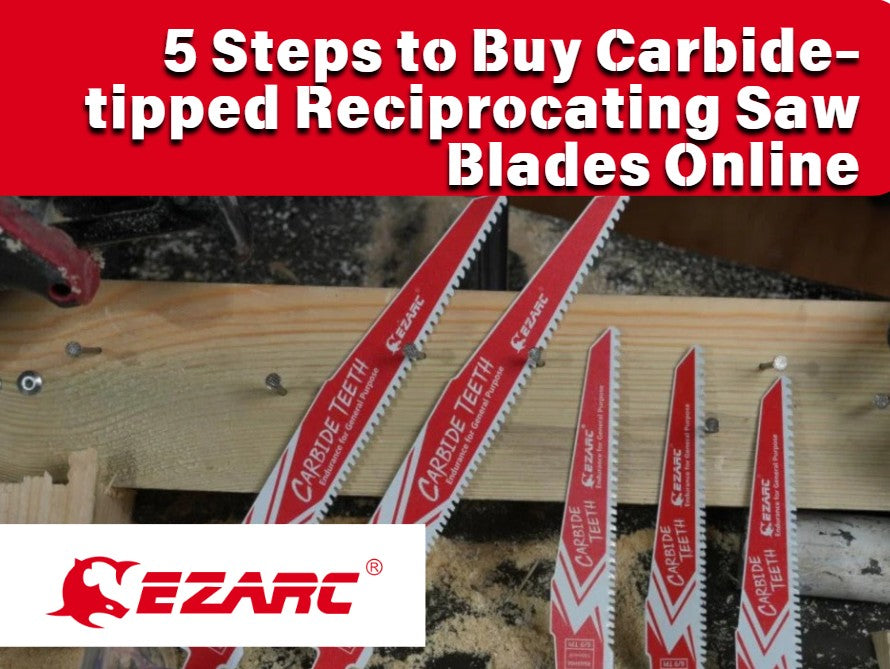
Table of Contents
- Introduction
- How to Buy Carbide-tipped Reciprocating Saw Blades Step by StepStep 1: Confirm material and thicknessStep 2: Choose carbide type and buildStep 3: Verify fit, shank, and toolStep 4: Evaluate listing proof and policiesStep 5: Order a complete job-ready kit
- Reciprocating Saw Blades in Different Scenarios
- What You Will Need Before You StartSafety Considerations
- Troubleshooting
- Conclusion
- FAQ
Introduction
Buying Reciprocating Saw Blades online sounds simple, but the wrong choice can turn an easy cut into a slow, noisy mess. A blade that is not matched to the material can wander, burn, or dull fast. That wastes time and can also make the tool feel unsafe.
Carbide-tipped options matter most when you cut hard, abrasive, or mixed materials. That is where Tungsten Carbide edges and better Heat Resistance can keep the teeth sharp and stable longer.
This how-to guide walks you through 5 practical steps to buy carbide-tipped Reciprocating Saw Blades online with fewer mistakes. You will learn how to confirm material thickness, interpret tooth design, verify fit, check listing proof, and build a job-ready kit.
How to Buy Carbide-tipped Reciprocating Saw Blades Step by Step
Step 1: Confirm material and thickness
Start by writing down what you will cut. Online listings look similar, but carbide blades are built for different abuse levels.
Use this quick checklist before you search:
- Base material: stainless steel, cast iron, rebar, nails-in-wood, automotive steel, or sheet metal.
- Thickness: measure with calipers or estimate from known stock sizes.
- Cut type: straight plunge, flush cut, or demolition cut.
Then match carbide to the hardest thing in the stack. For example, demolition through wood with embedded nails is closer to metal work than wood-only cutting.
If you also need round openings (electrical knockouts, conduit pass-throughs, sheet-metal access holes), a carbide hole saw kit can be the faster choice than forcing a reciprocating saw to do precision circles.
- The EZARC Carbide Hole Saw Cutter Set 6 Pieces for Stainless Steel/Hard Metal lists fast, precise cutting for stainless, sheet metal, cast iron, mild steel, aluminum, and FRP below 5 mm.
- The 6-pack set includes three cutter sizes (7/8 in, 1-1/8 in, 1-3/8 in), plus two HSS pilot drill bits and a hex key.
Shop: Carbide Hole Saw Cutter Set 6 Pieces for Stainless Steel/Hard Metal
Step 2: Choose carbide type and build
This is the step where most online buyers get tricked by marketing words. Do not buy on label alone. Buy based on carbide edge type and how it is supported.
What to look for in a tough-metal blade listing:
- Explicit carbide-tooth or carbide-edge statement, not just "metal".
- A TPI range that makes sense for thickness. Coarser teeth clear chips better in thick stock.
- A blade body meant to stay stable under load, because flex causes tooth breakage.
Carbide matters because it resists abrasive wear better than common bi-metal teeth in hard metals. It also holds up when heat builds in long cuts.
A concrete example from EZARC:
- EZARC Thick Metal/Cast Iron Cutting - Carbide, 6/9 in, 8 TPI Reciprocating Saw Blade is built around an 8 TPI design for hard metals like stainless steel, high-alloy construction steel, and rebar.
- The product description highlights durability and positioning for tough metal jobs where standard blades burn out.
If your projects include more than one material (wood, nails, and metal), a carbide multi-material set can reduce blade swaps. That matters in demolition, remodeling, and DIY Home Improvement where you do not control what is behind a wall.
Shop: Thick Metal/Cast Iron Cutting - Carbide, 6/9 in, 8 TPI Reciprocating Saw Blade
Step 3: Verify fit, shank, and tool
Fit problems are one of the most common reasons for returns. Online photos do not always show the shank clearly, and the wrong interface can lead to slipping, vibration, and broken teeth.
Before checkout, confirm these three items:
- Saw type: reciprocating saw vs oscillating multi-tool. Oscillating Multi-Tool Blades are not interchangeable with reciprocating blades.
- Clamp style: most modern reciprocating saws use a standard tang, but confirm your manual if the tool is older.
- Blade length: choose a length that clears the material plus any stand-off. A blade that is too short forces the shoe off the work and increases vibration.
If you also drill pilot holes or open up access holes before cutting (common in electrical and plumbing), pick drill bits that match your tool and keep the bit from slipping.
A practical add-on that helps online buyers:
- EZARC Carbide Shallow Hole Saw for Hard Metal notes an all-in-one design that includes a drill bit, spring, and wrench.
- The same page lists a wide size span, from 9/16 in (14 mm) up to 4-3/4 in (120 mm), which helps when you want to match common conduit or pass-through sizes.
Shop: 9/16 inch - 2-15/16 inch Carbide Shallow Hole Saw for Hard Metal
Step 4: Evaluate listing proof and policies
A good online listing reduces your risk before you ever open the box. This step matters because carbide products can look similar across sellers, and incomplete listings raise the odds of wrong-fit orders.
Use this proof checklist:
- Clear product name and intended material (for example, thick metal, cast iron, demolition).
- Specific tooth design info (such as 8 TPI) for Reciprocating Saw Blades.
- Kit contents listed line-by-line (cutter sizes, pilot bits, keys, storage case).
- SKU shown and consistent across the page and packaging photos.
Also check policies that reduce downtime:
- Return window.
- Warranty duration.
- Shipping expectations for your region.
On the EZARC product pages you reviewed, you can see structured warranty language and common support elements, which makes it easier to compare items consistently across categories.
If you run a shop or do repeated jobs, record the product name you liked and the SKU for reorders. That helps when you build standardized tool packs for crews.
Step 5: Order a complete job-ready kit
Most people buy one blade and forget everything that supports the cut. A job-ready kit is not about buying more. It is about preventing a stalled job when something changes mid-cut.
Build your kit around the work sequence:
- Mark and prep.
- Pilot hole or access opening (if needed).
- Main cut.
- Clean-up and finishing.
Here is a practical bundle approach using common EZARC categories and your target keywords:
- Hole Saw Kits for clean openings in sheet metal and stainless (electrical boxes, knockouts, access ports).
- Drill Bits and Sets for pilot drilling, step drilling, and hardware holes.
- Cutting and Grinding Discs for jobs where a grinder makes the cut safer or cleaner than a saw.
- Sanding and Polishing Abrasives for deburring and smoothing sharp edges after metal cuts.
- Socket and Driver Sets and other Hand Tools for removing fasteners instead of cutting them.
A strong "prep" item for metal work is a step drill bit set, because it reduces grabbing and helps you size holes gradually.
- EZARC Step Drill Bit Set for Metal, Stainless Steel, Aluminum, Plastic highlights M35 cobalt steel and a C-profile edge for controlled starts.
- The product listing shows set size ranges (for example, 1/8 in to 7/8 in in a 3-piece set), which is useful for wiring, brackets, and panel work.
Shop: EZARC Step Drill Bit Set for Metal, Stainless Steel, Aluminum, Plastic
Reciprocating Saw Blades in Different Scenarios
Demolition work (thicker metal, nails)
- Use carbide-focused Reciprocating Saw Blades when you expect nails, straps, or rebar.
- Let the saw do the work. Excess push increases deflection and can snap teeth.
DIY Home Improvement (mixed material walls)
- Plan for surprises like plaster lath, screws, and thin metal corner bead.
- Keep a carbide blade ready and a hole saw option for cleaner openings.
Automotive Repair Tools (exhaust, brackets)
- Expect heat buildup and vibration. Choose tooth geometry meant for thick metal.
- Pair cutting with controlled drilling for mounting holes and hardware changes.
What You Will Need Before You Start
Safety Considerations
- OSHA explains eye and face protection requirements and references ANSI Z87.1 as the consensus standard used in many workplaces, which matters when cutting throws chips and sparks. (osha.gov)
- OSHA regulations require eye and face protection when hazards include flying particles and similar risks. (osha.gov)
- Wear gloves that still allow trigger control. Loose gloves can snag during reciprocating cuts.
- Secure the material so the kerf does not pinch the blade. Pinching can cause kickback and tooth loss.
- Keep the shoe planted to reduce vibration and improve tracking.


Troubleshooting
| Problem | Likely cause | Solution |
| Blade dulls fast | Blade type does not match hard metal or abrasive material | Switch to carbide-tipped Reciprocating Saw Blades and slow the stroke rate on thick metal |
| Cut wanders off line | Workpiece flexing or blade too long/too thin for the cut | Clamp closer to the cut, shorten blade length if possible, and reduce pressure |
| Blade chatters and vibrates | Shoe not planted or tool speed too high | Plant the shoe, start slower, then increase speed after the kerf is established |
| Blade will not fit the saw | Wrong interface or wrong tool type | Confirm reciprocating vs Oscillating Multi-Tool Blades and match the shank style to your saw |
| Teeth break early | Side loading and twisting in the cut | Use straight-in strokes, avoid prying, and widen tight kerfs with a relief cut |
Conclusion
Buying carbide-tipped Reciprocating Saw Blades online works best when you shop like a tech: confirm the material, interpret tooth design, verify fitment, and demand complete listing proof.
When the job involves more than one operation, add the support tools that prevent delays. Hole Saw Kits, Drill Bits and Sets, and the right Cutting and Grinding Discs often save more time than buying an extra blade.
Official Site: EZARC Tools
FAQ
How to tell if reciprocating saw blade is for metal? A metal-cutting blade usually shows a higher TPI and a tooth form designed for thinner chips and controlled feed. You should look for clear listing language that calls out metal types like stainless steel or cast iron. You should also match TPI to thickness, because very fine teeth can overheat in thick stock. If the listing calls out carbide teeth for thick metal, that is a strong sign it is intended for heavy-duty metal work.
Saw blade comparison for cutting wood vs metal during renovations? Wood blades typically use fewer teeth per inch so they clear sawdust fast and cut aggressively. Metal blades usually use finer teeth and harder edge materials, which slows the cut but improves control and tooth life. For renovation demolition, mixed materials are common, so a carbide multi-material approach can reduce mid-cut blade changes. You should still slow down when you hit nails or straps to avoid tooth shock.
Which reciprocating saw blades are best for cutting steel pipes and rebar? Carbide-tipped blades are usually the best choice for rebar and thicker steel because they resist abrasion and hold an edge longer. An 8 TPI class blade often balances chip clearance and smoothness for thick metal, although thickness and wall size still matter. You should use variable speed and let the blade cut without heavy push to limit heat and tooth breakage. If the cut starts to glow or smoke, reduce speed and add cutting fluid when appropriate.
Which reciprocating saw blades are best for demolition work? Demolition work usually needs blades that tolerate embedded nails and unknown material stacks. A carbide multi-material blade can stay effective longer when you hit fasteners and thin metal in framing. You should choose a blade length that clears the work but is not so long that it flexes and wanders. You should also keep the shoe planted and avoid twisting the blade in the kerf.
Where to buy carbide-tipped reciprocating saw blades online? You should buy from sellers that show clear specifications, intended materials, and complete kit contents. A good listing should include tooth count or TPI, blade length options, and fitment notes so you avoid returns. You should also check warranty and return terms before ordering so downtime stays low if you selected the wrong item. If you buy for repeated jobs, record the exact product name and keep it consistent across reorders.

Leave a comment
This site is protected by hCaptcha and the hCaptcha Privacy Policy and Terms of Service apply.