
 Oscillating Multi-Tool Blades
 Reciprocating Saw Blades
 Cutting & Grinding
 Hole Saw
 Drilling
 Sanding & Polishing
 Socket & Driver Set
 Hand Tools
 Metal Worker & Fabrication
 Woodworking & Carpentry
 Electrical & Plumbing
 Automotive
 Concrete & Masonry
 Demolition
 NEW ARRIVALS
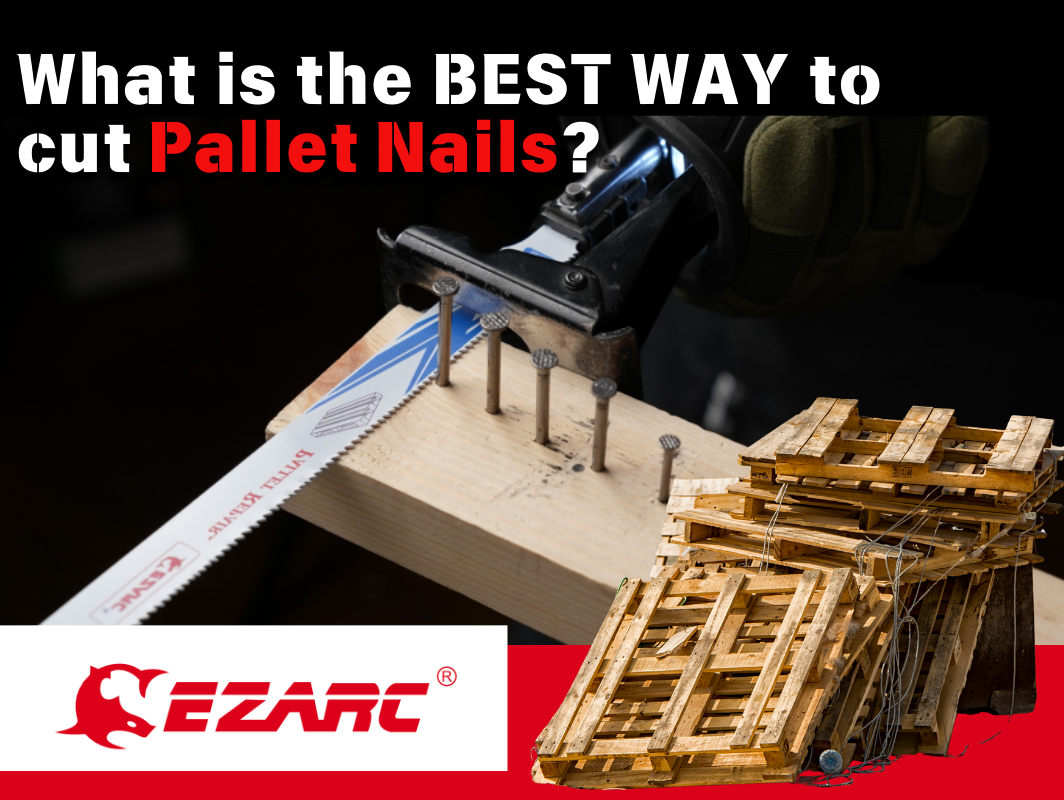
If you operate in pallet recycling or pallet repair, your biggest cost is rarely the wood itself, but instead it’s downtime. Lost productivity from dull tools, frequent blade changes, and damaged materials quickly adds up. One of the most common questions we hear from professionals is:
“Why are my reciprocating saw blades dulling after only a few pallets?”
The answer lies in the physics of the cut. Pallet dismantling is one of the most demanding cutting applications in industrial recycling. You are not just cutting wood, you are repeatedly cutting hardened steel nails embedded in dense, often kiln-dried lumber. Understanding this challenge is the first step toward choosing the right approach and the right reciprocating saw blades.
- 1. Why Pallet Nails Destroy Standard Blades
- 2. The Real Problem: Heat and Friction
- 3. Why Bi-Metal Blades Are the Professional Standard
- 4. How to Tell if a Blade Is Suitable for Pallet Nails
- 5. The Best Blade for Cutting Pallet Nails
- 6. Maximizing Efficiency in Pallet Repair
- 7. Choosing the Right Reciprocating Saw Blades for Your Operation
- 8. Sustainability and Cost Savings
- 9. Common Mistakes to Avoid When Cutting Pallet Nails
- 10. Conclusion: Cut Smarter, Not Harder
Why Pallet Nails Destroy Standard Blades
Pallet nails are not ordinary fasteners. Most are spiral-shank or ring-shank nails made from hardened steel and designed to permanently lock boards together. At the same time, pallet wood is often oak, maple, or dense pine that has been heat-treated or kiln-dried, further increasing cutting resistance.
When a blade transitions rapidly between these two materials, friction and heat build almost instantly. Standard carbon steel blades cannot tolerate this environment. Their teeth soften, strip, or round over after just a few nail strikes. This is why blades that perform well in clean wood fail so quickly during pallet dismantling.
Professional pallet repair requires reciprocating saw blades engineered specifically for mixed-material cutting.
The Real Problem: Heat and Friction
Heat, and not impact, is what destroys most blades. When a wood-cutting blade contacts a hardened nail at high speed, friction spikes. The blade teeth overheat, lose hardness, and dull within seconds. Increasing pressure only accelerates the failure.
This is why using “wood-only” blades for pallet work is a costly mistake. Effective pallet nail cutting requires blades that can dissipate heat while maintaining tooth integrity under repeated steel contact.
Why Bi-Metal Blades Are the Professional Standard

High-performance pallet dismantling relies on bi-metal reciprocating saw blades. These blades are constructed by bonding high-speed steel teeth to a flexible alloy steel body. This design delivers two critical advantages:
- Heat resistance: High-speed steel maintains hardness at elevated temperatures
- Flexibility: The alloy back allows the blade to bend without snapping when transitioning between materials
Bi-metal construction allows Sawzall blades to survive repeated nail strikes while maintaining cutting speed and control.
How to Tell if a Blade Is Suitable for Pallet Nails
Not all bi-metal blades are created equal. When selecting blades for pallet repair, look for these three essential features.
Variable Tooth Geometry (10/14 TPI)
A variable tooth pitch is critical for mixed-material cutting. A 10/14 TPI configuration allows the blade to clear wood chips efficiently while still engaging steel smoothly. This reduces vibration, prevents clogging, and stabilizes the cut when transitioning between wood and nails.
Increased Blade Thickness
Thin blades flex excessively, causing “blade whip.” This leads to inaccurate cuts, increased operator fatigue, and premature tooth wear. Pallet dismantling demands thicker, more stable reciprocating saw blades that track straight through nail shanks without deflection.
Cobalt-Reinforced Teeth
Cobalt acts as a heat stabilizer in blade metallurgy. Blades with cobalt-enhanced teeth retain hardness under extreme friction, significantly extending service life. EZARC’s bi-metal blades use 8% cobalt, making them particularly well suited for pallet nail cutting.
The Best Blade for Cutting Pallet Nails
For professional pallet dismantling, blade length and tooth geometry matter just as much as metallurgy. A 9-inch blade provides the reach needed to cut fully through deck boards and stringers in a single pass, reducing repositioning and wasted motion.
The EZARC 10/14 TPI 9-inch bi-metal reciprocating saw blade is engineered specifically for nail-embedded wood and pallet dismantling. It combines variable tooth geometry, cobalt-reinforced bi-metal construction, and optimized thickness to deliver clean, consistent cuts through hardened pallet nails.
This blade is designed to maintain performance across dozens of pallets, significantly reducing downtime caused by blade changes.
Maximizing Efficiency in Pallet Repair
Reducing cost-per-cut is about more than blade durability. It’s about matching the blade to the saw and the application. Blade length, tooth pitch, and saw stroke length all influence performance.
If you are unsure how to choose between different blade lengths or TPI ranges, EZARC has published a detailed guide explaining how to select the right Sawzall blade based on material, thickness, and cutting method:
https://www.ezarctools.com/blogs/blog/how-to-select-the-right-sawzall-blade-ezarc-tools-guide-bf2c15-1405
Educated blade selection leads to smoother cuts, less heat buildup, and longer blade life.
Choosing the Right Reciprocating Saw Blades for Your Operation
Pallet recycling operations vary widely, from small workshops to high-volume industrial lines. The common denominator is the need for reliable, consistent reciprocating saw blades that can withstand repetitive mixed-material cuts.
If you are comparing options across multiple applications, wood, metal, demolition, or pallet dismantling, you can explore EZARC’s full professional blade lineup here:


Evaluating blades side by side helps ensure the right tool is used for each task, improving both productivity and safety.
Sustainability and Cost Savings
Pallet repair is one of the most effective forms of recycling. Every board saved reduces demand for new lumber, conserves energy, and minimizes landfill waste. Clean cuts made with high-quality reciprocating saw blades preserve wood integrity, allowing boards to be reused rather than discarded.
From a business perspective, longer-lasting blades reduce replacement frequency, lower labor interruptions, and improve throughput. From an environmental perspective, efficient pallet repair supports a circular economy built on reuse rather than disposal.
Common Mistakes to Avoid When Cutting Pallet Nails
- Using wood-only blades for nail-embedded cuts
- Applying excessive pressure instead of letting the blade cut
- Using blades that are too thin or too short
- Ignoring early signs of overheating or tooth wear
Replacing worn reciprocating saw blades promptly protects both operators and materials.
Conclusion: Cut Smarter, Not Harder
Cutting pallet nails efficiently is not about brute force. It’s about understanding the materials and using the correct tools. Hardened steel nails and dense pallet wood demand blades engineered for heat resistance, flexibility, and mixed-material cutting.
By investing in professional-grade reciprocating saw blades, pallet repair operations can reduce downtime, improve material recovery, and lower overall operating costs. When the blade is designed for the job, pallet dismantling becomes faster, safer, and far more profitable. One clean cut at a time.


댓글 남기기
이 사이트는 hCaptcha에 의해 보호되며, hCaptcha의 개인 정보 보호 정책 과 서비스 약관 이 적용됩니다.