
 Oscillating Multi-Tool Blades
 Reciprocating Saw Blades
 Cutting & Grinding
 Hole Saw
 Drilling
 Sanding & Polishing
 Socket & Driver Set
 Hand Tools
 Metal Worker & Fabrication
 Woodworking & Carpentry
 Electrical & Plumbing
 Automotive
 Concrete & Masonry
 Demolition
 NEW ARRIVALS
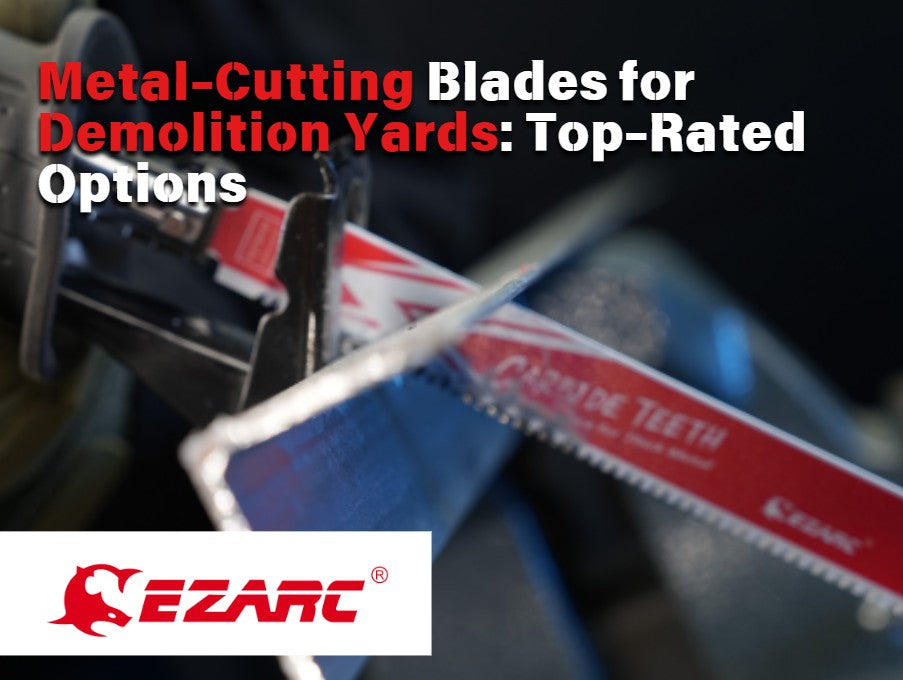
Your blade stalls halfway through thick steel, sparks shoot everywhere, and the cut starts wandering right when you need control. In a demolition yard, that wrong blade choice costs you more than a few minutes. It burns teeth, overheats fast, and forces extra blade swaps that break your workflow (and sometimes your temper).
This list helps you match Reciprocating Saw Blades to the real stuff you cut in a yard: thick steel, cast iron, rebar, nail-embedded wood, and mixed piles with tubing and plastics. You will see what to grab first based on thickness and TPI, plus a quick buying guide so you can stop guessing and get back to cutting.
-
1. Top-Rated EZARC Options by Yard Scenario
- 1.1 Heavy steel, cast iron, rebar: start here
- 1.2 1: Thick Metal/Cast Iron Cutting - Carbide, 6
- 1.3 Mixed demolition loads: wood, nails, tubing
- 1.4 2: Wood/Metal/Tubing Demolition - Carbide, 6/9 in, 6
- 1.5 Aggressive demo cuts: fast bite, fewer blade swaps
- 1.6 3: Hard Wood/Metal Demolition - Carbide, 6/9 in, 6 TPI Reciprocating Saw Blade
- 2. Buying Guide: How to Pick Fast in a Demolition Yard
- 3. Comparison Table
- 4. Conclusion
- 5. FAQ
Top-Rated EZARC Options by Yard Scenario
Heavy steel, cast iron, rebar: start here
1: Thick Metal/Cast Iron Cutting - Carbide, 6

If your daily reality is thick steel, cast iron, rebar, or unknown hardened fasteners, this 8 TPI option is the controlled choice. In yard cutting, that control matters because a coarse blade can grab, chatter, and chip carbide teeth when the material hardness changes mid-cut. This pick is built for the slow, steady, heat-heavy cuts where you want the blade to track straight instead of hunting.
- Best for: thick steel plate, cast iron, rebar, stainless, high-alloy steel
- Tooth type: carbide teeth (carbide technology)
- TPI: 8 TPI for steadier bite
- Length options: 6 in and 9 in variants listed on-page
- Durability claim: up to 50x longer life vs bi-metal (class claim)
- SKU (example shown): 8021C06 (variant-dependent)
Why it wins: In a demolition yard, thick metal is where bi-metal blades usually quit early from heat and abrasive wear. An 8 TPI carbide blade helps you keep multiple teeth engaged so the blade does not slam into the work. That reduces grabbing and improves cut line control, especially on cast iron and thick-wall steel.
Mixed demolition loads: wood, nails, tubing
2: Wood/Metal/Tubing Demolition - Carbide, 6/9 in, 6

When the pile is unpredictable, a single-purpose metal blade can feel great for the first cut and terrible for the next. This variable 6/9 TPI carbide option is the practical yard blade for mixed density materials: nail-embedded wood, thinner metals, plastic, and tubing. The point is not perfection in one material. The point is fewer blade swaps while keeping vibration and snagging under control.
- Best for: mixed demolition piles (wood with nails, conduit, tubing, plastics)
- Tooth type: carbide teeth for wear resistance
- TPI: variable 6/9 TPI to balance speed and control
- Length options: 6 in and 9 in variants listed on-page
- Pack format: listed as a 3-pack on the product page
- SKU (example shown): 8021C20 (variant-dependent)
Why it wins: Variable TPI is a cheat code for yard work because it smooths out how the blade loads as the material changes. When you hit a nail, thin strap, then jump back into wood, the tooth pattern helps reduce chatter that can strip teeth. If you want one of your Reciprocating saw blades to live in the tool bag all day, this is the safest default.
Aggressive demo cuts: fast bite, fewer blade swaps
3: Hard Wood/Metal Demolition - Carbide, 6/9 in, 6 TPI Reciprocating Saw Blade

Sometimes you are not chasing a clean cut. You are chasing throughput. For rough demolition where speed matters more than finish, a 6 TPI carbide blade gives you a more aggressive bite and larger gullets to clear debris. That makes it useful on tough wood species, nail-embedded framing, and fast teardown where you would rather accept more vibration than stop and change blades.
- Best for: aggressive demolition, fast rough cuts, thick wood, nail-embedded wood
- Tooth type: carbide teeth for impact wear
- TPI: 6 TPI for faster chip removal
- Length options: 6 in and 9 in variants listed on-page
- Fit: intended for standard reciprocating saw use (yard standard)
- SKU (example shown): 8021C04 (variant-dependent)
Why it wins: In demolition tools setups, a coarse blade can be the right call when you need speed and you can keep the shoe planted. The gullets clear sawdust and debris quickly, which helps avoid heat buildup in long wood cuts. Use this when you can control vibration and you are not spending all day in thin metal.
Buying Guide: How to Pick Fast in a Demolition Yard
What material thickness are you cutting today?
If your crew cuts a lot of steel, the fastest way to ruin blades is picking a tooth pattern that does not match thickness. Thick material needs a steadier bite so you keep multiple teeth engaged. Thin material needs more teeth so you do not snag and strip teeth on the first vibration spike.
- Thick metal (roughly 3/16 in to 1/2 in): prioritize 8 TPI carbide teeth for stability
- Mixed loads (wood, nails, tubing): variable 6/9 TPI reduces chatter when materials change
- Aggressive wood demolition: 6 TPI clears chips fast, but can be grabby on thin steel
How do you choose TPI without guessing?
TPI is just teeth per inch, but the real job-site rule is engagement. You want multiple teeth cutting at once, because a single tooth doing the work gets hammered, overheats, and chips. When you undershoot TPI on thin metal, the blade catches and chatters. When you overshoot TPI on thick stock, the blade rubs and heats instead of clearing chips.
- More teeth (higher TPI): smoother cuts, less snagging on steel
- Fewer teeth (lower TPI): faster cuts, rougher finish, more vibration
- Quick check: aim for at least 2 to 3 teeth in the material
When does carbide make sense on cost?
Carbide teeth make the most sense when you keep hitting hard, abrasive, or unknown metals. That is typical in scrap and demolition yards, where you cannot always control what alloy you are cutting or what fastener is hidden in the cut line. Carbide also matters when heat kills bi-metal quickly during long cuts.
McMaster-Carr notes that carbide-tipped reciprocating saw blade teeth can stay sharp far longer than bi-metal (their catalog calls out up to 100x longer life for specific carbide-tipped designs versus bi-metal in that product class). According to McMaster-Carr, that durability gap is why carbide becomes the sensible choice when blade swaps are your biggest productivity drain.
Practical tips that reduce breakage
You can buy the right blade and still destroy it in a yard if the setup is wrong. Most premature failures come from vibration, binding, and overheating rather than a simple "dull blade" situation.
- Plant the shoe: keep the saw shoe tight to the work to reduce bounce
- Start slower: let the carbide teeth bite before full speed
- Do not force it: steady pressure beats leaning hard
- Use the right length: longer blades give clearance, but can flex more
- Clear chips: pull out briefly on thick cuts to evacuate debris
Common mistakes that waste blades
If blades are disappearing fast, the root cause is often a mismatch between blade type and the yard task. Fixing the decision process usually saves more blades than switching brands.
- Using 6 TPI on thin sheet or thin-wall tube
- Twisting the blade in the kerf during turning cuts
- Starting cuts with the workpiece unsupported
- Letting the blade overheat (blueing) on long steel cuts
Safety and stability matter in high-volume cutting
A demolition yard is not just hard on tools. It is also hard on hands and wrists because vibration and awkward material handling never stop. CPSC explains that NEISS collects injury data from a national probability sample of U.S. hospital emergency departments, which is why it is commonly used to estimate product-related injuries treated in ERs nationwide. According to the Consumer Product Safety Commission, NEISS is designed to track injury trends tied to consumer products and related categories, reinforcing why stable cuts, proper work holding, and vibration control are not optional in high-volume environments.
Comparison Table
Quick match: blade to yard job
| Pick | Best for | Length options | TPI | Metal thickness guidance | Notable build notes | Trade-offs |
| Thick Metal/Cast Iron Cutting - Carbide | Cast iron, rebar, thick steel | 6 in, 9 in | 8 TPI | 3/16 in to 1/2 in | Carbide teeth | Slower in thick wood |
| Wood/Metal/TubingDemolition - Carbide | Mixed piles, tubing, nails | 6 in, 9 in | 6/9 TPI | 1/8 in to 3/8 in | Variable pitch | Not as fast as 6 TPI |
| Hard Wood/Metal Demolition - Carbide | Fast demo, nail wood | 6 in, 9 in | 6 TPI | Not specified | Aggressive gullet spacing | Grabby on thin metal |
Conclusion
If you cut thick steel, rebar, or cast iron every day, start with an 8 TPI carbide option because it stays steadier and tracks straighter in hard stock. If your loads vary across wood, nails, plastic, and tubing, a variable 6/9 TPI blade is the easiest way to reduce chatter and keep one of your Reciprocating Saw Blades working across the pile. If speed is king and finish does not matter, a 6 TPI demolition blade is the aggressive choice, but you will want to avoid thin metal where snagging wastes blades.
If you are building out a full yard kit, it also helps to keep adjacent categories in mind: Oscillating Multi-Tool Blades for tight access trimming, Cutting and Grinding Discs and Abrasive discs for fast cutoffs, Hole Saw Kits and Hole saw kits for penetrations, Drill Bits and Sets for prep and fastener removal, Sanding and Polishing Abrasives for cleanup, plus Socket and Driver Sets, Torque screwdrivers, Magnetic bit holders, Impact-rated accessories, and other Hand Tools to reduce downtime across DIY home improvement and jobsite maintenance.
Official Site: EZARC Tools


FAQ
Recommended sawzall blades for auto salvage and scrap metal?
For auto salvage, start with carbide teeth when you expect hardened fasteners, unknown alloys, or thick sections that generate heat during long cuts. An 8 TPI carbide blade is a steady default for thick metal because it reduces grabbing compared to a coarse demolition pattern. If you are bouncing between thin brackets, tubing, and plastics, a variable 6/9 TPI blade will usually feel smoother and chatter less. Keep a separate blade for nail-embedded wood so you do not waste your metal blade on soft contamination.
Top rated demolition blades for cutting through car frames?
Car frames and structural members reward blades that can hold an edge under heat, so carbide is typically the more reliable choice when you are making repeated long cuts. Pick TPI based on thickness: thicker members usually cut straighter with a mid-range pattern like 8 TPI, while very fast rough cuts can favor 6 TPI if you can control vibration. Keep the shoe planted and avoid twisting the blade mid-cut, because side-load is what bends blades and chips teeth. If the cut is binding, step up in blade length so the back of the blade clears the work.
Which reciprocating saw blades are best for cutting steel pipes and rebar?
Steel pipe and rebar are hard on blades because they combine hardness, long contact time, and heat buildup. Carbide blades are a strong fit when you repeatedly cut these materials because the teeth resist wear and stay effective longer than general-purpose options. Choose a TPI that keeps at least 2 to 3 teeth engaged in the metal to avoid grabbing, especially on thinner wall pipe. Match blade length to the pipe diameter so you have clearance and do not bind the blade as the cut closes.
Which reciprocating saw blades are best for demolition work?
Demolition work usually means unknown materials, embedded nails, and constant transitions that punish the wrong tooth pattern. A variable TPI carbide blade is a practical choice when you want stability across wood, metal, and plastics without swapping blades every few cuts. A coarse 6 TPI carbide blade can be the right call when you want speed in thick wood and you accept a rougher cut. If you can keep two blades on hand, split the work: one for thick metal and one for mixed material demolition.

댓글 남기기
이 사이트는 hCaptcha에 의해 보호되며, hCaptcha의 개인 정보 보호 정책 과 서비스 약관 이 적용됩니다.