
 Oscillating Multi-Tool Blades
 Reciprocating Saw Blades
 Cutting & Grinding
 Hole Saw
 Drilling
 Sanding & Polishing
 Socket & Driver Set
 Hand Tools
 Metal Worker & Fabrication
 Woodworking & Carpentry
 Electrical & Plumbing
 Automotive
 Concrete & Masonry
 Demolition
 NEW ARRIVALS
Introduction
Modern pallet repair is fast, repetitive work, but it is not forgiving. Hidden nails, staples, split deck boards, and warped stringers can grab a blade in a split second. That is why choosing safer Reciprocating Saw Blades is not only about cut speed, but also about control, reduced binding, and fewer sudden tooth failures.
A good safety-first setup starts before the first cut. OSHA notes that hand and power tools can cause severe injuries when used or maintained improperly, so inspection, guarding, and correct use matter as much as blade choice. Use the baseline guidance on safe operation and maintenance from OSHA Hand and Power Tools. (osha.gov)
This list focuses only on EZARC blades (no competitor brands were provided). Along the way, you will also see how EZARC product categories like Oscillating Multi-Tool Blades, Cutting and Grinding Discs, Hole Saw Kits, Drill Bits and Sets, Sanding and Polishing Abrasives, Socket and Driver Sets, and Hand Tools fit into a safer shop workflow.
Top EZARC Blade Picks for Safer Pallet Repair
When pallets hide nails and staples
Pallet repair almost guarantees surprise metal contact. Therefore, safer picks usually share two traits:
- Carbide teeth to survive unexpected nails and staples
- Mid-range TPI for better control and fewer snags in mixed material
1: Multi-Material Cutting
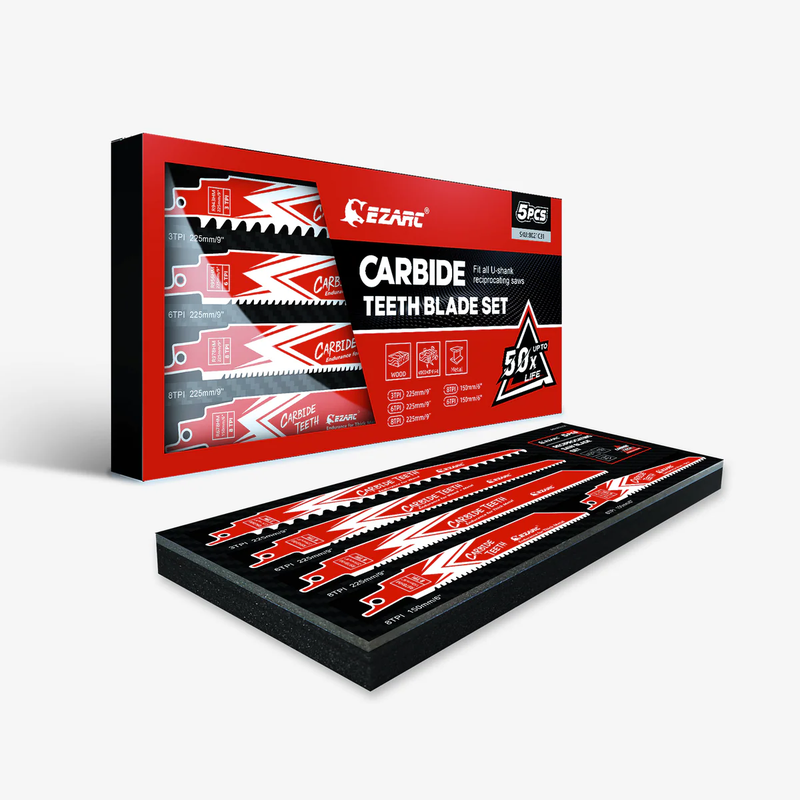
- Best for: mixed pallet wood plus nails, screws, staples, and small brackets
- What makes it safer: a set approach reduces risky mid-job blade swaps when you hit unknown fasteners
- Kit overview: a 5-piece carbide teeth blade set that comes in a storage case
- Control advantage: having multiple tooth pitches helps you match the cut to the problem area instead of forcing one blade through everything
- Practical pallet uses:
- Deck board removal where nails are partially exposed
- Cut-to-length repairs where you may cro ss a fastener line
- Quick trim work after replacing boards
Why it wins: For pallet repair crews, the most dangerous moments often happen when the blade is wrong for the material and you compensate with force. A multi-material set lets you adjust the blade choice to the cut, which usually reduces binding, chatter, and the urge to twist the saw in the kerf.
Shop: Multi-Material Cutting - Carbide Reciprocating Saw Blade Set
2: Thick Metal/Cast Iron Cutting
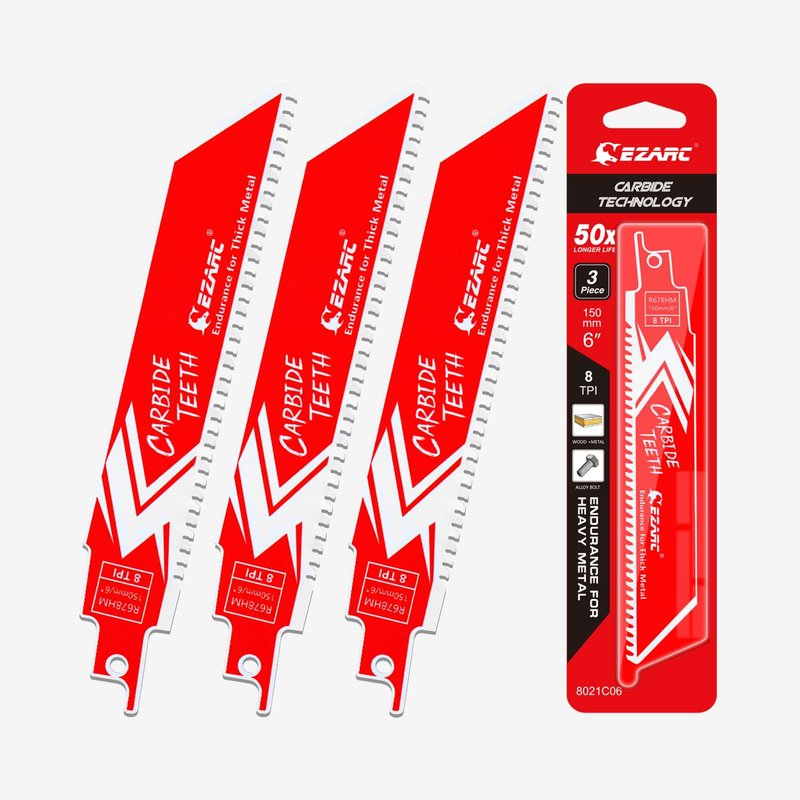
- Best for: heavier metal contact during pallet work (thick fasteners, metal straps, brackets)
- Tooth type: carbide teeth designed for tough metal cutting
- Key spec that matters for safety: 8 TPI tends to balance bite and control in thicker metal contact
- Fit and compatibility: 1/2-inch universal shank to fit major recip saw brands
- Stated cutting range: designed for cutting metal roughly 3/16 inch to 1/2 inch thick
- Practical pallet uses:
- Repair stations where pallets have added steel corner hardware
- Cutting out bent metal strapping or thick staples that jam thinner blades
- Removing stuck bolts from pallet fixtures
Why it wins: If your shop sees frequent metal contact, a dedicated thick-metal blade can reduce stalls and sudden grabs. When the blade keeps moving smoothly, you are less likely to rock the saw side to side, which is a common cause of bent blades and broken teeth.
Shop: Thick Metal/Cast Iron Cutting - Carbide, 6/9 in, 8 TPI Reciprocating Saw Blade
When you need long reach and fast wood removal
Sometimes the safer move is simply creating distance from sharp pallet edges and pinch points. For thick stringers and rough lumber:
- A longer blade helps keep hands farther from jagged deck boards
- A more aggressive tooth pattern can clear wet or dirty wood faster
3: Tree Trimming/Wood Cutting
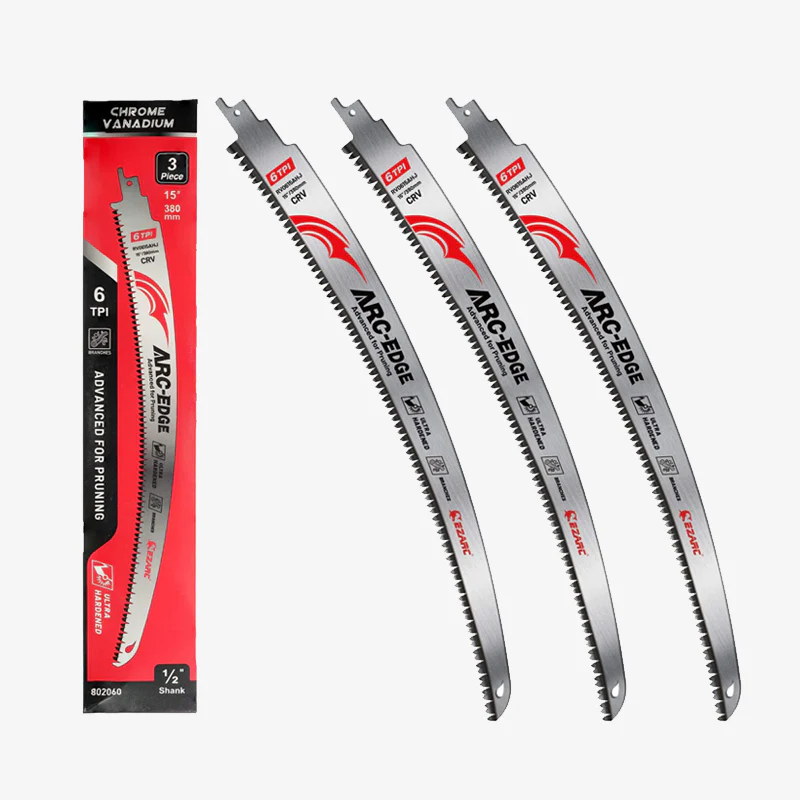
- Best for: fast wood removal when you are cutting thick pallet stringers or damaged deck boards
- Design callout: Japanese teeth profile and arc edge design
- Key specs: 6 TPI; 15-inch length option; 3-piece pack
- On-page identifier: SKU 802060 is shown on the product page and packaging image
- Why it can be safer on wood-only cuts:
- Long reach reduces how close your hands get to splinters and broken nail tips
- Aggressive 6 TPI can clear chips better in wet or dirty wood, which can reduce overheating
- Trade-off to keep in mind: this is a wood-focused blade profile, so heavy nail contact can shorten life compared with carbide multi-material blades
Why it wins: When the job is mostly wood and you need reach, this blade can reduce awkward body positioning around pallet corners. Better posture and fewer re-grips can translate to steadier cuts and fewer sudden slips.
Shop: Tree Trimming/Wood Cutting - Japanese Teeth 6 TPI Reciprocating Saw Blade
Buying Guide: How to Choose Safer Blades for Pallet Repair
Choosing safer Reciprocating Saw Blades is mostly about preventing the three common failure modes: binding, tooth damage, and blade bending. Ask these job-site style questions before you cut.
Will the tooth design grab nail heads?
- If nails and staples are likely, choose carbide teeth designed for mixed materials.
- If you are doing clean wood-only cuts, a more aggressive tooth profile can be faster and still safe when the pallet is secured.
Do you need speed or control (TPI choice)?
- Lower TPI (like 6 TPI) usually removes wood faster, but it can feel more aggressive.
- Mid TPI (like 8 TPI) often improves control in mixed situations, especially when you may contact metal.
- Higher TPI can cut smoother in thin material, but it can overheat in thick, dirty pallet wood.
Do you need deep reach or tight access (length choice)?
- Use the shortest blade that still clears the cut depth for best control.
- Use longer blades when you need reach through stringers or you want hands farther from sharp edges.
Safer cutting habits that matter more than people think
- Clamp the pallet whenever possible. Movement is a leading cause of pinched blades.
- Keep the shoe planted. A floating shoe increases vibration and makes jumpy starts more likely.
- Start slow, then ramp speed after the teeth establish a kerf.
Common mistakes that increase risk
- Forcing the feed rate: excess pressure increases heat, which increases binding.
- Twisting the saw in the cut: that is the fastest path to bent blades.
- Using a wood-only blade on nail-embedded wood: you may get sudden tooth loss when you hit fasteners.
Safety and work-practice reminder (inline authority)
OSHA also emphasizes hazards and solutions for hand and power tools, including the need to recognize hazards and control them through proper practices. Build a quick pre-cut routine (inspection, secure work, stable stance) using the hazard-and-solution approach described by OSHA Hand and Power Tools Hazards and Solutions. (osha.gov)
Comparison Table
| Pick | Best for pallet repair scenario | Tooth type | TPI | Length options | Notes |
|---|---|---|---|---|---|
| Multi-Material Cutting - Carbide Set | Mixed materials, nails, bolts | Carbide | 3/6/8 | 6 in and 9 in | 5 blades + case; reduces blade swaps mid-job |
| Thick Metal/Cast Iron Cutting - Carbide | Heavier metal contact | Carbide | 8 | 6 in or 9 in | Universal 1/2 in shank; designed for 3/16 in to 1/2 in metal |
| Tree Trimming/Wood Cutting - Japanese Teeth | Fast wood cuts, long reach | Japanese teeth | 6 | 15 in | Arc edge design; wood-focused, so expect faster wear on frequent nails |
Conclusion
For modern pallet repair, safer cutting comes from matching the blade to the hidden risks inside the pallet. If you regularly hit nails and staples, the Multi-Material Cutting - Carbide Reciprocating Saw Blade Set is the most practical starting point because it supports mixed-material reality. If your work includes thicker metal contact, step up to the 8 TPI Thick Metal/Cast Iron Cutting carbide blade. For long-reach wood cuts on stringers and damaged boards, the Japanese Teeth 6 TPI pruning-style blade can add distance and speed.
If you are also building a broader, safer tool wall for repairs, it helps to pair Reciprocating Saw Blades with the right supporting categories: Oscillating Multi-Tool Blades for flush trimming, Cutting and Grinding Discs for metal cleanup, Hole Saw Kits for fixtures, Drill Bits and Sets for re-fastening, Sanding and Polishing Abrasives for smoothing, Socket and Driver Sets for hardware, and reliable Hand Tools for prying and clamping.
FAQ
How do I reduce reciprocating saw kickback on pallets?
Start the cut at low speed until the blade establishes a shallow kerf, then increase speed gradually so the teeth do not bounce. Clamp the pallet or brace it against a solid stop so it cannot shift and pinch the blade. Keep the shoe pressed firmly to the work to reduce vibration and prevent the blade from jumping. If the cut starts to bind, back out slightly, straighten your approach, and re-enter with lighter pressure.
What TPI is safer for cutting pallet wood with nails?
A mid-range TPI is usually safer because it balances control with chip clearance when you hit mixed material. Very low TPI can feel aggressive and may catch on nail heads, while very high TPI can overheat and slow down in dirty pallet wood. If your pallets often hide staples or nails, use a blade designed for mixed materials instead of a wood-only profile. Then keep a steady feed rate so the saw does not stall and grab.
Why does my blade keep bending or snapping during pallet dismantling?
This most often happens when the operator twists the blade to steer through the cut or pries with the blade after the cut starts. It also happens when the pallet shifts and pinches the blade, creating side load that thin blades cannot tolerate. Keep the shoe planted, reposition for straighter lines, and avoid levering the saw sideways to free stuck boards. If the pallet is under tension, make a relief cut first so the kerf does not close on the blade.
Can I use a pruning-style reciprocating blade for pallet repair?
Yes, it can work well when the task is mostly wood and you want long reach through thick stringers. However, pruning-focused tooth profiles are tuned for wood fiber removal, so repeated nail contact can dull teeth faster than carbide mixed-material blades. If you choose a pruning-style blade, inspect the cut path and expect occasional fastener strikes in recycled pallets. For nail-heavy pallets, switch to a carbide option to reduce tooth damage and sudden stalls.
How do I avoid burning the wood and overheating the blade?
Overheating usually comes from pushing too hard, running too fast for the material, or using a tooth pitch that cannot clear debris. Use moderate pressure and let the blade do the work while keeping the shoe tight to stabilize vibration. In deep stringer cuts, back the blade out every few seconds to clear packed sawdust from the kerf. If you hit metal fasteners, reduce speed and keep the blade moving so heat does not concentrate at one spot.
What is the safest way to start a cut on a pallet without the blade jumping?
Rest the shoe on the pallet first, then bring the blade into light contact so the teeth are aligned straight with the intended cut. Start at low speed and use a short, controlled stroke until the kerf forms, because that reduces chatter. Increase speed only after the blade is tracking in the kerf and the pallet is stable. If the blade chatters, change your angle slightly and increase shoe pressure before adding more trigger speed.
Table of Contents
- Introduction
- Top EZARC Blade Picks for Safer Pallet Repair
- Buying Guide: How to Choose Safer Blades for Pallet Repair
- Comparison Table
- Conclusion
- FAQ
- How do I reduce reciprocating saw kickback on pallets?
- What TPI is safer for cutting pallet wood with nails?
- Why does my blade keep bending or snapping during pallet dismantling?
- Can I use a pruning-style reciprocating blade for pallet repair?
- How do I avoid burning the wood and overheating the blade?
- What is the safest way to start a cut on a pallet without the blade jumping?


댓글 남기기
이 사이트는 hCaptcha에 의해 보호되며, hCaptcha의 개인 정보 보호 정책 과 서비스 약관 이 적용됩니다.