
 Oscillating Multi-Tool Blades
 Reciprocating Saw Blades
 Cutting & Grinding
 Hole Saw
 Drilling
 Sanding & Polishing
 Socket & Driver Set
 Hand Tools
 Metal Worker & Fabrication
 Woodworking & Carpentry
 Electrical & Plumbing
 Automotive
 Concrete & Masonry
 Demolition
 NEW ARRIVALS
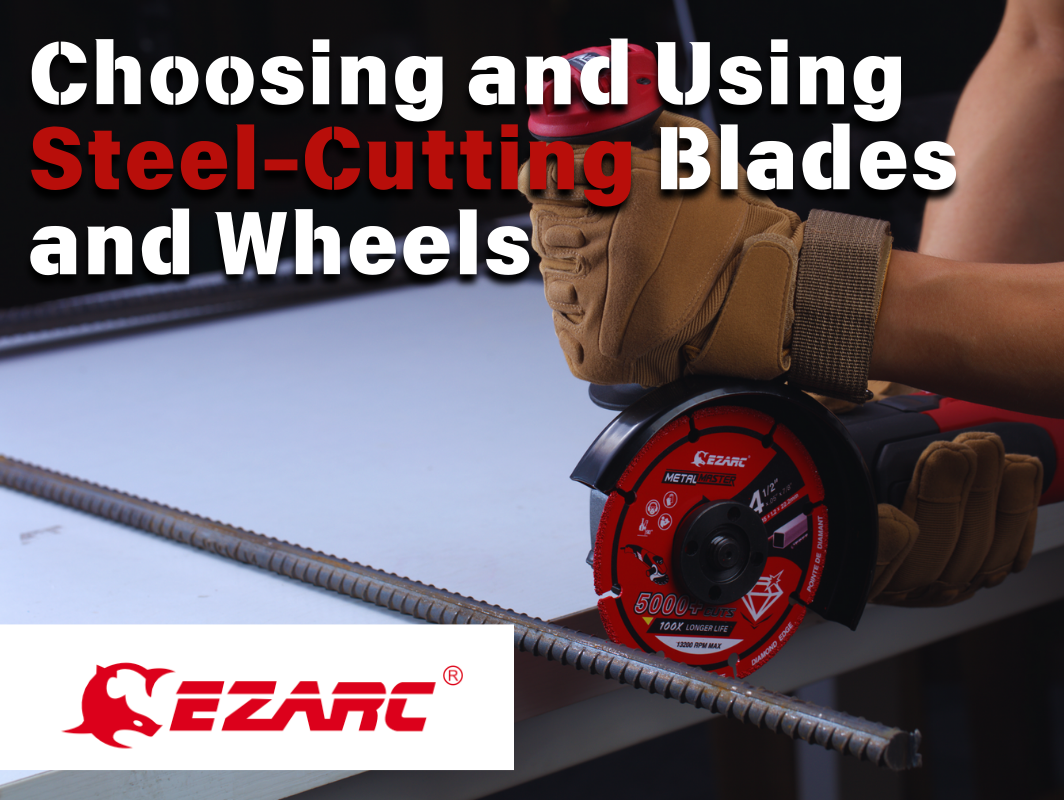
Steel is unforgiving. To get clean, cool, and consistent cuts, you need steel‑cutting blades and wheels built for the job. Below is a clear, step‑by‑step guide that mirrors what pros do on the floor and in the field, along with proven EZARC picks for thin sheet, structural steel, rebar, and even cast iron.
- 1. Why a Dedicated Blade For Steel?
- 2. What makes EZARC metal‑cutting solutions different?
- 3. Quick Picks by Job (At a Glance)
- 4. How to Use Steel-Cutting Blades and Wheels (6-Step Quickstart)
- 5. More Tips for Safer, Cleaner Steel Cuts
- 6. Maintenance and Care to Extend Blade Life
- 7. Where Each EZARC Product Fits (and When to Choose It)
- 8. FAQs
Why a Dedicated Blade For Steel?
Steel behaves very differently from non‑ferrous metals. It is denser and harder, so it wears generic blades quickly. Some steel‑cutting carbide blades are also designed to run at lower RPMs than non‑ferrous blades, and certain models are intended for chop saws rather than handheld circular saws. Always follow the manufacturer’s speed and saw-type guidance, as explained in this steel-cutting blade overview by ToolsToday.
What makes EZARC metal‑cutting solutions different?
EZARC focuses on application‑matched tooling so you can pick by job rather than guess by marketing.
- Diamond Metal Cutting Wheel: solid steel core with a diamond edge for multi‑metal cutting, designed to resist shattering and maintain diameter for control.
- Bi‑Metal Reciprocating Blades (14 TPI): fine‑tooth pattern for thin to medium steel, engineered for smooth cuts and wide saw compatibility.
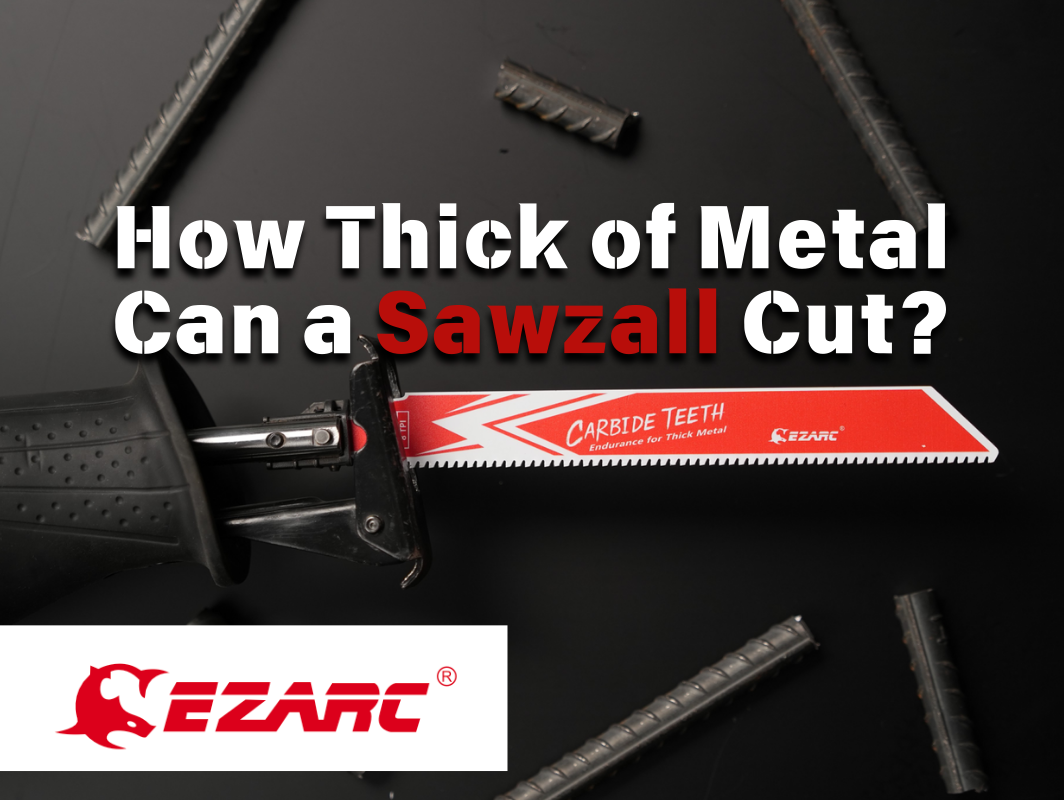
- Carbide Reciprocating Blades (8 TPI): aggressive carbide teeth for thick steel, cast iron, and tough alloys; built for long life.
- Carbide Shallow Hole Saws: sizes for clean holes in stainless and other hard metals.
Quick Picks by Job (At a Glance)
| Task / Material | Recommended EZARC Pick | Tooth / Size | Tool | Why It Works |
| Thin sheet steel, light-gauge metal | Bi-Metal Reciprocating Blade, 14 TPI | 6–9 in | Reciprocating saw | Fine teeth help avoid grabbing and give a cleaner edge. |
| Heavy steel pipe, angle, cast iron | Carbide Reciprocating Blade, 8 TPI | 6–9 in | Reciprocating saw | Carbide teeth handle heat and hard materials; low TPI clears chips quickly. |
| Rebar, angle iron, bolts, multi-metal | Diamond Metal Cutting Wheel | 3–7 in | Angle grinder | Solid steel core with diamond edge is durable, stable, and multi-metal capable. |
| Clean holes in stainless or hard metals | Carbide Shallow Hole Saw | 9/16 in to 2-15/16 in | Drill/driver or drill press | Carbide teeth and pilot control make round, accurate holes. |
How to Use Steel-Cutting Blades and Wheels (6-Step Quickstart)
- Match the blade or wheel to the metal and thickness. For thin stock, a higher TPI helps. For thick or hardened steel, choose carbide or diamond where appropriate. You can check EZARC’s metal-cutting blade guide for examples.
- Confirm the tool and speed. Follow the blade’s specs, especially if the blade requires low RPM or a specific saw type. This reference from ToolsToday breaks it down clearly.
- Prepare the work. Clear hazards, mark the cut line, and use proper lighting and ventilation.
- Secure the material. Clamp sheet and tubing to reduce chatter and improve accuracy.
- Control heat and chips. Use steady feed, let teeth work, and consider air or mist cooling when allowed.
- Finish safely. Deburr, vacuum chips, and store the blade or wheel dry.
Pro Tip: Match Tooth Count to the Job
- Thin sheet: higher TPI (for example, 14–24 TPI) for a smoother, more controlled cut.
- Medium to thick steel: 8–14 TPI balances speed and chip evacuation.
- Very hard or thick sections: step up to carbide reciprocating blades or a diamond cutting wheel.
More Tips for Safer, Cleaner Steel Cuts
- Wear proper PPE: safety glasses, cut‑resistant gloves, hearing protection.
- Keep the cut line supported to prevent pinching or kick.
- Do not force the tool. Excess pressure overheats teeth and shortens life.
- Follow tool‑maker guidance on guards and wheel/blade maximum RPM.
Maintenance and Care to Extend Blade Life
- Clean off pitch and swarf after use.
- Inspect for chipped teeth, cracks, or excessive wear.
- Store dry and protected from impacts.
- Replace dull or damaged blades promptly to improve safety and finish quality.
Where Each EZARC Product Fits (and When to Choose It)
1. Thin to Medium Steel: EZARC Bi‑Metal 14 TPI Reciprocating Blades

For HVAC sheet, studs, and general metalwork, the fine‑tooth 14 TPI design delivers smooth, burr‑reduced cuts and broad saw compatibility. Ideal as an everyday metal blade.
2. Thick Steel and Cast Iron: EZARC Carbide 8 TPI Reciprocating Blades

When the material gets tough, carbide teeth keep cutting. Great for schedule pipe, angle, and alloys where standard blades stall or burn.
3. Fast, Flush, Multi‑Metal Cuts: EZARC Diamond Metal Cutting Wheel

A solid‑steel body resists shattering while the diamond edge stays consistent in diameter for controlled cutting in rebar, angle, and mixed metals.
4. Clean holes in stainless and hard metals: EZARC Carbide Shallow Hole Saws

Dial in precise diameters across a wide size range for panels, enclosures, and shop fab.
FAQs
How Do I Choose The Best Blade for Cutting Steel?
Identify the metal and thickness first, then choose tooth technology and TPI. Use higher TPI for thin stock and carbide or diamond for thick or hardened materials. Match the blade to your saw and the required RPM.
What TPI Should I Use for Thin vs. Thick Metal?
As a rule, thin sheet prefers higher TPI (for example, 14–24), while thicker materials work better with 8–14 TPI or carbide teeth to carry chips and manage heat.
Can I Use a General‑Purpose Blade on Steel?
General‑purpose blades may make a cut, but they wear fast and leave rough edges. A dedicated steel‑cutting blade improves speed, finish, and safety.
What Speed Should I Run for Steel?
Follow the blade’s instructions. Some steel‑cutting blades are designed for lower RPMs and specific saw types; consult the manufacturer.
When Should I Replace a Blade or Wheel?
Replace it if teeth chip, the edge rounds over, the kerf burns, or cutting speed drops noticeably. Dull tooling increases heat and risk.
Any Quick Way to Spot a Metal Sawzall Blade?
Look for the label and specs: bi‑metal or carbide tips, universal shank, and the right TPI range for metal. EZARC’s guide gives a helpful breakdown of these cues.
Read Our Full EZARC Blade Selection Guide.

コメントを書く
このサイトはhCaptchaによって保護されており、hCaptchaプライバシーポリシーおよび利用規約が適用されます。