
 Oscillating Multi-Tool Blades
 Reciprocating Saw Blades
 Cutting & Grinding
 Hole Saw
 Drilling
 Sanding & Polishing
 Socket & Driver Set
 Hand Tools
 Metal Worker & Fabrication
 Woodworking & Carpentry
 Electrical & Plumbing
 Automotive
 Concrete & Masonry
 Demolition
 NEW ARRIVALS
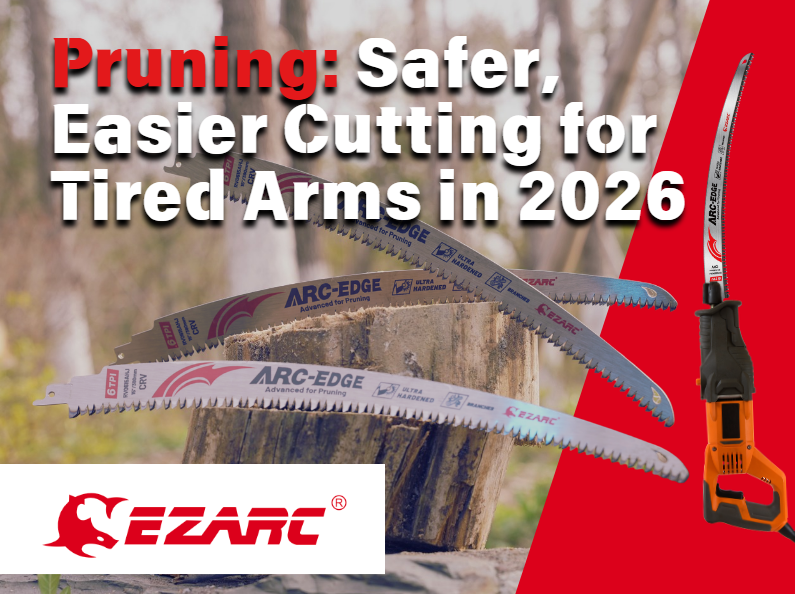
Pruning trees and branches shouldn’t leave your arms sore, numb, or exhausted. Yet for many homeowners, landscapers, and especially older users, traditional pruning tools and aggressive demolition blades cause excessive vibration, poor control, and safety risks. That’s why in 2026, more people are switching to a low vibration Sawzall blade for pruning designed for comfort, control, and clean cuts.
This guide explains how blade design affects fatigue, why vibration matters for safety, and how choosing the right Sawzall blade for pruning—especially curved, Japanese-tooth, carbide options like EZARC—can make pruning easier and safer for tired arms.
Why Vibration Is a Serious Problem in Pruning
Excessive vibration isn’t just uncomfortable—it can be dangerous, particularly for older users or anyone with joint pain.
High-vibration pruning tools can cause:
- Arm and hand fatigue
- Reduced grip strength
- Loss of cut control
- Increased risk of slips and kickback
- Long-term joint and nerve stress
A low vibration Sawzall blade for pruning minimizes these risks by cutting smoothly instead of tearing through wood.
How Blade Design Reduces Arm Fatigue
Not all blades vibrate the same. The way a blade is shaped, toothed, and balanced directly affects how much shock is transferred to your arms.

Key Design Features That Reduce Vibration
- Curved blade profile for continuous wood contact
- Japanese-style teeth for slicing instead of ripping
- Carbide construction for consistent sharpness
- Balanced tooth spacing to prevent chatter
A well-designed Sawzall blade for pruning absorbs cutting forces more evenly, resulting in smoother, more controlled operation.
Curved Sawzall Blade vs Straight Blade for Comfort
Straight blades are common, but they’re not ideal for pruning—especially for users concerned about fatigue.

Why Curved Blades Are Easier on the Arms
- Maintain constant contact with branches
- Reduce sudden grabbing or jumping
- Require less downward pressure
- Follow the natural arc of limbs
A curved, low vibration Sawzall blade for pruning significantly reduces wrist strain and arm shock compared to straight designs.
Japanese Teeth: Cleaner Cuts, Less Effort
Japanese tooth geometry is one of the biggest contributors to low vibration performance.
Benefits for Older and Safety-Focused Users
- Smooth slicing action
- Minimal tear-out and binding
- Faster cuts with less force
- Better control near the cut finish
When paired with a curved profile, Japanese teeth transform a standard Sawzall blade for pruning into a precision pruning tool.

Why Carbide Matters for Consistent, Low-Vibration Cutting
Standard steel or bi-metal blades dull quickly, increasing vibration as they struggle through wood. Carbide blades stay sharp much longer.
Carbide Advantages
- Maintains sharp cutting edges
- Cuts consistently without grabbing
- Handles dirt-contaminated bark
- Reduces blade chatter over time
A carbide low vibration Sawzall blade for pruning delivers smooth performance even after extended use.
EZARC Low Vibration Sawzall Blade for Pruning (Recommended)
EZARC’s Japanese teeth carbide reciprocating saw blade is designed specifically to reduce vibration and user fatigue during pruning.

Why EZARC Is Ideal for Tired Arms
- Curved profile for smooth engagement
- Precision-ground Japanese teeth
- Durable carbide construction
- Excellent balance for controlled cuts
For homeowners, landscapers, and older users, EZARC offers a Sawzall blade for pruning that prioritizes comfort without sacrificing power.
Safety Benefits for Older Users
Reduced vibration isn’t just about comfort—it’s about safety.
A low vibration Sawzall blade for pruning helps:
- Maintain steady hand control
- Reduce accidental slips
- Improve cut accuracy
- Lower fatigue-related mistakes
These benefits are especially important for users over 50 or anyone with arthritis, tendon issues, or reduced grip strength.
Sawzall Blade vs Chainsaw: Which Is Safer for Pruning?
Chainsaws are powerful, but they’re not always the safest option.
Why Many Older Users Prefer a Sawzall Blade

- Lower kickback risk
- Better control on small branches
- Less noise and intimidation
- Easier handling at shoulder height
With a low vibration Sawzall blade for pruning, many users find reciprocating saws safer and more manageable than chainsaws.
Best Practices to Reduce Fatigue While Pruning
Even the best blade works better with proper technique.
- Let the blade cut—don’t force it
- Use two hands whenever possible
- Keep arms relaxed, not locked
- Take breaks during extended pruning
- Dedicate one Sawzall blade for pruning only
These habits further reduce strain and improve safety.
Who Should Use a Low Vibration Sawzall Blade for Pruning?
This blade type is ideal for:
- Older homeowners
- DIY gardeners
- Landscapers doing daily pruning
- Anyone with arm or joint fatigue
From backyard maintenance in the US to orchard care in Europe and Australia, a low vibration Sawzall blade for pruning makes cutting safer and more comfortable.
Final Thoughts: Pruning Shouldn’t Hurt
Pruning doesn’t have to mean sore arms or risky cuts. Choosing a low vibration Sawzall blade for pruning—especially one with a curved profile, Japanese teeth, and carbide construction—can dramatically improve comfort and safety.

In 2026, EZARC’s Japanese teeth carbide blades stand out as a smart choice for anyone who wants cleaner cuts, less fatigue, and more confidence while pruning.


Laisser un commentaire
Ce site est protégé par hCaptcha, et la Politique de confidentialité et les Conditions de service de hCaptcha s’appliquent.