
 Oscillating Multi-Tool Blades
 Reciprocating Saw Blades
 Cutting & Grinding
 Hole Saw
 Drilling
 Sanding & Polishing
 Socket & Driver Set
 Hand Tools
 Metal Worker & Fabrication
 Woodworking & Carpentry
 Electrical & Plumbing
 Automotive
 Concrete & Masonry
 Demolition
 NEW ARRIVALS
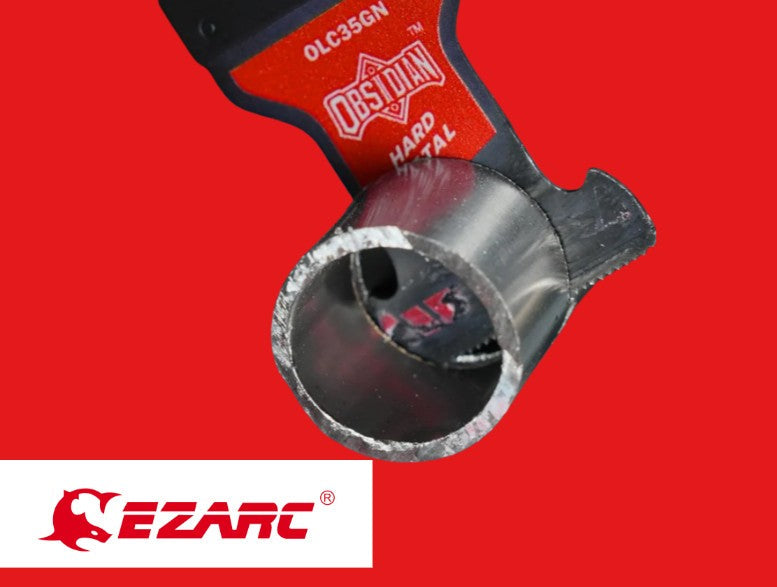
You are working on a demanding metal-cutting job with your oscillating tool blade. This includes trimming bolts, slicing rebar, or cutting pipes. Nothing is more frustrating than seeing smoke rise from your blade. A new attachment can turn black and useless in seconds. Heat is almost always the primary culprit.
Understanding why an oscillating tool blade overheats is the first step. Use proper techniques and heat-resistant engineering to extend gear lifespan. This will save money on constant replacements. Let’s examine thermal failure and seven ways to make your oscillating tool blade last longer.
Why Do Oscillating Tool Blades Overheat When Cutting Metal?
We must first look at what happens at a microscopic level. A multi-tool encounters metal during the process. Metal creates intense friction unlike wood or drywall.
- Friction and High-Frequency Stress: A multi-tool operates via rapid lateral micro-oscillations. When these teeth slam against hard steel thousands of times per minute, extreme friction is generated instantly.
- Work-Hardening Alloys: Metals like stainless steel and carbon steel react to friction by rapidly increasing in hardness directly ahead of the cutting edge. This work-hardening effect causes the teeth to grind rather than shear, super-heating the contact point.
- Poor Heat Dissipation: Because an oscillating tool blade has a compact surface area and operates in tight spaces, it lacks the massive surface cooling of large angle grinder wheels. Heat gets trapped directly at the teeth, causing them to lose their temper, soften, and dull almost instantly.
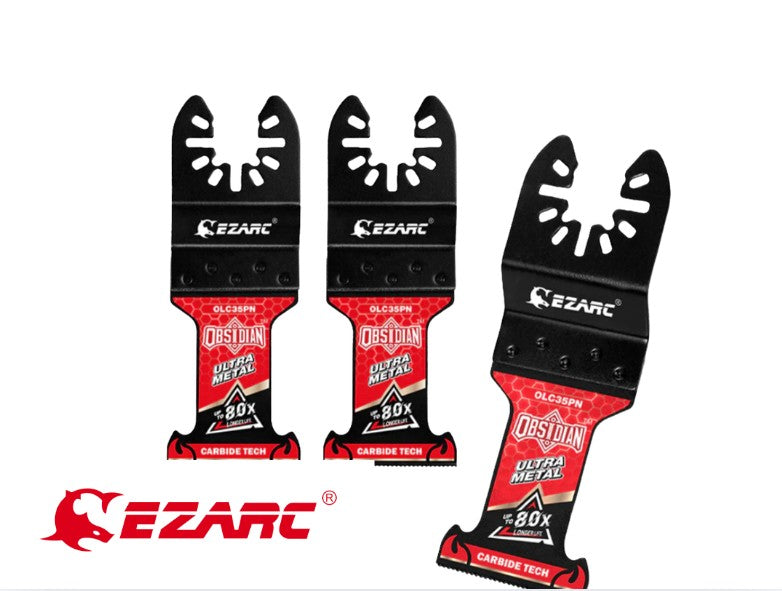
Standard bi-metal attachments lack the thermal tolerance for these conditions. Heavy-duty applications demand advanced accessories. The EZARC Obsidian Carbide oscillating tool blade is a great choice. It features industrial carbide edges and a specialized TiAlN coating. This coating withstands intense thermal stress.
7 Ways to Make Your Oscillating Tool Blade Last Longer
Even the highest-quality accessory can fail prematurely if used incorrectly. Follow these seven practical strategies to maximize the lifespan of your oscillating tool blade and get cleaner cuts every time.
1. Let the Tool Do the Work
Operators often make the mistake of using heavy downward pressure. Forcing the tool does not speed up the process. Instead, it binds teeth and traps heat against the metal. Use light, steady pressure. Let the rapid micro-oscillations do the heavy lifting.
2. Utilize Sweeping and Pivoting Motions
Holding your oscillating tool blade in one stationary spot concentrates all friction on a single group of teeth. Instead, use a gentle sweeping or pivoting motion across the cutting line. This distributes wear evenly across the entire industrial carbide edge, preventing localized overheating and thermal burnout.
3. Take Periodic Cooling Breaks
Friction builds up rapidly during deep or extended metal cuts. If you notice smoke, discoloration, or sparks, stop immediately. Take short, 10-second breaks to let the oscillating tool blade cool down. A little patience prevents the teeth from overheating and losing their structural integrity.
4. Choose the Right oscillating tool blade Accessory for the Material
Never use wood-cutting attachments on hardened metals like rebar or stainless steel. Select a dedicated carbide oscillating tool blade engineered for metal. Some accessories have industrial carbide teeth and heat-resistant coatings. These can last 80X longer than standard alternatives.
5. Control Your Tool Speed and Vibration
Maximum velocity can generate counterproductive vibration and friction heat. Use variable speed control if your model has it. Find an optimal setting. This allows teeth to shear metal cleanly instead of sliding violently.
6. Secure the Workpiece Properly
Unstable or vibrating metal causes the oscillating tool blade to chatter, skip, and bind. When a workpiece bounces around, it creates erratic friction points that skyrocket local temperatures. Always clamp your metal securely to a stable workbench before starting your cut.
7. Upgrade to Heat-Resistant Coatings (TiAlN)
Technology has improved since traditional steel attachments. Look for an oscillating tool blade with Titanium Aluminum Nitride (TiAlN) coatings. This treatment provides exceptional heat resistance and hardness. It allows the accessory to slice tough metals while staying cool.
Conclusion
Overheating is the top killer of multi-tool accessories. However, it does not have to be inevitable. Understand how friction and work-hardening destroy attachments. Then, you can completely change your approach.
Pair proper techniques with a high-performance accessory. The EZARC Obsidian Carbide oscillating tool blade ensures faster, cleaner cuts. It offers up to 80 times more durability. Respect the heat and let the tool work.

Laisser un commentaire
Ce site est protégé par hCaptcha, et la Politique de confidentialité et les Conditions de service de hCaptcha s’appliquent.