
 Connexion

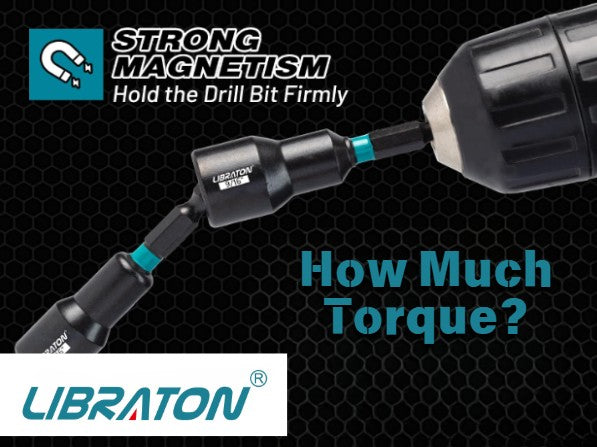
A magnetic nut driver can make fastening and loosening jobs more convenient, especially when working with small nuts in recessed or awkward locations. But one question often gets overlooked: how much force should you actually apply?
The answer is not a single torque number that works for every nut and bolt. The appropriate nut driver torque depends on the fastener, material, application, thread condition, and the manufacturer's specifications. The magnetic feature helps with handling the fastener, but it does not determine the correct tightening torque.
Understanding nut driver torque is therefore less about finding a universal setting and more about knowing when torque matters, how to control it, and when a magnetic nut driver is the right tool for the job.
- What Is Nut Driver Torque?
- Does a Magnetic Nut Driver Change the Required Torque?
- How Much Torque Should You Use?
- Why More Torque Isn't Always Better
- Can You Control Nut Driver Torque With a Drill?
- What About an Impact Driver and Nut Driver?
- Does Nut Driver Size Affect Torque?
- How Magnetic Nut Drivers Help During Fastening
- The LIBRATON 31-Piece Magnetic Nut Driver Set
- When Should You Use a Torque Wrench Instead?
- Tips for Managing Nut Driver Torque
- Final Thoughts
What Is Nut Driver Torque?
Torque is the rotational force applied to a fastener. It is commonly expressed in units such as inch-pounds (in-lb), foot-pounds (ft-lb), or Newton-meters (N·m).
When you use a nut driver, the tool applies rotational force to the nut. The amount required depends heavily on the fastener and the job.
For example, a small nut securing a light-duty bracket generally does not require the same tightening force as a structural fastener on machinery. Applying excessive force to a small fastener can damage the fastener, threads, surrounding material, or accessory.
This is why there is no universal nut driver torque specification.
If the manufacturer provides a torque specification for the fastener or assembly, that specification should take priority over a general rule of thumb.
Does a Magnetic Nut Driver Change the Required Torque?

No. The magnetic feature does not determine how much torque a fastener needs.
A magnetic nut driver uses a magnet to help hold a compatible nut or fastener in the driver. This can be particularly convenient when positioning a nut in a confined area or when you want to keep the fastener with the accessory before starting the fastening operation.
The required tightening torque still comes from the fastener and application.
Think of the magnetic feature as a handling convenience rather than a torque-control mechanism.
For example, if a manufacturer's instructions specify a particular torque for a nut, switching from a non-magnetic nut driver to a magnetic one does not change that specification.
How Much Torque Should You Use?
The safest answer is: use the torque specified for the particular fastener and application.
If a torque specification is available, use an appropriate torque-controlled tool rather than attempting to estimate the value by feel.
This is especially important for applications where incorrect tightening can have meaningful consequences, such as:
- Automotive components
- Machinery
- Electrical equipment with specified fastening requirements
- Plumbing connections
- Equipment assemblies
- Structural or load-bearing components
For ordinary DIY fastening, the situation may be less demanding. Small household hardware, furniture fasteners, brackets, and similar applications may not always come with a formal torque specification. In these cases, avoid treating maximum tool output as the target.
The goal is generally to tighten the fastener sufficiently for the intended application without unnecessarily stressing the fastener or surrounding material.
Why More Torque Isn't Always Better
It can be tempting to assume that more torque means a tighter or better connection. That is not necessarily true.
Excessive torque can cause several problems. Threads can be damaged, smaller fasteners can deform, and components made from softer materials can be damaged by over-tightening.
The accessory itself can also be subjected to unnecessary stress.
This is particularly relevant when working with smaller nuts. A compact nut may require relatively little tightening force compared with a larger industrial fastener.
When using an impact driver, the issue becomes even more important because the tool can deliver repeated impacts rather than simply applying a slow, continuous rotation. Without a suitable torque-control method, relying on the tool's maximum capability is not a substitute for a specified torque value.
Can You Control Nut Driver Torque With a Drill?
Sometimes.
Many cordless drills include a clutch with adjustable settings. When properly used, a clutch can limit the amount of driving force applied during fastening. The exact behavior and settings vary by tool, so the manufacturer's instructions should be followed.
This can make a drill more suitable than an impact driver for applications where controlled fastening is important.
However, clutch numbers should not automatically be interpreted as precise torque values. A numbered clutch setting is not necessarily equivalent to a specific value such as 20 in-lb or 30 in-lb.
If an exact torque specification is important, use a calibrated torque tool appropriate for the application.
What About an Impact Driver and Nut Driver?
An impact driver can be useful for fastening and loosening nuts when the nut driver accessory and application are compatible.
However, an impact driver's high output does not mean every fastener should be tightened using maximum power.
If the application has a specified nut driver torque, use a method that allows you to achieve that specification rather than simply running the impact driver until the fastener feels tight.
For critical assemblies, an impact driver may be useful for initial fastening, with final tightening performed using an appropriate torque-controlled tool when the manufacturer's procedure calls for it.
This approach separates speed and convenience from final torque control.
Does Nut Driver Size Affect Torque?
The size of the nut driver itself does not establish the correct torque specification for the fastener.
A 1/4-inch drive nut driver, for example, can be used with different socket sizes depending on the design and application. The correct tightening torque is determined by the fastener and assembly rather than simply by the drive size.
However, choosing the correct nut driver size is still important.
The driver should properly fit the nut. Using an incorrectly sized accessory can make fastening less effective and may increase the likelihood of slipping or damaging the fastener.
For this reason, match the nut driver to the nut size before applying force.
How Magnetic Nut Drivers Help During Fastening
Although a magnetic nut driver does not establish or regulate torque, it can make the fastening process easier to manage.
The magnet inside the driver can help hold a compatible nut in place while you position it over a threaded fastener. This can be useful when working in recessed areas where holding a loose nut by hand is inconvenient.
The benefit is mainly handling convenience.
It should not be interpreted as meaning that the magnet can compensate for an incorrectly sized driver, excessive force, damaged threads, or an unsuitable fastening technique.
You still need the correct accessory and appropriate amount of force for the application.
The LIBRATON 31-Piece Magnetic Nut Driver Set
For users who regularly work with different fastener sizes, the LIBRATON 31-piece Magnetic Nut Driver Set provides a combination of standard and long-reach nut drivers.
The set contains 14 standard 1/4-inch magnetic nut drivers covering SAE sizes from 3/16 to 9/16 inch and metric sizes from 6 to 14 mm. It also includes 14 six-inch magnetic nut drivers covering a range of SAE and metric sizes. The set includes a 1/4-inch impact-to-hex converter, two long PH1 and PH2 bits, and a storage case.
The nut drivers are made from chrome vanadium steel, and each nut driver incorporates a magnet to help hold compatible fasteners during use.
These features make the set useful for DIY projects, home repair, maintenance, furniture assembly, and other fastening tasks where having multiple nut driver sizes and additional reach is convenient.
The important point is that the set provides accessory options. It does not establish a specific nut driver torque value for the fasteners you are working on. Torque should still be determined by the requirements of the particular application.
When Should You Use a Torque Wrench Instead?
A nut driver is not a replacement for a torque wrench when an exact torque specification is required.
Use a suitable torque-controlled tool when working on an assembly where the manufacturer specifies a precise tightening value.
This is particularly important for safety-critical or mechanically sensitive applications.
A practical workflow can involve both tools. A nut driver or compatible driver accessory can handle routine fastening, while a torque wrench can be used for final tightening when precise torque is required.
That gives you the convenience of powered fastening without confusing tool speed or maximum output with controlled torque.


Tips for Managing Nut Driver Torque
A few simple habits can help prevent over-tightening:
Check the Specifications
Look for the manufacturer's recommended torque before fastening whenever one is provided.
Choose the Correct Size
Use a nut driver that properly matches the fastener. Do not force a mismatched accessory onto a nut.
Start at a Controlled Speed
When using a powered tool, moderate speed can make it easier to observe how the fastener is behaving.
Avoid Maximum Power by Default
Maximum tool output is not automatically the correct setting for every fastener.
Use a Torque-Controlled Tool When Necessary
If the application calls for a specific torque value, use equipment designed to control and measure that torque.
Inspect the Fastener
Stop if you notice damaged threads, unusual resistance, deformation, or other signs that something is wrong.
Final Thoughts
There is no universal nut driver torque that applies to every fastening job. The correct value depends on the fastener, materials, assembly, and manufacturer's specifications.
A magnetic nut driver can make handling compatible nuts more convenient, particularly when working in recessed or difficult-to-reach areas. But the magnet does not determine how tightly the fastener should be installed.
For routine DIY and maintenance work, focus on using the correct driver size, applying reasonable force, and avoiding unnecessary over-tightening. When an exact torque specification matters, switch from estimating by feel to using an appropriate torque-controlled tool.
Understanding the difference between fastening convenience and torque control is the key. A good nut driver helps you work with the fastener, while the application's requirements determine how much torque that fastener actually needs.