
 Cuchillas Oscilantes Multiherramienta
 Hojas de sierra recíproca
 Corte y Esmerilado
 Sierra de corona
 Perforación
 Lijado y pulido
 Juego de vasos y llaves de vaso
 Herramientas Manuales
 Trabajador de metal y fabricación
 Carpintería
 Electricidad y fontanería
 Automotriz
 Hormigón y Albañilería
 Demolición
 NUEVAS LLEGADAS
Introducción
Corte de raíces de árboles: seguridad y mejores prácticas
Cortar raíces de árboles puede parecer simple, pero desafíos como el atascamiento de la hoja en suelos arenosos, el retroceso de la sierra y el trabajo cerca de servicios públicos enterrados lo hacen riesgoso. Los estándares de seguridad para las herramientas utilizadas en el corte de raíces tienen como objetivo reducir fallas como la pérdida de control (contragolpe), lesiones, escombros voladores, ruido y vibración excesivos, y daños a los servicios públicos. Estos estándares no son solo para grandes equipos de construcción; se aplican a contratistas, arboristas, equipos de mantenimiento de propiedades y propietarios de viviendas que utilizan herramientas como hojas de sierra recíproca, hojas de herramientas múltiples oscilantes y herramientas de apoyo como herramientas manuales y juegos de dados y destornilladores.
Esta guía se centra en los fundamentos de seguridad y los flujos de trabajo probados que importan al cortar raíces cerca de estructuras, cercas, aceras y macizos de flores. También utilizaremos las herramientas EZARC como ejemplos de cómo el diseño de la hoja, la geometría de los dientes y los materiales pueden apoyar prácticas de corte más seguras sin convertir esto en un discurso de ventas.

Herramientas EZARC
Fundamentos clave
Los peligros del corte de raíces se dividen en tres categorías: peligros mecánicos (contragolpe, aprisionamiento de la hoja y bordes afilados durante los cambios de hoja), peligros eléctricos y de servicios públicos (líneas enterradas que causan descargas, incendios o explosiones), y peligros del entorno enterrado (arena del suelo, humedad y escombros ocultos como rocas o clavos). Cada uno de ellos debe abordarse por separado para la seguridad, en lugar de asumir que solo se trata de cortar madera.
La guía de seguridad proviene de la OSHA, ANSI y los manuales del fabricante. La OSHA exige la localización de los servicios públicos subterráneos antes de excavar, y los manuales de herramientas especifican el montaje adecuado de la hoja, el uso de protectores y el EPP.
Para seguir los estándares de seguridad, piense en términos de la jerarquía de controles. La Eliminación (cambio de ruta), la Sustitución (uso de herramientas menos agresivas) y los Controles de Ingeniería (protectores, apoyo estable) deben preceder a los Controles Administrativos (sesiones informativas de trabajo y zonas de exclusión). El EPP es esencial, pero debe ser la última línea de defensa.
Antes de comenzar, inspeccione las herramientas en busca de desgaste, confirme el asiento de la hoja y revise el entorno en busca de rocas sueltas o escombros. La configuración adecuada reduce las lesiones, así que tenga a mano un kit básico con herramientas manuales, una pala pequeña, una palanca y juegos de dados para garantizar la seguridad y la estabilidad.
Evaluación de riesgos del sitio de trabajo previa
Un trabajo seguro de corte de raíces comienza con la planificación. Comience por determinar si va a cortar o excavar. Si va a exponer raíces bajo el nivel del suelo, trátelo como una excavación ligera, siguiendo los procedimientos de localización de servicios públicos (https://en.wikipedia.org/wiki/Utility_location). La OSHA y el estándar para propietarios de viviendas en EE. UU. exigen localizar los servicios públicos antes de excavar, como enviar una solicitud al 811 varios días antes si puede haber servicios públicos.
A continuación, evalúe el sistema radicular y las condiciones del suelo. Las raíces tensas pueden romperse al cortarse, y las raíces debajo de las losas pueden moverse. Use Herramientas Manuales como una pala de zanja para exponer las raíces, una barra de excavación para verificar si hay rocas y un cepillo rígido para limpiar la arena. Establezca una zona de exclusión alrededor del área de trabajo para evitar que los escombros golpeen a los transeúntes y para asegurarse de que pueda retirarse de forma segura si la sierra se atasca. Coloque marcadores físicos si el corte está cerca de pasarelas.
Por último, cree una secuencia de pasos. Un proceso seguro es: localizar los servicios públicos, exponer la raíz con una pequeña zanja, limpiar la línea de corte, elegir la longitud de hoja correcta, adoptar una postura adecuada y cortar por etapas. Los cortes por etapas reducen la posibilidad de que el corte se cierre y apriete la hoja. Si pierde de vista la línea de corte, disminuya la velocidad y despeje el área nuevamente. El corte más seguro es el que se puede ver.
Requisitos de equipo de protección personal
El EPP para el corte de raíces no es solo "usar gafas de seguridad". Los estándares deben coincidir con los peligros: virutas voladoras, arena abrasiva, fragmentos de rotura de la hoja, ruido y vibración. La protección ocular es innegociable porque la arena del suelo y las virutas de madera se expulsan de forma impredecible, especialmente cuando se inicia una inmersión o cuando la hoja sale de una raíz en ángulo. Para escombros pesados o ángulos elevados, agregue una careta sobre las gafas de seguridad para tener una protección en capas en lugar de elegir una u otra.
La protección de las manos debe elegirse por el agarre y la resistencia al corte, no por el volumen. Los guantes demasiado gruesos reducen el control y pueden fomentar un agarre excesivo, lo que aumenta la fatiga y la carga de vibración. Si trabaja en suelo húmedo, priorice los guantes que mantengan la fricción cuando están húmedos. La protección auditiva a menudo se pasa por alto en las tareas de jardinería, pero debe tratarse como un estándar cuando las herramientas eléctricas funcionan continuamente. NIOSH identifica 85 dBA promediados durante una jornada laboral de 8 horas como el límite de exposición recomendado para el ruido ocupacional, y las herramientas eléctricas comúnmente alcanzan o superan este nivel. Esto significa que incluso una sesión corta de corte de raíces puede justificar el uso de tapones para los oídos u orejeras, especialmente si también utiliza discos de corte y desbaste u otras herramientas ruidosas el mismo día.
Selección de herramientas para el corte de raíces
Los estándares de selección de herramientas para el corte de raíces se centran principalmente en controlar tres modos de falla: atascamiento, sobrecalentamiento y daño de los dientes por la arena. La primera decisión es el factor de forma de la herramienta. Una sierra recíproca es ideal para raíces medianas a grandes donde se necesita alcance y una trayectoria de corte recta. Una herramienta oscilante puede ser más segura en espacios reducidos cerca de superficies duras porque tiene una amplitud de movimiento más pequeña y puede reducir el riesgo de contragolpe, lo que convierte a las hojas de herramientas múltiples oscilantes en una opción práctica para recortar raíces pequeñas cerca de una pared o un borde de adoquín. Las herramientas manuales siguen siendo la opción más segura para raíces muy pequeñas cuando se pueden cortar las fibras con una sierra de podar o tijeras de podar sin los peligros de las herramientas eléctricas.
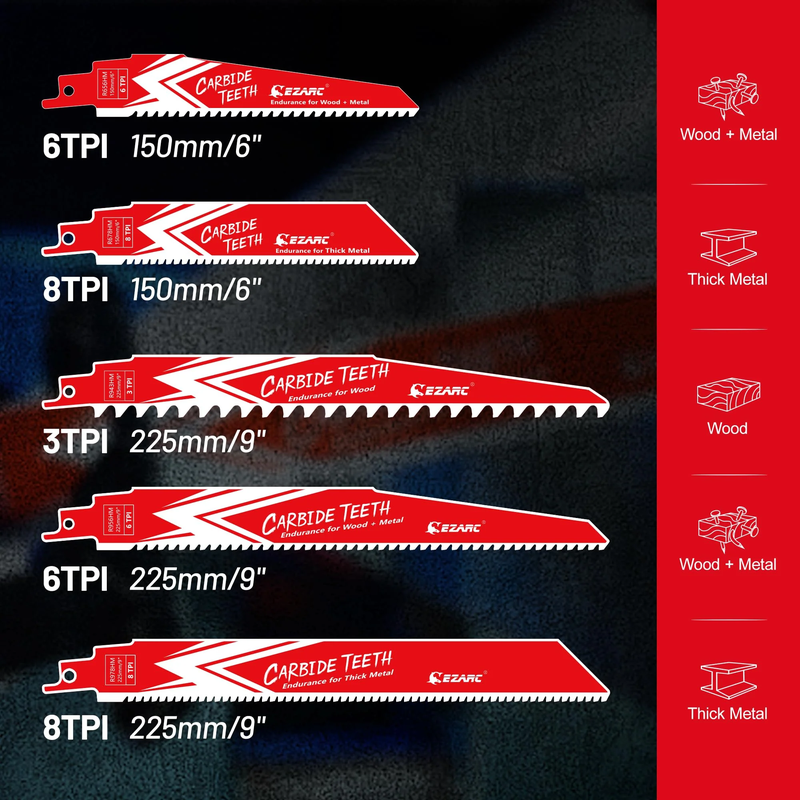
Cuando elija hojas de sierra recíproca, haga coincidir la longitud de la hoja con el diámetro y el acceso de la raíz. Una hoja demasiado corta lo obliga a hacer palanca y girar, lo que aumenta el atascamiento. Una hoja demasiado larga puede azotar, vibrar y golpear el suelo innecesariamente, lo que acelera el desgaste. A continuación, haga coincidir el diseño de los dientes con el material real. Las raíces son madera, pero a menudo son madera contaminada: arena, pequeñas piedras y, a veces, escombros incrustados. Por eso, los diseños de dientes de carburo pueden ser más seguros en cortes sucios; resisten el desgaste abrasivo y mantienen el agarre sin forzar. Por ejemplo, el juego de hojas de sierra recíproca de carburo de corte multimaterial EZARC utiliza dientes de carburo soldados a un cuerpo de acero flexible e incluye múltiples opciones de TPI (3 TPI, 6 TPI y 8 TPI) para que pueda elegir grueso para una eliminación agresiva o más fino para cortes controlados en secciones más pequeñas.
https://www.ezarctools.com
También considere categorías de herramientas secundarias que mejoran indirectamente la seguridad. Los discos de corte y esmerilado a veces se utilizan para quitar barras de refuerzo o obstáculos metálicos cerca de las raíces, pero introducen chispas y un mayor potencial de contragolpe; si los lleva al trabajo, debe actualizar el EPP y eliminar los combustibles. Las brocas y juegos de brocas y los kits de sierras de corona se pueden usar para crear orificios de alivio o vías de drenaje en estructuras de madera cerca de las raíces, pero no deben reemplazar la exposición adecuada de las raíces y el corte controlado. Los juegos de llaves de vaso y destornilladores son importantes porque los zapatos, protectores o soportes de accesorios sueltos pueden generar vibraciones y movimientos inesperados. El enfoque estándar es simple: elija la herramienta menos agresiva que pueda realizar el trabajo limpiamente, luego elija la hoja que corte sin forzar.
Técnicas de corte seguras y posicionamiento del cuerpo
Los estándares de técnica de corte segura se centran en la estabilidad, la alineación y el control de cómo la hoja entra y sale del corte. Comience con su postura: pies separados al ancho de los hombros, un pie ligeramente hacia atrás y las rodillas flexionadas para absorber el movimiento sin pisar la trayectoria de la hoja. Mantenga siempre un agarre con las dos manos cuando sea posible, manteniendo las muñecas neutras. La sierra debe apoyarse contra el trabajo usando la zapata; si la zapata flota, la hoja se convierte en el pivote, lo que aumenta la vibración y el contragolpe. https://www.cdc.gov/niosh/docs/2007-122/pdfs/2007-122.pdf
Los cortes de inmersión requieren especial cuidado, ya que la cuchilla puede deslizarse o engancharse. Comience con una muesca poco profunda usando una presión ligera y una velocidad más lenta, luego profundice el corte una vez que los dientes estén siguiendo la trayectoria. Mantenga la cuchilla alineada con la trayectoria de corte y evite la carga lateral, que ocurre cuando se tuerce la sierra para ensanchar el corte, lo que a menudo causa la flexión de la cuchilla y el desprendimiento de los dientes. Si necesita más espacio, retire la cuchilla, limpie los escombros y vuelva a entrar en un ángulo diferente.
El corte por etapas es una técnica de seguridad clave. En lugar de cortar una raíz gruesa de una sola vez, cree una ranura, retroceda para limpiar las virutas y continúe. Esto reduce el calor y evita que el corte se cierre. Si la hoja se ralentiza o el tono del motor baja, deténgase y reevalúe; forzar el corte convierte un atascamiento manejable en una liberación violenta y aumenta la fatiga, lo que provoca errores.
Si trabaja cerca de una superficie dura como el hormigón, tenga cuidado por donde sale la hoja. El enfoque más seguro es detenerse antes, reposicionarse y terminar desde el lado opuesto en lugar de permitir que la hoja golpee una losa. En estos casos, las hojas más cortas o una herramienta oscilante pueden ser una opción más segura. Un corte limpio y controlado no solo se trata de la apariencia; es una medida de seguridad para reducir los movimientos repentinos.
Cuidado de la hoja, calor y prevención de fallos
El cuidado de la hoja es un estándar de seguridad, no solo una tarea de mantenimiento. La mayoría de las lesiones por corte de raíces ocurren cuando las hojas están desafiladas, dañadas o se usan incorrectamente. El calor es la señal de advertencia temprana. El sobrecalentamiento reduce la eficiencia de corte, fomenta la fuerza excesiva y debilita la hoja con el tiempo. En los cortes de raíces sucios, la arena aumenta la fricción, lo que hace que el corte se llene de escombros, acelerando la acumulación de calor. Para evitar esto, use una técnica de pulsación: corte brevemente, retire, limpie y reanude. Si nota humo, olores a quemado o decoloración, ajuste su técnica inmediatamente.
La prevención de fallas comienza con la inspección. Reemplace las hojas que estén dobladas, les falten dientes, estén astilladas o agrietadas cerca del vástago. Incluso una hoja ligeramente doblada puede causar atascamientos, especialmente al golpear nudos o coronas de raíces densas. El almacenamiento también es importante: las hojas sueltas en una caja de herramientas pueden dañar los dientes y oxidarse, lo que aumenta la fricción. Use una caja o funda para mantener las hojas rectas y protegidas.
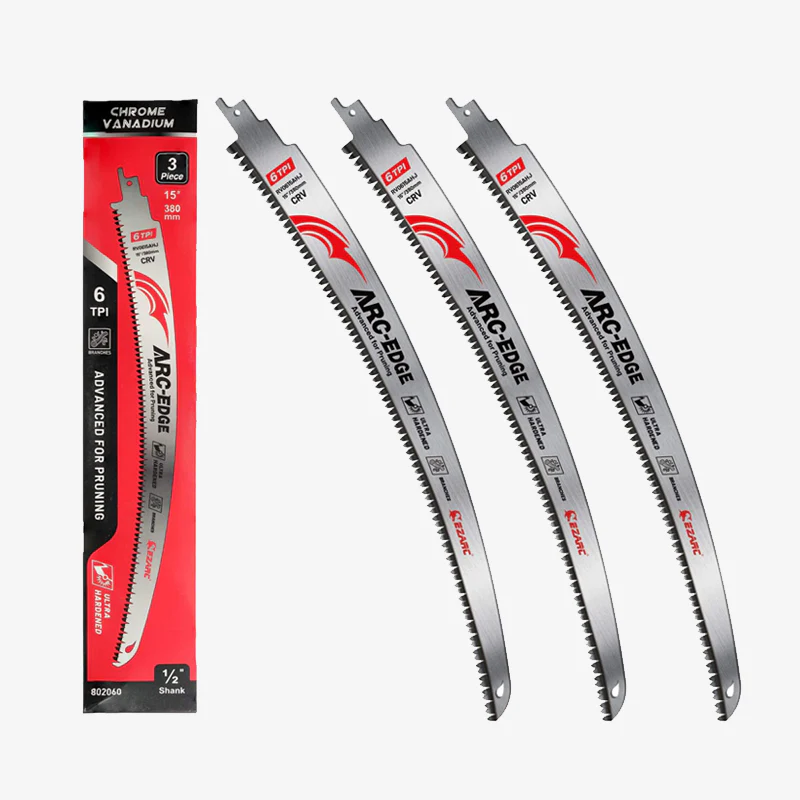
Las hojas con dientes de carburo son ideales para entornos abrasivos, ya que mantienen su filo por más tiempo y proporcionan un rendimiento constante, lo que reduce la necesidad de empujar demasiado fuerte. El juego de carburo multi-material EZARC ofrece durabilidad con varias longitudes y opciones de TPI para evitar el exceso de alcance y las vibraciones. Para cortes de poda en madera más limpia, una hoja de poda de madera dedicada es más eficiente y suave, ya que su geometría de dientes está optimizada para cortar fibras en lugar de materiales mixtos. https://en.wikipedia.org/wiki/Tungsten_carbide
Una parte final del cuidado de la cuchilla es elegir cuándo no cortar. Si la raíz está profundamente incrustada debajo de una losa, o si no puede exponer una ventana de corte segura sin socavar una estructura, el enfoque estándar es detenerse y escalar: consultar a un arborista o a un contratista con el equipo adecuado. Los estándares de seguridad lo protegen de convertir un corte simple en un daño estructural o una lesión grave.
Diámetro de la raíz: coincidencia de la longitud de la hoja y la carrera
Como regla general de campo, la longitud de la hoja debe exceder el diámetro de la raíz lo suficiente como para que los dientes permanezcan enganchados sin enterrar toda la hoja en el suelo. Si la hoja es demasiado corta, hará palanca con la sierra y cargará lateralmente la hoja. Si la hoja es mucho más larga de lo necesario, puede golpear el suelo en la carrera de retorno y desafilar los dientes rápidamente. Si no está seguro, exponga más la raíz en lugar de compensar con una hoja más larga.
Humedad de la madera y comportamiento de la fibra: elija el perfil del diente y el TPI
Las raíces húmedas y verdes cortan de forma diferente a la madera seca y curada. Las fibras húmedas pueden agarrar y cerrar la ranura, lo que aumenta el riesgo de atascos. Los dientes más gruesos (menor TPI) limpian mejor las astillas en materiales gruesos y húmedos, mientras que los dientes más finos (mayor TPI) pueden proporcionar un control más suave en raíces pequeñas y cortes parciales. Si siente vibraciones, es posible que el perfil de los dientes sea demasiado agresivo para el tamaño de la raíz o que no esté apoyando la base correctamente.
Arena y contaminación del suelo: carburo vs. bimetal
En madera limpia y expuesta, muchas hojas estándar pueden funcionar. En cortes contaminados con tierra, los dientes de carburo mantienen la estabilidad del filo por más tiempo y se mantienen predecibles en condiciones abrasivas, lo que favorece una técnica más segura porque no es necesario empujar con más fuerza a medida que la hoja se desafila. El bimetal puede ser apropiado para trabajos más ligeros y limpios, pero tiende a perder agarre más rápido en ranuras arenosas, lo que aumenta el calor y la tentación de forzar. Elija según el entorno, no solo el nombre del material.
Conclusión
Los estándares de seguridad para herramientas de corte de raíces de árboles no son complicados, pero son estrictos por una razón: las raíces crean ataduras, la tierra crea abrasión y los servicios ocultos crean un riesgo catastrófico. El camino más fiable hacia resultados seguros es una configuración disciplinada (ubicación de servicios públicos, exposición, zonas de exclusión), el equipo de protección personal correcto (ojos, manos, oídos) y la selección de la hoja que minimice la fuerza. Una vez que su flujo de trabajo sea sólido, productos como las hojas de sierra recíproca duraderas y las hojas de poda diseñadas específicamente se convierten en facilitadores de una técnica más segura en lugar de atajos. Si da un paso hoy, que sea este: planifique el corte, inspeccione la herramienta y elija la hoja que mantenga el trabajo controlado.
Preguntas frecuentes
¿Qué EPI es esencial para cortar raíces de árboles con herramientas eléctricas?
Como mínimo, debe usar gafas de seguridad con protección lateral, guantes duraderos que preserven el agarre y protección auditiva cuando la herramienta funcione continuamente. Agregue un protector facial cuando corte en tierra arenosa, realice trabajos en altura o cuando los escombros sean abundantes e impredecibles. Use calzado con suela agresiva porque los resbalones son comunes en césped mojado, mantillo o tierra suelta alrededor de las raíces. Si el polvo es significativo o la visibilidad disminuye, considere la protección respiratoria y haga una pausa para mejorar el área de trabajo en lugar de cortar a ciegas.
¿Cuándo debo usar hojas con dientes de carburo frente a bimetálicas para raíces?
Las hojas con dientes de carburo tienen más sentido cuando es probable que la ranura sea abrasiva, como las raíces cortadas a nivel o por debajo del suelo, donde la tierra entrará en contacto con los dientes. También ayudan cuando se pueden encontrar materiales mezclados, como pequeños desechos incrustados, porque la retención del filo se mantiene más consistente y reduce la necesidad de forzar. Las hojas bimetálicas pueden ser apropiadas para madera más limpia y expuesta donde el desgaste abrasivo es menor y se puede mantener una ranura limpia. La prueba práctica es el control: si siente que está empujando con más fuerza a medida que avanza el corte, es probable que necesite una solución de dientes más duradera o una mejor exposición.
¿Cómo reduzco el retroceso y el atasco al cortar raíces?
Comience por mejorar la ventana de trabajo: excave lo suficiente para mantener la hoja alineada y visible, y retire las rocas sueltas del área de corte. Mantenga una postura estable, use un agarre con las dos manos y mantenga la zapata de la sierra presionada contra la raíz para que la hoja no se convierta en el punto de pivote. Evite girar la hoja en la ranura; en su lugar, retire, limpie los residuos y vuelva a entrar. Finalmente, elija una longitud de hoja que se ajuste al diámetro de la raíz para no hacer palanca con la hoja ni enterrarla en la tierra.
¿Es una herramienta oscilante más segura que una sierra recíproca para raíces?
Una herramienta oscilante puede ser más segura para raíces pequeñas en espacios reducidos porque el movimiento de la hoja es más corto y tiende a ser más fácil de controlar cerca de superficies duras. Las hojas multiherramienta oscilantes son especialmente útiles para recortar raíces cerca de adoquines, paredes o bordes de jardines donde se desea precisión y un recorrido mínimo. Sin embargo, las herramientas oscilantes son más lentas para raíces gruesas y pueden alargar el tiempo de exposición, lo que aumenta la fatiga. Use la herramienta oscilante cuando el acceso y la precisión dominen el riesgo, y use una sierra recíproca cuando pueda lograr un soporte estable y necesite una extracción eficiente.
¿Cómo debo almacenar y transportar las hojas para mantenerlas seguras y rectas?
Mantenga las hojas en un estuche o funda dedicados para que los dientes estén protegidos y el cuerpo de la hoja permanezca recto. Evite tirar las hojas sueltas en una caja de herramientas donde puedan doblarse por herramientas más pesadas o donde los dientes puedan golpearse contra el metal. Seque las hojas después de usarlas en tierra húmeda y elimine los residuos acumulados para que la corrosión no aumente la fricción en el siguiente trabajo. Un buen almacenamiento es una práctica de seguridad porque una hoja recta y sin daños es más predecible y menos propensa a atascarse.
Tabla de Contenidos
- Fundamentos
- Evaluación de riesgos del lugar de trabajo previa al trabajo
- Requisitos del equipo de protección personal
- Selección de herramientas para el corte de raíces
- Técnicas de corte seguras y posicionamiento corporal
- Cuidado de la hoja, calor y prevención de fallasDiámetro de la raíz: coincidencia de la longitud de la hoja y la carreraHumedad de la madera y comportamiento de la fibra: elección del perfil de los dientes y TPIGrano del suelo y contaminación: carburo vs bimetal
- Conclusión
- Preguntas frecuentes¿Qué EPI es esencial para cortar raíces de árboles con herramientas eléctricas?¿Cuándo debo usar hojas con dientes de carburo frente a bimetálicas para raíces?¿Cómo reduzco el retroceso y el atasco al cortar raíces?¿Es una herramienta oscilante más segura que una sierra recíproca para raíces?¿Cómo debo almacenar y transportar las hojas para mantenerlas seguras y rectas?



Dejar un comentario
Este sitio está protegido por hCaptcha y se aplican la Política de privacidad de hCaptcha y los Términos del servicio.