
 Cuchillas Oscilantes Multiherramienta
 Hojas de sierra recíproca
 Corte y Esmerilado
 Sierra de corona
 Perforación
 Lijado y pulido
 Juego de vasos y llaves de vaso
 Herramientas Manuales
 Trabajador de metal y fabricación
 Carpintería
 Electricidad y fontanería
 Automotriz
 Hormigón y Albañilería
 Demolición
 NUEVAS LLEGADAS

Introducción
Cómo elegir las herramientas más seguras para cortar hierro fundido
Cortar hierro fundido es arriesgado porque es fuerte, quebradizo y puede fallar de forma impredecible. A diferencia del acero dulce, el hierro fundido puede agrietarse repentinamente, desprender virutas afiladas y enganchar una rueda o cuchilla si la configuración es incorrecta. Los principales riesgos son el contragolpe, las esquirlas voladoras y la falla de la rueda abrasiva.
Para mantenerse seguro, no solo compre accesorios más resistentes. Elija la herramienta adecuada para el trabajo, adapte el accesorio al hierro fundido, verifique las clasificaciones y el ajuste, y controle el polvo, las chispas y las vibraciones con una técnica adecuada.
Esta guía muestra un método paso a paso para elegir de forma segura herramientas de corte para hierro fundido. Los accesorios EZARC, como las Hojas de sierra recíproca y los Discos de corte y desbaste, garantizan cortes más suaves y seguros.
Cómo elegir las herramientas más seguras paso a paso
Paso 1: Identifique el tipo de hierro fundido
Antes de elegir una herramienta, identifique qué está cortando exactamente y cómo está apoyado. Las tuberías y accesorios de hierro fundido a menudo tienen espesores de pared variables, recubrimientos viejos y sarro interno que pueden cambiar la sensación del corte. Los utensilios de cocina y las rejillas pueden ser más delgados pero más quebradizos, por lo que tienden a astillarse si se fuerza el corte o se introduce una carga lateral. Las bases de máquinas y los soportes pesados pueden ser gruesos y estables, pero a menudo son difíciles de sujetar, lo que aumenta el riesgo de vibración y atascos.
Comience confirmando tres cosas: el espesor, el acceso y si la pieza puede moverse al finalizar el corte. Si es una tubería, mida el diámetro exterior y estime el espesor de la pared si puede. Si es una instalación fija, verifique si el corte liberará tensión o provocará una caída. Esta clasificación impulsa la elección de la herramienta más segura: amoladora angular para acceso abierto y cortes rectos, sierra recíproca para corte controlado en su lugar y disco diamantado cuando se necesita un desgaste predecible y una acción de corte estable.
Paso 2: Elija la clase de herramienta más segura para el trabajo
Para la mayoría de las tareas de corte de hierro fundido, la clase de herramienta más segura es aquella que minimiza el atascamiento y reduce la posibilidad de agarres repentinos. En muchos casos reales, esto significa (1) una amoladora angular con un disco de corte clasificado, o (2) una sierra recíproca con una hoja de dientes de carburo. Una amoladora puede ser rápida y limpia si mantiene la protección instalada, un ángulo de corte recto y evita torcer el disco. Una sierra recíproca suele ser más segura en espacios reducidos porque la hoja tiene menos probabilidades de romperse y la herramienta es más fácil de controlar cuando la pieza de trabajo está fija.
Evite elegir herramientas que inviten a la carga lateral o a un control deficiente. Por ejemplo, forzar una rueda no clasificada, usar un adaptador de árbol que no coincida o usar una geometría de diente de hoja incorrecta puede aumentar la vibración y hacer que el corte se desvíe. Si no está seguro, elija la opción que le permita sujetar firmemente el trabajo y mantener las manos fuera de la línea de fuego. Esto generalmente significa una amoladora angular para trabajos de banco y una sierra recíproca para tuberías o accesorios en su lugar.
Paso 3: Combine el accesorio con hierro fundido y metal pesado
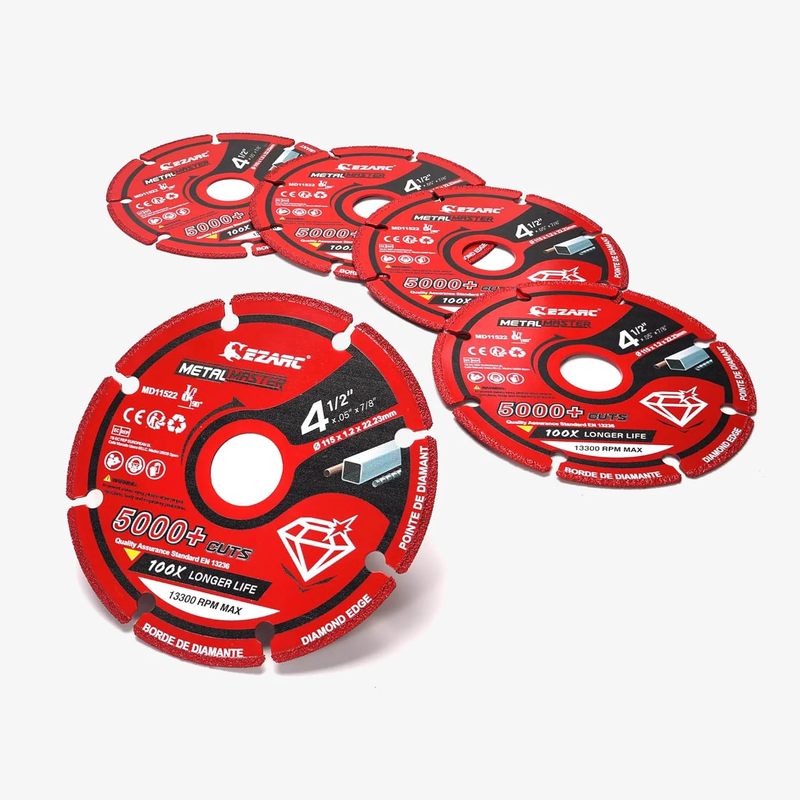
Una vez que elija la clase de herramienta, seleccione un accesorio diseñado para materiales abrasivos y pesados. El hierro fundido se comporta más como un material altamente abrasivo que el acero típico, por lo que desgasta rápidamente las cuchillas comunes y los discos delgados. En general, las hojas de sierra recíproca con dientes de carburo son una opción más segura para el hierro fundido grueso porque están construidas para permanecer intactas bajo el calor y la vibración. Para las amoladoras, un disco de corte de metal diamantado puede proporcionar un rendimiento de corte constante porque el borde de corte no se consume como un disco estándar delgado.
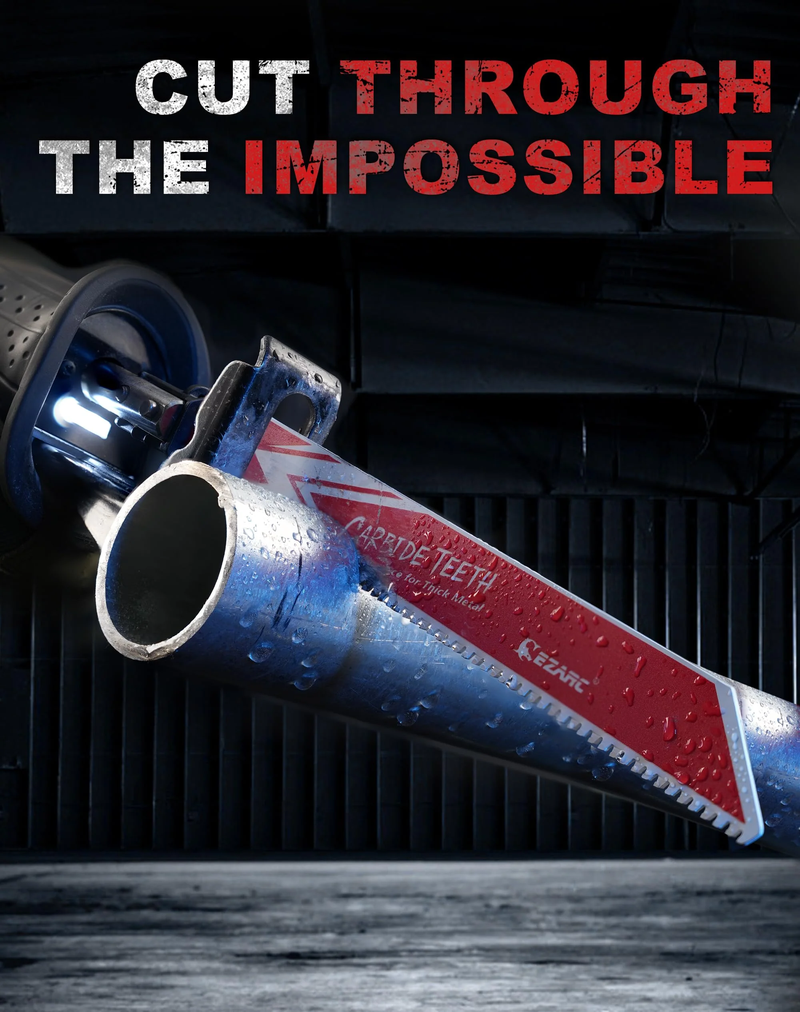
Si desea una regla de decisión simple, elija dientes de carburo cuando necesite un corte controlado y un menor riesgo de pellizco de la rueda, y elija una rueda de amoladora cuando tenga un excelente acceso, un soporte estable y necesite velocidad. Muchos usuarios mantienen ambas opciones a mano para poder cambiar si el corte comienza a atascarse o si cambia el acceso.
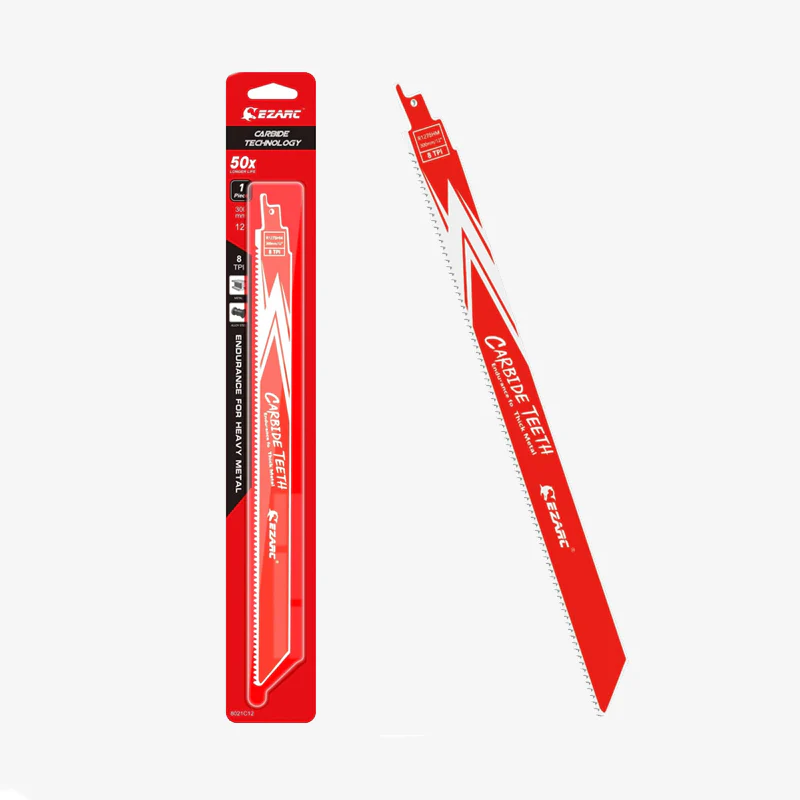
Ejemplo de EZARC que se ajusta a este paso: las hojas de sierra recíproca de carburo EZARC de 8TPI para metal grueso y hierro fundido (disponibles en varias longitudes) están construidas con un diseño grueso de 8TPI que ayuda a eliminar los residuos y reducir la acumulación de calor durante el corte pesado. Esa combinación puede hacer que el corte sea más estable y reducir la tentación de forzar la herramienta.
Paso 4: Verifique el tamaño, el ajuste del árbol y la velocidad antes de cortar
Este es el paso donde los trabajos seguros se mantienen seguros. Para cualquier disco de corte y desbaste basado en amoladora, confirme que el diámetro del disco coincide con la guarda y la herramienta, y confirme que el tamaño del árbol coincide con el husillo sin soluciones improvisadas. Un disco que no se asienta correctamente puede tambalearse, vibrar y fallar. También confirme que las RPM máximas de la herramienta no excedan la marca de velocidad máxima de funcionamiento del accesorio. La OSHA exige específicamente verificar que la velocidad del husillo no exceda la velocidad máxima de funcionamiento del disco, y también describe la inspección y prueba de sonido de los discos antes de montarlos en contextos aplicables.
Para sierras recíprocas, las comprobaciones equivalentes son más simples pero siguen siendo importantes: verifique que la longitud de la hoja le dé espacio libre total sin que la zapata flote en el aire, y confirme que el vástago y la abrazadera de la hoja estén seguros. Si la pieza de trabajo es gruesa, las hojas más largas reducen la posibilidad de que la hoja se incline y vibre, pero solo si puede mantener la zapata apoyada.
Ejemplo de EZARC que se ajusta a este paso: si necesita alcance para una sección gruesa o un corte profundo, la variante de hoja de sierra recíproca de carburo de 12 pulgadas y 8 TPI es la opción más segura que forzar una hoja corta para cortar profundamente. Un alcance más largo le ayuda a mantener la zapata de la sierra contra el trabajo, lo que reduce las vibraciones y el agarre repentino que ocurre cuando la hoja se flexiona.
Paso 5: Controle el polvo, las chispas y la vibración con una técnica segura
El corte de hierro fundido produce polvo fino y virutas afiladas, y el corte con amoladora arroja chispas que pueden encender los escombros cercanos. Su técnica debe centrarse en la estabilidad y el control del calor. Con una amoladora, mantenga un ángulo de corte recto y evite la presión lateral. Deje que la rueda haga el trabajo y alimente de manera constante, porque forzar la herramienta aumenta el calor y la posibilidad de que la rueda se pellizque. Con una sierra recíproca, mantenga la zapata firmemente contra el trabajo, comience a una velocidad más lenta para establecer un corte, luego aumente la velocidad mientras mantiene una presión moderada.
La vibración es una señal de advertencia. Si el trabajo está vibrando, su corte será menos predecible y su riesgo aumentará. Reduzca la vibración mejorando la sujeción, cambiando la longitud de la hoja o cambiando la clase de herramienta. También controle el polvo trabajando al aire libre o utilizando una captura local si es factible, y mantenga los materiales inflamables alejados de las trayectorias de las chispas. Si está cortando tuberías instaladas, proteja las superficies cercanas con barreras no inflamables y planifique dónde caerá la pieza cortada.
Ejemplo de EZARC que se ajusta a este paso: un disco de corte de metal de diamante puede ser una buena opción cuando se desea un corte constante sin la rápida pérdida de diámetro común en los discos delgados unidos. Ese borde consistente puede facilitar el mantenimiento de una línea de corte estable y reducir la tendencia a presionar más fuerte a medida que el disco se desgasta.
Comprar: https://www.ezarctools.com/products/diamond-cutting-wheel?_pos=1&_sid=b784332cc&_ss=r
Paso 6: Asegure la pieza de trabajo para evitar pellizcos, caídas y contragolpes
La sujeción no es opcional para un corte seguro de hierro fundido. El objetivo es evitar el movimiento y que el corte se cierre sobre el disco o la cuchilla. Apoye ambos lados de la línea de corte para que el material no se combe y se pellizque al terminar. Para tuberías, use dos abrazaderas o una prensa para tuberías y agregue un soporte debajo del lado de caída. Para rejillas o utensilios de cocina, use mordazas acolchadas o bloques de madera de desecho para que la abrazadera no agriete la pieza antes de comenzar.
Coloque su cuerpo de manera que no esté en línea con el disco o la cuchilla. Si la herramienta se engancha, desea que se aleje de usted, no hacia usted. Para amoladoras, párese ligeramente a un lado y mantenga la guarda entre usted y el disco. Para sierras recíprocas, mantenga el control con ambas manos y evite iniciar el corte con la punta de la cuchilla sin soporte.
Una lista de verificación simple ayuda: sujete, apoye, verifique el espacio libre, confirme la guarda, confirme el PPE y luego corte. Si no puede sujetar de forma segura, reconsidere la clase de herramienta o mueva el trabajo a una ubicación más controlable.
Paso 7: Inspeccione y reemplace los consumibles antes de que se vuelvan inseguros
Los accesorios desafilados o dañados no solo son más lentos, sino que son menos predecibles. Para las ruedas y discos de amoladora, deje de usarlos si ve grietas, vidriado intenso, segmentos faltantes, deformaciones o vibraciones inusuales. La OSHA enfatiza la inspección de las ruedas antes del montaje y evitar el uso de ruedas dañadas en contextos de ruedas abrasivas relevantes, lo que se alinea con la realidad práctica de que pequeños defectos pueden convertirse en fallas a altas RPM.
Para hojas recíprocas de carburo, reemplácelas cuando los dientes estén astillados, la hoja esté doblada o la velocidad de corte disminuya drásticamente incluso con la técnica correcta. También esté atento a la decoloración por sobrecalentamiento y al traqueteo excesivo, lo que puede indicar que la hoja ya no está cortando de forma recta. El hábito más seguro es inspeccionar antes de cada trabajo y retirar los consumibles temprano, porque el costo de un accesorio desgastado se paga con riesgo.
Ejemplo de EZARC que se ajusta a este paso: si va a realizar cortes repetidos en hierro fundido, tenga varias hojas de carburo a mano para no verse tentado a terminar un trabajo con una hoja gastada. Para trabajos de amoladora, tenga un disco de corte de metal dedicado para secciones delgadas y cambie en lugar de forzar una rueda comprometida.
Adaptación de su enfoque en diferentes escenarios
Tubos de hierro fundido grueso (tuberías in situ): Utilice hojas de sierra recíproca con dientes de carburo y elija una longitud de hoja que permita que la zapata permanezca apoyada. Comience despacio para establecer un surco, luego aumente la velocidad mientras mantiene el tubo completamente apoyado. Este enfoque reduce el riesgo de pellizcos en comparación con forzar una amoladora en un espacio reducido. https://en.wikipedia.org/wiki/Cast_iron#Gray_cast_iron
Secciones delgadas de hierro fundido (rejillas, soportes, cubiertas): Un disco de corte delgado puede ser rápido, pero solo si la pieza está firmemente sujeta y se mantiene el disco perfectamente recto. Use poca presión y planifique la rotura en el extremo del corte apoyando el lado del desecho. https://www.sciencedirect.com/topics/engineering/brittle-fracture
Área confinada (cerca de paredes o marcos): Las hojas recíprocas más cortas pueden ayudarle a evitar golpear superficies adyacentes. Mantenga el zapato firmemente presionado y considere hacer un corte de alivio para reducir el atascamiento al terminar.
Contacto con metales mixtos (aleaciones desconocidas, barras de refuerzo cercanas, sujetadores incrustados): Un disco de diamante puede ser una opción de respaldo más segura cuando se espera material inconsistente o contacto incidental. También es útil cuando se desea un borde de corte estable sin cambios frecuentes de disco.
Lo que necesitará antes de empezar
Herramientas y materiales necesarios
No necesita un kit enorme, pero sí necesita los fundamentos correctos para un control seguro. Comience con una amoladora angular que tenga su protección instalada y correctamente ajustada. Agregue una sierra recíproca de velocidad variable si espera tuberías en su lugar o acceso incómodo. Tenga discos de corte y desbaste adecuados para metal, además de una opción duradera como una rueda de corte de metal de diamante para una vida útil más larga y un corte más constante. Tenga hojas de sierra recíproca adecuadas para hierro fundido, idealmente hojas con dientes de carburo en al menos dos longitudes.
Incluya también herramientas manuales básicas para el control: un tornillo de banco o una prensa de tubo, dos abrazaderas, una llave para ajustar las protecciones y un marcador más cinta métrica para el trazado. Si desea resultados más limpios, agregue una lima o una herramienta de desbarbado para los bordes después del corte. Tener las herramientas manuales adecuadas reduce la improvisación, que es donde comienzan muchos problemas de seguridad.
Consideraciones de seguridad
Use protección ocular y un protector facial al cortar hierro fundido, ya que las virutas y los fragmentos abrasivos pueden viajar de forma impredecible. Use protección auditiva, especialmente con amoladoras y sierras recíprocas, ya que la exposición prolongada puede dañar la audición incluso en trabajos cortos. Use guantes que permitan el agarre sin reducir el control, y use un respirador adecuado para partículas finas cuando el corte produzca polvo. Mantenga el área libre de materiales inflamables y dirija las chispas lejos de cables, trapos y solventes.
Para el trabajo con amoladora, mantenga la protección instalada y colóquese fuera del plano de la rueda. La guía de la OSHA sobre ruedas abrasivas enfatiza la inspección y las prácticas de montaje seguras, y la conclusión práctica es simple: nunca use una rueda dudosa a altas RPM. Finalmente, planifique el corte para que la pieza cortada no caiga, gire o pellizque la rueda al final, porque el último centímetro es donde comienzan muchos eventos de contragolpe.
Guía de resolución de problemas
| Problema | Causa | Solución |
|---|---|---|
| La rueda se atasca a mitad del corte | Pieza de trabajo sin soporte, el corte se cierra | Vuelva a sujetar y apoye ambos lados del corte, luego vuelva a entrar suavemente en el corte con una presión de avance más ligera |
| La hoja traquetea y salta | Patrón de dientes incorrecto, la zapata no está apoyada | Cambie a una hoja recíproca de carburo de 8 TPI y mantenga la zapata de la sierra firmemente presionada contra la pieza de trabajo |
| El corte se desvía de la línea | Presión lateral, vibración, acceso deficiente | Reduzca la presión, mejore la sujeción y haga una ranura guía poco profunda antes de comprometerse con la profundidad total |
| Exceso de chispas y sobrecalentamiento | Avance demasiado fuerte, disco glaseado | Reduzca la presión, deje que la herramienta mantenga la velocidad y reemplace un disco glaseado o desgastado |
| Corte lento a pesar de la herramienta correcta | Consumible desgastado o clase de accesorio incorrecta | Inspeccione si hay dientes desgastados o ruedas dañadas, luego cambie a una hoja nueva o considere una rueda de diamante para mayor consistencia |
Conclusión
Cómo elegir las herramientas más seguras para cortar hierro fundido se trata realmente de disciplina: identificar el material y el acceso, elegir la clase de herramienta más segura, combinar el accesorio, verificar las clasificaciones y el ajuste, controlar el polvo y la vibración, sujetar la pieza de trabajo y reemplazar los consumibles a tiempo. Cuando sigue ese proceso, el hierro fundido se vuelve mucho más predecible de cortar, incluso en lugares de trabajo donde las condiciones no son perfectas.
Si desea simplificar su configuración, tenga a mano una pequeña rotación de accesorios EZARC compatibles con hierro fundido: hojas de sierra recíproca de carburo para cortes controlados in situ, y discos de corte y desbaste duraderos (incluida una opción de disco de diamante) para trabajos de amoladora de acceso abierto.
Preguntas frecuentes
¿Puedo usar una hoja para madera en hierro fundido si solo necesito un corte?
No, una hoja para madera es una opción deficiente e insegura para el hierro fundido porque los dientes y el cuerpo no están diseñados para metales abrasivos. Se desafilará casi de inmediato, se sobrecalentará y puede comenzar a rebotar o engancharse a medida que pierde mordida. Esa pérdida de control es lo que aumenta el riesgo de contragolpe y dientes rotos. En su lugar, use una hoja recíproca con dientes de carburo o una rueda de corte de metal adecuada.
¿Necesito cortar hierro fundido en húmedo para reducir el polvo?
En la mayoría de las situaciones de bricolaje, el corte en seco es más común, pero aun así debe controlar el polvo con ventilación, distancia y un respirador adecuado. El corte en húmedo puede reducir el polvo en el aire, pero no es automáticamente más seguro porque puede introducir riesgos de resbalones, problemas eléctricos y problemas de compatibilidad de herramientas. Si considera métodos húmedos, siga las instrucciones del fabricante de su herramienta y accesorios y mantenga los cables y las conexiones protegidos. Para muchos usuarios, cortar al aire libre con un buen EPP y control de chispas es la base práctica de seguridad.
¿Qué debo hacer si el corte empieza a atascarse cerca del final?
Deje de cortar inmediatamente y no fuerce la herramienta, porque forzar es lo que convierte un pequeño pellizco en un evento de retroceso. Añada soporte debajo del lado del corte para que el material no se combe y cierre la hendidura al terminar. Si está utilizando una amoladora, vuelva a entrar en el corte suavemente y mantenga el disco perfectamente recto con una ligera presión de avance. Si está utilizando una sierra recíproca, reduzca la velocidad, mantenga la base plantada y termine con presión constante en lugar de velocidad.
¿Cómo sé cuándo reemplazar un disco o cuchilla por razones de seguridad?
Reemplace un disco si ve grietas, deformaciones, segmentos faltantes, un glaseado intenso, o si comienza a vibrar de una manera que no lo hacía al principio del trabajo. Reemplace una cuchilla recíproca si los dientes están astillados, la cuchilla está doblada, o la velocidad de corte disminuye drásticamente incluso después de mejorar la sujeción y la técnica. Como regla general, si siente que está empujando con más fuerza para progresar, es una señal de que el consumible ya no está cortando de manera eficiente. Cambiarlo antes es más seguro que intentar terminar un trabajo con un accesorio desgastado.
Tabla de Contenidos
- Introducción
-
Cómo elegir las herramientas más seguras paso a paso
- Paso 1: Identificar el tipo de hierro fundido
- Paso 2: Elegir la clase de herramienta más segura para el trabajo
- Paso 3: Unir el accesorio al hierro fundido y metales pesados
- Paso 4: Verificar el tamaño, el ajuste del árbol y la velocidad antes de cortar
- Paso 5: Controlar el polvo, las chispas y la vibración con una técnica segura
- Paso 6: Asegurar la pieza de trabajo para evitar pellizcos, caídas y retrocesos
- Paso 7: Inspeccionar y reemplazar los consumibles antes de que se vuelvan inseguros
- Adaptando su enfoque en diferentes escenarios
- Lo que necesitará antes de empezar
- Guía de Solución de Problemas
- Conclusión
- Preguntas Frecuentes


Dejar un comentario
Este sitio está protegido por hCaptcha y se aplican la Política de privacidad de hCaptcha y los Términos del servicio.