
 Cuchillas Oscilantes Multiherramienta
 Hojas de sierra recíproca
 Corte y Esmerilado
 Sierra de corona
 Perforación
 Lijado y pulido
 Juego de vasos y llaves de vaso
 Herramientas Manuales
 Trabajador de metal y fabricación
 Carpintería
 Electricidad y fontanería
 Automotriz
 Hormigón y Albañilería
 Demolición
 NUEVAS LLEGADAS
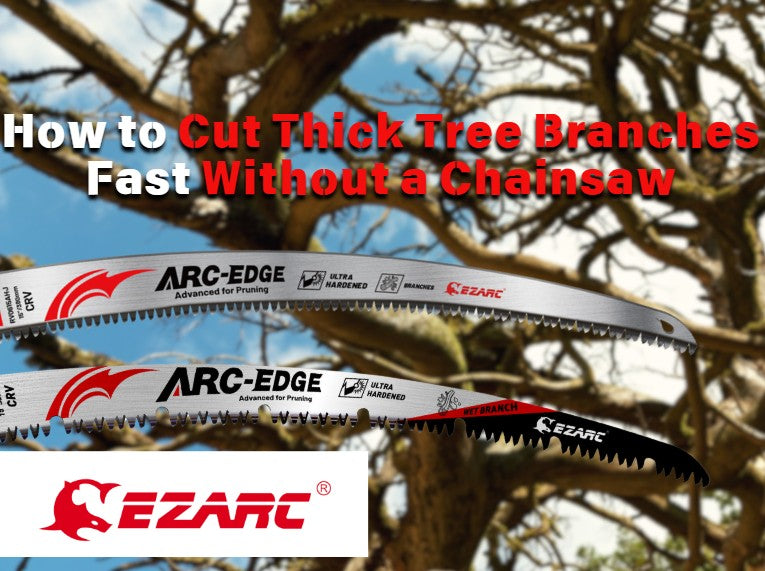
There's a certain kind of dread that sets in when you're staring up at a thick, storm-damaged limb and your only tool of choice feels like a chainsaw, loud, heavy, and just a little terrifying when you're balanced on a ladder ten feet off the ground. Here's the good news: you don't need one. With the right reciprocating saw blades and a bit of technique, you can drop thick branches just as fast, with a lighter tool, way less noise, and a lot more control.
Reciprocating saws get a bad reputation for tree work because most people are running them with the wrong reciprocating saw blade, usually whatever general-purpose demolition blade was already in the toolbox. Swap that out for a blade actually engineered for wood, and the whole job changes. What used to feel like sawing through concrete suddenly feels like slicing warm bread.
Let's get into why a reciprocating saw can outperform a chainsaw for a huge chunk of pruning and cleanup work, and exactly how to set yourself up to cut fast without sacrificing safety.
Why a Reciprocating Saw Beats a Chainsaw for Most Branch Work

Chainsaws are built for felling and bucking, big timber, ground-level, both hands free, feet planted. The moment you're up a ladder, reaching overhead, or working in a tight canopy, a chainsaw becomes a liability. It's heavy, it kicks back, and one wrong angle can end badly fast.
A reciprocating saw fitted with the right reciprocating saw blades solves nearly all of that, and it does it with a tool most people already own:
- Lighter and easier to control one-handed is critical when your other hand is holding a ladder rung or a branch.
- No kickback risk the way a spinning chain has.
- Quieter, which matters if you're working near a house, a nervous dog, or the crack of dawn.
- More precise, since the straight or curved reciprocating stroke lets you follow exact cut lines instead of a wide chain kerf.
- Cheaper to maintain, no chain oil, no chain tensioning, no chain sharpening. Just swap the blade when it dulls.
The catch is that all of this only holds true if you're using Sawzall blades that are actually built for thick, green, or damp wood, not a generic all-purpose blade that binds after three strokes.
Step 1: Pick the Right Reciprocating Saw Blade for the Job
This is where most people go wrong. A demolition-grade blade, the kind meant for nail-embedded lumber or drywall, has a fine tooth pattern that's simply too weak for a thick, living branch. It'll bog down, overheat, and dull in minutes.
For tree work, the best Sawzall blades share a few key traits:
- 6 TPI (teeth per inch), coarse enough to bite aggressively without clogging on thick material.
- Deep gullets to clear chips fast, especially in wet or green wood.
- A curved, arc-edge profile that follows the natural shape of a branch instead of skating across it.
- Chrome-vanadium (Cr-V) steel for an edge that survives sap, moisture, and repeated cuts without folding.
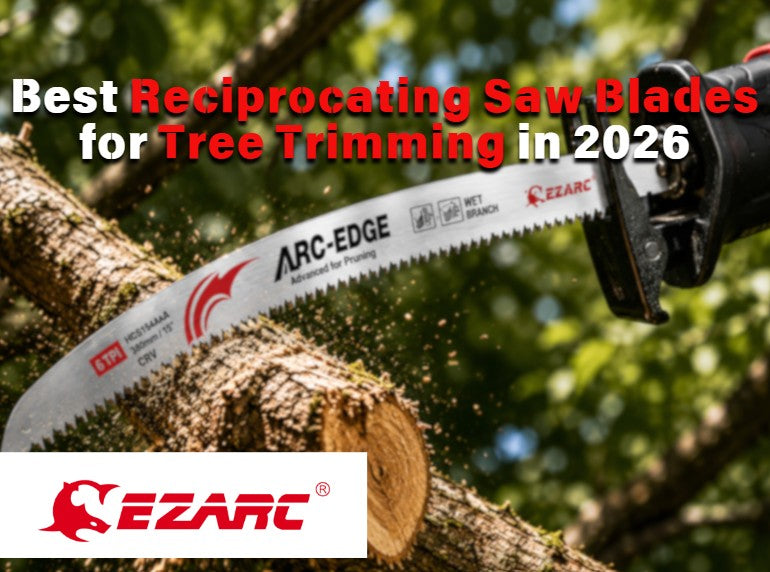
EZARC's Japanese Teeth Arc Edge 15" Pruning Blade (6 TPI) checks every one of these boxes. It's built with triple-ground offset teeth that cut from three angles at once, which is a big part of why it earns comparisons to a chainsaw in cutting speed, minus the weight, noise, and risk. The curved arc-edge design gives you real leverage on thick limbs, and the Cr-V steel construction means it doesn't fold or dull halfway through a big cleanup job.
If you're regularly cutting wet, green, or sap-heavy wood, spring pruning, storm cleanup, anything resinous like pine, the ProCut U-Groove Curved Pruning Blade is worth the upgrade. It's one of the few reciprocating saw blades built specifically to fight sap and sawdust buildup rather than just cutting through it. Its U-Groove chip ejection design clears sticky sawdust as you cut, which keeps friction and heat down and stops the blade from binding partway through a thick, damp limb. Both blades ship as 3-packs, so a dull or nicked blade never has to end the job early.
Step 2: Set Up the Cut Before You Start
A fast cut starts before the reciprocating saw blade ever touches wood.
- Support the branch. An unsupported limb can pinch the blade the moment it starts to sag under its own weight, especially near the end of the cut. If it's a heavy branch, plan for a two-cut removal (an undercut a few inches out, followed by the final cut closer to the trunk) to prevent tearing bark or trapping the blade.
- Find your angle. Reciprocating saw blades cut fastest when the full length of the blade's teeth are engaged, not just the tip. Position the saw so the blade lies as flat against the cut line as the branch allows.
- Brace the saw firmly against your body or a stable surface if possible. A steady saw cuts straighter and faster than one that's wobbling.
Step 3: Let the Blade Do the Work

Once you're set up, resist the urge to muscle through the cut. Pushing too hard on reciprocating saw blades actually slows you down, it increases friction, generates more heat, and causes the blade to bind or wander off-line, undoing the whole point of choosing fast-cutting reciprocating saw blades in the first place. Instead:
- Use long, full strokes rather than short, choppy ones. This clears chips more efficiently and keeps the blade cool.
- Keep a steady, moderate pressure, just enough to guide the saw, not force it.
- If you feel resistance building or smell burning wood, back off and let the blade clear itself before continuing.
Done right, a sharp, properly matched blade will pull itself through a 4–6 inch limb in a matter of seconds, not minutes.
Step 4: Know When You Still Need a Chainsaw
To be fair, a reciprocating saw isn't a chainsaw replacement for everything. Felling a tree, bucking large trunk sections, or working through anything much larger than 6–8 inches in diameter is still chainsaw territory. But for the huge majority of pruning, storm cleanup, deadwood removal, and shaping cuts homeowners and landscapers actually deal with, a reciprocating saw fitted with the right reciprocating saw blades is faster to grab, safer to use, and honestly more fun to work with.
For a deeper breakdown of blade types, TPI ranges, and how to match a blade to whatever material you're cutting, wood, metal, or otherwise, check out our guide on how to select the right sawzall blade.
Final Cut
You don't need to fire up a heavy, loud, kickback-prone chainsaw every time a branch needs to come down. With the right reciprocating saw blades, coarse TPI, deep gullets, a curved profile, and durable Cr-V steel, a reciprocating saw can clear thick limbs just as fast, with far more control and a lot less risk. It really comes down to which reciprocating saw blades you've got loaded up before you start.
Ready to gear up? Browse EZARC's full lineup of reciprocating saw blades and find the right match for your next trimming job.
FAQ
Can a reciprocating saw really cut as fast as a chainsaw on branches? For most branches under 6–8 inches thick, yes, especially with a coarse-TPI, curved pruning blade. Beyond that diameter, a chainsaw is still the better tool.
What size reciprocating saw blade works best for thick branches? A 15-inch blade gives you the reach and cutting capacity to handle most thick limbs in a single pass without repositioning constantly.
Why does my reciprocating saw blade keep binding in branches? Usually it's the wrong blade for the job, either too fine a TPI, not enough gullet clearance, or a straight profile that doesn't follow the branch shape. Swapping to curved, coarse reciprocating saw blades solves most binding issues.
Is it safe to cut overhead branches with a reciprocating saw? Yes, and it's generally safer than a chainsaw overhead, since there's no chain kickback risk. Just make sure the branch is supported and you're using a stable ladder or platform.


Dejar un comentario
Este sitio está protegido por hCaptcha y se aplican la Política de privacidad de hCaptcha y los Términos del servicio.