
 Log in

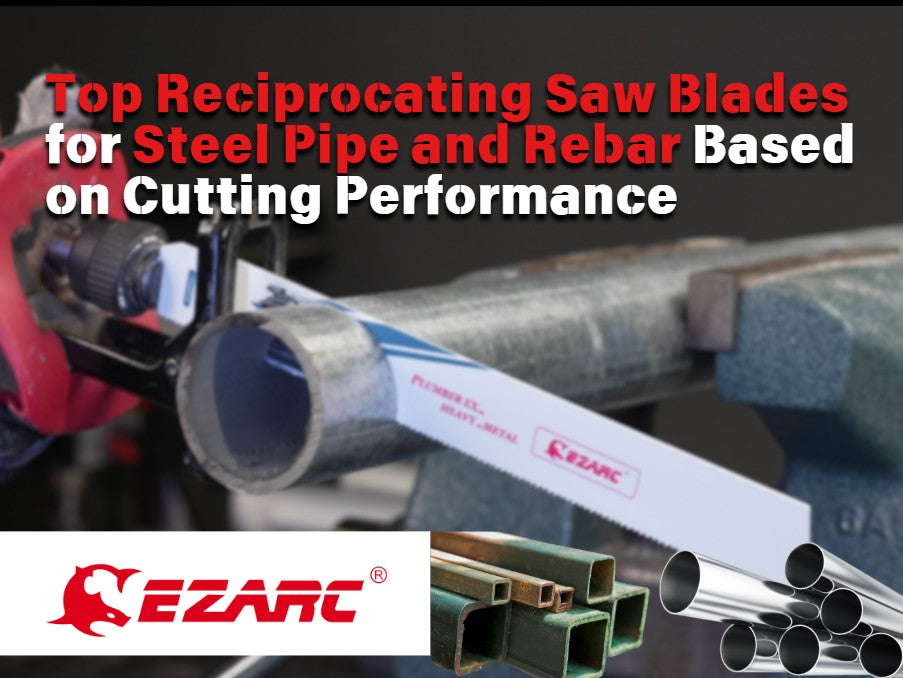
You start the cut, the pipe starts spinning, and the blade chatters like it is trying to jump out of the kerf. Two minutes later, you are staring at blue teeth, a half-finished cut, and a workpiece that is now harder to control than when you began. When the blade choice is wrong, you pay twice: first in burned teeth and wasted time, then again in rework when the cut wanders.
This list narrows your decision down to three performance-first reciprocating saw blades for steel pipe and rebar. You will see when to choose Carbide teeth vs bi-metal, how tooth pitch (TPI) maps to steel thickness, and what to expect in cut speed vs control. After the picks, a short buying guide helps you match your next blade to the job so your cut stays straight, and your blade lasts longer.
I. Product Picks for Steel Pipe and Rebar
1: EZARC Thick Metal/Cast Iron Cutting - Carbide, 6/9 in, 8 TPI

If your day includes thick-wall black pipe, rebar, cast iron, or alloy steel that eats "regular" blades, this is the Reciprocating saw blades built for abuse. The lower tooth count (8 TPI) is the point: it gives larger gullets (the spaces between teeth) to clear chips, so the blade keeps feeding instead of polishing the cut and overheating.
- Best for: thick-wall steel pipe, rebar bundles, cast iron, tough alloys
- Tooth type: Carbide teeth for extreme wear resistance
- Tooth pitch: 8 TPI for faster feed in thick metal
- Length options: 6 in and 9 in
- Material range: designed for cutting 3/16 in to 1/2 in thick metal
- Fit: 1/2 in universal shank (universal tang) for common saws
Why it wins: When you are fighting heat and tooth loss more than you are fighting cut speed, carbide is the safer bet. This blade is aimed at jobs where a bi-metal blade can dull quickly, especially if the pipe vibrates or you hit welds, scale, or mixed-metal surprises.
2: EZARC Heavy Metal Cutting - Bi-Metal, 6/9/12 in, 14 TPI

When your priority is a cleaner, more controlled cut in steel (and you do not want the saw to feel like it is grabbing the work), stepping up to a finer tooth pitch helps. A 14 TPI bi-metal pattern generally behaves better on thinner wall pipe and lighter stock because more teeth stay engaged, which reduces the "hook and slam" feeling you can get from coarse blades.
- Best for: controlled cuts in steel pipe, lighter structural steel, thinner wall material
- Tooth type: bi-metal (HSS cutting edge + flexible body)
- Tooth pitch: 14 TPI for smoother engagement
- Length options: 6 in, 9 in, 12 in
- Jobsite advantage: easier to keep a straight line in handheld cuts
- Pack options: available in 5-piece and 25-piece packs (varies by length)
Why it wins: This is the blade you reach for when the cut quality and control matter as much as speed. If your carbide blade is overkill for the thickness you are cutting, a 14 TPI bi-metal can feel more predictable and less prone to snatching at the start.
3: Milwaukee TORCH with Carbide Teeth (comparison pick)
If you want a trade-familiar benchmark for thick metal, Milwaukee TORCH with Carbide Teeth is a common baseline many crews recognize. Milwaukee positions the TORCH carbide line for thick metals like black iron pipe, rebar, stainless steel, and cast iron, and calls out an 8 TPI design aimed at fast, smooth cutting in thick metal.
- Best for: thick metal cutting, where you want a widely known baseline
- Tooth type: Carbide teeth
- Tooth pitch: 8 TPI
- Blade length (example): 9 in (48-00-5502 page)
- Design notes: large gullets for material ejection; 1/2 in universal tang
Why it is here: Side-by-side comparisons are easier to trust when one pick is a known reference. If you are testing new Reciprocating Saw Blades in your workflow, comparing against a familiar TORCH carbide blade can help you judge speed, vibration, and tooth survival on your typical pipe and rebar.
Product Page: Milwaukee TORCH with Carbide Teeth SAWZALL Blades
II. Buying Guide: Pick Faster, Burn Fewer Blades
Factor 1: Steel thickness and tooth pitch
If you only remember one rule, make it this: match TPI to thickness before you worry about brand or marketing claims. Too fine on thick steel builds heat fast because the gullets pack up with chips; too coarse on thin-wall pipe tends to grab, chatter, and yank the work.
- Thick-wall pipe and solid rebar: start around 6 to 10 TPI
- Medium steel (thin pipe, angle, strut): often 10 to 14 TPI
- Very thin sheet or tubing: go higher TPI to reduce snagging
Practical question to ask: Are you cutting schedule pipe and rebar today, or thin tube and brackets? Your answer should decide the tooth pitch first, then the tooth material.
Factor 2: Carbide teeth vs bi-metal decision

Carbide teeth are about survival in heat and hard material, while bi-metal is often about feel and forgiveness. If you keep stripping teeth or glazing the edge, carbide is usually the fix. If you need steadier control and you are not constantly hitting hard inclusions, bi-metal often feels smoother.
- Choose Carbide teeth when: thick steel, cast iron, stainless, demolition variability, and long runs.
- Choose bi-metal when: thinner steel, controlled shop-like cuts, better line tracking.
Factor 3: Cut speed vs control
Fast cuts are not always productive cuts. A blade that feeds aggressively can also amplify small mistakes in setup, especially on a round pipe. If you need a cut that lands square for a coupling or weld fit-up, you may be better off trading a little speed for calmer behavior.
- Demo pace: coarser TPI, aggressive bite, faster chip removal
- Fit-up pace: finer TPI, steadier engagement, less jumping
Factor 4: Vibration, heat, and tooth loss risk
Most "bad blade" complaints are actually "bad setup" problems: vibration, binding, and heat are what kill teeth. The more the workpiece moves, the more shock-loading you put into the tooth tips. Heat then softens the edge (even on good steels), and the blade stops cutting and starts rubbing.
OSHA notes that the cooling effect of metalworking fluids can help extend cutting tool life and prevent burning and smoking at the cut. (osha.gov)
Practical tips that keep cuts straight
A few habits can make even mid-pack blades feel better, and they make premium blades last longer.
- Clamp the pipe: round stock must not spin
- Plant the shoe: keep firm contact to reduce bounce
- Start a shallow notch: establish a track before feeding harder
- Use steady pressure: do not force feed when sparks spike
- Let chips clear: back off briefly if the kerf packs up


Common mistakes that kill performance
If your blade keeps dying early, check these first before you blame the teeth.
- Too-fine TPI on thick steel: heat builds, teeth glaze, cut slows
- Too-coarse TPI on thin-wall pipe: grabbing and tooth shock
- Unclamped pipe: vibration rips teeth and bends blades
- Angled entry: side-loads teeth and causes early tooth loss
III. Comparison Table
| Pick | Best for | Tooth type | TPI | Length options | Trade-offs |
| EZARC Carbide 8 TPI | Thick pipe, rebar, cast iron | Carbide teeth | 8 | 6 in, 9 in | Rougher edge on thin steel |
| EZARC Bi-Metal 14 TPI | Cleaner, controlled steel cuts | Bi-metal | 14 | 6 in, 9 in, 12 in | Faster wear on tough alloys |
| Milwaukee TORCH Carbide | Familiar thick-metal benchmark | Carbide teeth | 8 | 6/9/12 in (varies) | More aggressive on thin wall |
Conclusion
If you cut thick steel pipe or rebar often, start with Carbide teeth and a lower TPI so the blade can keep clearing chips instead of overheating. If your work leans toward controlled cuts and straighter tracking in thinner steel, a 14 TPI bi-metal blade is usually easier to manage in handheld situations. Keep one of each in your kit, because the fastest way to burn blades is trying to make one tooth pitch do every job.
Official Site: EZARC Tools
FAQ
How do I choose TPI for steel pipe vs rebar?
For thick-wall steel and solid rebar, a lower TPI (often 6 to 10) clears chips faster and keeps the cut moving with less heat. For thinner tubing, a higher TPI (often 10 to 18) keeps more teeth engaged and reduces grabbing. If the blade chatters and snags, you are usually too coarse for the wall thickness. If the cut slows down and the blade turns blue, you are often too fine and building heat.
When should I use carbide teeth instead of bi-metal?
Use carbide teeth when you routinely cut tough metals, hardened material, or when you keep dulling blades in thick pipe and rebar. Carbide handles heat better and resists wear when you hit welds, scale, or mixed-metal surprises. Use bi-metal when you want a smoother feel and more control in thin-to-medium steel, especially when line tracking matters. If you are unsure, choose carbide for heavy demo and bi-metal for controlled fabrication-style cuts.
Why does my blade keep losing teeth on metal cuts?
Tooth loss usually comes from vibration and shock loading, not just "hard material." A pipe that spins, a loose workpiece, or starting the cut at an angle can snap or strip teeth quickly. Excess heat can also weaken the cutting edge, so it fails sooner on the next vibration spike. Clamp the work, keep the shoe planted, and use steady pressure instead of forcing the feed.
Can I cut stainless steel with the same blade I use for mild steel?
Yes,s sometimes, but stainless steel often generates more heat and can work-harden, so the wrong blade dulls quickly. A carbide-tooth blade is usually the safer choice if stainless steel is frequently used, especially on thicker sections. Reduce heat by using moderate pressure and avoiding full-throttle forcing when the cut stops making chips. If the blade squeals and stops biting, back out, let it cool, and re-enter with a steadier feed.
What blade length should I use for pipe and rebar?
Pick a blade long enough to extend past the material so the blade body does not rub and overheat in the kerf. Longer blades also help you keep the shoe planted when cutting pipe on racks or near clamps. Shorter blades feel stiffer, which can help in tight spaces, but they can run hotter if they barely clear the cut. As a rule, choose a length that gives at least 1 to 2 inches of extra reach beyond the work.
How do I reduce vibration when cutting metal with a reciprocating saw?
First, clamp the workpiece, because a loose pipe is the biggest vibration amplifier. Next, keep firm shoe contact against the material so the saw does not bounce and hammer the teeth. Choose a blade that matches the thickness, because a coarse blade on thin-wall pipe tends to grab and chatter. If the saw starts hammering, back off pressure, reset your angle, and restart with a shallow notch to stabilize the cut.
What is the most common setup mistake in DIY home improvement metal cuts?
The most common mistake is cutting unsecured round stock, which lets the pipe spin and creates immediate chatter. The second is picking the wrong tooth pitch, such as using a fine blade on thick steel that overheats and stops cutting. Many DIY home improvement projects also fail because the operator lifts the shoe off the work, which increases vibration and tooth shock. A simple fix is to clamp the work, keep the shoe planted, and let the blade make chips rather than sparks.