
 Oscillating Multi-Tool Blades
 Reciprocating Saw Blades
 Cutting & Grinding
 Hole Saw
 Drilling
 Sanding & Polishing
 Socket & Driver Set
 Hand Tools
 Metal Worker & Fabrication
 Woodworking & Carpentry
 Electrical & Plumbing
 Automotive
 Concrete & Masonry
 Demolition
 NEW ARRIVALS
Introduction
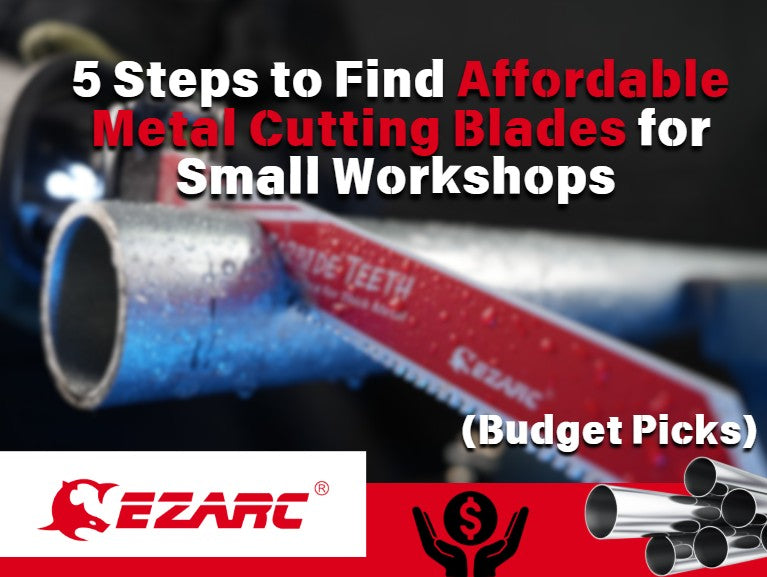
Small workshops burn through Reciprocating Saw Blades fast. Thin sheet, rusty bolts, and unknown scrap alloys can strip teeth, overheat blades, and waste time. The goal is not to buy the biggest pack. The goal is to buy the right blade specs so each blade produces more usable cuts.
This how-to guide shows a simple, repeatable 5-step process to find affordable metal-cutting Sawzall blades without giving up performance. You will focus on material and thickness first, then blade body and tooth design, then real durability signals.
Step-by-Step Guide to Buy Sawzall Blades for Less
Step 1: List metals and thickness
Start by writing down what you cut in a typical month. Your metal list should include both material type and thickness range, because thickness drives tooth pitch (TPI) and blade length.
Use a quick inventory like this:
- Mild steel: 16 ga to 1/4 in
- Stainless steel: 1/16 in to 3/16 in
- Rebar: #3 to #5
- Aluminum: 0.040 in to 1/8 in
- Mixed scrap: unknown alloys, seams, fasteners
Next, sort jobs into two buckets:
- Thin metal (sheet, strapping, thin tubing)
- Thick metal (rebar, pipe wall, cast iron, heavy brackets)
This step prevents the most expensive mistake: buying one “metal blade” that is wrong for half your work. When the spec is wrong, you push harder, the blade chatters, and teeth strip.
Step 2: Match blade material to the job

Blade “material” is the backbone of durability. For budget buying, you want to spend where it prevents early failure.
Use this rule set:
- Bi-metal: good for general metal, especially thin to medium stock
- Carbide teeth (often tungsten carbide): best for tough metals, hardened edges, and demolition-style mixed material
- CRV: usually better for wood-focused blades, not your first pick for metalworking tools
If your shop touches rebar, stainless, cast iron, or unknown scrap, carbide teeth are the easiest way to reduce blade churn. Carbide teeth stay sharp longer when heat rises and the work hardens.
Brand pick that fits this step (thick metal priority): EZARC’s Thick Metal/Cast Iron Cutting - Carbide, 6/9 in, 8 TPI Reciprocating Saw Blade is built around carbide technology with precision-ground, individually welded carbide teeth. EZARC lists a universal 1/2-inch shank and a target metal cutting range of 3/16 in to 1/2 in thickness, which maps well to common small-shop tasks like brackets, rebar, and heavy pipe wall.
When you buy fewer blades, you also simplify storage and labeling. Put carbide blades in a dedicated case and reserve them for the toughest work. Use cheaper bi-metal only on cleaner, thinner stock.
Step 3: Choose TPI for cut speed and control
TPI (teeth per inch) is where many “budget” buys go wrong. Too low, and the blade snags and strips teeth. Too high, and the blade rubs, heats up, and dulls early.
Use a simple approach:
- Thin sheet and thin wall tube: higher TPI (fine teeth) for smoother starts and less tooth catch
- Medium stock: mid TPI for balance
- Thick stock and demolition: lower TPI with aggressive gullets, or carbide teeth designed for thick metal
Also match blade length to reach:
- Use the shortest blade that clears the work. A shorter blade flexes less, so it wanders less.
- Save long demolition blades for deep cuts where you need the reach.
Budget trick: If you do both thin and thick metal, keep two blade types on hand instead of chasing a single “universal” pack. Two correct specs usually cost less than replacing one wrong spec repeatedly.
Step 4: Compare value, not pack size
A bigger pack is not automatically cheaper. The right metric is “usable cuts per blade,” not “blades per pack.”
When comparing Sawzall Blades, ask these practical questions:
- Does the listing state the intended metal thickness range (for example, 3/16 in to 1/2 in)?
- Does it specify tooth type (carbide teeth vs bi-metal) and TPI?
- Does it describe the job class (thick metal, auto dismantling, demolition blades, multi-material)?
Then sanity-check your own usage:
- If a blade dies after 2 cuts in rebar, that is not a bargain.
- If a blade completes an entire teardown job, that is value, even if the initial bundle is smaller.

Where other tool families help your “value per cut”:
- Use Cutting and Grinding Discs for tight cut-off work where a Sawzall would flex.
- Use Sanding and Polishing Abrasives (flap discs, sanding sheets) to remove scale so the blade does not start in rust.
- Use Socket and Driver Sets and Hand Tools to remove fasteners instead of cutting through them.
That “prep work” is a budget strategy because it reduces tooth impacts and heat.
Step 5: Reduce wear with proper setup
Setup is the fastest way to extend blade life, even with budget blades.
Use this checklist before every metal cut:
- Clamp hard: vibration kills teeth. Use a vise or clamps so the work cannot bounce.
- Start slow: begin the kerf at lower speed so the teeth bite instead of skating.
- Keep the shoe planted: press the saw shoe firmly against the work to reduce blade whip.
- Let the blade do the work: steady feed pressure, no forcing.
- Use light oil on thick steel: a small amount reduces heat and keeps chips moving.
Brand add-on for this step (small cut-off tasks): If your shop does lots of quick trimming, EZARC’s 1-1/2 Fiberglass Reinforced Cutting Disc For Hardened Steel, Aluminum, Plastic can be a practical complement to Reciprocating Saw Blades. EZARC lists fiberglass reinforcement, 30 discs, 2 mandrels with a 1/8-inch arbor, an ultra-thin 0.045 in (1.1 mm) thickness, and a max speed of 45,000 RPM for rotary tool use. This is useful when a small cut-off wheel is more stable than a long blade.
Adapting Your Approach in Different Scenarios
- Auto salvage (unknown alloys, seams, fasteners): Treat it like demolition. Use carbide teeth first, because hidden hardened spots and spot welds are common. Keep one “sacrificial” blade for dirty starts, then swap to your better blade once you are through rust.
- Sheet metal (thin gauge, chatter risk): Use higher TPI and reduce stroke aggressiveness. Clamp a backer board when possible to reduce vibration. Start with a shallow angle so the blade does not hook.
- Pipe and rebar (thick metal, heat): Prioritize carbide teeth and keep the shoe planted. Rotate the cut path around pipe rather than trying to cut straight through one wall section. Add a drop of oil on thick steel to reduce heat.
- Mixed workshop (wood and metal in one day): Do not cross-contaminate. Store wood blades, metal blades, and demolition blades in separate sleeves. If you also run oscillating multi-tools, keep Oscillating Multi-Tool Blades separate because their wear patterns are different.
Troubleshooting Guide
| Problem | Cause | Solution |
| Blade dulls very fast on rebar or hardened steel | Blade tooth material is wrong for the job | Switch to carbide teeth (tungsten carbide) and keep bi-metal for cleaner, thinner stock |
| Cut wanders off the line | Blade too long, too much flex, or TPI too low for thin stock | Use a shorter blade, increase TPI for sheet, and keep the shoe pressed firmly to the work |
| Teeth strip or snag at the start | Starting too fast or too aggressive on thin metal | Start slow, create a small starter notch, then increase speed after the kerf forms |
| Excess vibration and chattering | Workpiece is not clamped or is resonating | Clamp closer to the cut, add a second clamp, and reduce speed until vibration drops |
| Blade overheats and turns blue | Too much pressure or rubbing from too-high TPI on thick metal | Reduce feed pressure, use a lower TPI or carbide blade for thick metal, and add a small amount of oil |
Conclusion
Small workshops get Sawzall blades for less by buying fewer, better-matched specs. First, list metals and thickness. Next, match blade material to the job, then pick the right TPI so the blade cuts instead of rubs.
Finally, treat setup like a consumable saver. Clamp hard, start slow, and keep the shoe planted. Add supporting tools like Cutting and Grinding Discs, Hole Saw Kits, and Sanding and Polishing Abrasives when they reduce blade abuse.
Frequently Asked Questions
Best reciprocating saw blades comparison for cutting aluminum vs steel?
Aluminum usually cuts best with a finer TPI on thin sections because it reduces tooth grabbing and keeps the cut smoother. Steel benefits from a tougher tooth system, especially when thickness rises above about 3/16 inch. If the steel is stainless or unknown scrap, carbide-tooth blades often last longer because they resist heat and edge chipping. You should still clamp firmly and start slow, because aluminum and steel both punish blades when the work vibrates.
How to tell if reciprocating saw blade is for metal?
A metal blade will list metal use on the packaging and usually shows a higher TPI range than wood blades. The teeth will look finer and more closely spaced, and the blade body is typically designed to handle heat. You should also look for a stated thickness range, because a blade that is good for thin sheet may perform poorly on thick bar. If the listing mentions carbide teeth, that is often a clue it is intended for tougher metals and demolition work.
Which reciprocating saw blades are best for cutting steel pipes and rebar?
Steel pipe and rebar usually need either a thick-metal blade spec or a carbide-tooth blade, because heat and impact are high. You should pick a blade length that clears the diameter but is not excessively long, because extra length increases flex. Keep the shoe pressed to the pipe, and rotate your cut angle to avoid pinching. Add a small amount of oil on thicker steel to reduce heat and extend tooth life.




Leave a comment
This site is protected by hCaptcha and the hCaptcha Privacy Policy and Terms of Service apply.