
 Log in

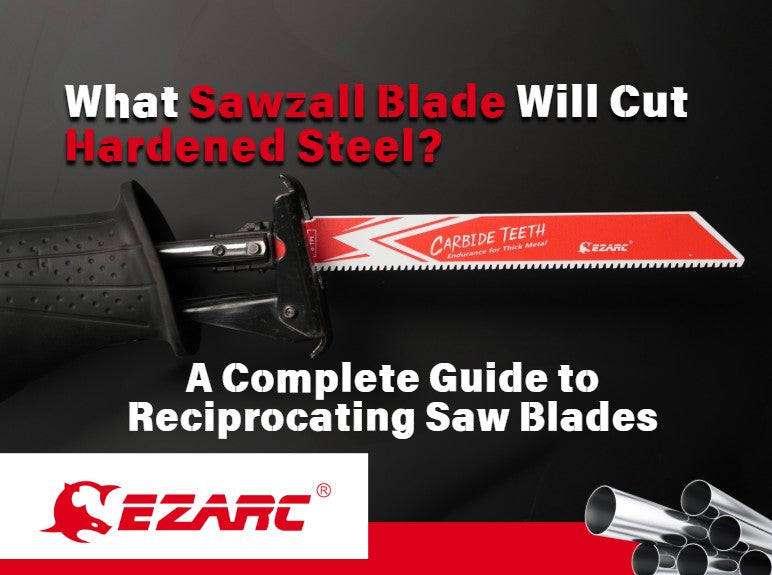
Cutting hardened steel is one of the toughest tasks you can ask of a power tool, especially with reciprocating saw blades. Standard blades often dull quickly, overheat, or simply fail to make progress. If you’ve ever tried cutting through hardened bolts, rebar, or thick alloy steel with the wrong blade, you know how frustrating it can be.
The key to success is choosing the right reciprocating saw blades for the job. Hardened steel demands a blade that combines durability, heat resistance, and aggressive cutting capability. In this guide, we’ll explain exactly which Sawzall blades work best for hardened steel, why carbide technology makes a difference, and how to get the cleanest, fastest cuts.
- 1. Why Hardened Steel Is So Difficult to Cut
- 2. The Best Reciprocating Saw Blades for Hardened Steel
- 3. Why Carbide Reciprocating Saw Blades Work Better
- 4. Choosing the Right Tooth Count for Hardened Steel
- 5. When You Should Upgrade Your Reciprocating Saw Blades
- 6. Tips for Cutting Hardened Steel Successfully
- 7. Why Professionals Trust EZARC Reciprocating Saw Blades
- 8. Final Thoughts
Why Hardened Steel Is So Difficult to Cut

Hardened steel is specifically engineered to resist wear, deformation, and impact. It’s commonly found in materials such as:
- Structural bolts
- Reinforced steel bars (rebar)
- Cast iron components
- Automotive suspension parts
- Industrial fasteners
Because hardened steel has been heat-treated to increase its strength, ordinary reciprocating saw blades often struggle. Traditional high-speed steel or basic bi-metal blades may dull within minutes when cutting dense metal.
The solution lies in using Sawzall blades designed specifically for thick and hardened metals.
The Best Reciprocating Saw Blades for Hardened Steel
When it comes to cutting hardened steel, carbide technology is the clear winner. Carbide teeth are significantly harder than conventional steel teeth, allowing them to stay sharp longer and maintain cutting performance even in demanding applications.
One of the best options available is the EZARC Carbide Reciprocating Saw Blade for Thick Metal and Cast Iron.
This blade is engineered for professional cutting performance in the toughest materials. Its carbide teeth provide exceptional durability and allow the blade to power through hardened steel, stainless steel, alloy steel, and cast iron without premature wear.
Compared to standard blades, carbide Sawzall blades can last dramatically longer, making them a smarter choice for demolition work, metal fabrication, and heavy-duty repair jobs.
Why Carbide Reciprocating Saw Blades Work Better
The main reason carbide Sawzall blades excel in hardened steel cutting comes down to material science.
Carbide is far harder and more heat-resistant than the steel used in standard blade teeth. When cutting hardened metals, friction and heat quickly degrade conventional blades. Carbide teeth resist that heat buildup and maintain their edge for far longer.
Key advantages of carbide Sawzall blades include:
Extreme durability
Carbide teeth maintain sharpness even when cutting hardened bolts, rebar, or thick steel plates.
Longer lifespan
High-quality carbide Sawzall blades can last many times longer than standard bi-metal blades in tough applications.
Better cutting efficiency
Because the teeth remain sharp, the blade continues cutting aggressively instead of slowing down as the teeth wear.
For contractors, mechanics, and serious DIYers, switching to carbide Sawzall blades can dramatically improve productivity.

Choosing the Right Tooth Count for Hardened Steel
Another important factor when selecting Sawzall blades for hardened steel is the tooth count, commonly measured in TPI (teeth per inch).
For thick metals, a lower tooth count generally works better because it allows deeper, more aggressive cuts.
For example:
- 6–10 TPI: Best for thick steel, cast iron, and hardened metal
- 10–14 TPI: Good for medium metal thickness
- 14–18 TPI: Better suited for thin sheet metal
The EZARC carbide blade mentioned earlier uses an optimized tooth pattern designed specifically for thick metal cutting. This balance allows the Sawzall blades to remove material efficiently while maintaining durability.
When You Should Upgrade Your Reciprocating Saw Blades
If your blade struggles to cut hardened steel, it may be time to upgrade your Sawzall blades.
Here are a few common signs your blade isn’t suitable for hardened materials:
- The blade dulls quickly
- Cutting speed drops dramatically
- Excessive heat builds up during cuts
- Teeth break or chip after minimal use
Upgrading to carbide Sawzall blades can solve these issues and deliver smoother, faster results.
If you’re unsure which blade to choose for a specific material, EZARC also provides a detailed guide on blade selection that explains how different Sawzall blades perform across wood, metal, and demolition applications.
Tips for Cutting Hardened Steel Successfully
Even the best Sawzall blades perform better when paired with the right technique. Here are a few tips that can help extend blade life and improve cutting performance.

Use steady pressure
Let the blade do the work. Excessive force can overheat the teeth and shorten the life of your Sawzall blades.
Control the cutting speed
Slower speeds often work better for hardened steel because they reduce friction and heat buildup.
Secure the material firmly
Movement during cutting can damage the teeth on Sawzall blades and produce rough cuts.
Apply cutting fluid when possible
Lubrication helps keep temperatures down and protects the cutting edge.
These small adjustments can significantly improve the performance of your Sawzall blades when working with tough materials.
Why Professionals Trust EZARC Reciprocating Saw Blades
Professionals rely on Sawzall blades that deliver both performance and durability. EZARC blades are designed to meet those expectations with high-quality materials and precision manufacturing.
The carbide metal-cutting blade from EZARC is specifically engineered for challenging applications like hardened steel. It provides:
- Carbide tooth technology for extreme hardness
- Long service life in demanding environments
- Efficient cutting through thick metal and cast iron
- Compatibility with all standard reciprocating saws
Whether you’re tackling demolition work, automotive repairs, or structural metal cutting, high-performance Sawzall blades can make the job faster and easier.
You can explore the full selection of EZARC blades here:


Final Thoughts
So, what sawzall blade will cut hardened steel?
The answer is clear: carbide reciprocating saw blades designed for thick metal cutting.
Hardened steel is simply too tough for most standard blades. By choosing carbide Sawzall blades, you gain the durability, heat resistance, and cutting power needed to tackle demanding materials like alloy steel, rebar, and heavy-duty fasteners.
If you regularly work with hardened metals, upgrading your Sawzall blades is one of the simplest ways to improve both efficiency and tool performance. With the right blade in your saw, even the toughest metal cutting jobs become far more manageable.