
 Oscillating Multi-Tool Blades
 Reciprocating Saw Blades
 Cutting & Grinding
 Hole Saw
 Drilling
 Sanding & Polishing
 Socket & Driver Set
 Hand Tools
 Metal Worker & Fabrication
 Woodworking & Carpentry
 Electrical & Plumbing
 Automotive
 Concrete & Masonry
 Demolition
 NEW ARRIVALS
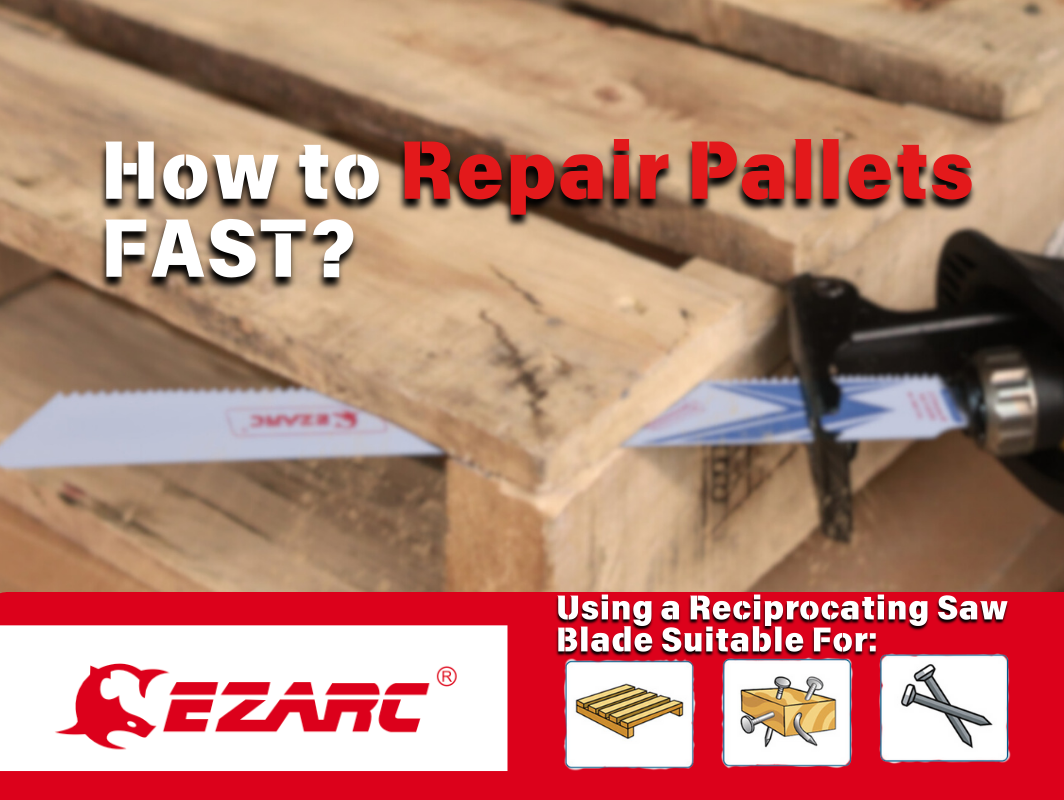
In the industrial world, the wooden pallet is the literal foundation of global trade. From warehouses and factories to retail distribution centers and construction sites, pallets quietly support the movement of goods at massive scale. Despite their rugged appearance, pallets are not disposable by design. They are engineered to be reused, repaired, and cycled through multiple lifetimes, provided they are dismantled correctly.
For many operators, pallet repair becomes frustrating not because of the wood itself, but because of how pallets are assembled. Hardened spiral-shank and ring-shank nails are designed to lock boards together permanently. When a deck board splits or a stringer cracks, you face a choice: discard a valuable asset or adopt a professional dismantling method that preserves usable material. The difference between waste and efficiency comes down to technique, tooling, and most importantly, the correct use of reciprocating saw blades.
- 1. Why Pallets Are Difficult to Take Apart
- 2. Why Traditional Dismantling Methods Fail
- 3. The Cut-and-Replace Method Explained
- 4. Why Reciprocating Saws Are Ideal for Pallet Repair
- 5. The Mixed-Material Cutting Challenge
- 6. Selecting the Right Reciprocating Saw Blades
- 7. Safety and Pallet Inspection
- 8. Step-by-Step Professional Dismantling Process
- 9. Why Blade Geometry Matters
- 10. Cost Efficiency and Productivity
- 11. Environmental Benefits of Proper Pallet Repair
- 12. Common Mistakes to Avoid
- 13. Conclusion: Upgrade Your Process, Not Just Your Tools
Why Pallets Are Difficult to Take Apart

Pallets are not furniture. They are engineered for strength, not disassembly. Most pallets are constructed using nails that compress wood fibers as they are driven in, creating exceptional holding power. These fasteners are designed to resist vibration, shear forces, and repeated impact, which is exactly the conditions pallets experience during transport and handling.
When boards are pried apart with crowbars or hammers, the wood fibers usually fail before the nail releases. The result is split deck boards, damaged stringers, and inconsistent salvage quality. Over time, manual prying also increases worker fatigue and injury risk. This is why professional pallet operations have largely abandoned brute-force methods in favor of controlled cutting using reciprocating saw blades.
Why Traditional Dismantling Methods Fail
Manual dismantling is slow, destructive, and inefficient. Pry bars apply uneven force, concentrating stress around nail points. Hammer-and-chisel techniques often bend nail shanks, making clean removal impossible. Nail pullers rarely work because pallet nails are countersunk, twisted, or inaccessible.
These methods fail because they attempt to defeat the pallet’s engineering rather than bypass it. Pallet repair becomes efficient only when the fastener is neutralized instead of extracted. This realization led to the industry-standard cut-and-replace method.
The Cut-and-Replace Method Explained

The cut-and-replace method is simple in principle: instead of removing nails, you cut through them. By slicing through the nail shank between the deck board and the stringer, the board separates cleanly while the surrounding wood remains intact. This preserves material quality, reduces labor time, and produces consistent results.
The success of this method depends almost entirely on the quality and design of the Sawzall blades being used. Poor blades dull quickly, overheat, and slow the process. Properly engineered blades transform pallet dismantling into a fast, repeatable operation.
For pallet dismantling specifically, a variable-pitch bi-metal blade is essential. The EZARC 10/14 TPI 9-inch bi-metal reciprocating saw blade is engineered for nail-embedded wood, combining aggressive wood-cutting performance with the durability needed to repeatedly cut through hardened pallet nails without premature wear.
Why Reciprocating Saws Are Ideal for Pallet Repair
Reciprocating saws are uniquely suited for pallet repair due to their straight-line cutting action and ability to access tight gaps between boards. Unlike circular saws, they do not require wide cutting paths. Unlike oscillating tools, they deliver enough stroke length and power to sever hardened fasteners efficiently.
That said, the saw itself is only the delivery system. Cutting speed, safety, blade life, and finish quality are determined by the reciprocating saw blades installed in the tool.
The Mixed-Material Cutting Challenge
Pallet dismantling is a mixed-material operation. In a single cut, a blade must pass through dense hardwood or softwood and hardened steel nails, often coated with resins or debris. Standard wood-cutting blades dull instantly when they hit metal. Fine-tooth metal blades clog with wood fibers and overheat.
This is why professionals rely on hybrid blades designed specifically for nail-embedded wood. High-quality Sawzablades combine durability, flexibility, and tooth geometry optimized to handle both materials without sacrificing speed or control.
Selecting the Right Reciprocating Saw Blades

Choosing the correct blade is critical. The three most important factors are tooth pitch, blade material, and flexibility.
Tooth Pitch (TPI)
Tooth count determines how a blade behaves across different materials:
- Low TPI (6–8): Aggressive in wood but prone to catching on nails
- High TPI (18+): Cuts metal well but clogs quickly in wood
- Variable 10/14 TPI: Balanced performance across wood and steel
This balance is why variable-pitch reciprocating saw blades are widely regarded as the professional standard for pallet dismantling.
Tooth pitch is also one of the most misunderstood aspects of blade selection. For a deeper explanation of how tooth count, blade material, and application affect performance, we have published a detailed guide on how to select the right Sawzall blade.
Blade Material
Bi-metal blades reinforced with cobalt alloy maintain hardness under high heat. This is essential when cutting hardened pallet nails repeatedly without rapid tooth wear.
Flexibility
A flexible blade spine absorbs shock when transitioning between wood and steel, reducing breakage and extending blade life.
If you are comparing blade options across different applications, you can view EZARC’s full range of professional reciprocating saw blades designed for wood, metal, and nail-embedded materials here:


Safety and Pallet Inspection
Before cutting, always inspect both the pallet and your work environment:
- Wear ANSI-rated eye protection and heavy-duty gloves
- Secure the pallet to prevent movement
- Check for pallet treatment stamps
Only pallets marked “HT” (heat treated) should be cut. Pallets stamped “MB” (methyl bromide) are chemically treated and unsafe to cut.
Proper safety practices not only protect workers but also reduce blade damage caused by instability or improper loading of reciprocating saw blades.
Step-by-Step Professional Dismantling Process
1. Position the Pallet
Stand the pallet on edge or clamp it securely to a workbench. Stability reduces vibration and side-loading, which are common causes of premature blade failure.
2. Insert the Blade
Slide the blade into the gap between the deck board and stringer, where pallet nails are typically located.
3. Start Before Contact
Engage the saw before touching the nail. This prevents tooth chipping and reduces kickback.
4. Apply Steady Pressure
Let the reciprocating saw blades do the work. Do not force the cut. A quality blade will slice through the nail cleanly.
5. Clear Nail Stubs
After removal, nail stubs can be driven flush or left as-is, depending on reuse requirements.
Why Blade Geometry Matters

Blade geometry determines cutting efficiency, heat generation, and finish quality. Poor geometry leads to overheating, tooth loss, and damaged wood. Well-designed reciprocating saw blades maintain consistent cutting speed across varying densities, which is critical when processing large numbers of pallets.
In professional environments, this balance directly impacts productivity, consistency, and material recovery.
Cost Efficiency and Productivity
Low-cost blades often appear economical until downtime and replacement frequency are considered. Frequent blade changes interrupt workflow, increase labor costs, and frustrate operators.
High-quality reciprocating saw blades deliver a lower cost per cut. In pallet repair operations, premium blades consistently outlast entry-level alternatives while producing cleaner, more reusable material. Over time, this directly improves throughput and profitability.
Environmental Benefits of Proper Pallet Repair
Pallet repair is a key component of the circular economy. Each repaired pallet reduces demand for new lumber, conserves energy, and keeps usable wood out of landfills. Clean cuts made with professional reciprocating saw blades preserve wood quality, making boards suitable for reuse in shipping, construction, or secondary applications such as furniture and décor.
Common Mistakes to Avoid
- Using wood-only blades for nail cuts
- Forcing the saw through resistance
- Cutting unstable pallets
- Ignoring early signs of blade wear
Replacing worn reciprocating saw blades promptly improves safety and prevents damage to reclaimed wood.
Conclusion: Upgrade Your Process, Not Just Your Tools
Pallet dismantling does not have to be slow, dangerous, or wasteful. With the right technique and the correct reciprocating saw blades, pallet repair becomes a controlled, efficient process that preserves materials and reduces costs.
Professional results come from respecting both the engineering of the pallet and the engineering of the blade. When those two elements are aligned, pallet repair shifts from a grueling task into a streamlined operation. One clean cut at a time.



コメントを書く
このサイトはhCaptchaによって保護されており、hCaptchaプライバシーポリシーおよび利用規約が適用されます。