
 ログイン
ログイン

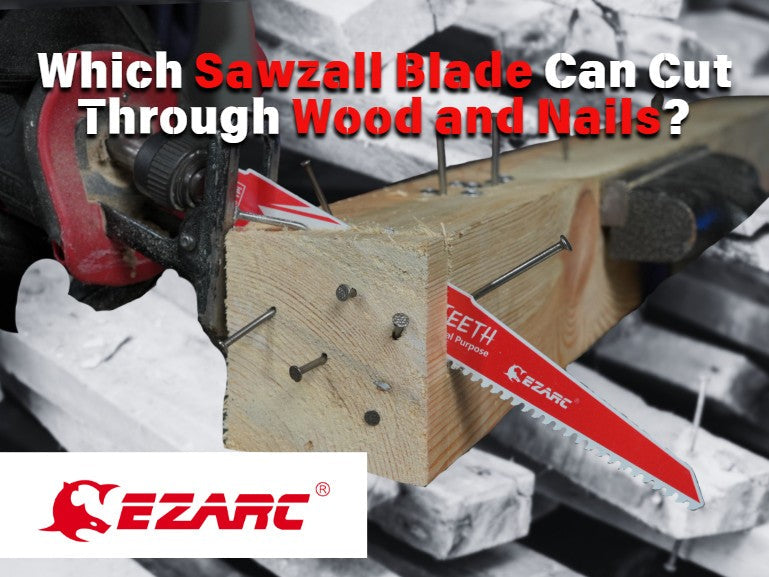
Every demolition job has a moment of truth. You're ripping through an old stud wall, a deck board, or a stack of pallets, the cut is going smooth, and then your blade slams into a hidden nail and stops dead. Teeth chip. The blade bends. You're back at the truck digging through your blade case for a replacement that probably isn't even in there.
If that sounds familiar, you don't need a better saw. You need better reciprocating saw blades.
Most "wood blades" are built for clean lumber, not the nail-embedded, screw-riddled, who-knows-what's-in-there wood you actually run into on a real jobsite. The good news is that the right reciprocating saw blades are made to chew through wood and the metal hiding inside it without dulling, snapping, or slowing you down. Here's what actually separates a real demolition blade from a basic wood blade, plus three EZARC options built for exactly this job.
Why Regular Wood Blades Fail on Nails
A standard wood-cutting blade has thin, delicate teeth made for speed through clean material. The second those teeth meet a hardened steel nail, the same geometry that makes them fast also makes them fragile. Teeth shear off, the blade flexes under the impact, and a cut that should've taken ten seconds turns into a blade-swapping delay.
Demolition work, remodeling, deck tear-outs, pallet breakdown, and fence removal all share the same headache: you rarely know exactly what's buried in the wood. That's why contractors and serious DIYers reach for purpose-built Sawzall blades rated for "wood with nails" instead of just hoping for the best with a clean-cut blade.
What Actually Makes a Blade Nail-Ready

Not all reciprocating saw blades are built the same. Three things decide whether a blade survives contact with embedded metal:
Tooth count (TPI). A 6 TPI (teeth per inch) setup hits the sweet spot for demolition. Fewer, bigger teeth bite hard into thick material and clear debris fast through deep gullets, but they also hold up better when they catch a nail. Higher TPI blades are great for clean metal, but they tend to clog or chip on mixed material.
Tooth material. This is the big one. Bi-metal blades use high-speed steel teeth, often boosted with cobalt, welded to a flexible carbon-steel body. That gives them the toughness to flex instead of snap on impact. Carbide-tipped blades take it a step further with individually welded tungsten carbide teeth that resist wear at a level standard steel just can't match. Some EZARC carbide Sawzall blades last up to 50 times longer than bi-metal in tough materials.
Body thickness. A thin blade whips and wanders under load. A thicker body, 1.25mm to 1.3mm in EZARC's demolition lineup, resists bending mid-cut and keeps the blade tracking straight even while it's grinding through a nail or screw.
Put those three together and you get reciprocating saw blades that genuinely don't care what's hiding inside your lumber.
The Best Reciprocating Saw Blades for Wood and Nails
Here's where it gets practical. EZARC builds three reciprocating saw blades specifically for cutting wood with embedded nails, and each one fits a slightly different job.
1. Bi-Metal Demolition Blade (6/9/12 in, 6 TPI)
This is the workhorse pick for general demolition. It's built with 8% cobalt bi-metal teeth on a thick 1.3mm body, designed to tear through hardwood, nail-embedded lumber, pressure-treated wood, and composites without bending or snapping. The aggressive 6 TPI tooth design and deep gullets clear debris instantly, which EZARC engineered to cut roughly 30% faster than standard wood blades in demolition scenarios. The cobalt also helps the teeth resist heat buildup, giving this blade roughly double the working life of a conventional bi-metal blade. It's the one we'd grab first when nails are a sure thing, not just a maybe.
If you're tearing out a deck, breaking down pallets, or demoing a stud wall and want a reliable, budget-friendly blade that won't quit on the first nail it meets, this is your blade.
2. Carbide Blade for Hard Wood & Metal Demolition (6/9 in, 6 TPI)
When bi-metal isn't enough, think rusted pipe, hardened bolts, or repeated heavy demolition, this carbide-tipped blade is the upgrade. Each tooth is precision-ground and individually welded tungsten carbide, built to survive impacts that would chip a standard blade. EZARC rates this option to last up to 50 times longer than bi-metal blades on hard materials like oak, maple, stainless steel, and nail-embedded wood.
This is the blade for contractors who are tired of swapping blades mid-job. Among EZARC's carbide Sawzall blades, this is the one built for jobs where metal is guaranteed, not just possible. If your demo work mixes hardwood, metal fasteners, and the occasional rusted surprise, grab this carbide option and stop carrying a backup blade just in case.
3. R669HM Endurance Carbide Blade (6 in, 6/9 TPI, 3-Pack)
This one's the versatility pick. It uses the same premium tungsten carbide teeth and the same 50x longer lifespan rating, and it's built around a variable tooth design that cuts down on vibration for smoother, faster cuts. Its real strength is range. It's designed to cleanly handle wood, nail-embedded wood, plastic, and metals from 1/8" to 3/8" thick, plus tubing, all with one blade. That's what makes it one of the most versatile reciprocating saw blades in the EZARC lineup. A 1.25mm thick, non-stick coated body and a precision plunge tip round things out, making plunge cuts and tight corners easier to manage.
If your projects bounce between wood, metal, and plastic on the same job, this 3-pack keeps you from switching tools every five minutes.
How to Choose the Right Reciprocating Saw Blade for Your Job
With several solid reciprocating saw blades to pick from, the right choice usually comes down to budget, how often you're cutting, and what's actually inside the material. Light, occasional demolition with a handful of nails? Bi-metal does the job. Daily heavy demolition, rusted hardware, or mixed wood-and-metal work? Carbide pays for itself fast. Either way, having the right reciprocating saw blades on hand saves you a trip back to the truck mid-job. For a deeper breakdown of TPI, tooth geometry, and blade length for every cutting scenario, check out our full guide to selecting the right sawzall blade. It covers everything from pruning blades to metal-cutting specialists, well beyond just nail-embedded wood.


Quick Safety Tips for Cutting Nail-Embedded Wood
A few habits go a long way when you're running reciprocating saw blades through material that might be hiding metal:
- Run the saw at a slightly slower stroke speed when you suspect nails, then speed back up once you're through.
- Let the blade do the work. Forcing it through resistance is what snaps teeth.
- Wear eye protection and gloves. Carbide chips and metal shavings move fast.
- Keep a couple of spare reciprocating saw blades on hand even with a tough blade, because heavy demolition is still demolition.
Stop Fighting Your Blade
The right reciprocating saw blades turn "I hope this doesn't have a nail in it" into "I don't even need to check." Whether you go with the cobalt bi-metal workhorse, the 50x-longer carbide upgrade, or the do-it-all R669HM, EZARC builds these reciprocating saw blades to survive the jobsite reality of wood that's never quite as clean as it looks.