
 Oscillating Multi-Tool Blades
 Reciprocating Saw Blades
 Cutting & Grinding
 Hole Saw
 Drilling
 Sanding & Polishing
 Socket & Driver Set
 Hand Tools
 Metal Worker & Fabrication
 Woodworking & Carpentry
 Electrical & Plumbing
 Automotive
 Concrete & Masonry
 Demolition
 NEW ARRIVALS
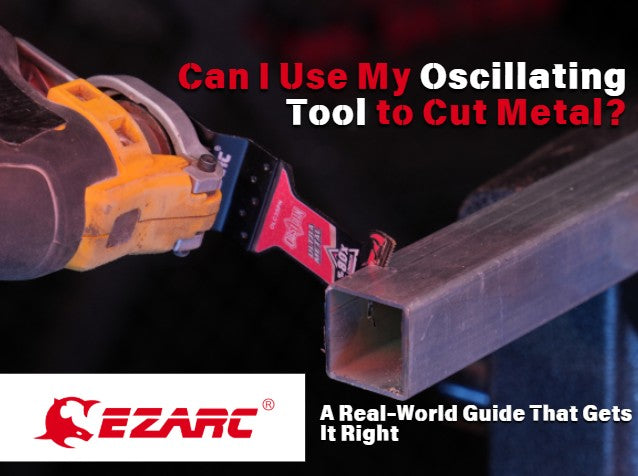
Short answer: yes, you can cut metal with an oscillating tool. But whether it feels smooth and efficient or slow and frustrating depends almost entirely on your blade.
If you are using the wrong oscillating multi tool blades, metal cutting will feel like a chore. With the right blade, especially a carbide option, the same job becomes controlled, precise, and surprisingly efficient.
This guide focuses on what actually works, with a deep look at one of the most capable options for metal cutting.
- 1. When an Oscillating Tool Makes Sense for Metal
- 2. The Biggest Problem With Cutting Metal
- 3. The Blade That Actually Solves the Problem
- 4. EZARC TiAlN Obsidian Carbide Oscillating Saw Blades Pro
- 5. How It Performs on Real Metal Cutting Jobs
- 6. Why Carbide Beats Bi-Metal for Metal Cutting
- 7. When You Should Not Use Oscillating Multi Tool Blades for Metal
- 8. How to Cut Metal Properly with an Oscillating Tool
- 9. Common Mistakes That Ruin Metal Cuts
- 10. When This Blade Is the Right Investment
- 11. Explore More Options
- 12. Final Verdict
When an Oscillating Tool Makes Sense for Metal

Oscillating tools are not built for high-speed cutting like an angle grinder. They are built for control.
That makes oscillating multi tool blades ideal for:
- Cutting metal in tight or awkward spaces
- Flush cuts where other tools cannot reach
- Precision work around installed fixtures
- Small to medium cuts where accuracy matters
Typical use cases include:
- Cutting nails, screws, and bolts
- Trimming metal pipes or conduit
- Removing rusted fasteners
- Cutting sheet metal in confined areas
If you need long, fast cuts through thick steel, use a grinder or reciprocating saw. If you need precision and access, an oscillating multi tool blade is the better choice.
The Biggest Problem With Cutting Metal
Most people try to cut metal using standard bi-metal blades and run into the same issues:
- Slow cutting speed
- Excessive heat buildup
- Teeth wearing down quickly
- Rough, inconsistent cuts
That is because metal is far more demanding than wood. It requires a harder cutting edge that can handle friction and heat.
This is where carbide changes everything.
The Blade That Actually Solves the Problem
EZARC TiAlN Obsidian Carbide Oscillating Saw Blades Pro
If you are serious about cutting metal with an oscillating multi tool blade, this is the category you should be looking at.
What makes this blade different
Carbide cutting edge
Unlike traditional teeth, carbide is significantly harder. It does not dull nearly as fast when cutting metal.
TiAlN coating
This coating improves heat resistance and reduces friction. That matters because heat is the main reason blades fail during metal cutting.
Obsidian edge design
The cutting edge is engineered for durability and consistency rather than aggressive tearing. That results in smoother, more controlled cuts.
How It Performs on Real Metal Cutting Jobs

Cutting Screws and Nails
This is where most oscillating multi tool blades struggle. Standard blades lose their edge quickly.
With carbide, you get:
- Consistent cutting speed
- Minimal wear even after multiple cuts
- Less vibration during operation
This makes it ideal for renovation work where hidden fasteners are common.
Cutting Metal Pipes or Conduit
For small diameter pipes, control matters more than speed.
This blade allows:
- Clean, controlled cuts without jumping
- Reduced risk of damaging surrounding material
- Better stability in tight spaces
You will not get the speed of a grinder, but you will get accuracy.
Cutting Sheet Metal
Thin metal tends to vibrate and tear with weaker blades.
Carbide oscillating multi tool blades:
- Maintain a smoother cut line
- Reduce chatter and vibration
- Produce a cleaner edge with less deformation
Removing Rusted or Stuck Fasteners
This is one of the most practical uses.
Instead of stripping a screw or breaking a bolt, you can cut it cleanly. Carbide blades handle the resistance without losing effectiveness.

Why Carbide Beats Bi-Metal for Metal Cutting
Here is the key difference in simple terms.
Bi-metal blades are versatile. Carbide blades are specialized.
- Bi-metal is fine for occasional metal contact
- Carbide is built for repeated metal cutting
If your job involves frequent metal cuts, a carbide oscillating multi tool blade will last significantly longer and perform better throughout their lifespan.
When You Should Not Use Oscillating Multi Tool Blades for Metal
Even with the best oscillating multi tool blades, there are limits.
Avoid using it for:
- Thick steel bars
- Long straight cuts across large sheets
- Heavy-duty fabrication work
In those cases, faster cutting tools are more appropriate.


How to Cut Metal Properly with an Oscillating Tool
The technique matters just as much as the blade.
1. Use light, steady pressure
Do not force the blade. Let it work at its natural speed.
2. Keep the tool stable
Movement reduces efficiency and increases wear.
3. Control heat buildup
Take short pauses if needed. Even high-end oscillating multi tool blades benefit from cooling.
4. Match speed settings to the material
Higher speed is not always better for metal. Controlled speed improves results.
Common Mistakes That Ruin Metal Cuts
Using the wrong blade
This is the number one issue. Standard blades wear out quickly on metal.
Pushing too hard
This creates heat and reduces blade life.
Expecting grinder-level speed
An oscillating multi tool blade is about precision, not speed.
Ignoring blade condition
A worn blade will struggle no matter how good the tool is.
When This Blade Is the Right Investment

The EZARC carbide blade makes the most sense if:
- You regularly cut screws, bolts, or nails
- You work in renovation or installation
- You need reliable performance in tight spaces
- You are tired of burning through standard blades
If you only cut metal once in a while, a bi-metal blade might be enough. If you do it often, carbide is the upgrade that pays for itself.
Explore More Options
If you want to compare different types of oscillating multi tool blades for wood, metal, and mixed materials, you can browse the full collection here.
Final Verdict
So, can you use your oscillating tool to cut metal?
Yes, and in many situations it is the best tool for the job. But the experience depends heavily on the blade you choose.
With a carbide oscillating multi tool blade, metal cutting becomes controlled, consistent, and far more efficient. Without them, it can feel slow and frustrating.
If precision, durability, and reliability matter to you, upgrading your blade is the single most important step you can take.


コメントを書く
このサイトはhCaptchaによって保護されており、hCaptchaプライバシーポリシーおよび利用規約が適用されます。