
 ログイン
ログイン

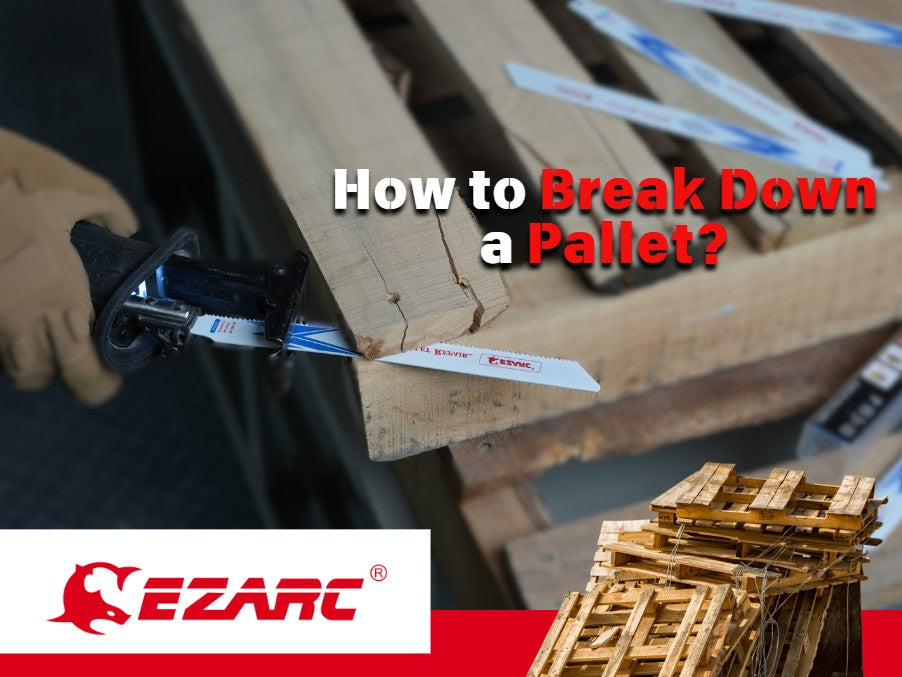
Free pallets are practically currency in the DIY world. They show up behind grocery stores, hardware shops, and warehouses, stacked high and waiting for someone with enough patience (or the right tool) to turn them into raised garden beds, rustic shelves, furniture, or firewood. The problem? Getting them apart without destroying the boards in the process.
If you've ever tried to break down pallets the old-fashioned way (a hammer, a pry bar, and a whole lot of swearing), you already know how that story ends. Split boards. Bent nails. Busted knuckles. There's a better way, and it starts with the right reciprocating saw blade.
Let's walk through the best way to break down pallets efficiently, safely, and with boards intact enough to actually use.
- 1. Why Pallets Are Such a Pain to Disassemble
- 2. The Best Way to Break Down Pallets: Use a Reciprocating Saw
- 3. Choosing the Right Reciprocating Saw Blades for Pallet Work
- 4. The EZARC 9-Inch 10/14 TPI Bi-Metal Blade Set: Built for This Exact Job
- 5. Step-by-Step: How to Break Down a Pallet with a Reciprocating Saw
- 6. Common Mistakes to Avoid When Disassembling Pallets
- 7. What Can You Do with Reclaimed Pallet Wood?
- 8. Final Thoughts
Why Pallets Are Such a Pain to Disassemble
Before we talk tools, it helps to understand why pallets fight back so hard.
Most wooden pallets are built from hardwood like oak, southern yellow pine, or mixed species, and assembled using ring-shank or spiral nails that are specifically designed not to pull out. The wood itself is often dense, weathered, and pressure-treated, which adds abrasiveness that chews through standard reciprocating saw blades fast. Add in the fact that those nails have been sitting in there for years, and you've got a material that's basically hostile to cutting.
This is exactly why a generic reciprocating saw blade won't survive long on pallet work. What you need is a blade engineered for nail-embedded wood, one that can handle the steel fasteners and the tough lumber without breaking down after the first few boards.
The Best Way to Break Down Pallets: Use a Reciprocating Saw
Skip the pry bar. The best way to disassemble pallets is with a reciprocating saw (also called a Sawzall) paired with the right reciprocating saw blade. Here's why:
A reciprocating saw lets you cut the nails themselves rather than trying to pull them out. You simply slide the reciprocating saw blade into the gap between the deck board and the stringer, run it flat, and slice right through the fasteners. The board comes off clean, and the nail stubs left behind are easy to pull or grind down later. No splitting, no cracking, no drama.
The speed is night-and-day compared to manual methods. What takes 20-30 minutes with a pry bar takes 3-5 minutes with a reciprocating saw and the right Sawzall blade.
Choosing the Right Reciprocating Saw Blades for Pallet Work

Not all reciprocating saw blades are created equal, and pallet dismantling is one of the most demanding applications you can throw at a blade. Here's what to look for:
Bi-Metal Construction: Bi-metal reciprocating saw blades combine high-speed steel (HSS) teeth with a flexible alloy steel back. The HSS teeth are hard enough to cut nails, while the flexible body absorbs the shock and vibration of working through gnarly, nail-studded wood without snapping. Standard carbon steel blades will dull fast or break entirely.
TPI (Teeth Per Inch): TPI determines cut speed vs. smoothness. For pallet work, you generally want two ranges:
- 10 TPI for fast, aggressive cuts through thick stringers and nail-embedded sections
- 14 TPI for cleaner cuts on thinner deck boards where board integrity matters
Blade Length: 9-inch reciprocating saw blades give you the depth to reach fully into the gap between deck boards and stringers without losing control. Shorter blades struggle with thick pallets; longer ones can be unwieldy in tight spots.
Reverse/Aggressive Tooth Geometry: Some reciprocating saw blades designed specifically for nail-embedded wood feature tooth profiles that resist jamming when they hit a nail unexpectedly. This keeps the cut moving and extends blade life significantly.
Not sure which blade type fits your job? The EZARC How to Select the Right Sawzall Blade Guide breaks it all down in plain language: TPI, length, material, and more.
The EZARC 9-Inch 10/14 TPI Bi-Metal Blade Set: Built for This Exact Job
If you want to cut pallets without constantly swapping reciprocating saw blades or burning through a pack in one afternoon, the EZARC 9-Inch 10/14 TPI Bi-Metal Reciprocating Saw Blade Set for Nail-Embedded Wood & Pallet Dismantling is engineered specifically for this punishment.
The set includes both a 10 TPI blade (for aggressive ripping through thick, nail-loaded wood) and a 14 TPI blade (for cleaner board separation on thinner slats). Both are 9 inches long, heat-treated bi-metal, and built to last 3x longer than standard wood-only blades in nail-penetrated materials. The hardened HSS teeth stay sharp through job after job, and the blades are compatible with all major reciprocating saw brands, including Milwaukee, DeWalt, Bosch, and Makita.
Whether you're a contractor breaking down pallets on a job site or a weekend DIYer building something cool in the garage, this set handles the work without flinching.
Step-by-Step: How to Break Down a Pallet with a Reciprocating Saw

Here's how to take apart pallets the right way:
Step 1: Safety First Wear safety glasses, work gloves, and hearing protection. Pallets can have rough edges, loose splinters, and the occasional rogue nail. Don't skip this.
Step 2: Inspect the Pallet Look for any markings. Pallets stamped HT (heat-treated) are safe to use for DIY projects. Avoid pallets marked MB (methyl bromide), as those were chemically treated and shouldn't be used for furniture or garden applications.
Step 3: Secure the Pallet Lay the pallet flat on the ground or clamp it to a workbench. You want it stable, because a shifting pallet mid-cut is both dangerous and inefficient.
Step 4: Insert the Blade into the Gap Slide your reciprocating saw blade flat into the gap between a deck board and the pallet stringer. You're aiming for the nail shank, not the wood itself. Keep the blade parallel to the stringer to avoid wandering into the wood and splitting the board.
Step 5: Cut the Nails Squeeze the trigger and let the reciprocating saw blade do the work. Use steady, moderate pressure and don't force it. The 10 TPI option is your go-to for thicker sections; switch to 14 TPI when you want cleaner separations on thinner boards. You'll feel a slight pop when each nail is cut through.
Step 6: Repeat Across Each Board Move to the other end of the same board and repeat. Two cuts per board (one on each stringer) and the deck board lifts free. Work your way across the pallet systematically.
Step 7: Clean Up the Boards Once you've taken apart the pallets, use a hammer or nail puller to remove any remaining nail stubs from the boards. A quick pass with a sander cleans up rough faces if you're using the wood for visible surfaces.
Common Mistakes to Avoid When Disassembling Pallets
Using a wood-only blade: A standard wood reciprocating saw blade will dull almost immediately when it hits the first nail. Always use a bi-metal sawzall blade rated for nail-embedded wood.
Cutting at the wrong angle: Keep the blade as parallel to the pallet surface as possible. Angling upward risks cutting into and splitting the deck board; angling too far down risks cutting into the stringer.
Rushing: Let the saw and blade work at their own pace. Forcing the tool creates heat, blade flex, and sloppy cuts.
Ignoring blade wear: When cuts start feeling sluggish or the blade begins to wander, it's time to swap. Dull reciprocating saw blades work harder and produce worse results.
What Can You Do with Reclaimed Pallet Wood?
Once you successfully break down pallets and have a stack of clean boards, the possibilities are genuinely impressive:
- Garden planters and raised bed frames
- Rustic wall art and accent walls
- Outdoor furniture (benches, side tables, chairs)
- Compost bins and cold frames
- Storage shelves and wine racks
- Firewood and kindling
Pallet wood has natural character: weathering, grain variation, and a worn texture that's difficult to fake. With a little cleanup and finishing, it makes stunning DIY material.
Final Thoughts
The best way to disassemble pallets isn't about brute strength. It's about working smart. Pairing a reciprocating saw with the right reciprocating saw blades turns a sweaty 30-minute wrestling match into a clean, quick 5-minute job. The key is matching blade specs to the task: bi-metal construction, the right TPI for the cut you need, and a blade long enough to reach the fasteners without fighting for position.
The EZARC 9-Inch 10/14 TPI Bi-Metal Blade Set was designed with exactly this kind of work in mind. Tough enough for the nails. Precise enough for the wood. Compatible with whatever saw is already sitting in your shop.
Ready to cut pallets the right way? Grab a set and see the difference purpose-built reciprocating saw blades make.


