
 Oscillating Multi-Tool Blades
 Reciprocating Saw Blades
 Cutting & Grinding
 Hole Saw
 Drilling
 Sanding & Polishing
 Socket & Driver Set
 Hand Tools
 Metal Worker & Fabrication
 Woodworking & Carpentry
 Electrical & Plumbing
 Automotive
 Concrete & Masonry
 Demolition
 NEW ARRIVALS
Introduction
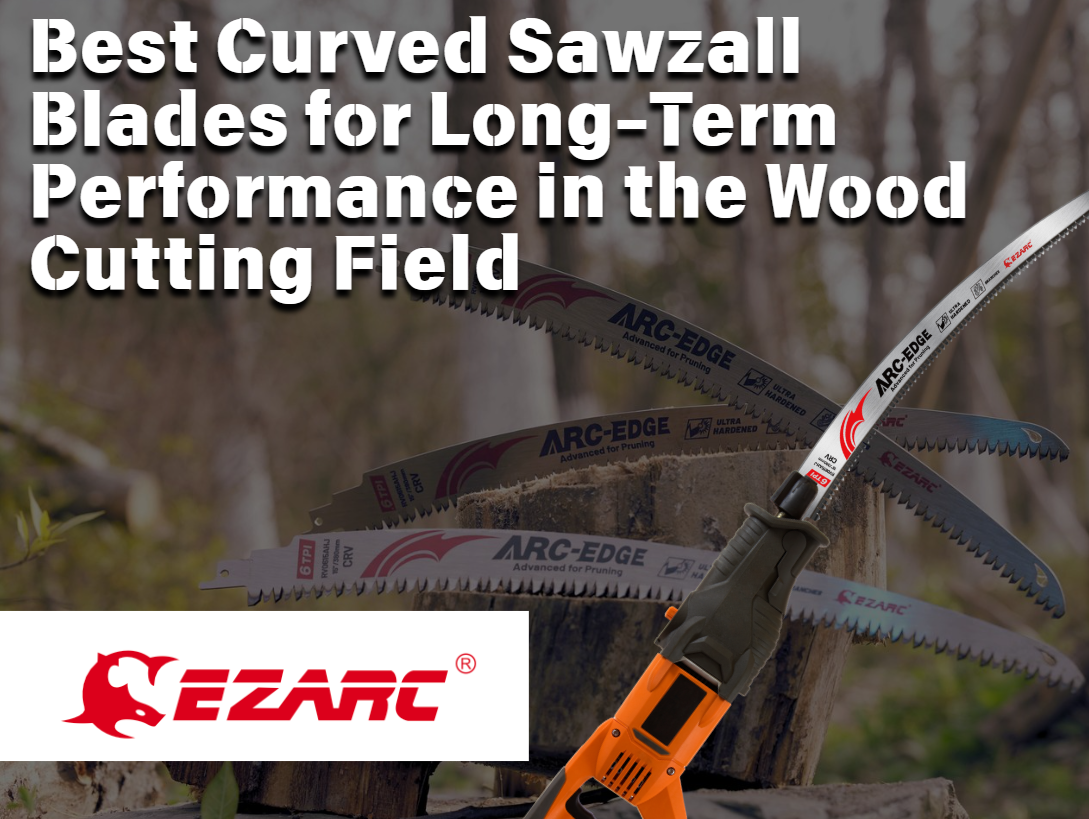
If you’ve ever had a pruning blade jam halfway through a thick limb, you already know the real problem isn’t “power”—it’s chip removal, control, and staying sharp long enough to finish the job. A curved Sawzall-style pruning blade can help because the arc profile improves leverage while the tooth geometry can keep wet sawdust from packing the kerf.
In 2026, more crews are also judging blades by battery efficiency: faster cutting with fewer stalls means fewer trigger-on seconds, fewer pack swaps, and less heat in both the blade and the tool. That’s why Reciprocating Saw Blades built for pruning—especially a curved, coarse-tooth design—can outperform a standard straight wood blade in storm cleanup, firewood prep, and routine tree work.
Below are the best picks for long-term performance using EZARC’s curved Japanese-teeth pruning blade family.
Picks for Long-Term Wood-Cutting Performance
Best for thick limbs and storm cleanup
1) 15" curved arc edge
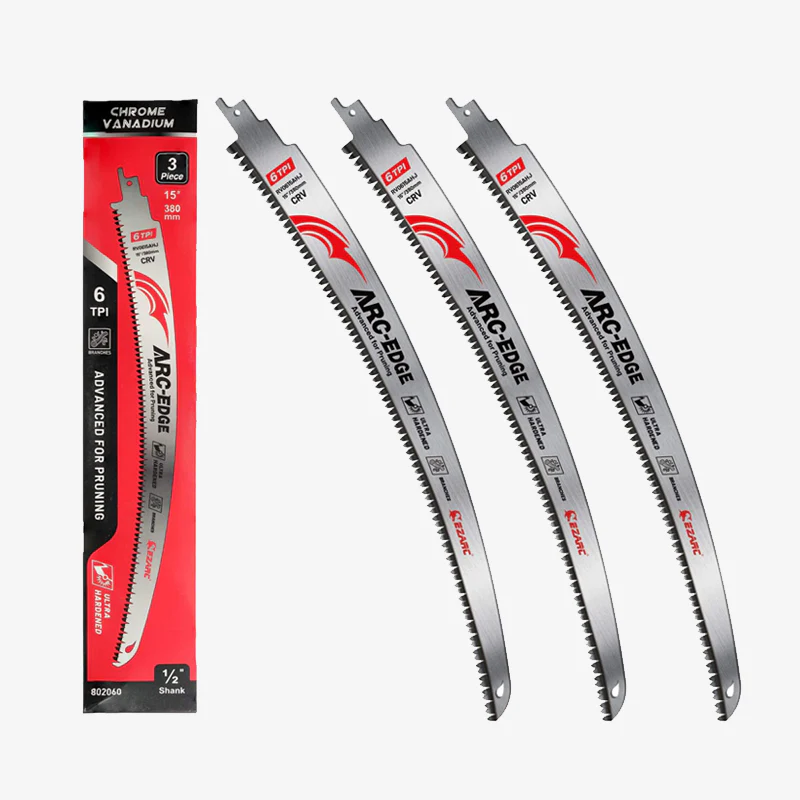
Japanese Teeth 6 TPI Reciprocating Saw Blade
When you’re clearing storm debris, you need a blade that bites fast in irregular grain and doesn’t bind when the branch shifts. This EZARC curved pruning blade is built around a 15-inch (380 mm) extra-long profile with 6 TPI Japanese-style teeth, which is a sweet spot for aggressive removal in thicker wood where fine-tooth blades just overheat and stall.
- Best for: storm cleanup, thick branches, heavy-duty yard work where speed and reach matter
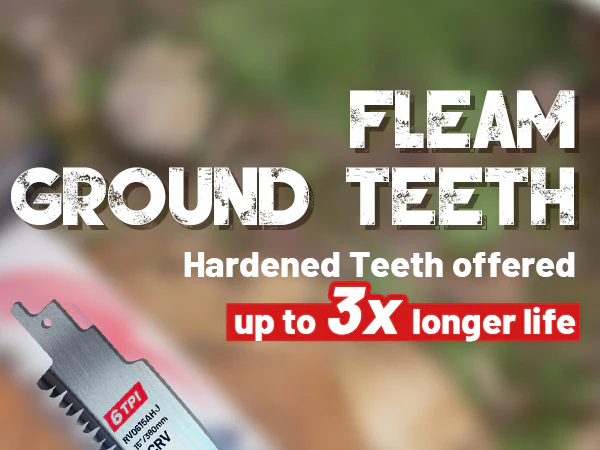
- Tooth style: aggressive Japanese-style teeth with fleam-ground geometry for fast fiber slicing
- Anti-jam help: deep gullets to evacuate wet chips before they pack the kerf
- Control advantage: curved arc edge for leverage when the cut is deep or the workpiece isn’t perfectly supported
- Durability focus: heavy-duty chrome vanadium (Cr-V) polished steel construction
- Key spec callout: 6 TPI designed for coarse wood pruning and fast material removal
Why it wins: In storm cleanup, the biggest time sink is stopping to reposition wood and restart bound cuts. The long, curved profile helps you keep the blade engaged and moving through the cut path, while the coarse 6 TPI + deep gullets combination is geared toward clearing bulky chips that would otherwise cause heat and stalls.
Best for wet/green wood and fast chip clearing
2) wet wood + green timber focus
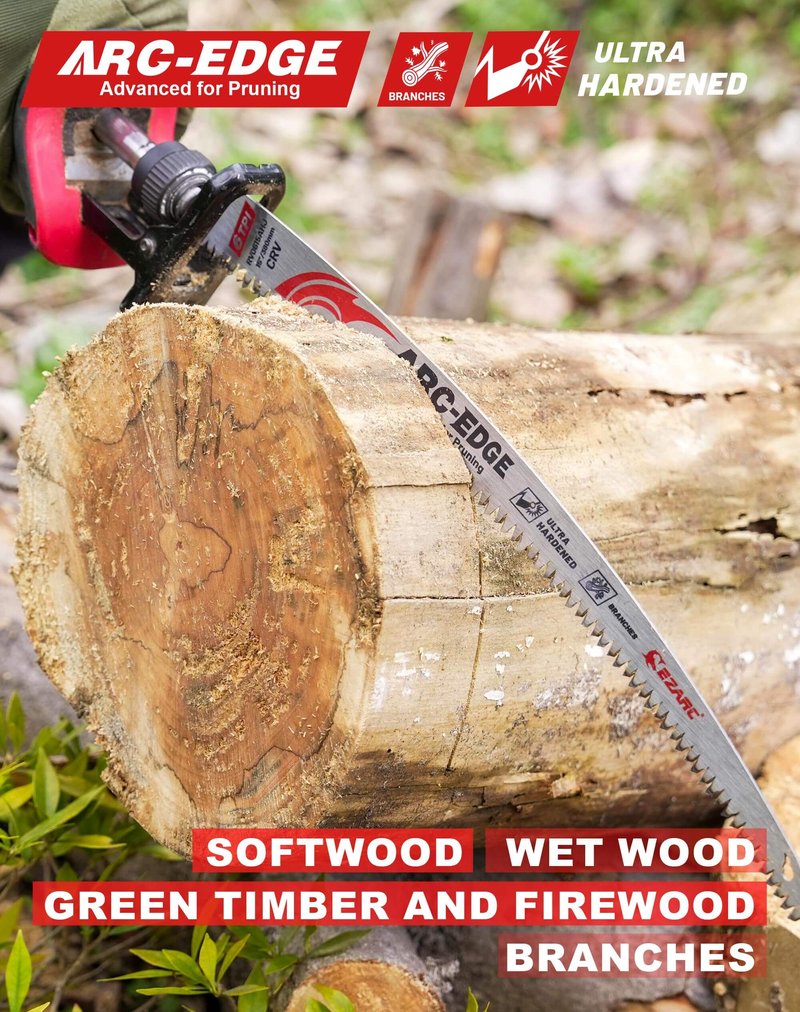
Japanese Teeth 6 TPI Reciprocating Saw Blade
Wet or green wood is where many “wood blades” fail early: the cut produces heavy, sticky chips that pack the gullets, friction spikes, and the blade starts wandering. EZARC positions this curved pruning blade specifically for wet wood, green timber, and dense firewood, leaning on deep gullets and an aggressive tooth shape to keep the kerf breathing.
- Best for: wet/green branches, fresh-cut limbs, sappy species, and firewood rounds where chips clog easily
- Chip management: deep gullets designed to clear chips quickly to reduce binding
- Tooth grind: fleam-ground teeth positioned for faster, cleaner slicing through fibers
- Cut feel: coarse bite that rewards steady feed pressure (instead of forcing the tool)
- Heat control: faster chip evacuation helps reduce heat buildup during repeated cuts
- Material: Cr-V polished steel for outdoor durability and jobsite wear
Why it wins: Wet sawdust behaves more like paste than powder. A design that clears chips aggressively often lasts longer in real work because it avoids the friction spiral (packing → heat → dulling → more packing). For crews trying to stretch battery runtime, fewer stalls also means fewer trigger seconds per cut.
Best for controlled cuts in tight spots
3) control + leverage scenario
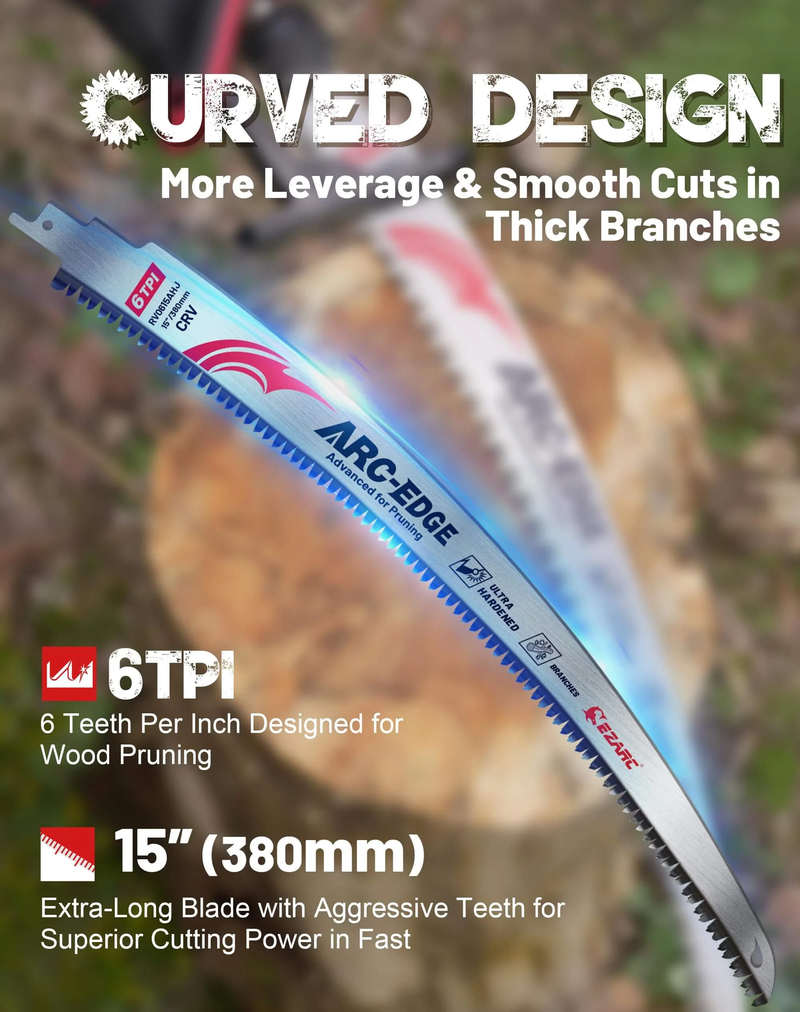
Japanese Teeth 6 TPI Reciprocating Saw Blade
Overhead pruning, reaching into crotches, and cutting close to fences or trunks is where control beats raw speed. EZARC’s arc edge is meant to improve leverage, and the blade is described as using a triple-ground offset tooth approach that provides multiple cutting angles while aiming to reduce friction and vibration.
- Best for: overhead trimming, awkward reaches, tight clearances, and directional cuts
- Blade profile: curved arc edge for leverage and controlled engagement through the cut
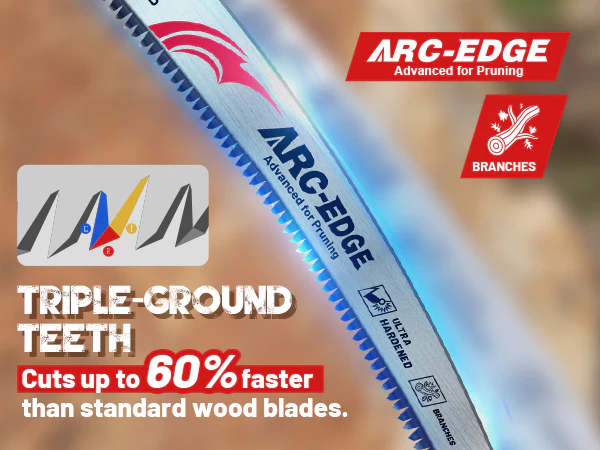
- Tooth design: triple-ground offset teeth (three cutting angles) for smoother progression
- Vibration/fatigue: reduced friction and vibration helps you stay accurate longer
- Wood range: positioned for pruning large limbs, green wood, and dense timber
- Practical tip: let the shoe ride the wood; use the curve to “pull” the cut instead of torquing the saw sideways
Why it wins: In tight spots, straight blades often encourage side-loading (which dulls teeth and can bend the blade). The curved profile is built to keep the teeth tracking while you maintain a safer posture and more stable contact—especially useful when you can’t get your body square to the cut.
Best for durability-focused buyers
4) Cr-V steel durability
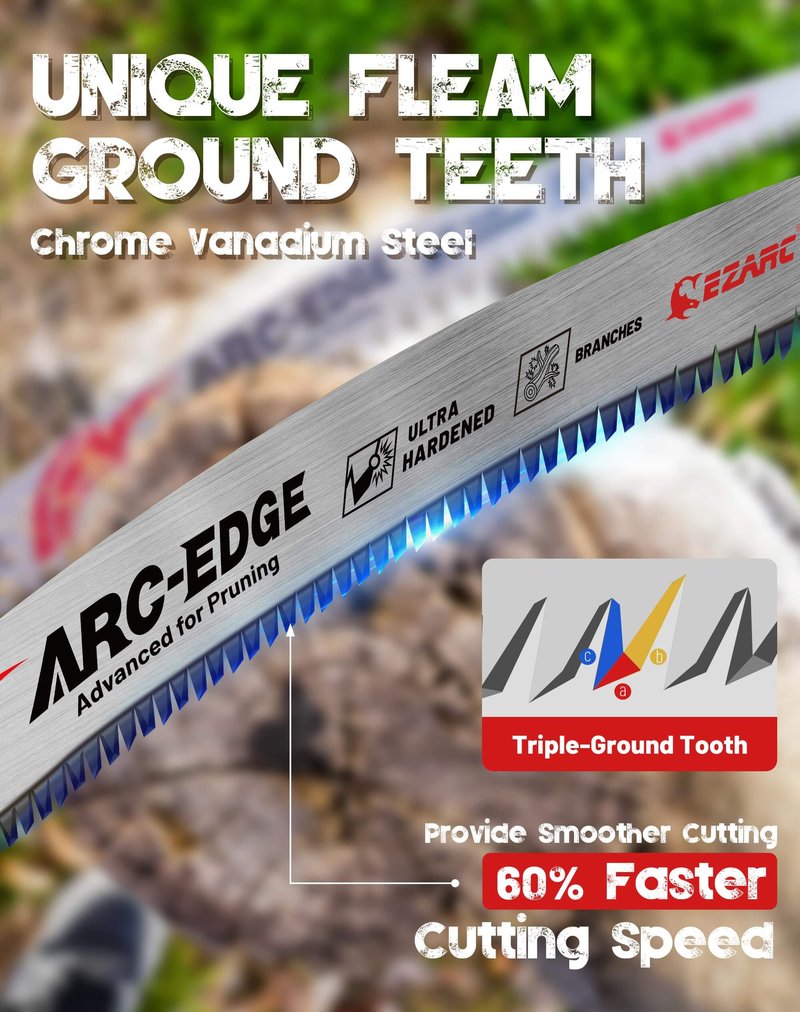
Japanese Teeth 6 TPI Reciprocating Saw Blade
If you measure value by how many jobs a blade survives—not how cheap the pack looks—start with the construction. EZARC describes this blade as premium Cr-V polished steel, designed to stay sharp longer and resist rust, which matters when blades live in truck boxes, tool bags, or damp garages.
- Best for: long sessions, repeated pruning days, and outdoor storage conditions
- Construction: chrome vanadium (Cr-V) polished steel for strength and durability
- Jobsite advantage: less mid-task swapping (especially when you’re partway through a thick limb)
- Binding resistance: curved profile helps keep deeper cuts moving without jamming
- Deep-cut behavior: designed for better leverage during deep plunge cuts
- Maintenance note: wipe sap and moisture after use; resin buildup increases friction and accelerates dulling
Why it wins: Longevity is mostly about controlling heat and preventing tooth damage. A tougher steel body helps the blade stay stable under load, while a design that clears chips and reduces vibration can protect the tooth edges from micro-chipping and premature rounding.
Best “value pack” option for crews
5) multi-pack and mixed-length options
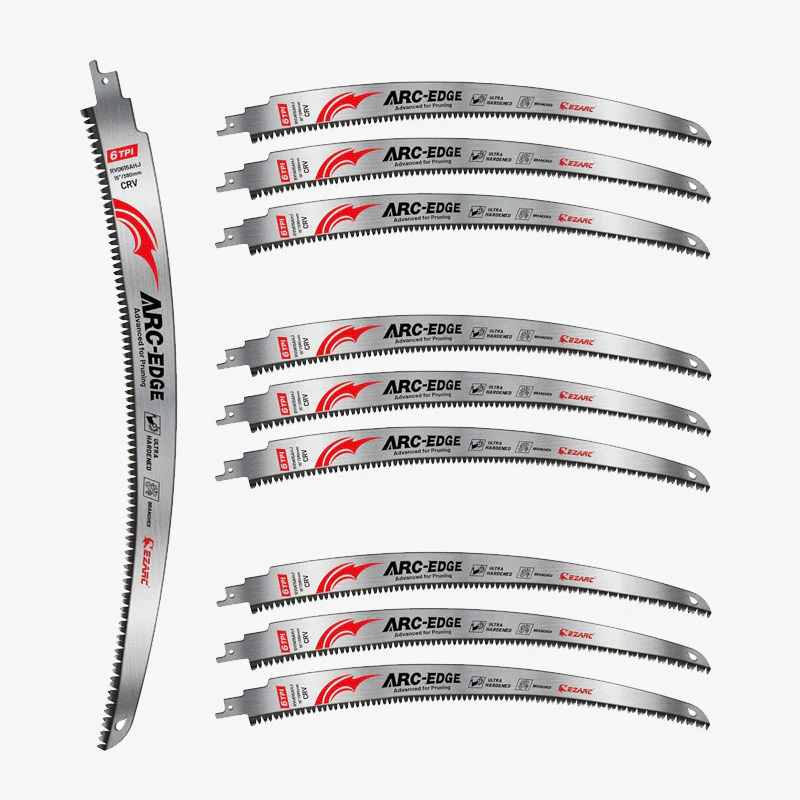
Japanese Teeth 6 TPI Reciprocating Saw Blade
For crews, the best “deal” is often the one that prevents downtime: a fresh blade ready when one dulls, plus the right length for the cut. EZARC lists multiple configurations including 12-inch and 15-inch options, along with 3-piece, 10-piece, and a mixed pack.
- Best for: yard crews, property maintenance teams, and anyone doing weekly pruning volume
- Length options: 12-inch (more maneuverable) and 15-inch (more reach/deeper engagement)
- Pack options: 3pcs, 10pcs, plus a mixed-length configuration for flexibility
- Inventory benefit: keep one pack staged per truck to avoid mid-job supply runs
- Standardization: same 6 TPI tooth style across lengths helps your team get consistent cut behavior
- Planning tip: match blade length to what you cut most (diameter + access), not just “bigger is better”
Why it wins: Crews lose time when one person’s blade dulls and they borrow from someone else or switch tools entirely. Multi-pack options are a practical way to keep productivity steady across multiple users—especially during storm-response days.
Best choice when you want speed first
6) speed-forward tooth geometry
Japanese Teeth 6 TPI Reciprocating Saw Blade
If your goal is to get through thick material quickly—without switching to a chainsaw—this blade is positioned as ultra-fast, coarse cutting thanks to the 6 TPI + aggressive tooth approach and the curved arc edge. EZARC also frames performance benefits versus standard wood blades (for example, faster cutting and longer life claims).
- Best for: fast branch breakdown, rough pruning cuts, and rapid firewood prep
- Tooth pitch: 6 TPI for coarse, fast material removal in thicker wood
- Cutting action: triple-ground offset teeth designed to keep cutting angles engaged
- Efficiency: fewer stalls means less trigger time and less wasted battery in cordless saws
- User technique: steady pressure; avoid forcing—forcing increases heat and dulling
- Reality check: speed-forward blades trade smoothness for aggression; expect rougher finish than finer TPI
Why it wins: In real pruning work, the fastest blade is often the one that doesn’t choke. Coarse teeth plus gullets that actually clear chips can cut faster over a full day than a “finer” blade that constantly binds and heats up.
Best pick for first-time curved blade buyers
7) starter-friendly curved pruning setup
Japanese Teeth 6 TPI Reciprocating Saw Blade
Curved pruning blades feel different if you’re used to straight demolition blades: they can self-feed more aggressively, and they reward letting the shoe and curve control the cut. Starting with a general-purpose pruning scenario is the easiest way to learn the technique without beating up teeth through side-load or twisting.
- Best for: homeowners, DIY users, and new crew members learning curved pruning blades
- Simple spec to remember: 6 TPI for thicker wood and pruning-style cuts
- Control: arc edge can feel smoother once you stop “steering” with wrist torque
- Learning tip: start at moderate speed, establish a shallow kerf, then increase speed
- Safety note: secure the limb; unexpected pinch is the #1 cause of binding and kickback-like motion
- When to size down: if you’re mostly cutting in tight landscaping, the 12-inch option can be easier to manage
Why it wins: A blade that clears chips and keeps moving is easier for beginners because it reduces the temptation to force the saw. Once you learn to keep the shoe planted and the cut aligned, curved blades can feel both faster and more controllable than straight wood blades in pruning.
Buying Guide: How to Choose a Curved Sawzall Blade

Key factors that actually affect longevity
1) Tooth style and grind (what actually bites the fibers?)
For pruning, coarse teeth aren’t just about speed—they reduce friction in thick wood because each tooth has room to clear debris. Fleam-ground or slicing-style grinds can feel faster in green wood because they shear fibers instead of scraping them, which can reduce heat.
2) TPI choice (why 6 TPI feels “right” in thick branches)
If you mainly cut 3–8 inch limbs, 6 TPI is a practical pitch: it’s aggressive enough to keep moving, and it leaves gullets large enough to carry wet sawdust out of the kerf. Finer pitches can be useful in thinner stock, but they’re more likely to pack up in wet wood.(https://www.directhardware.com.au/pages/how-to-choose-reciprocating-saw-blades)
3) Curved arc edge vs straight profile (when does the curve help?)
A curved arc edge can improve leverage in deep cuts and can feel more stable in pruning angles (especially overhead or in tight crotches). Straight blades can be easier for flush cuts, but they can also encourage side-loading when you’re reaching around obstacles.
4) Material and body durability (why steel choice matters)
Outdoor cutting is tough on blades: sap, moisture, and grit all increase wear. A tougher steel body helps the blade resist bending during plunge cuts and reduces fatigue cracking over time. It won’t prevent dulling, but it can reduce the “death by abuse” failures that happen on job sites.
Q&A-style selection guidance
Do you work overhead or in tight landscaping?
If yes, control matters as much as speed. A curved arc edge can help you keep the blade engaged without twisting, and a shorter length (like 12-inch) can be easier to manage when you’re close to fences, walls, or trunks.
Do you care more about “fast cut” or “clean cut”?
Fast pruning blades are usually coarse and will leave a rougher surface than a fine-tooth finish blade. If you need cleaner cuts for specific tree-care standards, you may still use a saw for the finish cut—but use the pruning blade to break down bulk material quickly.
Practical tips for better performance (and longer life)
- Let the shoe do the work: keep the saw’s shoe planted; it stabilizes the cut and reduces tooth shock.
- Avoid forcing: if progress slows, back out slightly to clear chips—especially in wet wood.
- Start shallow on plunge cuts: establish a kerf at lower pressure, then let the curve and teeth carry the cut.
- Watch heat: if the blade is hot to the touch, you’re building friction; slow down, clear chips, and reduce pressure.
Comparison Table
| Attribute | EZARC Tree Trimming/Wood Cutting – Japanese Teeth 6 TPI Reciprocating Saw Blade |
| Category | Reciprocating Saw Blades |
| Tooth style | Japanese-style; fleam-ground |
| TPI | 6 TPI |
| Blade profile | Curved arc edge |
| Anti-jam design | Deep gullets; curved leverage |
| Material | Chrome vanadium (Cr-V) polished steel |
| Best for | Thick limbs, wet/green wood, dense firewood |
| Size options | 12-inch; 15-inch |
| Pack options | 3pcs; 10pcs; mixed pack |
| Trade-offs / limitations | Coarse 6 TPI cut can be rougher than fine-tooth wood blades; long 15-inch blade may feel less maneuverable in tight landscaping; aggressive teeth can grab if you start too hard without a stable shoe position |
FAQ
1) Can I use a curved pruning Sawzall blade for firewood?
Yes—especially for breaking down pieces where a coarse blade can clear chips quickly. Use steady, moderate pressure and let the teeth do the cutting; forcing the saw typically increases heat and dulls the edge sooner. If the kerf starts binding, back the blade out 1–2 inches to clear debris and then re-enter the cut. Always stabilize the wood so it can’t roll or pinch the blade mid-cut.
2) What’s the advantage of a curved arc edge versus a straight blade?
A curved arc edge can feel more controllable in pruning-style cuts because it improves leverage and keeps the teeth engaged smoothly as the cut deepens. It’s especially helpful when you’re cutting overhead, reaching into awkward angles, or working around obstacles where you can’t keep a straight blade perfectly aligned. Straight blades can still be useful for simpler, straight-on cuts and some flush-cut situations. The best choice depends on your typical cutting angles and how often you fight binding.
3) How do aggressive Japanese-style teeth affect cutting speed and battery runtime?
Aggressive teeth can increase cutting speed because they remove more material per stroke, especially in thicker wood. Faster cuts often translate to fewer trigger-on seconds, which can improve battery efficiency on cordless reciprocating saws. The key is technique: if you force the blade, you’ll create heat and stalls that waste energy. For the best runtime, keep the shoe planted and let the blade clear chips rather than grinding in place.
4) What’s the difference between 12-inch and 15-inch pruning blades in real jobs?
A 15-inch blade gives you more reach and can be more efficient in thicker limbs because the longer profile helps maintain engagement through deeper cuts. However, the extra length can feel less maneuverable in tight landscaping or when you’re working close to a trunk, fence, or wall. A 12-inch option is easier to control in cramped spaces and can reduce accidental contact with nearby branches. Match length to the clearance you typically have and the limb diameters you cut most.
5) Can I use the same pruning blade on nail-embedded lumber?
It’s not a good idea: pruning blades are designed for wood fibers, and nails can damage the tooth edges quickly and increase the chance of grabbing or chatter. If you need to cut nail-embedded wood, switch to a blade designed specifically for that mixed-material job so you don’t destroy a pruning blade in a few cuts. Also check the work area for hidden fasteners before starting, especially in storm debris that may include fencing hardware. If you do hit metal accidentally, stop and inspect the teeth before continuing.
Conclusion
If you’re chasing long-term performance in the wood cutting field, a curved pruning blade is usually worth it when your real jobs involve thick limbs, wet/green wood, and awkward cutting angles. EZARC’s Tree Trimming/Wood Cutting – Japanese Teeth 6 TPI Reciprocating Saw Blade focuses on the core elements that reduce stalls and premature dulling: a curved arc edge for leverage, aggressive fleam-ground teeth, and deep gullets for chip clearing.
If you want one practical recommendation: choose the length based on access (12-inch for maneuverability, 15-inch for reach), keep extra blades on hand for peak season, and focus on technique—shoe planted, steady feed, and chip clearing—so your Reciprocating Saw Blades last job after job.
Table of Contents
- Introduction
- Picks for Long-Term Wood-Cutting Performance Best for thick limbs and storm cleanup1) 15" curved arc edge Best for wet/green wood and fast chip clearing2) wet wood + green timber focus Best for controlled cuts in tight spots3) control + leverage scenario Best for durability-focused buyers4) Cr-V steel durability Best “value pack” option for crews5) multi-pack and mixed-length options Best choice when you want speed first6) speed-forward tooth geometry Best pick for first-time curved blade buyers7) starter-friendly curved pruning setup
- Buying Guide: How to Choose a Curved Sawzall BladeKey factors that actually affect longevityQ&A-style selection guidancePractical tips for better performance (and longer life)
- Comparison Table
- FAQ1) Can I use a curved pruning Sawzall blade for firewood?2) What’s the advantage of a curved arc edge versus a straight blade?3) How do aggressive Japanese-style teeth affect cutting speed and battery runtime?4) What’s the difference between 12-inch and 15-inch pruning blades in real jobs?5) Can I use the same pruning blade on nail-embedded lumber?
- Conclusion


コメントを書く
このサイトはhCaptchaによって保護されており、hCaptchaプライバシーポリシーおよび利用規約が適用されます。