
 Oscillating Multi-Tool Blades
 Reciprocating Saw Blades
 Cutting & Grinding
 Hole Saw
 Drilling
 Sanding & Polishing
 Socket & Driver Set
 Hand Tools
 Metal Worker & Fabrication
 Woodworking & Carpentry
 Electrical & Plumbing
 Automotive
 Concrete & Masonry
 Demolition
 NEW ARRIVALS

If you’ve ever picked up a reciprocating saw to tackle framing, demolition, pruning, or general woodworking, then you already know how powerful and versatile these tools can be. But even the best saw in the world is only as effective as the reciprocating saw blades you choose. For wood cutting, blade selection transforms your saw from a brute force tool into a precision performer.
The real question isn’t just which reciprocating saw blade cuts wood, but which blade gives you speed, durability, control, and clean cuts every time. That’s exactly what we’re here to answer.
In this guide, we’ll break down what makes certain blades ideal for wood, how to match blade characteristics with your project, and showcase top performers from EZARC Tools that set the standard for performance.
- 1. Why Blade Choice Matters More Than You Think
- 2. Understanding Blade Basics for Wood Cutting
- 3. Best Reciprocating Saw Blades for Wood: EZARC’s Top Picks
- 4. Blade Selection Tips for Wood Projects
- 5. Learn More: Blade Selection Authority
- 6. Performance That Professionals Trust
- 7. Common Wood Cutting Mistakes & How to Avoid Them
- 8. Why EZARC Tools Blades Deliver More
- 9. Final Thoughts
Why Blade Choice Matters More Than You Think

With wood, the differences between blades are subtle, but the impact on cut quality isn’t. Choosing the wrong blade can lead to:
- Slow progress and high friction
- Excessive wear or blade breakage
- Rough, splintered cuts
- Poor control and vibration
Conversely, the right reciprocating saw blades will empower you to cut:
- Framing lumber
- Hardwood boards
- Tree branches and pruning cuts
- Planks in renovation and demolition
...with speed, accuracy, and confidence.
Before we dive into product picks, let’s break down the blade science.
Understanding Blade Basics for Wood Cutting
1. Length Matters
Blade length determines how deep you can cut. Longer blades (9–12 inches) give you reach into thicker stock or deeper cavities, while shorter blades offer more control in confined spaces.
2. TPI (Teeth Per Inch)

- Lower TPI (3–8) – Fewer, larger teeth ideal for fast, aggressive cuts in wood.
- Higher TPI (10+) – Finer cuts, smoother finishes, but slower — better for metal or composite.
For most woodworking, especially framing or demolition, lower TPI blades are your best bet.
3. Material & Teeth Style

Blades made from robust materials like carbide or with specialized teeth (e.g., Japanese-style rake teeth) offer more durability and cleaner cuts. These designs resist wear, stand up to knots, and reduce binding.
4. Application Focus
Not all wood is the same. Soft pine, hardwood oak, or buried, sappy branch material demands different blade behaviors. Understanding your application (framing vs pruning vs fine woodworking) helps you pick the right blade profile.
Best Reciprocating Saw Blades for Wood: EZARC’s Top Picks
We’ve spent countless hours testing and refining blade designs so that your reciprocating saw becomes unmatched in cutting performance.
Here are two EZARC blades that consistently outperform competitors for wood work:
1. EZARC 3TPI 9–12″ Carbide Reciprocating Saw Blade for Hard Wood
Best For:
Hardwood, framing lumber, demolition, dense wood cutting
If your projects demand raw cutting power through tough wood fibers, this blade raises the bar. With a 3 TPI configuration and carbide-tipped construction, it delivers:
- Rapid material removal
- Exceptional durability through knots and dense grain
- Reduced friction and heat buildup
- Longer life than standard bi-metal blades
The 9–12” size gives versatility across wood dimensions, from ripping through framing studs to deeper cuts in treated lumber.
This is one of the go-to blades for carpenters, contractors, and serious DIYers who don’t want to compromise on speed or strength.
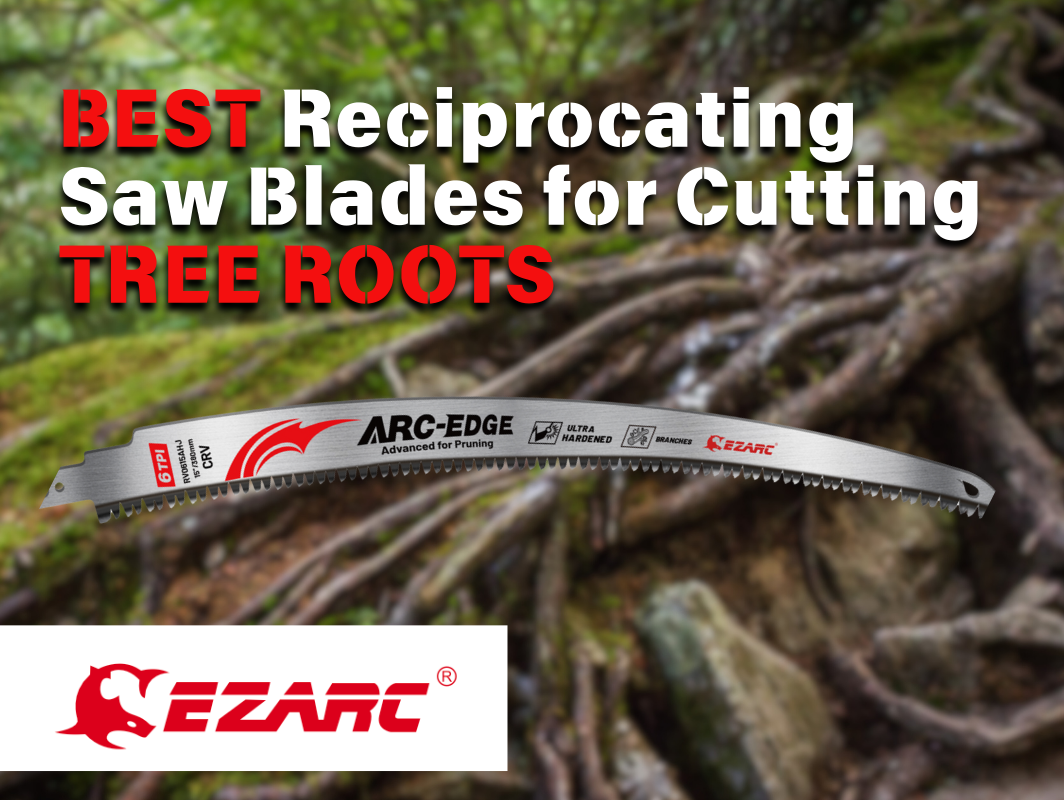
2. EZARC 8TPI Japanese Teeth Reciprocating Saw Blade — Arc Edge Wood Pruning & Cutting
Best For:
General wood cutting, pruning, controlled cuts, tree limbs
For wood applications where control and finish matter (e.g. trim work, branch cutting, or precision cuts) the EZARC Japanese teeth blade is a standout choice.
This blade features:
- 8 TPI for a balance of speed and fine finish
- Arc edge geometry to guide cuts steadily
- Sharp, Japanese-style teeth designed to slice through wood fibers cleanly
Whether you’re pruning branches or cutting finished lumber, this blade cuts with less tear-out and smoother edges than standard blades.
Blade Selection Tips for Wood Projects
No two woodworking projects are identical. Here’s how to choose the best reciprocating saw blades based on real-world scenarios:
For Fast, Rough Cuts (Demolition/Framing)

Use low-TPI blades like the EZARC 3TPI Carbide blade. Its aggressive tooth pattern rips through wood fast, ideal for framing tear-outs or demolition when finish isn’t the priority.
For Precision & Smooth Cuts (Trim/Finish Work)

Choose blades with moderate TPI like the EZARC Japanese teeth blade. It slows the cut slightly but dramatically improves edge quality.
For Green Wood or Pruning
Wood with sap or moisture can gum up standard blades. Blades with special teeth geometry (like Japanese style) cut more efficiently and shed debris more effectively.
Learn More: Blade Selection Authority
If blade choices feel overwhelming, EZARC has your back. Our in-depth guide breaks down terminology, compatibility, TPI choices, and more to help you make informed decisions every time.
This guide elevates your understanding of reciprocating saw blades beyond basic labels, empowering you to match blade to task like a pro.
Performance That Professionals Trust
Still wondering which reciprocating saw blade is best for wood? The answer isn’t one-size-fits-all, rather it’s about matching blade design to your cut:
| Application | Blade to Use | Why It Works |
| Framing Lumber | 3 TPI Carbide Blade | Fast, aggressive cutting |
| Hardwood Boards | 3 TPI Carbide Blade | Durability through dense grain |
| Tree Pruning | 8 TPI Japanese Teeth | Controlled cut, less tear-out |
| Finished Lumber | 8 TPI Japanese Teeth | Smooth edges |
With EZARC Tools’ blades in your toolbox, you aren’t guessing, you’re choosing with precision.
Common Wood Cutting Mistakes & How to Avoid Them
Even with the best reciprocating saw blades, improper use can reduce performance. Avoid these pitfalls:
Forcing the Blade
Let the blade do the work. Pressing too hard bogs down your saw and heats up the blade.
Ignoring Blade Fit
Make sure your blade locks securely in your saw. Loose blades chatter and wear faster.
Using the Wrong TPI
More teeth don’t always mean better quality. Match the TPI to the wood and task.
Skipping Maintenance
Clean blades after cuts, especially in resinous or wet wood, debris can reduce cutting efficiency.
Why EZARC Tools Blades Deliver More
At EZARC Tools, quality isn’t a buzzword, it’s the foundation of every blade we produce. Our reciprocating saw blades are engineered with:
- Precision tooth geometry
- Durable materials like carbide and heat-treated steel
- Designs optimized for real jobsite conditions
- Compatibility with all major saw brands
Whether you’re a seasoned professional or a weekend warrior, EZARC delivers blades that cut faster, last longer, and make woodworking projects more predictable and stress-free.


Final Thoughts
Selecting the best reciprocating saw blades for wood doesn’t have to be confusing. By understanding blade length, TPI, tooth design, and material, you can match performance to purpose.
- For aggressive wood removal and rugged applications, the EZARC 3TPI 9–12″ Carbide Blade is your powerhouse.
- For smoother cuts and balanced performance, the EZARC 8TPI Japanese Teeth Blade delivers precision and reliability.
Pair these blades with your reciprocating saw and experience cuts that are faster, cleaner, and more satisfying than ever before. And if you’re still exploring blade options, our detailed blade selection guide is the perfect next step.
Choose the right blade. Cut with confidence. Build with precision. That’s the EZARC promise.

Laisser un commentaire
Ce site est protégé par hCaptcha, et la Politique de confidentialité et les Conditions de service de hCaptcha s’appliquent.