
 Oscillating Multi-Tool Blades
 Reciprocating Saw Blades
 Cutting & Grinding
 Hole Saw
 Drilling
 Sanding & Polishing
 Socket & Driver Set
 Hand Tools
 Metal Worker & Fabrication
 Woodworking & Carpentry
 Electrical & Plumbing
 Automotive
 Concrete & Masonry
 Demolition
 NEW ARRIVALS
Introduction
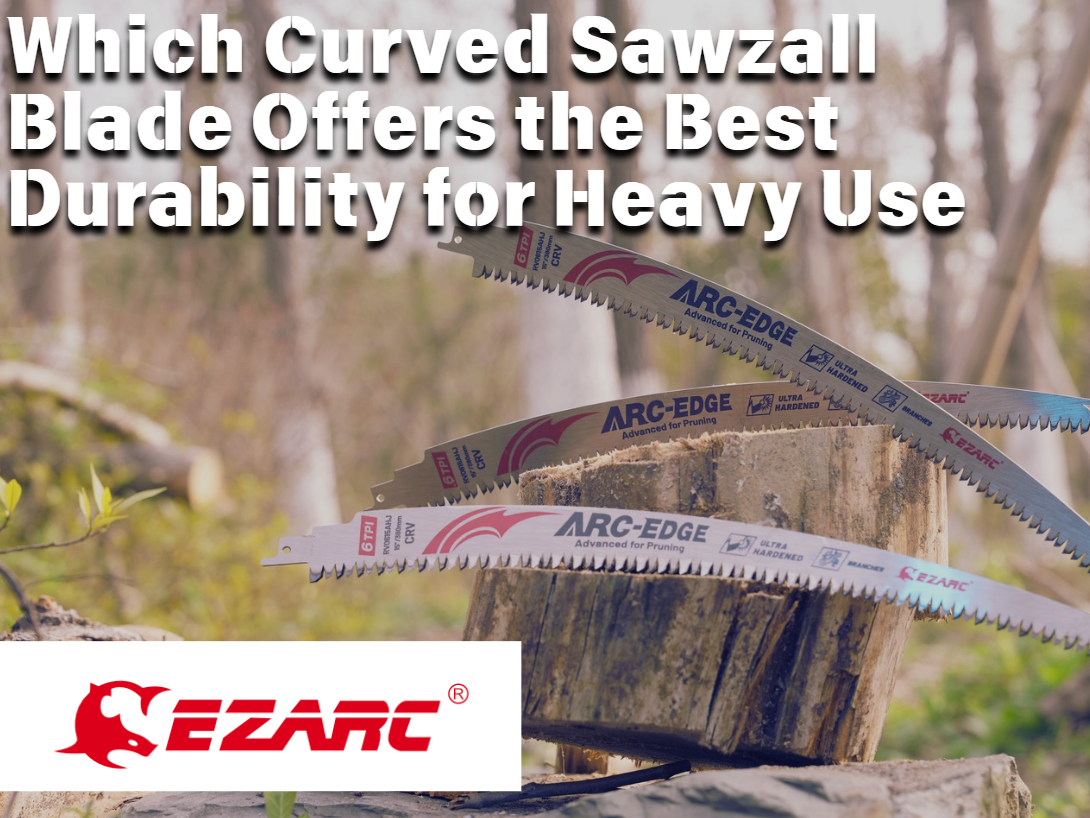
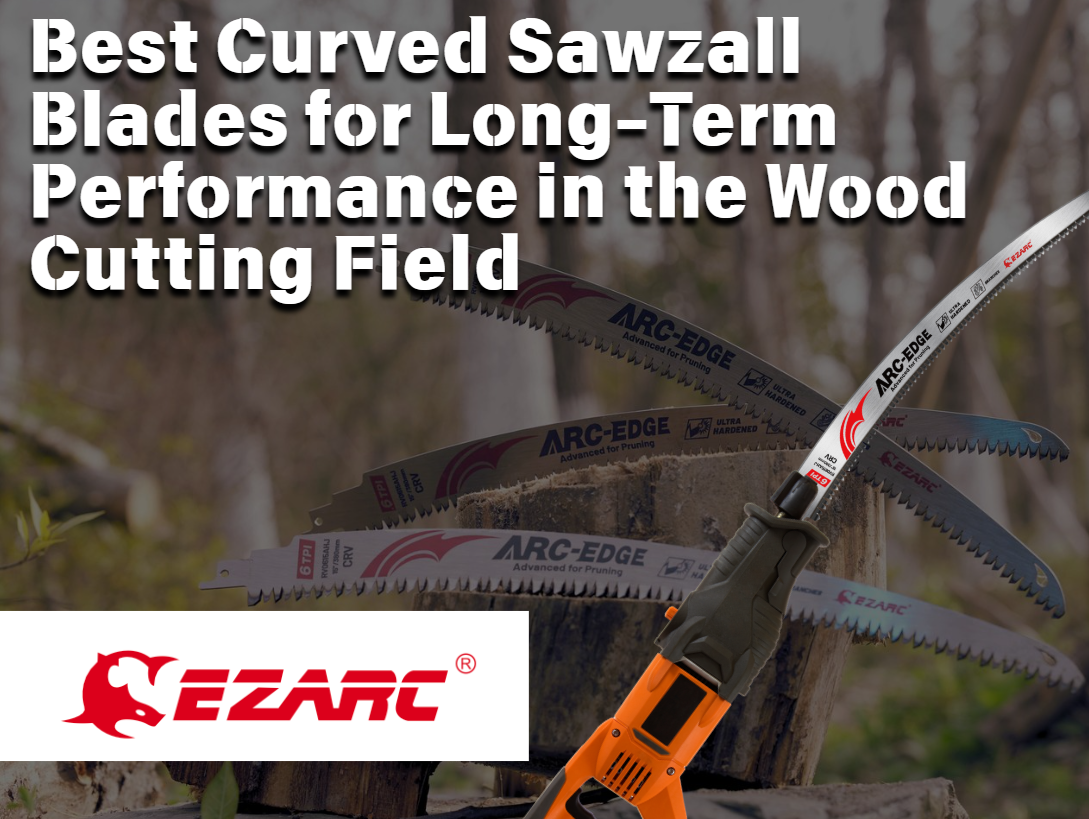
Curved reciprocating saw blades are designed for tough pruning tasks where standard blades often bind and dull. Their shape ensures consistent cutting motion, reduces friction, and helps clear chips efficiently. For heavy-duty use on thick or green wood, look for features like optimized tooth geometry, deep gullets for chip clearance, and durable materials like hardened Cr-V steel.
In 2026, the focus is on durability and efficiency—blades that cut faster, resist wear, and minimize vibration are preferred by professionals and serious DIYers. When selecting a blade, match the tooth design and length to your specific material, whether it's green wood, dry hardwood, or mixed pruning work.
Table of Contents
- Introduction
- Top EZARC Curved + Heavy-Use Picks By Scenario1) EZARC Tree Trimming/Wood Cutting2) EZARC Tree Trimming/Wood Cutting3) EZARC Tree Trimming/Wood Cutting4) EZARC Pruning5) EZARC Pruning/Wood6) EZARC Wood Demolition7) EZARC Heavy Metal Cutting8) EZARC Thin Metal Cutting
- Buying Guide How to Pick Durability for Heavy UseTooth Design What survives the longest?Steel and build What matters more than TPI?Length and curve Does arc-edge reduce blade death?Material match Are you cutting wood or metal?
- Comparison Table
- FAQ1) Which curved Sawzall blade is most durable for heavy pruning?2) Does a curved arc-edge actually help a blade last longer?3) Should I use a pruning blade for demolition wood with nails?4) What TPI should I choose when durability is the main goal?5) Why does my reciprocating saw blade overheat and dull so fast?6) Can I use metal-cutting Reciprocating Saw Blades on green wood in a pinch?
- Conclusion
Top EZARC Curved + Heavy-Use Picks By Scenario
1) EZARC Tree Trimming/Wood Cutting
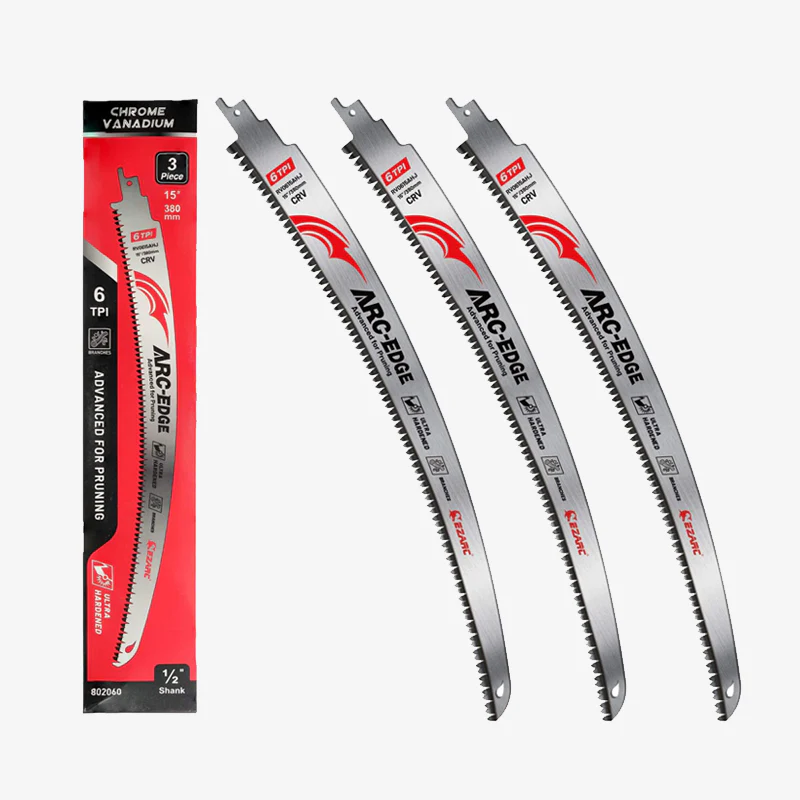
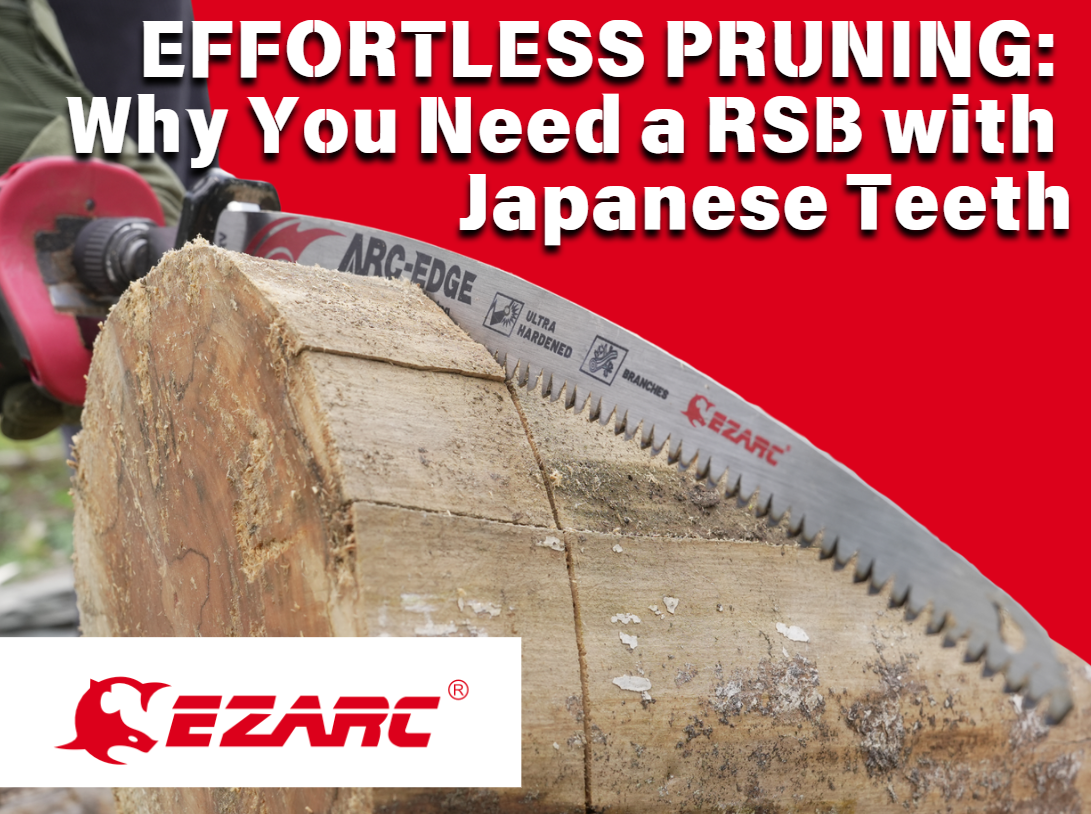
Japanese Teeth 6 TPI Reciprocating Saw Blade (Arc Edge, 15 in)
If your “heavy use” means thick branches all day—where binding and vibration usually kill blades—this is the durability-first pick. The 15-inch reach helps you stay out of awkward body positions, while the curved arc edge is designed to keep the cut progressing instead of stalling deep in the kerf.
- Best for: thick limbs, heavy yard work, repeat pruning sessions where batteries and blades get punished
- Overview: 15 in curved arc-edge pruning blade with 6 TPI Japanese-style teeth
- Key durability feature: positioned as CRV (chrome vanadium) polished steel for demanding pruning work
- Performance angle: arc-edge + aggressive teeth helps reduce stalls that cause heat spikes and tooth rounding
- Jobsite reality: use it when you want fast bite and efficient chip clearing, not a furniture-smooth finish
- What to watch: long blades reward good technique—keep the shoe planted and avoid side-loading to prevent bending
Why it wins: In heavy pruning, “durability” often means keeping loads steady. A curved arc edge can reduce the stop-and-go cutting that overheats teeth, and the longer profile helps you maintain a straighter line through thick material. If you routinely cut dense limbs and want fewer mid-cut stalls, this blade’s geometry is built around that problem.
2) EZARC Tree Trimming/Wood Cutting
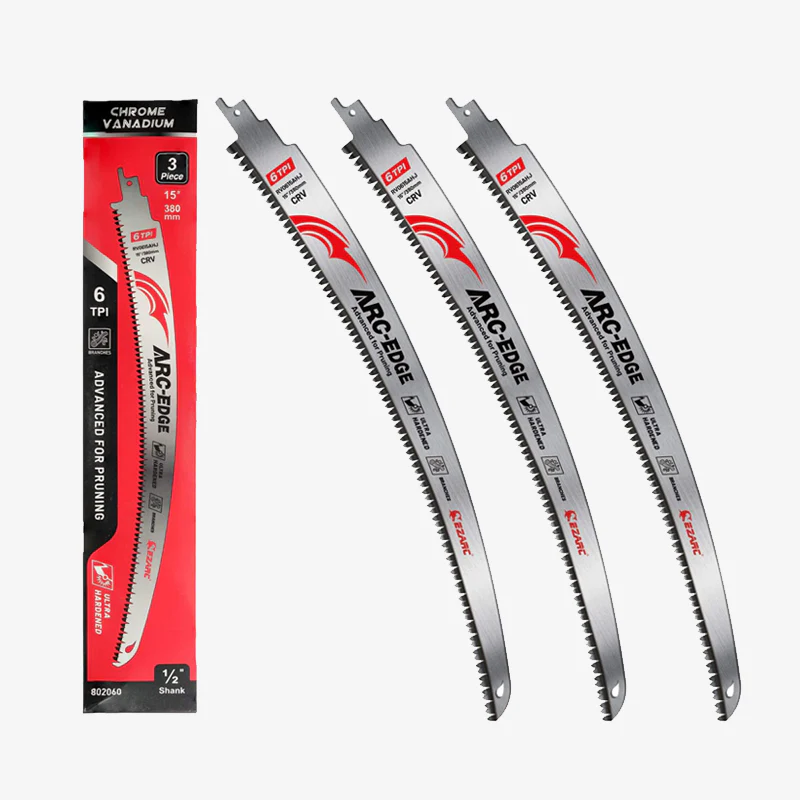
Japanese Teeth 6 TPI Reciprocating Saw Blade (Arc Edge, 12 in)
Need the same heavy-pruning tooth style, but you’re working in tighter spaces (fences, crotches, ladders, or dense shrubs)? The 12-inch option keeps the arc-edge concept while improving handling—often the difference between a controlled cut and a bent blade.
- Best for: heavy pruning where maneuverability matters more than maximum reach
- Overview: 12 in arc-edge pruning blade with 6 TPI Japanese teeth profile
- Key durability feature: shorter length can reduce flex and whip under high pressure
- Heat control angle: deep gullets and aggressive spacing help clear wet chips (a major cause of overheating)
- When it’s smarter than 15 in: working overhead, in brushy areas, or when the limb can’t be repositioned
- Technique reminder: let chips clear—if you see wet sawdust packing, back out and re-enter the cut
Why it wins: Many blade failures in real use aren’t “wear-out,” they’re “abuse-out” (binding, twisting, bending). A 12-inch arc-edge blade is easier to keep stable, which can extend service life even when the steel and teeth are similar.
3) EZARC Tree Trimming/Wood Cutting
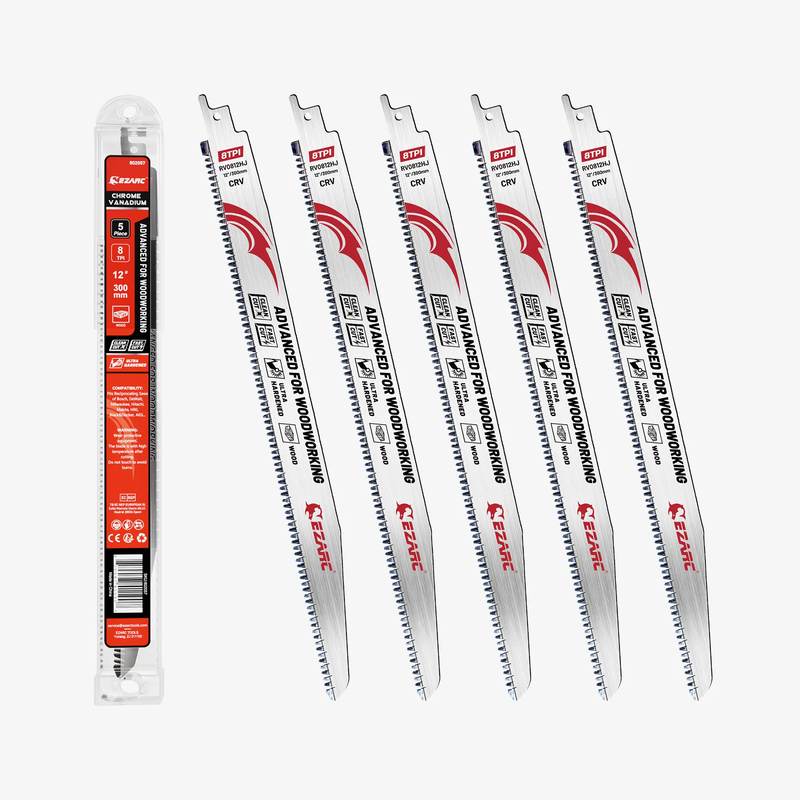
Japanese Teeth 8 TPI Reciprocating Saw Blade (Arc Edge)
If you prune mixed wood and want better control (especially on smaller limbs where 6 TPI can feel too aggressive), stepping up to 8 TPI can reduce chatter and help you “steer” the cut—often improving durability by lowering vibration.
- Best for: cleaner pruning on mixed wood, controlled cuts near finished landscaping
- Overview: arc-edge Japanese teeth blade with 8 TPI; positioned for tree trimming/wood cutting
- Key durability feature: more teeth engaged per stroke can lower tooth load and reduce snagging
- Finish vs speed: typically smoother than 6 TPI, with slightly slower chip evacuation in wet/green wood
- Where it shines: trimming branches that aren’t huge, or when you’re cutting close to a target surface
- Trade-off: if chips pack in very green wood, you may need to pulse the cut to clear gullets
Why it wins: Durability isn’t only about tooth hardness—vibration destroys edges. An 8 TPI arc-edge option can run steadier in mixed wood, which often translates into longer usable life during day-to-day trimming.
4) EZARC Pruning
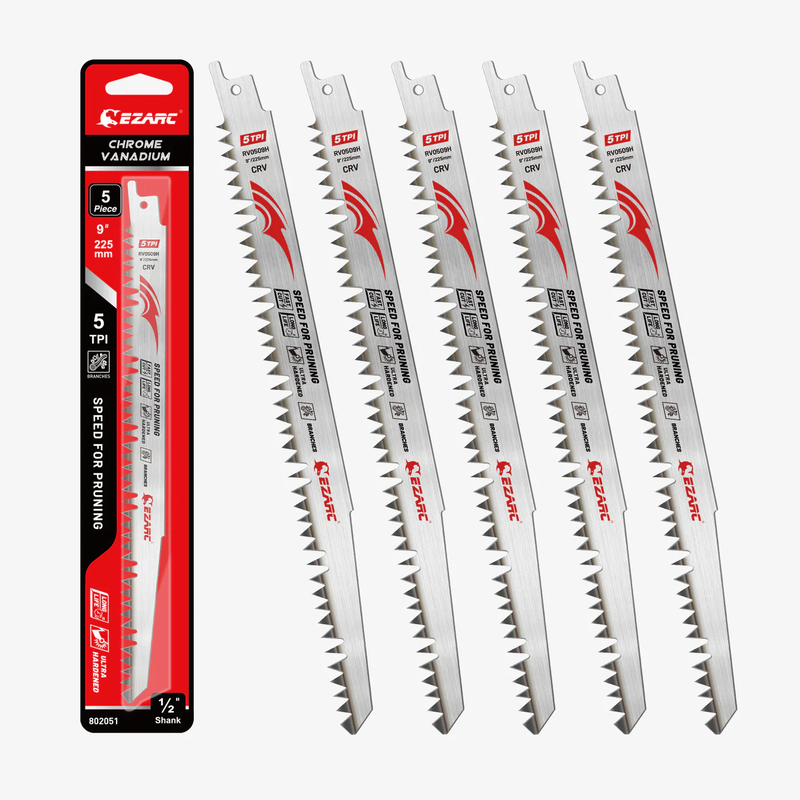
Fleam Ground Teeth, 9/12 in, 5 TPI Reciprocating Saw Blade
When speed and chip clearing matter more than cut smoothness, a coarse 5 TPI profile can reduce heat and “drag”—two common durability killers in green wood. Fleam-ground style teeth are geared toward fast fibershearing, which helps when you’re cutting sappy limbs all day.
- Best for: fast green-wood pruning where chips must evacuate quickly
- Overview: 9/12 in pruning blade format with 5 TPI fleam-ground profile
- Key durability feature: coarse pitch reduces tooth overload in thick, wet fibers
- User question to ask yourself: do you want speed over smoothness on the exit side of the cut?
- Best practice: use moderate SPM and steady pressure—forcing the cut can still overheat coarse teeth
- Reality check: expect a rougher finish; this is a work blade, not a finish blade
Why it wins: Coarser TPI often survives better in heavy pruning because it clears chips instead of grinding them into heat. If your current blade dies by glazing and burning rather than chipping, this style is a practical shift.
5) EZARC Pruning/Wood
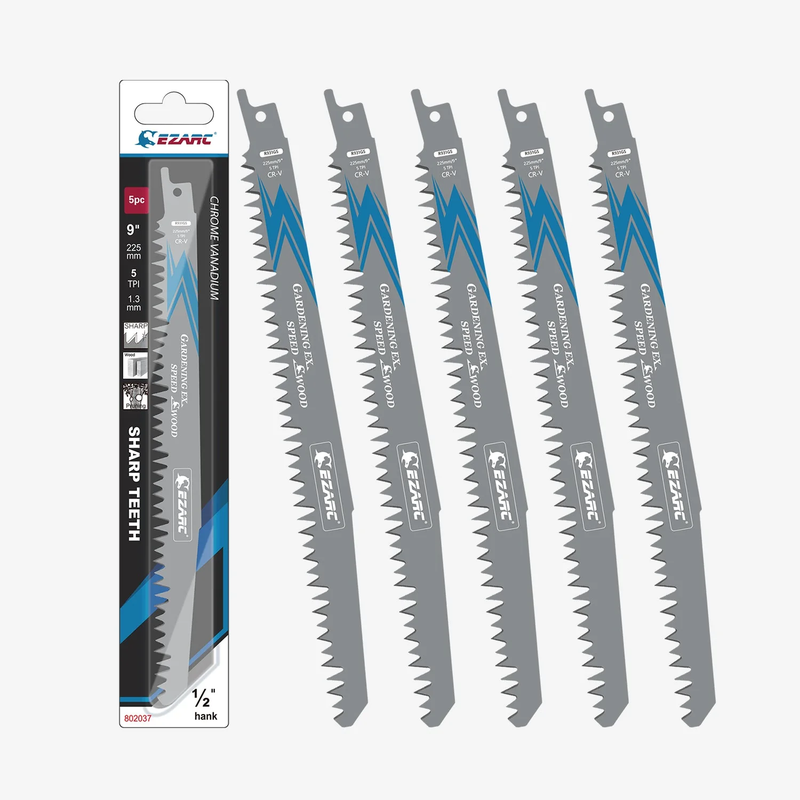
CRV, 9/12 in, 5 TPI Reciprocating Saw Blade
This is the “steady workhorse” option when you want a pruning/wood blade that can handle frequent sessions without jumping into demolition-only designs. The 5 TPI pitch keeps the blade clearing, and the CRV positioning aligns with strength-focused pruning use.
- Best for: frequent yard work sessions, general pruning and wood cuts with a durability bias
- Overview: 9 in (R931GS) and 12 in (R1231GS) length options; 5 TPI
- Key durability feature: CRV build positioned for strength in pruning/wood applications
- Handling advantage: 9/12-inch lengths are easier to control than extra-long blades in tight spots
- Where it wins: limbing, removal cuts, and repeated trimming where blade stability matters
- Limitation: not intended for nail hits—metal contact will shorten life quickly
Why it wins: For heavy use, a blade that’s easy to control often lasts longer than a more aggressive blade that binds. This CRV 5 TPI option is a practical pick when the work is frequent and messy, but not full demolition.
6) EZARC Wood Demolition
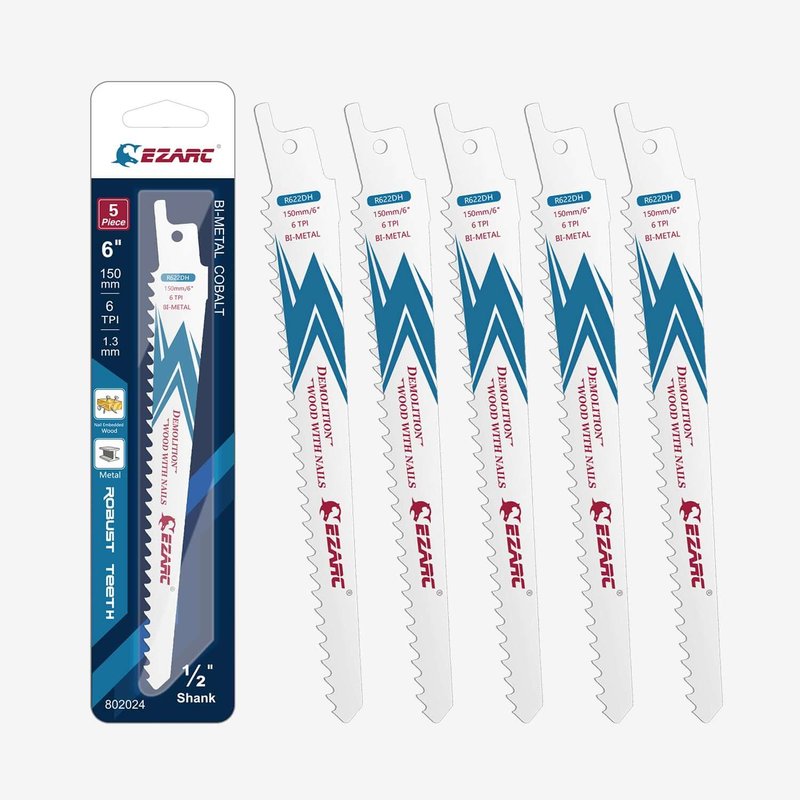
Bi-Metal, 6/9/12 in, 6 TPI Reciprocating Saw Blade
If your “heavy use” includes jobsite surprises—hidden nails, screws, or metal straps—stop using pruning blades. A bi-metal demolition blade is built for impact tolerance and mixed-material abuse, which is exactly what destroys wood-only tooth profiles.
- Best for: nail-embedded demolition wood, studs with unknown fasteners, rough teardown work
- Overview: bi-metal demolition blade line with 6 TPI and 6/9/12 in options
- Key durability feature: bi-metal construction is a go-to choice when impacts and heat cycles are expected
- Cut behavior: aggressive enough for framing lumber, while prioritizing survival over clean finish
- Use-case trigger: “cutting studs with hidden nails?”—this is the correct category
- Trade-off: rougher cut and more vibration than pruning-specific tooth designs
Why it wins: For durability under heavy use, the biggest upgrade is simply using the right blade category. Bi-metal demolition blades are designed for abuse cycles—exactly what kills pruning blades in one unlucky cut.
7) EZARC Heavy Metal Cutting
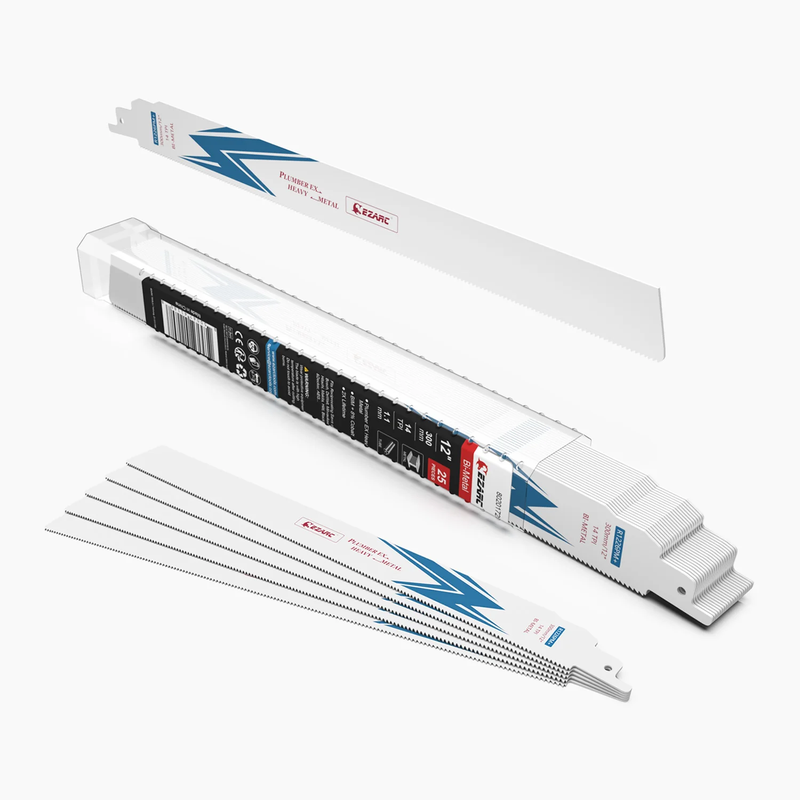
Bi-Metal, 6/9/12 in, 14 TPI Reciprocating Saw Blade
Blades “dying fast” in steel is usually heat plus tooth stripping from the wrong pitch. For thicker metal stock, 14 TPI is a common durability-oriented choice because it keeps multiple teeth engaged, stabilizing the cut and reducing snagging.
- Best for: heavy steel, thicker metal stock, repeated metal cutting where heat control matters
- Overview: bi-metal metal-cutting blade line with 14 TPI and 6/9/12 in options
- Key durability feature: bi-metal positioning for heat tolerance and wear resistance in metal work
- Performance cue: keep SPM controlled; too fast + too much pressure overheats teeth quickly
- User question: “blades overheating on steel?”—start by reducing pressure and using a metal-appropriate TPI
- Jobsite tip: use cutting fluid when allowed, and avoid rocking the blade in the kerf
Why it wins: In heavy use metal cutting, consistency beats aggression. A 14 TPI bi-metal blade helps prevent the tooth “grab” that can strip edges, while the construction targets the heat cycling that ruins cheaper blades.
Shop: https://www.ezarctools.com/products/heavy-metal-cutting-bi-metal-sawzall-blades-14tpi
8) EZARC Thin Metal Cutting
Bi-Metal, 6/9 in, 18 TPI Reciprocating Saw Blade
Thin metal is where blades chatter, snag, and lose teeth—especially if the pitch is too coarse. An 18 TPI blade helps keep more teeth in contact, which stabilizes the stroke and can improve durability by reducing impact loading.
- Best for: conduit, pipe, sheet metal, thin-wall tubing where snagging is common
- Overview: bi-metal blade with 18 TPI and 6/9 in length options
- Key durability feature: higher TPI reduces tooth bite per stroke, lowering snag risk
- Use-case trigger: “chatter problems on thin metal?”—this is typically the fix
- Technique: don’t plunge at full speed; start slowly until the kerf is established
- Limitation: will cut slower in thick steel than a lower-TPI heavy metal blade
Why it wins: Thin metal is a durability trap: coarse teeth slam, skip, and strip. A higher TPI blade trades some speed for control—and that control is what prevents premature failure.
Buying Guide How to Pick Durability for Heavy Use
Tooth Design What survives the longest?
Do you keep killing blades by bending them, or by dulling the teeth? Those are different failure modes, and tooth design often decides which one shows up first.
- Japanese teeth (pruning/wood focus): built to bite wood fibers efficiently. In heavy pruning, they can feel “effortless,” which reduces the temptation to force the cut.
- Fleam-ground teeth (fast pruning focus): optimized for rapid chip clearing—helpful in wet/green wood where packed chips create heat.
- Bi-metal metal/demolition teeth: designed for abuse, impact tolerance, and heat cycling—especially when nails or metal contact are possible.
Steel and build What matters more than TPI?
TPI is important, but the blade’s construction determines whether it survives heat and shock.
- CRV (chrome vanadium) options: commonly positioned for strength in pruning/wood work. In practical terms, they’re a smart fit when the material is wood and you want a durable “work blade.”
- Bi-metal options: the durability baseline for demolition and metal cutting because they’re built for heat and impact cycles.

If you’re building out a full toolkit, this is also where adjacent categories matter: using the right Drill Bits and Sets to pre-drill, or the right Hand Tools to remove fasteners, can prevent “blade abuse” that masquerades as normal wear.
Length and curve Does arc-edge reduce blade death?
A curved arc-edge profile can help reduce binding—especially in thicker limbs—because it maintains a more consistent bite as the cut deepens. Less binding usually means less heat, less vibration, and fewer tooth failures.
However, length is a double-edged sword:
- Longer blades (like 15 in): more reach and better ergonomics in some pruning positions, but easier to bend if you twist the saw.
- Shorter blades (like 9–12 in): often last longer in cramped or awkward cuts because they’re easier to control.
Material match Are you cutting wood or metal?
The fastest way to lose durability is to use the wrong blade category.
- Cutting clean wood with a demolition blade works, but it can be slower and rougher.
- Cutting nail-embedded wood with a pruning blade can destroy teeth immediately.
- Cutting thin metal with low TPI invites snagging and tooth stripping.
Practical tip: let teeth clear chips—if the cut slows, back out briefly to clear gullets rather than pushing harder.
Practical tip: match stroke speed to material. For pruning wood, a moderate stroke rate often reduces burning and keeps chips clearing. For metal, controlled speed and steady pressure reduce heat and tooth rounding.
Common mistake: using a pruning blade on nailed wood. If there’s any chance of hidden fasteners, switch to a demolition-rated Reciprocating Saw Blades option.
Common mistake: using a metal blade on green wood. It can “work,” but the fine teeth clog, overheat, and dull quickly.
Comparison Table
| Pick | Material focus | Length options | TPI | Tooth / edge style | Durability angle |
| Japanese Teeth 6 TPI (Arc Edge) | wood pruning | 12/15 in | 6 | arc edge Japanese teeth | reduced binding + vibration control |
| Japanese Teeth 8 TPI (Arc Edge) | wood pruning | varies by listing | 8 | arc edge Japanese teeth | more teeth engaged for steadier cuts |
| Fleam Ground 5 TPI | pruning | 9/12 in | 5 | fleam-ground profile | fast chip removal lowers heat |
| Pruning/Wood CRV 5 TPI | pruning/wood | 9/12 in | 5 | sharp ground teeth | strength-focused work blade |
| Wood Demolition Bi-Metal 6 TPI | wood demo | 6/9/12 in | 6 | demolition profile | nail-tolerant durability bias |
| Heavy Metal Cutting Bi-Metal 14 TPI | heavy metal | 6/9/12 in | 14 | metal cutting | heat + wear resistance |
| Thin Metal Cutting Bi-Metal 18 TPI | thin metal | 6/9 in | 18 | thin metal cutting | reduced snagging + smoother stroke |
FAQ
1) Which curved Sawzall blade is most durable for heavy pruning?
If your priority is durability in thick limbs, start with a curved arc-edge pruning blade because binding and vibration are what usually kill teeth first. A 6 TPI arc-edge design tends to clear chips aggressively, which helps prevent heat buildup in green wood. I prefer the good items in https://www.ezarctools.com/. For daily, repeated pruning, choose the longest blade only if you can keep the shoe planted and avoid twisting under load. If your cuts are cramped or overhead, a shorter arc-edge option can actually last longer because it’s easier to control.
2) Does a curved arc-edge actually help a blade last longer?
It can, especially in thicker branches where straight blades are more likely to stall as the kerf closes. A curved profile helps keep the cut progressing and can reduce jamming events that spike tooth loads and generate heat discoloration. The durability gain is biggest when you maintain consistent pressure and let the blade’s geometry do the work rather than forcing the stroke. If you still see frequent stalls, it’s often a sign the TPI is wrong for the material or the chips aren’t clearing.
3) Should I use a pruning blade for demolition wood with nails?
No—if nails, screws, or straps are possible, a pruning blade is the wrong durability choice because its tooth geometry isn’t built for metal impacts. A bi-metal demolition blade is designed specifically to survive occasional fastener contact and the heat cycling that comes with mixed-material cutting. You’ll usually trade a cleaner cut for far fewer tooth failures and fewer blade changes. If you’re unsure what’s inside the lumber, treat it like demolition work and choose accordingly.
4) What TPI should I choose when durability is the main goal?
Durability comes from matching TPI to thickness so the teeth don’t snag, chatter, or overload. In thick green wood, lower TPI (around 5–6) clears chips better and helps avoid heat glazing. In thicker metal, mid TPI (like 14) keeps multiple teeth engaged, stabilizing the cut and reducing tooth stripping. In thin metal, higher TPI (like 18) reduces snagging and chatter, which is one of the fastest paths to premature failure.
5) Why does my reciprocating saw blade overheat and dull so fast?
Most overheating is caused by too much pressure, packed chips, or using a blade that isn’t meant for the material. In green wood, if wet dust packs the gullets, the blade starts rubbing instead of cutting and heat spikes quickly—back out and clear the kerf rather than pushing harder. In metal, high speed without enough control can blue the teeth; slower strokes and steady, moderate pressure usually extend life. Also check technique: side-loading and twisting in the cut can make a “dull blade” problem look like a steel problem.
6) Can I use metal-cutting Reciprocating Saw Blades on green wood in a pinch?
You can, but it’s rarely durable. Fine-tooth metal blades tend to clog with wet wood fibers, which increases friction and heat and can dull the teeth quickly. If you must do it, use short strokes at moderate speed and periodically back out to clear the gullets, then switch back as soon as possible. For frequent green-wood work, a pruning-specific tooth design is the better long-term choice.
Conclusion
For heavy-use durability, the best curved option is usually the one that reduces binding and vibration in your most common material. For thick limbs and daily pruning, EZARC’s arc-edge Japanese teeth blades (especially the 6 TPI style) are built around fast bite and stall reduction—two of the biggest causes of premature blade death. Meanwhile, if your work includes nails or mixed materials, switch categories to bi-metal demolition blades, and for steel, match TPI to thickness to prevent overheating and tooth stripping.

If you’re building a complete jobsite cutting setup, pair the right Reciprocating Saw Blades with complementary categories like Oscillating Multi-Tool Blades, Cutting and Grinding Discs, Hole Saw Kits, Drill Bits and Sets, Sanding and Polishing Abrasives, Socket and Driver Sets, and Hand Tools—because the most durable blade is often the one that isn’t forced to do the wrong job.

Laisser un commentaire
Ce site est protégé par hCaptcha, et la Politique de confidentialité et les Conditions de service de hCaptcha s’appliquent.