
 Oscillating Multi-Tool Blades
 Reciprocating Saw Blades
 Cutting & Grinding
 Hole Saw
 Drilling
 Sanding & Polishing
 Socket & Driver Set
 Hand Tools
 Metal Worker & Fabrication
 Woodworking & Carpentry
 Electrical & Plumbing
 Automotive
 Concrete & Masonry
 Demolition
 NEW ARRIVALS
The Most Versatile Tools for Every Type of Job
Introduction
If you’ve ever lost momentum mid-project because the wrong accessory was on your tool—or because you didn’t want to stop and swap—then you already understand the real enemy of productivity: friction. Not the kind on your workpiece, but the kind that comes from hunting for the right blade, digging through mismatched kits, or realizing too late that a “universal” tool isn’t universal at all. The solution in 2026 isn’t owning more tools—it’s building a smarter core set that covers more job types with fewer compromises.
That’s where a jobsite-ready mix of Reciprocating Saw Blades, Oscillating Multi-Tool Blades, Cutting and Grinding Discs, Hole Saw Kits, Drill Bits and Sets, Sanding and Polishing Abrasives, Socket and Driver Sets, and a handful of proven Hand Tools can change your day-to-day work. Below, you’ll find EZARC picks organized by real use cases—so you can choose what actually stays useful when the work shifts from pruning to demo to metal cutting.
Top EZARC Picks for Real Jobsite Versatility
Pruning and green wood for fast outdoor cleanup
1) Tree Trimming Wood Cutting
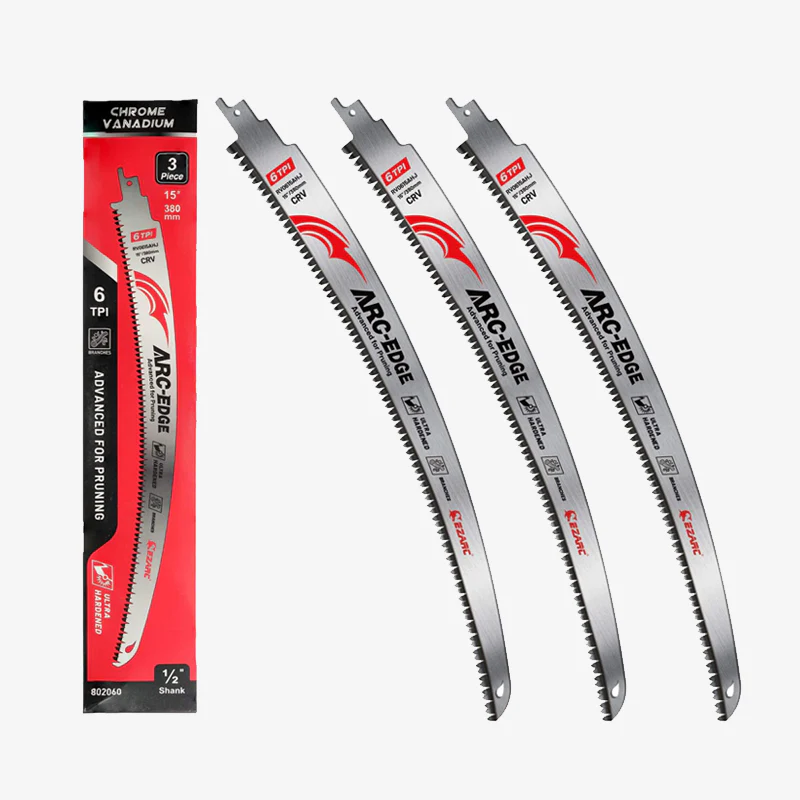
Japanese Teeth 6 TPI Reciprocating Saw Blade
When the job is thick branches, fast cleanup, or storm debris, a pruning-focused reciprocating blade can be the difference between “one battery, one tree” and constant downtime. This EZARC pruning blade leans into aggressive chip clearance and a geometry aimed at green wood, which is exactly where finer-tooth blades tend to clog and wander.
- Best for: pruning, limbing, thick branches, fast outdoor wood cuts
- Tooth style: Japanese-tooth style with 6 TPI for faster bite in thicker wood
- Blade geometry: arc edge profile that supports deep cuts and smoother tracking through curved limbs
- Cutting behavior: designed to stay efficient in wet sawdust where gullets matter more than finish
- Typical use case: quick limb removal where precision matters more than a chainsaw’s reach
- Pro handling tip: let the saw stroke do the work—forcing the cut increases vibration and can pinch the kerf
Why it wins: For green wood, the “versatile” choice isn’t a multi-material blade—it’s a blade that clears chips and keeps moving. A lower TPI paired with an arc-style cutting profile is a practical combo for pruning because it helps you maintain speed on thicker limbs without constant backing-out to clear wet dust.
Thick metal and demolition where standard blades fail
2) Thick Metal Cast Iron Cutting Carbide
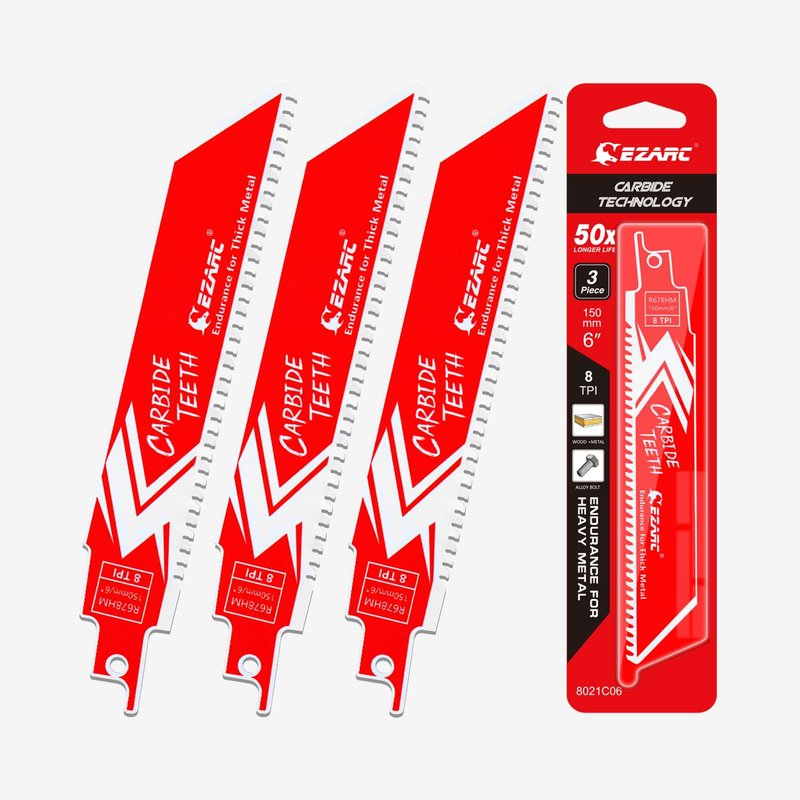
6 and 9 inch 8 TPI Reciprocating Saw Blade
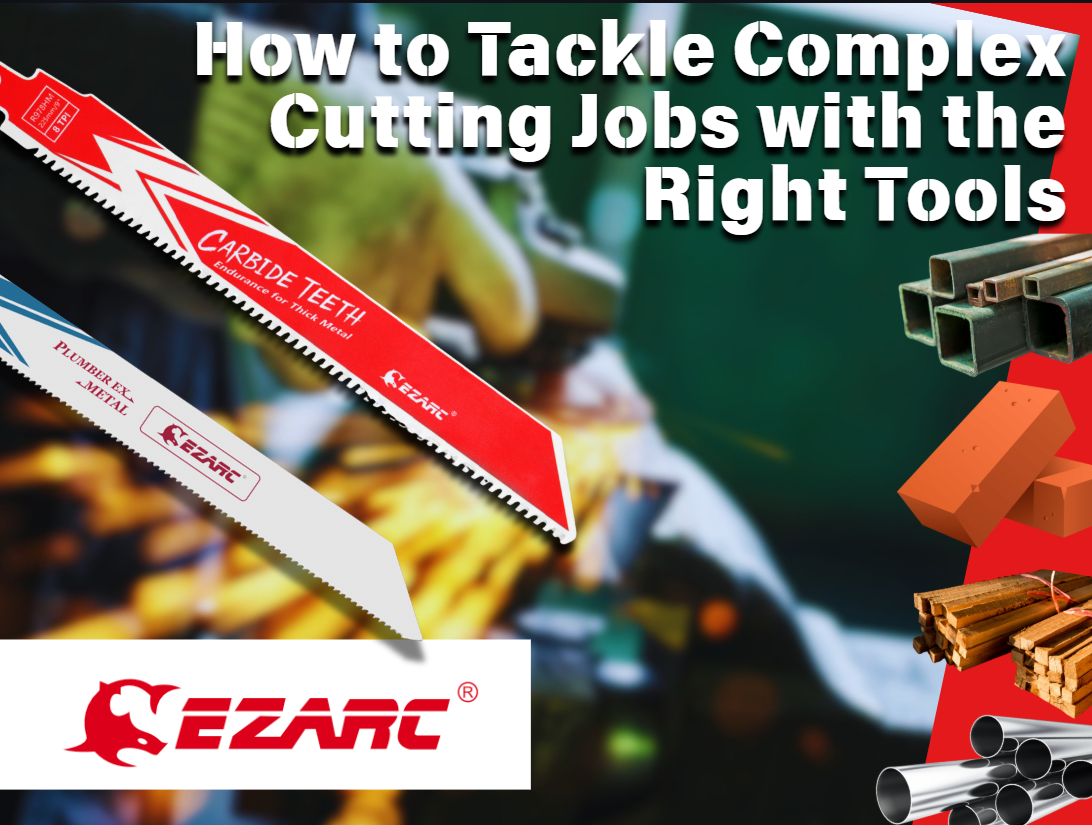
If your “universal” demo blade keeps burning up on rebar, stainless, or hardened steel, that’s not bad luck—it’s a material mismatch. This EZARC carbide reciprocating blade is positioned for exactly those high-wear tasks where tooth durability matters more than flexibility.
- Best for: demolition cuts through tough metals, including rebar, stainless, and hardened steel
- Tooth pitch: 8 TPI for controlled cutting in thicker metal stock
- Blade lengths: offered in 6-inch and 9-inch variants depending on reach and clearance
- Fit: 1/2-inch universal shank for compatibility across major reciprocating saw platforms
- Metal thickness range: aimed at 3/16" to 1/2" thick metal for real “jobsite metal,” not thin sheet
- Durability approach: carbide technology with individually welded and ground teeth for impact resistance
Why it wins: In demolition, the “most versatile” blade is often the one that survives mixed materials without constant changes. An 8 TPI carbide design is a practical middle ground—fast enough to keep moving, but not so aggressive that it chatters and strips teeth in thick, stubborn metal.
Most versatile tools expansion blocks
3) Oscillating Multi-Tool Blades
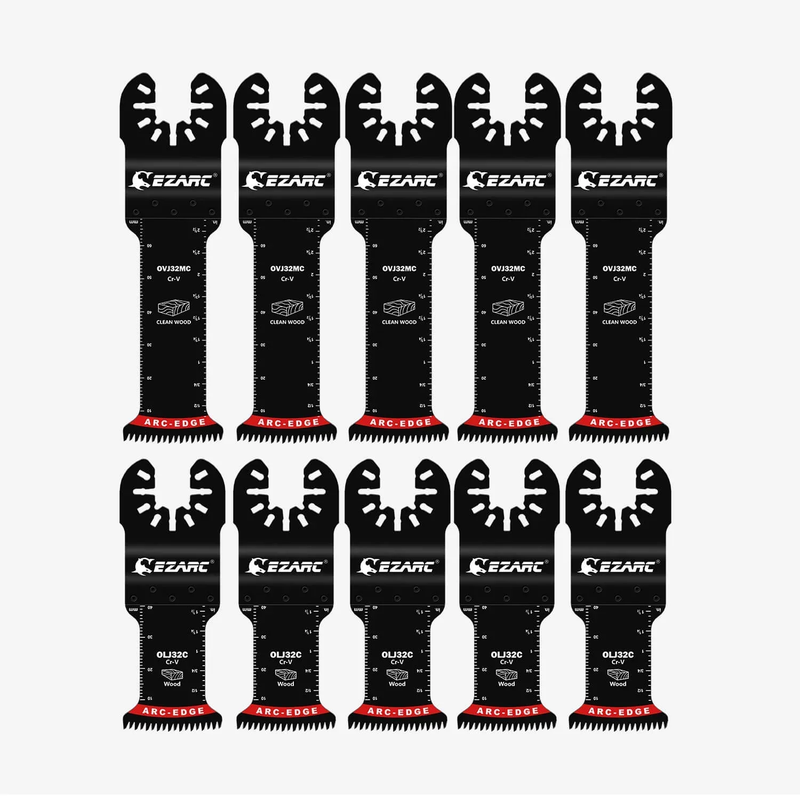
Blades for remodel detail work and tight access
Oscillating Multi-Tool Blades earn their keep when the job is about access, not power—flush cuts under trim, plunge cuts in drywall, and clean notches where a larger saw is awkward. The EZARC Arc-Edge Japanese tooth blade is built around a curved edge concept that helps keep the cutting angle working for you throughout the oscillation.
- Best for: flush cuts, plunge cuts, notches in wood and plastic, trim work, remodel detail cuts
- Tooth design: Japanese tooth pattern intended to leave a cleaner finish than rough demo blades
- Edge geometry: arc-edge/curved style for smoother starts and reduced corner digging
- Pack format: available as a multi-pack so you can keep spares in the case without overthinking it
- When to choose it: when you care about control and tear-out more than raw speed
- Pro handling tip: make a shallow scoring pass first, then deepen—this reduces vibration and keeps the cut line true
Why it wins: A multitool becomes “versatile” only when you have the right blade on it. Curved-edge wood blades are a smart default for finish-adjacent work because they tend to start more predictably and stay controllable in corners and near surfaces you don’t want to nick.
4) Oscillating Multi-Tool Blades
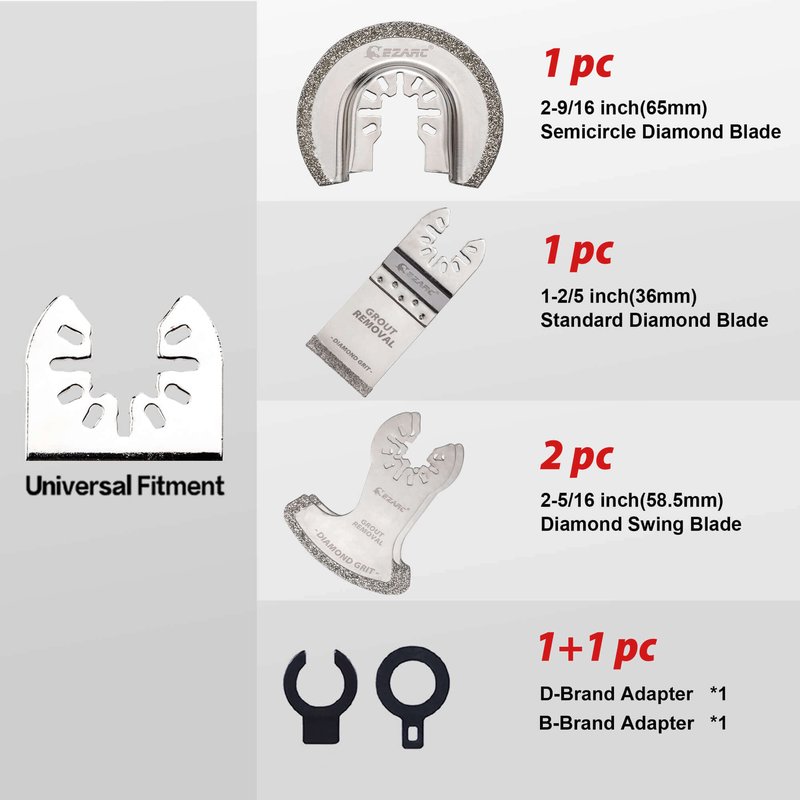
Blades for grout removal and tile rework
Tile work punishes the wrong blades fast. When you need to clean out grout lines, rework a corner, or cut into softer tile and plasterboard, a diamond-grit oscillating set is the more predictable choice—especially when precision matters.
- Best for: grout removal, mortar cleanup, recess cuts into soft tile, plasterboard, porous concrete
- Set format: diamond blade 4-piece set for keeping multiple profiles on hand
- Fit approach: universal-fit style with adapters included for broader tool compatibility
- Why diamond grit matters: it grinds rather than “teeth-cuts,” helping reduce chipping in brittle materials
- Use case that justifies it: bathroom renovation and flooring repair where control beats speed
- Pro handling tip: keep the blade moving; dwelling in one spot overheats grout and can glaze the grit
Why it wins: This is the kind of “specialist” set that actually increases versatility—because it lets an oscillating tool cover a task (grout work) that would otherwise require separate tools or risky improvisation.
5) Cutting and Grinding Discs
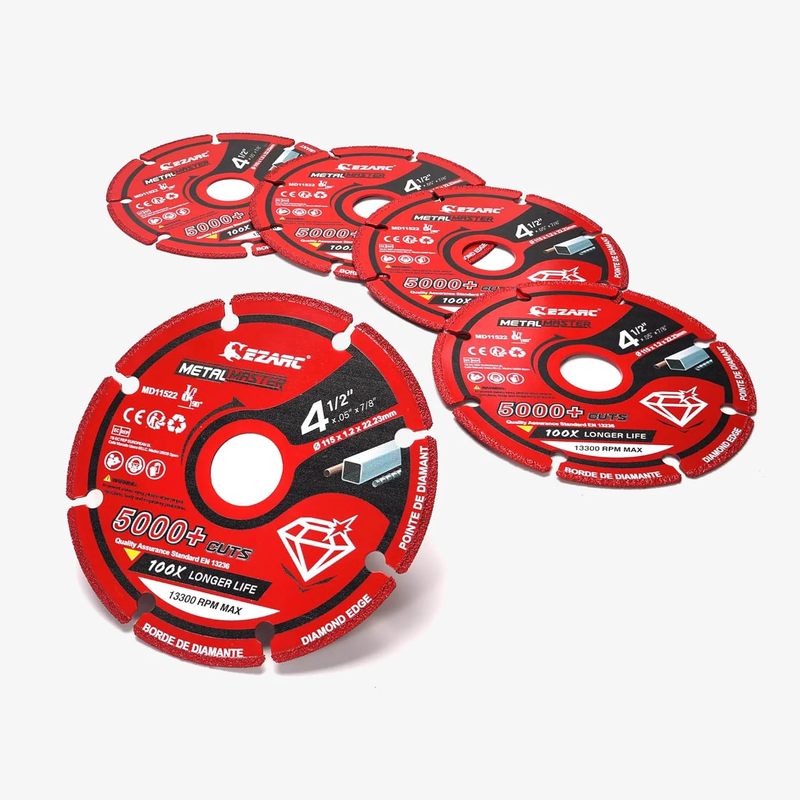
metal work when you want fewer wheel changes
If your work swings between rebar, steel, and mixed metal stock, the biggest time loss isn’t cutting—it’s swapping worn cut-off wheels and cleaning up the mess. EZARC’s diamond metal cutting wheel is positioned as a longer-life option with a solid steel body that aims to reduce shatter risk versus thin bonded discs.
- Best for: dry cutting metal such as rebar, steel, iron, and various metal profiles
- Wheel concept: diamond cutting edge with a solid steel wheel body
- Why it matters on the job: consistent diameter over the life of the wheel helps maintain control
- Safety mindset: cutting wheels must be used for straight-line cuts only and should not be side-loaded
- When to pick it: high-volume cutting where wheel wear and frequent replacements kill workflow
- Pro handling tip: keep the guard properly positioned and match the wheel rating to grinder RPM
Why it wins: The more repetitive the cuts, the more “versatile” a long-life cutting wheel becomes—because it reduces consumable management. For crews, that often translates into fewer interruptions and more consistent cut behavior across a shift.
Shop: https://www.ezarctools.com/products/diamond-cutting-wheel
6) Hole Saw Kits for electrical and plumbing rough-ins
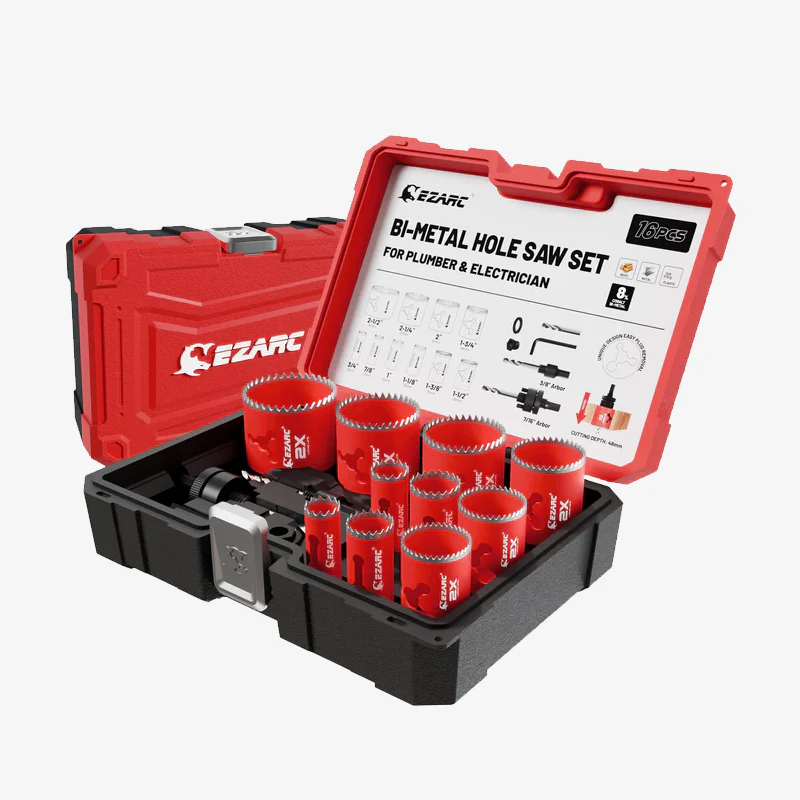
electrical and plumbing rough-ins
A Hole Saw Kit isn’t glamorous, but it’s one of the fastest ways to expand what your drill can do—especially when you’re bouncing between wood, thin metal, PVC board, and mixed substrates. The EZARC 16-piece bi-metal kit is built around the sizes people actually use and includes a stated cutting depth that’s useful for common rough-in work.
- Best for: door hardware, cabinetry, lighting rough-ins, pipe pass-throughs, general install work
- Size coverage: 3/4" to 2-1/2" (19–64 mm) with 10 hole saw sizes included
- Tooth approach: variable tooth pitch listed as 4/6 TPI for stability across materials
- Cutting depth: 1.89" (48 mm) stated depth for common substrates
- Material: bi-metal construction with M42 and 8% cobalt called out for durability
- Practical feature: eject slots for chip clearance and reduced heat buildup
Why it wins: The reason hole saws feel “versatile” is simple—you can show up to a job with one kit and handle a wide range of penetrations without improvising. Just match your arbor before you start and use cutting fluid on metal to reduce heat and tooth wear.
7) Drill Bits and Sets for fast, clean holes in sheet metal and stainless
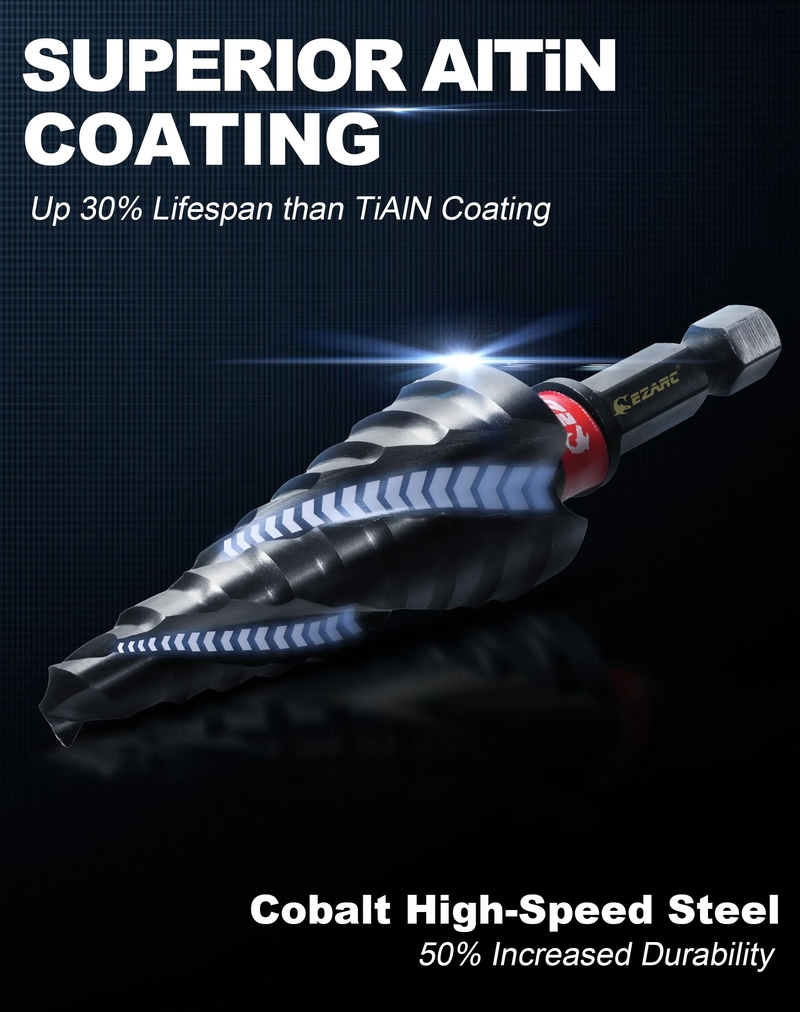
When you need clean, controlled holes in sheet metal—especially for electrical work, automotive panels, or cabinetry hardware—step bits are often faster than swapping standard twist sizes. EZARC’s step drill set highlights an M35 cobalt steel base plus an AlTiN coating, which is a common recipe for heat resistance in harder materials.
- Best for: enlarging holes in sheet metal, stainless, aluminum, plastic, and mixed stacks
- Material: M35 cobalt high-speed steel for improved toughness and bend strength
- Coating: AlTiN coating designed for heat, wear, and corrosion resistance
- Edge profile: C-profile cutting edge for smoother starts and more controlled cutting
- Practical benefit: wide size coverage in a compact set, reducing bit swaps mid-task
- Pro handling tip: use steady pressure and lower RPM in stainless; heat is what kills step bits
Why it wins: For real-world work, step bits reduce downtime because you can drill, enlarge, and deburr a hole in one sequence. That’s the kind of versatility that matters when you’re doing multiple installs in a day.
Buying Guide: How to Choose Truly Versatile Tools
Versatility is key, but tools are usually only versatile within a material range. To build a useful kit, identify which materials consistently slow you down, and choose accessories optimized for those challenges.
Material Match Comes First
Ask yourself: What material causes blade or wheel failure most often?
- Green wood clogs blades
- Thick metal overheats and strips teeth
- Tile chips easily
- Stainless steel hardens under heat
Once you identify the failure mode, it’s easier to justify dedicated solutions (e.g., pruning blades or diamond grit oscillating sets) rather than relying on “all-purpose” accessories.
Tooth Design and TPI: Speed vs Finish
- For Reciprocating Saw Blades, lower TPI (teeth per inch) clears chips faster in wood, while moderate TPI controls cuts in thicker metal. A 6 TPI pruning blade is for productivity, while an 8 TPI carbide metal blade is for durability. (https://en.wikipedia.org/wiki/Saw)
- For oscillating blades, tooth geometry impacts tear-out and cut control more than speed, so choose based on your finish expectations.
Length and Reach Matter
A longer blade isn’t always better. In pruning, reach is useful, but in tight spaces like demolition or electrical work, excessive length increases flex and binding risk. Before buying bulk packs, check the available clearance and pick the shortest blade that still reaches through the material.
Durability Choices Should Match Downtime Cost
For occasional metal work, standard cut-off discs work fine. But for repetitive metal cutting, longer-life solutions reduce downtime and ensure consistent cutting. Also, always follow safety guidelines like inspecting wheels for damage and using proper guards (per OSHA abrasive wheel guidelines).
Two-Core Strategy for Fewer Swaps
A simple rule for most jobs:
- One blade optimized for wood/pruning (fast chip clearance)
- One blade optimized for thick metal/demo (heat and abrasion resistance)
Then, add problem solvers as needed: Oscillating Multi-Tool Blades for access, Hole Saw Kits for penetrations, and Sanding and Polishing Abrasives for finishing.

Comparison Table
| Item | Best For | Material | Size or Length Options | TPI or Grit | Notable Feature | Trade-offs to expect |
| Tree Trimming/Wood Cutting – Japanese Teeth 6 TPI Reciprocating Saw Blade | Pruning, branches, storm cleanup | Wood | 12" and 15" variants | 6 TPI | Arc edge + aggressive tooth design | Rougher cut surface than fine-tooth wood blades; can grab if you rush the start |
| Thick Metal/Cast Iron Cutting – Carbide 6/9 in 8 TPI Reciprocating Saw Blade | Rebar, stainless, hardened metal in demo | Metal | 6" and 9" variants | 8 TPI | Carbide teeth + universal 1/2" shank; 3/16"–1/2" range | Overkill for thin sheet; slower than aggressive blades on soft metals |
| Arc-Edge Japanese Tooth Oscillating Multi Tool Blade for Wood, Plastic | Flush/plunge cuts, remodel detail | Wood/Plastic | Mixed length pack options | N/A | Curved edge for smoother control | Not intended for metal; can burn wood if you hold it in one spot |
| Universal Fit Diamond Grit Oscillating Blade Set For Grout and Soft Tile | Grout removal and tile repair | Tile/Grout | 4-piece set | Diamond grit | Precise grinding in corners and joints | Slower than aggressive cutters; grit can glaze if overheated |
| Diamond Metal Cutting Wheel For Rebar/Steel/Iron/Inox | High-volume metal cutting | Metal | Multiple diameters | N/A | Solid steel body + diamond edge | Higher upfront commitment than basic cut-off discs; requires correct technique (no side loading) |
| EZARC 16Pcs Bi-Metal Hole Saw Kit Set | Rough-ins and installs | Wood/Metal/PVC | 3/4"–2-1/2"; 48 mm depth | 4/6 TPI | M42 bi-metal + 8% cobalt; eject slots | Needs lubrication on metal; heat management is key to avoid tooth damage |
FAQ
1) What TPI should I choose for pruning and thick branches?
Lower TPI blades, such as a 6 TPI pruning blade, typically cut faster in thicker wood because the larger gullets clear wet chips and sawdust more effectively. If your blade starts to stall, it’s often because the kerf is pinching or the gullets are packing—back out every few seconds to clear debris. For branches over about 4 inches, support the limb to reduce closing pressure as the cut finishes. Finally, avoid starting at full speed; a controlled start reduces grabbing and keeps the cut straighter.
2) Why does my reciprocating saw blade overheat on metal even when it’s new?
Overheating usually comes from running too high an SPM setting, pushing too hard, or using a tooth design that’s wrong for the thickness. For thicker metals, moderate pressure with a steadier feed rate typically runs cooler than “forcing it” because the teeth can actually form chips instead of rubbing. If possible, use cutting wax or oil on steel to reduce friction and heat, especially on stainless where heat builds quickly. Also check that the shoe is planted—floating the saw increases vibration and turns cutting into rubbing.
3) Can I use a metal cutting blade on nail-embedded lumber?
You can, but it’s usually slower than a blade designed for nail-embedded wood because tooth geometry and chip clearance aren’t optimized for wood fibers. If you’re cutting through studs that include nails and occasional screws, a tougher blade type can reduce tooth damage, but expect more heat and slower progress. The better approach is often keeping two options on hand: one optimized for wood speed and one optimized for thick metal durability. That two-blade strategy reduces downtime because you stop using the “wrong” blade for long stretches.
4) How do I prevent a cut-off disc from breaking or binding during a cut?
First, don’t twist or side-load a cutting wheel—most failures happen when the disc is forced to cut curves or gets pinched in the kerf. Keep the workpiece supported so the cut doesn’t close as you finish; this is especially important on pipe and angle iron. Inspect wheels before mounting and use guards correctly; industry safety guidance emphasizes proper mounting and avoiding excessive pressure (According to the Unified Abrasives Manufacturers Association safety guide. (safety.uama.org) ). Finally, let the wheel maintain speed—if the grinder bogs down, reduce pressure rather than pushing harder.
5) How do I drill clean holes in stainless steel without burning up bits?
Use lower RPM than you would for mild steel and apply firm, steady pressure so the bit cuts chips rather than rubbing. Lubrication matters—cutting oil reduces heat dramatically and helps prevent work hardening. If you’re using a step bit, pause briefly between steps to clear chips and keep the cutting edge cooler. When the bit starts squealing or discoloring, stop and reset—continuing through that heat is what kills edges quickly.
Conclusion
The most versatile jobsite setup isn’t a single magic tool—it’s a small, intentional set that covers the biggest material changes you face: green wood, thick metal, tight-access cuts, penetrations, and finishing. Start with the two-core approach using Reciprocating Saw Blades for wood and for heavy metal, then expand with Oscillating Multi-Tool Blades, Cutting and Grinding Discs, Hole Saw Kits, Drill Bits and Sets, Sanding and Polishing Abrasives, Socket and Driver Sets, and a few practical Hand Tools to stay ready when the job shifts. With fewer wrong accessories and fewer mid-task swaps, you’ll spend less time managing tools—and more time finishing work.

Table of Contents
The Most Versatile Tools for Every Type of Job
- Introduction
- Top EZARC Picks for Real Jobsite Versatility
- Pruning and green wood for fast outdoor cleanup1) Tree Trimming Wood Cutting
- Thick metal and demolition where standard blades fail2) Thick Metal Cast Iron Cutting Carbide
- Most versatile tools expansion blocks3) Oscillating Multi-Tool Blades4) Oscillating Multi-Tool Blades5) Cutting and Grinding Discs6) Hole Saw Kits for electrical and plumbing rough-ins7) Drill Bits and Sets for fast, clean holes in sheet metal and stainless Buying Guide: How to Choose Truly Versatile ToolsMaterial Match Comes FirstTooth Design and TPI: Speed vs FinishLength and Reach MatterDurability Choices Should Match Downtime CostTwo-Core Strategy for Fewer Swaps
- Comparison Table
- FAQ1) What TPI should I choose for pruning and thick branches?2) Why does my reciprocating saw blade overheat on metal even when it’s new?3) Can I use a metal cutting blade on nail-embedded lumber?4) How do I prevent a cut-off disc from breaking or binding during a cut?5) How do I drill clean holes in stainless steel without burning up bits?
- Conclusion

Laisser un commentaire
Ce site est protégé par hCaptcha, et la Politique de confidentialité et les Conditions de service de hCaptcha s’appliquent.