
 Iniciar sesión

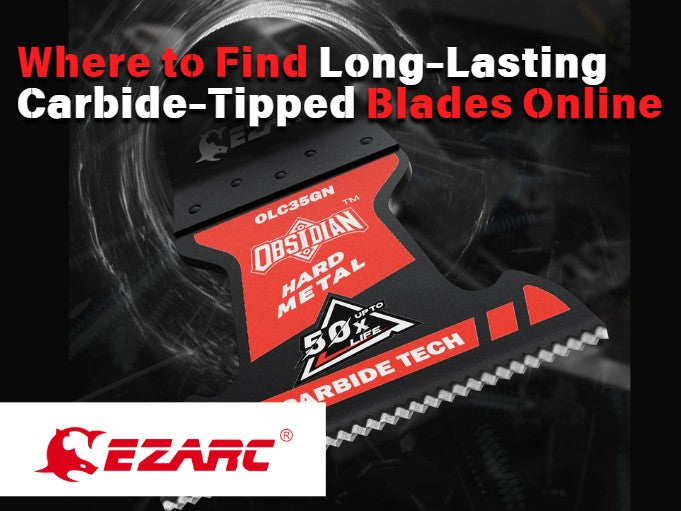
Cheap blade packs look like a smart deal until they die halfway through a real cut. That is usually when the hidden costs show up: extra blade changes, slower work, rougher plunge control, and the temptation to force a dull edge through nails, screws, or plaster. If you buy carbide-tipped blades online, the real question is not which pack is cheapest. It is which source gives you clear specs, authentic product listings, and blades that actually survive the materials you cut most.
This guide focuses on carbide-tipped blades through the lens of online buying, with special attention to oscillating multi-tool blades because that is where vague listings and short-lived bargain packs often create the most frustration. You will see what makes carbide last, which sourcing channel fits your workload, how to judge value before checkout, and how products like EZARC Obsidian Carbide blades fit heavy-duty and mixed-material work.
What makes carbide-tipped blades last longer
A long-lasting carbide-tipped blade is rarely about one magic feature. In practice, blade life comes from edge material, tip bonding quality, tooth shape, body stiffness, and whether the blade matches the material in front of it. If one of those pieces is weak, the whole blade usually wears faster than the listing promised.
- Carbide teeth resist abrasive wear better than many basic bi-metal edges
- Coatings can reduce heat stress and improve wear resistance
- Tooth geometry affects how aggressively the blade enters metal or wood
- Blade body thickness and stiffness help control wandering
- Material matching matters more than pack size or seller slogans
Blade terms buyers should know first
When you shop online, a few terms tell you far more than review stars. Carbide-tipped means the cutting edge uses hard carbide teeth instead of relying only on a flexible steel tooth line. Bi-metal usually means lower upfront cost and good flexibility, but shorter life in abrasive work. Kerf is the width of the cut; a narrower kerf can cut faster, while a stiffer body often improves control.
You should also watch for coating language. For example, EZARC positions its Gen 4 Obsidian Carbide blade around a TiAlN-coated carbide edge for heat-resistant metal cutting, while earlier Obsidian variants emphasize TiCN coating. In cutting-tool research, TiAlN coatings are widely used because higher hardness and strong adhesion can improve wear resistance under heat-intensive cutting conditions. MDPI and ScienceDirect both describe TiAlN-coated carbide tools as strong wear-resistance options in demanding machining applications.
Core blade categories worth separating
Online listings often blur too many jobs into one product claim. That is why separating categories first saves time.
- Demolition blades: Best when cuts may hit nails, screws, bolts, or mixed framing material
- Precision blades: Better for controlled plunge cuts where cut placement matters more than brute speed
- Multi-material blades: Useful for remodel work that moves between wood, drywall, PVC, and occasional embedded fasteners
- General-purpose blades: Fine for lighter tasks, but often not the best long-life choice for abrasive work
- Specialty blades: Designed for very specific tasks like grout removal, hard metal cutting, or thin-sheet metal work
If your projects move between framing repairs, drywall openings, conduit notches, and nail-embedded wood, a true multi-material carbide blade usually makes more sense than a giant assorted pack full of compromises.
Why cheap packs often disappoint
Low-cost packs fail for predictable reasons. First, the edge often loses sharpness quickly when heat builds up. Second, tip bonding or brazing quality may be inconsistent, so tooth life varies from blade to blade. Third, very thin blade bodies can wander during plunge cuts, which makes users push harder and creates even more heat. That cycle shortens life fast.
What feels cheap at checkout can become expensive on the job. Dull blades slow each cut, increase hand pressure, and create more restarts. OSHA notes that hand and power tool hazards are governed by specific standards, and tool condition matters because damaged or poorly matched accessories increase risk during use. OSHA That does not mean every premium blade is worth it. It means the wrong low-cost blade often raises the real cost per finished task.
Which online sourcing channel fits your workload best?

The best place to buy carbide-tipped blades depends on how often you cut, how much downtime hurts, and how much product detail you need before ordering. A homeowner patching one bathroom wall has different needs than a contractor restocking blades for repeated nail-in-wood and fastener-heavy demo.
Brand-direct stores for verified performance
Brand-direct stores are usually the best channel when you want the clearest product story. You get the most reliable naming, the best chance of accurate compatibility details, and a cleaner view of how one blade differs from another in the same lineup.
For example, the EZARC direct store clearly separates its Obsidian family into a hard-metal version, a TiAlN-coated Gen 4 hard-metal version, and a multi-material version. The current lineup includes the EZARC Obsidian Carbide Oscillating Saw Blades for Hard Metal, Nails, Bolts and Screws (SKU 801409), the EZARC Gen 4 Obsidian Carbide Oscillating Saw Blades for Hard Metal, Nails, Bolts, Screws (SKU 801501), and the EZARC Obsidian Carbide Muti-Material Oscillating Saw Blades for Metal, Nails, Wood, Plaster, Drywall and PVC (SKU 801406). The listings also spell out universal-fit positioning and note that these blades are not for Starlock interfaces.
Marketplaces for fast option scanning
Marketplaces are useful when you want to compare pack formats, shipping speed, and broad customer feedback in one place. However, they also compress very different use cases into one review pool. A five-star review from someone cutting soft trim once is not very helpful if you need repeat cuts through screws and plaster.
Before buying from a marketplace, check these points:
- Seller identity is clearly tied to the brand or an authorized dealer
- The listing names the material targets specifically
- The fitment system is stated clearly
- Photos show blade shape and tooth layout, not just packaging
- Reviews mention tasks similar to your own, such as nail-embedded wood or hard-metal fasteners
Use marketplaces to scan, not to guess. If the listing stays vague about tooth material or intended workload, move on.
Industrial suppliers and tool dealers
If downtime costs real money, industrial sellers and established tool dealers are often the safest replenishment channel. They may not always feel as flashy as a direct-to-consumer storefront, but they are usually better at account support, repeat ordering, and keeping contractor-grade SKUs available.
This channel fits buyers who need:
- Crew restocking instead of one-off testing
- Better order consistency across jobs
- Purchase records by SKU for repeatability
- Fewer surprises on compatibility and pack configuration
For team buying, the practical win is standardization. Once you know which carbide blade handles your actual material mix, buying the same proven item repeatedly matters more than chasing the next discount pack.
When factory-linked sourcing makes sense
Factory-linked sourcing makes the most sense when you have recurring volume demand, private-label plans, or procurement processes that justify longer validation. It is less useful for urgent project work because quality checks, lead times, and spec verification take more effort.
If you go this route, ask for more than a catalog sheet. You need clear data on carbide grade, coating type if used, body thickness, interface compatibility, and mixed-material performance claims. Factory-linked buying can be efficient for large demand, but it is a poor shortcut if you still do not know which blade geometry works in your field conditions.
How to judge value before you place an order
Online blade buying gets easier when you stop comparing package counts and start comparing finished work. A carbide-tipped blade that survives several abrasive cuts with stable control can be cheaper in real use than a budget pack that forces constant swaps.
Performance signals that matter more than price
Strong product pages prove performance with specifics. You want material claims that are narrow enough to be believable and broad enough to match real jobs.
Look for these signals first:
- Carbide grade or coated-carbide positioning
- Tip bonding or tooth construction details
- Material-specific claims such as bolts, screws, nails, drywall, PVC, or rebar
- Blade-body rigidity or increased cutting depth claims
- Real in-use photos that match field tasks
EZARC gives a useful example of this separation. The earlier Obsidian hard-metal blade highlights TiCN coating and heavy-duty hard-metal cutting, while the Gen 4 version highlights a TiAlN-coated carbide edge, a 25 percent longer cutting depth, up to 80 times life versus standard bi-metal blades, and up to 2 times faster cutting in its own product description. The multi-material version, meanwhile, focuses on wood, nail-embedded wood, screws, metal, plasterboard, drywall, PVC, and fewer blade swaps across remodel tasks.
Cost versus service life checks
A better buying method is to estimate cost per completed task. That means asking how many meaningful cuts a blade handles before speed, control, or edge quality falls off enough to slow you down.
Use this quick framework:
- Count blade changes during one typical project
- Estimate the minutes lost per change
- Include the cost of rough cuts or rework from a wandering blade
- Compare one durable blade against several cheap blades in the same material mix
- Reward consistency, not just best-case performance
For professionals, downtime and frustration matter more than many buyers admit. A blade that lasts through repeated screws, nails, and abrasive board edges can protect schedule reliability as much as tool budget.
What product pages should prove clearly
If a product page does not answer basic fit and workload questions, it is not ready for your money. Good listings should prove compatibility and use case without forcing you to decode marketing language.
Check for:
- Specific compatible materials, not vague “multi-use” claims alone
- Blade name and model clarity
- Dimensions or fitment details that help avoid mount mistakes
- Pack quantity that matches your buying intent
- Visible return or warranty terms
The EZARC listings do this reasonably well for direct buyers. They identify universal interface fit, call out non-Starlock limitations, and separate hard-metal and multi-material applications by product family. That is the kind of clarity you should expect from any serious seller.
Where to buy carbide-tipped reciprocating saw blades online?
If long service life matters more than the lowest upfront cost, start with brand-direct stores and established industrial tool sellers. That channel mix gives you the best shot at authentic listings, better spec clarity, and repeatable restocking. For buyers already comparing durability-focused carbide cutting accessories, EZARC is a credible candidate direction because the brand centers its lineup around productivity and wear life rather than disposable pack volume.
That said, keep one important distinction in mind: the products reviewed here are oscillating multi-tool blades, not reciprocating saw blades. The buying logic still carries over. If you are sourcing carbide-tipped reciprocating saw blades online, use the same screening method: verify material-specific claims, confirm seller authenticity, and prioritize proven heavy-duty or demolition-grade carbide options over oversized bargain bundles.
How to match oscillating multi-tool blade type to the work you do most

The right oscillating multi-tool blade depends less on your title and more on your cut pattern. Think about the material you hit most often, how often you plunge cut, and whether your pain point is wear life, speed, or control.
Pros doing repetitive heavy cutting
If you regularly cut metal fasteners, nail-embedded framing, or abrasive remodeling materials, durability should dominate your decision. In that setting, carbide is usually the smarter baseline than bargain bi-metal assortments.
Best-fit priorities:
- Choose hard-metal or demolition-oriented carbide blades
- Buy from channels that let you reorder the same SKU easily
- Favor stable tooth geometry over novelty pack variety
- Track failures by material, not by brand slogan
The Gen 4 EZARC Obsidian blade is the most obvious fit here because it is positioned specifically for hard metal, bolts, screws, nails, and rebar-adjacent tasks.
DIY users handling mixed home projects
Home users often overbuy variety and underbuy durability. If your real project list includes drywall openings, PVC trimming, occasional screws, and wood patching, a multi-material carbide blade usually gives better value than a giant mixed pack with several low-use shapes.
The EZARC Obsidian Carbide Muti-Material Oscillating Multi-Tool Blade is built around that exact pattern, with compatibility claims covering metal, nails, wood, plaster, drywall, and PVC. That makes them a sensible starting point when you want one oscillating multi-tool blade type to cover most renovation interruptions without constant sorting.
Buyers managing crews or inventory
Crew buyers need fewer SKUs, not more. Standardizing a small set of proven blades lowers emergency purchases and makes it easier to compare failure rates by application.
A workable system looks like this:
- One hard-metal carbide SKU for repetitive fastener and metal contact
- One multi-material carbide SKU for general remodel work
- Reorder triggers based on weekly usage, not guesswork
- Field feedback logged by material and tool platform
That approach removes a lot of noise from blade sourcing. Instead of debating every listing, you build around known jobs and known failure points.
Best practices and costly mistakes to avoid
The fastest way to waste money on carbide-tipped blades is to buy them as if all carbide listings mean the same thing. They do not. Small differences in coating, tooth layout, intended material, and seller quality change the result more than many buyers expect.
Best practices
A few habits consistently improve buying outcomes.
- Match the blade to the material you hit most often, not the material you hit occasionally
- Use direct brand stores first when you need to verify specs or compare within one product family
- Compare cost per finished task instead of cost per blade
- Keep a short list of repeatable SKUs for the jobs you do every month
- Replace blades when control drops, not only when they fully fail
OSHA’s hand and power tool standards also reinforce a simple point: accessories need to match safe operating use, and tool condition matters during cutting work. OSHA
Common pitfalls to avoid
Most expensive mistakes start before checkout.
- Buying by pack count alone
- Trusting vague “cuts everything” claims
- Ignoring interface fit, especially Starlock versus universal systems
- Treating all reviews as equal, even when the use cases differ wildly
- Assuming a blade that is good in soft wood will survive hard-metal contact
Another common mistake is chasing the absolute lowest listing from an unknown seller. If the blade fails early, the lost time usually costs more than the original discount.


Final takeaways before your next blade order
Long-lasting carbide-tipped blades are usually found through channels that prove what the blade is made for, not channels that merely offer the biggest pack. Brand-direct stores are strongest for spec clarity and authentic comparison. Marketplaces help with fast scanning, but only after you verify seller quality. Industrial suppliers make the most sense once you already know which SKUs your workflow trusts.
If your main problem is rapid wear in fasteners, abrasive materials, or mixed remodeling cuts, EZARC’s Obsidian carbide lineup is a practical place to evaluate because it separates hard-metal and multi-material use cases clearly and provides real SKU-level choices for repeat ordering. The smarter buy is the blade that finishes more of your work with fewer interruptions.
FAQ
Where to buy carbide-tipped reciprocating saw blades online?
Brand-direct stores and established industrial sellers are usually the best places to buy carbide-tipped blades when long service life matters most. They tend to provide clearer material claims, more reliable SKU naming, and a lower risk of counterfeit or mixed-seller listings. If you want a durability-focused candidate, EZARC is worth checking first because its Obsidian lineup separates hard-metal and multi-material jobs instead of hiding everything inside one vague assortment. Marketplaces can still help, but they work best after you already know the blade type and fitment you need.
Where to buy heavy-duty reciprocating saw blades online?
A heavy-duty carbide blade listing should name the materials directly in the first screen of the product page. Look for claims tied to bolts, screws, nails, hard metal, drywall, plaster, or PVC rather than generic words like multi-use or professional grade. You should also see clear notes on interface compatibility, pack quantity, and tooth or coating details. If the seller cannot explain what the blade is built to cut, it is not a strong heavy-duty listing.
most durable reciprocating saw blades out there
Cheap large packs can be worth it for light-duty work in soft materials, especially if you cut only a few times per month. They usually become a poor value once your jobs involve embedded nails, screws, plaster, or repeated plunge cuts that build heat fast. In those cases, the real cost comes from extra blade changes, slower cutting, and rougher control. A smaller set of durable carbide blades often completes more work with less frustration.
What is the best blade type for mixed home renovation work?
For mixed home renovation work, a multi-material carbide blade is usually the safest starting point. It can cover common interruptions such as wood, nail-embedded wood, drywall, plaster, PVC, and light metal contact without forcing you to swap blades every few minutes. EZARC’s multi-material Obsidian option fits that use pattern well because it is positioned around those exact materials. If your projects shift heavily toward bolts or dense metal fasteners, move up to a hard-metal-specific carbide blade instead.
How do carbide-tipped blades compare with bi-metal blades in real use?
Carbide-tipped blades usually cost more upfront, but they often last much longer in abrasive or mixed-material cutting. Bi-metal blades still make sense for lighter tasks, cleaner materials, and buyers who do not cut often enough to justify premium wear life. The better comparison is not shelf price alone but how many useful cuts you get before speed and control fall off. If your current blades die after a few fasteners or stall in nail-embedded wood, carbide is usually the smarter move.
What should a crew buyer standardize first when ordering blades online?
A crew buyer should standardize one hard-metal carbide SKU and one multi-material carbide SKU first. That two-part setup usually covers most service, remodel, and demolition interruptions while keeping inventory simple. EZARC is a relevant option here because its Obsidian family already separates those jobs into clearer categories for repeat ordering. Once the crew tracks failures by material for 30 to 60 days, reorder rules become much easier to set with confidence.