
 Iniciar sesión

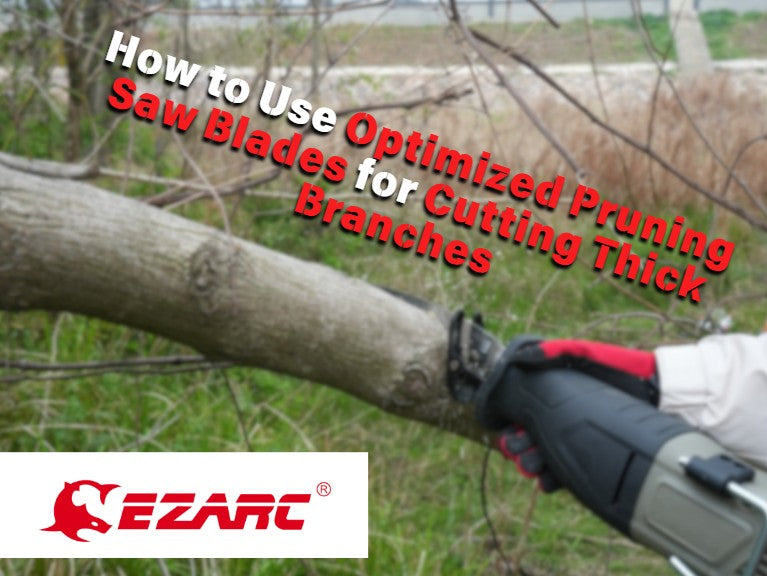
Thick branches become frustrating fast when the blade is too short, the teeth are too fine, or the kerf starts pinching before you reach the middle of the cut. That is why optimized pruning saw blades matter so much for this job. If you want to know how to cut thick branches cleanly, the result depends less on brute force and more on reach, tooth spacing, chip clearance, and cut order. With the right setup, you can move through wet wood and green branches with less binding, less bark tearing, and fewer stalled cuts.
For this kind of work, a long curved pruning blade is usually the smarter starting point than a general wood-cutting blade. EZARC positions its 15-inch pruning options around branch work, not flat lumber cuts. The main option here is the Tree Trimming/Wood Cutting – ProCut U-Groove Arc Edge Pruning Reciprocating Saw Blade, which uses a curved anti-bind profile, a U-groove chip-removal design, 6 TPI Japanese-style teeth, CRV steel, impulse-hardened teeth rated HRC 55-60, a universal shank, and a stated 225-325 mm cutting capacity. EZARC also offers the Tree Trimming/Wood Cutting – Japanese Teeth Arc Edge 6 TPI Reciprocating Saw Blade as a simpler long-reach option for aggressive branch trimming.
- What you want before the saw starts
- Follow These Steps to Cut Thick Branches Cleanly
- Use Controlled Technique Through the Full Cut
- What Blade Features Matter Most on Thick Branches
- Handle Safety and Site Conditions Before Every Cut
- Fix Ragged, Slow, or Stalled Thick-Branch Cuts
- Choose the Right EZARC Option for Your Workflow
- FAQ
What you want before the saw starts
- A blade longer than the branch diameter
- Coarse teeth for wet or green wood
- Clear branch drop zone
- Stable footing and two-handed control
- A cut sequence that prevents bark tearing
Why optimized pruning saw blades work better here

- Longer reach keeps more tooth line engaged
- 6 TPI teeth clear larger chips faster
- Curved profiles track rounded branch surfaces better
- Anti-bind geometry reduces stalling mid-cut
- Chip-ejection features help in damp, sticky wood
Follow These Steps to Cut Thick Branches Cleanly
Step 1: Match the blade to branch size and wood condition
A clean cut starts with blade choice, not trigger time. For pruning saw blades for thick branches, you want enough length to clear the full diameter without burying the saw body into twigs, bark, or nearby limbs. Fresh branches, wet wood, and resinous pine also need wider gullets and coarser teeth because fine-tooth blades pack up quickly and slow down.
What to do
- Choose a blade at least 2-4 inches longer than the branch diameter
- Use coarse teeth for green wood and damp limbs
- Reserve short general wood blades for smaller cuts
- Inspect the blade for bent teeth or a worn tip before use
Why this matters
The EZARC ProCut 15-inch model is built for this exact situation. Its U-groove is designed to clear sawdust and sticky residue quickly, while the curved profile is meant to reduce friction and binding in deeper cuts. If your workflow includes repeated cuts on thick green limbs, that chip-clearance benefit matters more than a smoother finish. The standard Japanese Teeth Arc Edge version is still a strong fit when you mainly want long reach, fast coarse cutting, and better leverage on branch work.
Step 2: Inspect the branch path before starting the saw
Many rough cuts come from bad setup, not a bad blade. Before the teeth touch wood, look at how the branch is loaded, where it may sag, and whether the kerf will close as weight shifts. This matters even more when you use a reciprocating saw pruning blade for tree trimming because the blade is long, flexible, and working on a rounded surface.
What to do
- Check where the branch will fall
- Remove nearby twigs that can trap the blade
- Identify compression and tension sides of the branch
- Stand off the direct fall line
- Plan a retreat path before cutting
Common mistake
- Cutting straight through a heavy limb without reading the load
- Letting the branch weight close the kerf mid-cut
- Working overhead with poor footing
What to watch
If the branch is supported on both ends, the kerf often closes from the top. If it hangs like a cantilever, the lower fibers may pinch as the limb drops. Reading that movement early helps you choose the right angle and decide whether to make a small relief cut first.
Use Controlled Technique Through the Full Cut
Step 3: Start with a stabilizing approach cut
The first few seconds set the blade path. Instead of jamming the teeth into bark at full speed, bring the blade in at a light angle and let the first strokes create a shallow groove. That gives the teeth a track to follow and reduces bark stripping at the entry point.
What to do
- Set the saw shoe lightly against the branch when possible
- Start at moderate speed, not maximum speed
- Let the tip establish a groove before increasing feed pressure
- Keep the blade square to the intended cut path
Why this matters
A curved pruning saw blade for thick wood can grip a rounded branch more naturally than a straight construction blade, but it still needs a clean start. The EZARC Japanese Teeth Arc Edge blade uses aggressive Japanese-style teeth and a curved arc edge to promote faster coarse cutting and smoother engagement on limbs. That makes it useful when your main problem is chatter at the start of the cut rather than slow progress at the end.
Step 4: Maintain steady feed pressure through the thickest section
Once the groove is established, your goal is smooth rhythm. Thick branch cutting rewards consistency, not bursts of force. Push too hard and the blade heats up, chatters, and slows chip removal. Stay too light and you waste stroke length.
What to do
- Keep both hands on the saw when possible
- Use a steady push rather than stabbing motions
- Let the shoe stay braced against the work
- Pause briefly if chips stop clearing
- Back the blade out if the kerf fills with wet debris
Tools or settings
- Medium to high stroke speed for thick green wood
- Moderate feed pressure
- Full blade stroke, not short pecking motions
- Dry, charged battery for cordless saws
Why this matters
The best blade for wet wood and green branches usually combines coarse teeth with strong chip clearance. EZARC’s ProCut adds the U-groove specifically to reduce drag from wet sawdust and sticky fibers. Its 15-inch length and 225-325 mm cutting capacity also give you more usable stroke on larger limbs, so you are not trying to finish a deep cut with the saw body crowding the branch.
Stop Binding Before It Becomes a Jam
Step 5: Manage binding before it starts
Binding rarely appears out of nowhere. You usually get warning signs first: the branch sags, the cut line twists, chips stop ejecting, or the saw sound changes. This is the point where anti-bind pruning saw blades earn their keep, but technique still matters.
What to do
- Watch the kerf width as the cut deepens
- Reposition the branch support if it starts to close
- Reduce twisting pressure from your wrists
- Withdraw the blade briefly to clear packed chips
- Rotate your body position instead of bending the blade sideways
What to watch
- Wet chip buildup in green wood
- Branch rotation during the middle third of the cut
- Blade deflection from side pressure
- Heat from forcing a stalled blade
Why this matters
The ProCut model combines a curved anti-bind profile with 6 TPI Japanese-style teeth and a reinforced shank. In practice, that means the blade is better suited to deeper branch cuts where jamming usually starts halfway through, not at the surface. A pruning blade for landscaping professionals should reduce downtime between cuts, and that is exactly where chip ejection and anti-bind shape help most.
According to OSHA, thousands of workers are blinded each year by job-related eye injuries that proper eye and face protection could have prevented. OSHA also states that eye and face protection must meet ANSI standards where those hazards exist, which is highly relevant when pruning throws wet chips and bark fragments toward your face.
Step 6: Finish the cut without tearing the branch collar
The last inch decides whether the cut looks clean or ragged. When you power straight through the final fibers, the branch can snap early and peel bark down past the collar. That leaves a rough wound and more cleanup.
What to do
- Slow down near the final inch
- Support or control the branch drop
- Make a small undercut first on heavier limbs
- Keep the blade aligned as fibers separate
- Stop cutting if the branch begins to split unexpectedly
Common mistake
- Chasing speed at the exit
- Letting the branch free-fall under its own weight
- Ignoring the collar on living trees
Why this matters
If your goal is how to cut thick branches cleanly, the finish matters as much as the first contact. A long curved pruning blade helps maintain contact on the rounded surface, but your exit pressure needs to ease off. On thicker live branches, a relief undercut plus a slower finish usually leaves a cleaner edge and less bark tearing than a single aggressive pass.
What Blade Features Matter Most on Thick Branches

Not every pruning blade solves the same problem. Some are mainly about reach, while others are built to deal with wet wood drag, deeper kerfs, or reduced vibration. When you compare optimized pruning saw blades, focus on the features that affect actual branch behavior during the cut.
Long reach improves control on larger limbs
- A 15-inch blade gives more working length on awkward cuts
- Extra reach keeps the saw body away from bark and side branches
- Deeper cuts stay more stable when more teeth stay engaged
Coarse teeth clear wood faster
- 6 TPI is well suited to coarse pruning work
- Larger gullets move chips better in green wood
- Fine teeth usually slow down in fibrous wet branches
Curved geometry helps on rounded stock
- Curved profiles contact branches more naturally
- They can reduce skating at the start of the cut
- They often feel easier to guide around rounded surfaces
Chip ejection matters in wet wood
- Wet sawdust packs tightly and increases drag
- A U-groove or deep gullet design helps clear debris
- Better chip flow lowers friction and reduces stalls


Handle Safety and Site Conditions Before Every Cut
Good cutting technique is only part of the job. Branch work adds falling hazards, unstable footing, and unpredictable limb movement, especially after storms or in damp yards. A pruning reciprocating saw blade for homeowners should make the cut easier, but it does not remove the need for setup discipline.
Safety checks before you cut
- Confirm the drop zone is clear of people, pets, and vehicles
- Wear safety glasses, gloves, and sturdy footwear
- Check that the blade is locked fully into the saw
- Avoid overhead cuts that force weak control
- Stop immediately if the branch shifts or splits early
Why this matters
OSHA notes that hand-held reciprocating saws with blades greater than one-fourth inch must use constant-pressure control, and it also advises eye and face protection for handheld saw operations. For access and footing, CDC reports that in 2020 there were 161 workplace ladder fatalities and 22,710 workplace ladder injuries, which is a useful reminder not to rush pruning work from unstable positions.
Scenario variations readers often face
- Backyard cleanup after rapid seasonal growth
- Damp storm-fallen limbs with sticky fibers
- Orchard maintenance with repeated same-size cuts
- Property work where long reach saves blade changes
Fix Ragged, Slow, or Stalled Thick-Branch Cuts
When the cut goes wrong, the pattern is usually predictable. You can often trace it back to blade choice, support, pressure, or exit technique. Use the table below to diagnose the problem quickly before you waste another blade or tear up the branch.
| Problem | Cause | Solution |
| Blade binds mid-cut | Kerf closes under load | Re-support limb, reduce twist |
| Cut is slow | Teeth too fine | Switch to coarse 6 TPI |
| Bark tears at exit | Finish too aggressive | Slow down, support drop |
| Saw chatters on entry | Unstable starting angle | Cut starter groove first |
| Blade overheats | Excess pressure, packed chips | Ease feed, clear kerf |
Quick recovery tips
- If the blade stalls, release the trigger before pulling back
- If chips are wet and gummy, back out and clear the kerf
- If the branch sags, change support before restarting
- If the cut wanders, re-establish a shallow groove instead of forcing alignment
Choose the Right EZARC Option for Your Workflow
Both featured EZARC blades are built around long-reach pruning, but they fit slightly different needs. If thick wet limbs and chip packing are your main headache, the ProCut is the more task-specific option. If you mainly want fast trimming reach with aggressive branch cutting, the Japanese Teeth Arc Edge blade is the simpler alternative.
Best fit for each job
- EZARC ProCut 15-inch curved pruning blade: best for wet wood, green branches, longer cuts, and anti-bind performance
- EZARC Japanese Teeth Arc Edge 15-inch blade: best for general tree trimming, long reach, and fast coarse cutting
Decision points
- Choose ProCut when binding is your main problem
- Choose the Arc Edge model when reach and aggressive cut speed matter most
- Stay with 15-inch length for thicker limbs and awkward angles
- Keep a fresh blade ready for storm cleanup or repeated cuts
FAQ
Evaluate EZARC on Pruning & Brush Clearing
A curved pruning blade is usually the better choice for rounded branches, awkward trimming angles, and deeper cuts where binding is common. The curve helps the blade engage the branch surface more naturally, while coarse pruning teeth clear chips faster than a typical straight wood blade. Straight blades make more sense on flat stock like lumber, pallets, or demolition wood. For branch-heavy work, EZARC’s curved 15-inch pruning options are a more direct fit than a standard straight framing blade.
Affordable pruning blades for homeowners.
Yes, coarse pruning blades are usually better for wet wood and green branches because they leave more space for chips and wet fibers to clear. A 6 TPI pruning blade for branch cutting is a practical range when the wood is fresh, damp, or resinous. Finer teeth can cut, but they often slow down once the kerf fills with sticky debris. EZARC’s ProCut is especially relevant here because its U-groove is designed to improve chip ejection in wet cutting conditions.
Best saw blades for DIY tree trimming at home.
For thick branches, use a blade that is longer than the branch diameter by at least 2 to 4 inches. That extra length gives you fuller stroke use, better clearance around bark and side growth, and less chance of crowding the saw body into the work. A 15-inch blade is a strong general choice for large pruning cuts, especially when the branch is green or the angle is awkward. EZARC’s 15-inch pruning formats are well suited to this range because they combine long reach with coarse branch-cutting teeth.
Why does my pruning blade keep binding halfway through the cut?
A blade usually binds halfway through because the branch weight closes the kerf, the cut angle twists, or wet chips stop clearing out. The fix is to read the branch load first, support the limb better, and maintain straight feed pressure instead of side bending the blade. Anti-bind geometry also helps, especially on thicker green wood. If this keeps happening, EZARC’s ProCut is the clearest candidate because it combines a curved anti-bind profile with U-groove chip removal for deeper branch cuts.
What is the best way to finish a branch cut without tearing bark?
The best way is to slow down for the final inch, control the branch drop, and avoid snapping through the last fibers at full speed. On heavier limbs, make a small undercut first so the bark does not peel downward when the branch breaks free. Keep the blade aligned and let the teeth separate the fibers instead of forcing the exit. That finishing approach works especially well with a long curved blade because it stays in contact with the rounded branch surface more evenly.