
 Cuchillas Oscilantes Multiherramienta
 Hojas de sierra recíproca
 Corte y Esmerilado
 Sierra de corona
 Perforación
 Lijado y pulido
 Juego de vasos y llaves de vaso
 Herramientas Manuales
 Trabajador de metal y fabricación
 Carpintería
 Electricidad y fontanería
 Automotriz
 Hormigón y Albañilería
 Demolición
 NUEVAS LLEGADAS
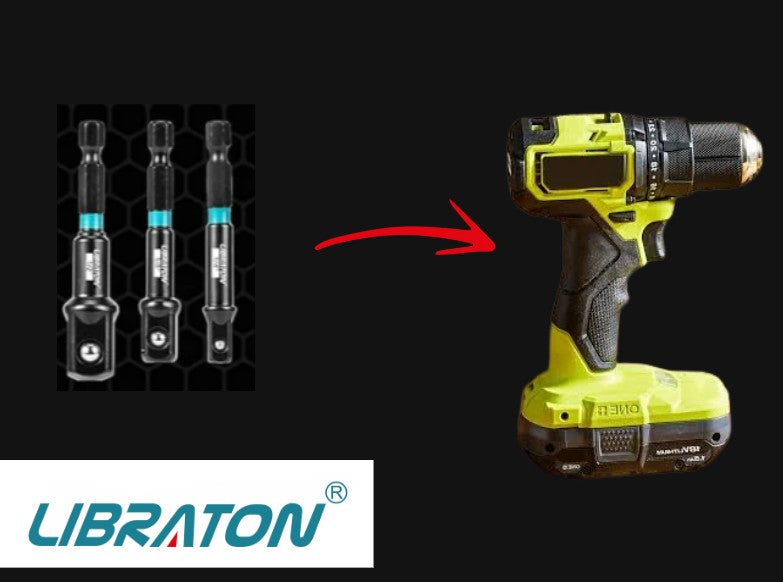
A drill can do much more than make holes. With the right accessories, it can handle fastening tasks. One useful option is a socket adapter. This connects a compatible drill to a compatible socket.
This is helpful when assembling furniture or working with hardware. It works for jobs where a socket is more convenient than a screwdriver bit.
But how does a socket adapter work? When should you use one? Understanding the connection helps you choose the right setup for your next repair.
- 1. What Is a Socket Adapter?
- 2. Can You Use a Socket Adapter for Drill Applications?
- 3. What Home Repairs Can You Use It For?
- 4. How Do You Choose the Right Socket Adapter?
- 5. Does a Larger Adapter Mean More Power?
- 6. How to Use a Drill Socket Adapter
- 7. Can You Use a Socket Adapter With an Impact Driver?
- 8. Can One Adapter Work With Different Sockets?
- 9. Why Add a Socket Adapter to Your Drill Accessories?
- 10. Tips for Using a Socket Adapter Safely
- 11. Final Thoughts
What Is a Socket Adapter?
A socket adapter is an accessory that connects a compatible power tool to a socket. One end is designed to fit the tool, while the other provides a drive connection for the socket.
The basic setup looks like this:
Drill → Socket Adapter → Socket → Fastener
The adapter does not turn the drill into a completely different type of power tool. Instead, it provides a compatible connection so the drill can rotate a socket.
Socket adapters are available with different socket drive sizes. Common options include 1/4-inch, 3/8-inch, and 1/2-inch drive connections.
Remember that the drive size describes the physical socket connection. It does not automatically establish the torque capacity or heavy-duty suitability of the adapter, socket, or drill.
Can You Use a Socket Adapter for Drill Applications?
Yes, a compatible socket adapter for drill use can connect a suitable drill to a matching socket.
Before using one, check both ends of the connection. The adapter's tool-side interface must fit the drill, while its socket-side drive must match the socket.
For example, a drill with a compatible chuck can hold an adapter with an appropriate shank. The other end of the adapter can then connect to a socket with the matching drive size.
This makes the setup useful for certain household fastening tasks without requiring a separate powered socket tool.
What Home Repairs Can You Use It For?
A drill socket adapter can be useful for various suitable fastening tasks around the home, garage, or workshop.
Potential applications include:
- Furniture assembly
- Installing or removing compatible hex fasteners
- General household maintenance
- Working with hardware and brackets
- Projects involving compatible nuts and bolts
The application should always determine whether powered socket driving is appropriate. For delicate fasteners, seized hardware, or jobs requiring precise torque, a hand tool or torque-controlled tool may provide better control.
How Do You Choose the Right Socket Adapter?
Choosing the right adapter starts with the socket rather than the drill.
First, determine the drive size of the socket you want to use. Common drive sizes include 1/4 inch, 3/8 inch, and 1/2 inch.
Then choose an adapter with the corresponding socket-side connection.
Finally, check the tool-side interface. The adapter must be compatible with your drill's chuck or quick-change interface.
For example:
1/4-inch-drive socket → matching adapter → compatible drill
The same principle applies to 3/8-inch and 1/2-inch-drive sockets.
Do not choose an adapter simply because its size resembles the size of the fastener. Drive size and fastener size are two different measurements.
Does a Larger Adapter Mean More Power?
No. This is an important distinction when choosing drill accessories.
A 1/2-inch socket adapter does not automatically give a drill more torque than a 1/4-inch adapter. The drive size describes how the adapter connects to the socket.
The actual limitations of a setup depend on the drill, adapter, socket, fastener, and application.
Some repairs require a specified torque value. Use a torque-controlled tool for this. Do not rely on adapter size or drill settings for exact torque.
How to Use a Drill Socket Adapter
Once you have confirmed that the components are compatible, using the adapter is relatively simple.
1. Select the appropriate socket
Choose a socket that matches the fastener and has the correct drive size for the adapter.
The socket should fit the fastener properly. Avoid using a socket that is loose or incorrectly sized.
2. Attach the adapter to the drill
Insert the adapter into the compatible drill chuck or quick-change interface. Make sure it is properly secured before operating the tool.
3. Attach the socket
Connect the appropriate socket to the adapter's drive end. Confirm that the socket is properly seated.
4. Align the tool
Position the socket squarely over the fastener. Keeping the drill aligned helps maintain contact between the socket and fastener.
5. Operate at a controlled speed
Start slowly and use an appropriate speed for the application. Avoid immediately applying maximum power.
For installation, stop when the fastener has reached the intended position. For removal, do not rely on powered rotation alone if the fastener is seized or heavily corroded.
Can You Use a Socket Adapter With an Impact Driver?
Only when the specific adapter and socket are rated for impact use.
A compatible hex shank is not always impact-rated. If using an impact driver, verify the rating of the adapter and socket first.
If the manufacturer's specifications do not confirm impact compatibility, do not assume that the components can safely withstand impact operation.
For standard drill applications, follow the compatibility and intended-use information provided for the specific accessories.
Can One Adapter Work With Different Sockets?
An adapter can generally be used with compatible sockets that have the same drive size.
For example, a 3/8-inch-drive adapter can connect to compatible 3/8-inch-drive sockets. Those sockets can have different openings for different fastener sizes while still sharing the same drive connection.
However, a 3/8-inch adapter cannot simply connect directly to every 1/4-inch or 1/2-inch-drive socket.
If you regularly work with different socket drive sizes, having multiple appropriate adapters can give you more flexibility.
Why Add a Socket Adapter to Your Drill Accessories?
A socket adapter expands the accessories your drill can use. This removes the need for another powered tool for every task.
For DIYers, this can be useful when moving between drilling, screwdriving, and suitable socket-based fastening work.
The LIBRATON 54-Piece Nut Driver Set includes three socket adapters. It also has magnetic nut drivers, screwdriver bits, and other tools. This gives users many options for fastening applications.
Select components based on the fastener, tool interface, and application. A kit adapter does not mean every tool or socket combination is suitable.
Tips for Using a Socket Adapter Safely
Good tool control is important even for simple home repairs.
Before starting, inspect the adapter and socket for visible damage. Confirm that the socket fits the fastener and that the adapter is properly secured in the drill.
Keep the drill aligned with the fastener and begin at a controlled speed. If the socket slips, stop and check the fit rather than continuing to apply power.
Avoid forcing seized or damaged fasteners with a powered tool. Depending on the situation, a manual ratchet or another appropriate tool may provide better control.
Also remember that a socket adapter does not determine the maximum torque of the entire setup. Follow the specifications and limitations of the individual components.


Final Thoughts
Yes, you can use a socket adapter with a compatible drill for many suitable home-repair and fastening tasks. The adapter provides a connection between the drill and a compatible socket, allowing the drill to rotate the socket.
The most important step is choosing the correct connection. Match the adapter to your drill and socket drive size. Ensure the socket fits the fastener.
A socket adapter is a useful drill accessory. It lets one tool handle different fastening work. Remember that drive size is about compatibility, not torque capacity.


Dejar un comentario
Este sitio está protegido por hCaptcha y se aplican la Política de privacidad de hCaptcha y los Términos del servicio.