
 Cuchillas Oscilantes Multiherramienta
 Hojas de sierra recíproca
 Corte y Esmerilado
 Sierra de corona
 Perforación
 Lijado y pulido
 Juego de vasos y llaves de vaso
 Herramientas Manuales
 Trabajador de metal y fabricación
 Carpintería
 Electricidad y fontanería
 Automotriz
 Hormigón y Albañilería
 Demolición
 NUEVAS LLEGADAS
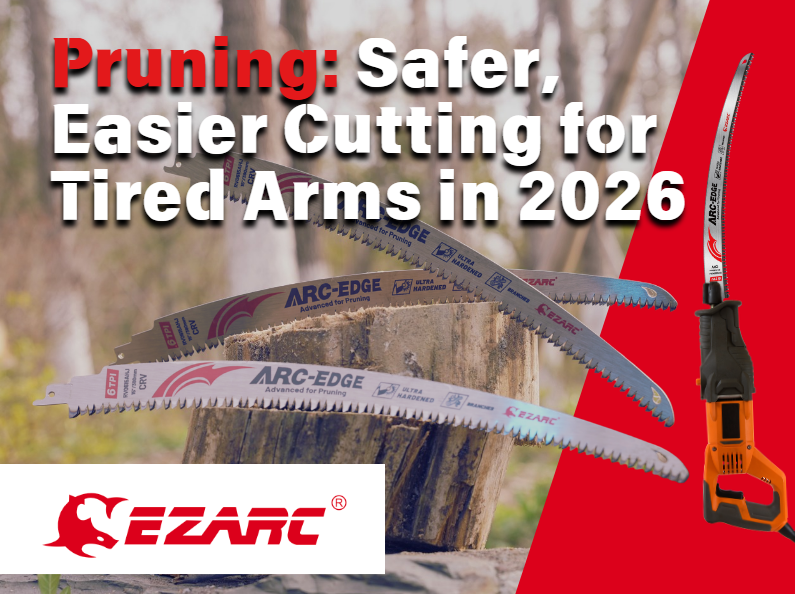
Podar árboles y ramas no debería dejarle los brazos doloridos, entumecidos o agotados. Sin embargo, para muchos propietarios, paisajistas y, especialmente, usuarios mayores, las herramientas de poda tradicionales y las agresivas cuchillas de demolición provocan vibraciones excesivas, poco control y riesgos de seguridad. Por eso, en 2026, más personas optan por una hoja de sierra sable de baja vibración para podar, diseñada para brindar comodidad, control y cortes limpios.
Esta guía explica cómo el diseño de la hoja afecta la fatiga, por qué la vibración es importante para la seguridad y cómo elegir la hoja de sierra sable adecuada para podar —especialmente las opciones curvas, de dientes japoneses y de carburo como EZARC— puede hacer que la poda sea más fácil y segura para los brazos cansados.
Por qué la vibración es un problema grave en la poda
La vibración excesiva no solo es incómoda, sino que puede ser peligrosa, especialmente para usuarios mayores o cualquier persona con dolor articular.
Las herramientas de poda de alta vibración pueden causar:
- Fatiga de brazos y manos
- Reducción de la fuerza de agarre
- Pérdida de control del corte
- Mayor riesgo de resbalones y contragolpes
- Estrés articular y nervioso a largo plazo
Una hoja de sierra sable de baja vibración para podar minimiza estos riesgos cortando suavemente en lugar de desgarrar la madera.
Cómo el diseño de la hoja reduce la fatiga del brazo
No todas las hojas vibran igual. La forma, los dientes y el equilibrio de una hoja afectan directamente la cantidad de impacto que se transfiere a los brazos.

Características clave de diseño que reducen la vibración
- Perfil de hoja curvado para un contacto continuo con la madera
- Dientes de estilo japonés para cortar en lugar de desgarrar
- Construcción de carburo para una nitidez constante
- Espaciado equilibrado de los dientes para evitar vibraciones
Una hoja de sierra sable bien diseñada para podar absorbe las fuerzas de corte de manera más uniforme, lo que resulta en un funcionamiento más suave y controlado.
Hoja de sierra sable curva vs. hoja recta para mayor comodidad
Las hojas rectas son comunes, pero no son ideales para podar, especialmente para usuarios preocupados por la fatiga.

Por qué las hojas curvas son más suaves para los brazos
- Mantienen un contacto constante con las ramas
- Reducen los tirones o saltos repentinos
- Requieren menos presión hacia abajo
- Siguen el arco natural de las ramas
Una hoja de sierra sable curva de baja vibración para podar reduce significativamente la tensión de la muñeca y el impacto en el brazo en comparación con los diseños rectos.
Dientes japoneses: cortes más limpios, menos esfuerzo
La geometría de los dientes japoneses es uno de los mayores contribuyentes al rendimiento de baja vibración.
Beneficios para usuarios mayores y preocupados por la seguridad
- Acción de corte suave
- Mínimo desgarro y atasco
- Cortes más rápidos con menos fuerza
- Mejor control cerca del final del corte
Cuando se combina con un perfil curvo, los dientes japoneses transforman una hoja de sierra sable estándar para podar en una herramienta de poda de precisión.

Por qué el carburo es importante para un corte consistente y de baja vibración
Las hojas de acero estándar o bimetálicas se desafilan rápidamente, lo que aumenta la vibración a medida que se esfuerzan al cortar la madera. Las hojas de carburo se mantienen afiladas por mucho más tiempo.
Ventajas del carburo
- Mantiene los filos de corte afilados
- Corta de forma consistente sin atascarse
- Maneja la corteza contaminada con suciedad
- Reduce la vibración de la hoja con el tiempo
Una hoja de sierra sable de carburo de baja vibración para podar ofrece un rendimiento suave incluso después de un uso prolongado.
Hoja de sierra sable de baja vibración EZARC para podar (recomendada)
La hoja de sierra recíproca de carburo con dientes japoneses de EZARC está diseñada específicamente para reducir la vibración y la fatiga del usuario durante la poda.

Por qué EZARC es ideal para brazos cansados
- Perfil curvo para un acoplamiento suave
- Dientes japoneses de precisión
- Construcción de carburo duradera
- Excelente equilibrio para cortes controlados
Para propietarios, paisajistas y usuarios mayores, EZARC ofrece una hoja de sierra sable para podar que prioriza la comodidad sin sacrificar la potencia.
Beneficios de seguridad para usuarios mayores
La reducción de la vibración no solo se trata de comodidad, sino de seguridad.
Una hoja de sierra sable de baja vibración para podar ayuda a:
- Mantener un control manual constante
- Reducir resbalones accidentales
- Mejorar la precisión del corte
- Disminuir errores relacionados con la fatiga
Estos beneficios son especialmente importantes para usuarios mayores de 50 años o cualquier persona con artritis, problemas de tendones o reducción de la fuerza de agarre.
Hoja de sierra sable vs. motosierra: ¿Cuál es más segura para podar?
Las motosierras son potentes, pero no siempre son la opción más segura.
Por qué muchos usuarios mayores prefieren una hoja de sierra sable

- Menor riesgo de retroceso
- Mejor control en ramas pequeñas
- Menos ruido e intimidación
- Fácil manejo a la altura del hombro
Con una hoja de sierra sable de baja vibración para podar, muchos usuarios encuentran que las sierras recíprocas son más seguras y manejables que las motosierras.
Mejores prácticas para reducir la fatiga durante la poda
Incluso la mejor hoja funciona mejor con la técnica adecuada.
- Deje que la hoja corte, no la fuerce
- Use ambas manos siempre que sea posible
- Mantenga los brazos relajados, no tensos
- Tome descansos durante la poda prolongada
- Dedique una hoja de sierra sable exclusivamente para podar
Estos hábitos reducen aún más la tensión y mejoran la seguridad.
¿Quién debería usar una hoja de sierra sable de baja vibración para podar?
Este tipo de hoja es ideal para:
- Propietarios mayores
- Jardineros aficionados
- Paisajistas que realizan podas diarias
- Cualquier persona con fatiga en brazos o articulaciones
Desde el mantenimiento de jardines en EE. UU. hasta el cuidado de huertos en Europa y Australia, una hoja de sierra sable de baja vibración para podar hace que el corte sea más seguro y cómodo.
Consideraciones finales: Podar no debería doler
Podar no tiene por qué significar brazos doloridos o cortes peligrosos. Elegir una hoja de sierra sable de baja vibración para podar —especialmente una con perfil curvo, dientes japoneses y construcción de carburo— puede mejorar drásticamente la comodidad y la seguridad.

En 2026, las hojas de carburo de dientes japoneses de EZARC se destacarán como una opción inteligente para cualquiera que desee cortes más limpios, menos fatiga y más confianza al podar.

Dejar un comentario
Este sitio está protegido por hCaptcha y se aplican la Política de privacidad de hCaptcha y los Términos del servicio.