
 Cuchillas Oscilantes Multiherramienta
 Hojas de sierra recíproca
 Corte y Esmerilado
 Sierra de corona
 Perforación
 Lijado y pulido
 Juego de vasos y llaves de vaso
 Herramientas Manuales
 Trabajador de metal y fabricación
 Carpintería
 Electricidad y fontanería
 Automotriz
 Hormigón y Albañilería
 Demolición
 NUEVAS LLEGADAS
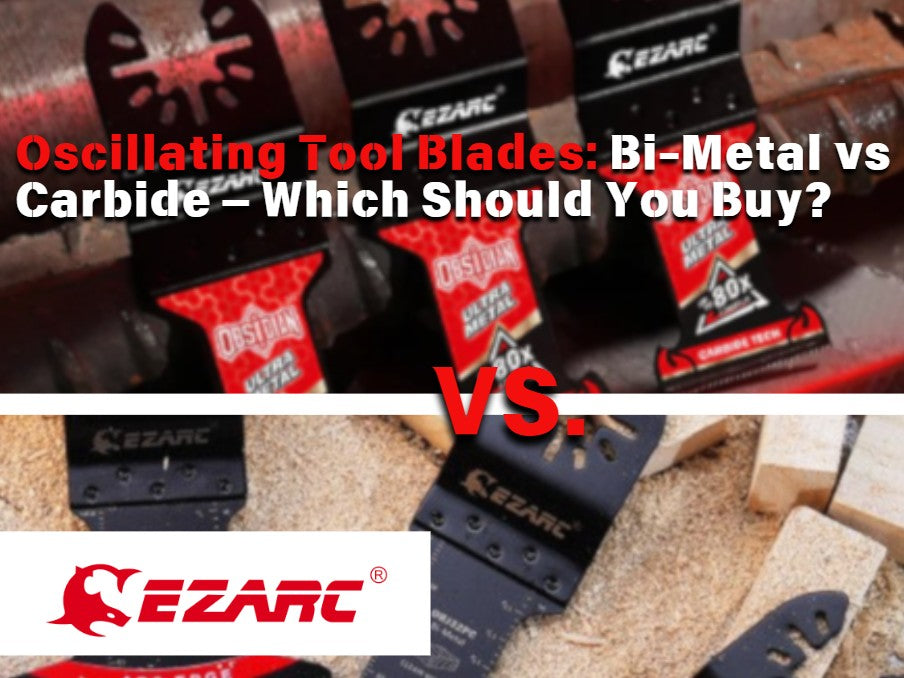
Walk into any hardware store and you'll find oscillating multi tool blades stacked in every price range, every brand, and what feels like a hundred variations. But strip away the packaging and the marketing, and almost every blade on the shelf falls into one of two categories: bi-metal or carbide.
Pick the right one and your oscillating multi-tool becomes one of the most versatile weapons in your kit. Pick the wrong one and you're mid-job, blade dulled out, wondering why you're even bothering.
This guide breaks down the real difference between bi-metal and carbide oscillating multi tool blades. No fluff, no filler. Buy once, cut right.
What Is a Bi-Metal Oscillating Blade?
Bi-metal blades are made from two fused metals: a flexible steel body (usually spring steel) with a high-speed steel (HSS) cutting edge welded along the teeth. The spring steel keeps the blade from snapping under flex, while the HSS edge provides hardness for cutting.
They're the most common type of oscillating multi tool blades on the market, and for good reason. They're affordable, widely available, and genuinely capable across a broad range of materials. Wood, drywall, plastic, soft metals, caulk, grout. Bi-metal handles most of what the average homeowner or light-duty tradesperson throws at it.
Where bi-metal works well:
- Softwood, plywood, and engineered lumber
- Drywall and plaster
- PVC and plastic pipe
- Thin sheet metal and aluminum
- Caulk removal and scraping
Where bi-metal falls apart:
- Hardened bolts, screws, or fasteners
- Rebar and structural steel
- Nails embedded in hardwood or concrete
- Any sustained metal cutting under load

The core problem with bi-metal on hard metal is heat. High-speed steel loses its hardness rapidly above around 300°C, and cutting hardened metal generates that kind of heat fast. Once the edge softens, it rounds off, and the blade stops cutting. You're not just through one blade either. You might be through half a dozen before the job is done.
What Is a Carbide Oscillating Blade?
Carbide blades use tungsten carbide teeth, a composite material that's dramatically harder and more heat-resistant than high-speed steel. Carbide maintains its cutting edge at temperatures that would destroy bi-metal, which makes it the right material for hard metal, abrasive materials, and applications that demand sustained cutting performance.
Carbide oscillating multi tool blades cost more upfront. That's real. But the cost-per-cut math flips completely when you're dealing with tough materials. One carbide blade can outlast dozens of bi-metal in the same application.
Where carbide works well:
- Hardened bolts, screws, and threaded rod
- Rebar and structural steel
- Nails embedded in wood or masonry
- Cast iron and hardened fasteners
- Abrasive materials like fiber cement and hard tile
Where carbide is overkill:
- Soft wood and drywall. Carbide teeth are aggressive and can tear rather than slice.
- Light scraping or caulk removal. Bi-metal is cheaper and perfectly adequate.
- Applications where fine control in soft materials matters more than durability.

Bi-Metal vs Carbide: Head-to-Head
| Bi-Metal | Carbide | |
| Cutting edge material | High-speed steel | Tungsten carbide |
| Best for | Wood, drywall, soft metal | Hard metal, nails, rebar |
| Heat resistance | Low (~300°C limit) | High (700°C+) |
| Blade life (metal cutting) | Short | Up to 80X longer |
| Upfront cost | Low | Higher |
| Cost per cut (hard metal) | High (frequent replacement) | Low |
| Tooth aggressiveness | Moderate | High |
| Ideal user | DIYer, light general use | Contractor, metalworker, trades |
The Upgrade Hidden Inside Carbide: Coatings
Not all carbide oscillating multi tool blades are created equal. The next meaningful jump in performance comes from what's on top of the carbide: TiAlN (Titanium Aluminum Nitride) coating.
TiAlN is a ceramic-based coating developed for industrial machining, the kind of high-load, high-speed metal cutting done by CNC machines running all day. Applied to an oscillating blade's carbide teeth, it acts as a thermal shield, preventing heat from penetrating the cutting edge. The blade stays sharper longer, runs cooler under load, and handles the hardest fasteners without the performance drop-off you get from uncoated carbide.
Think of uncoated carbide as a very tough knife. TiAlN-coated carbide is the same knife with a heat-proof jacket. It's not just harder to dull, it's resistant to the specific failure mode (heat buildup) that ends blade life prematurely.
If you're regularly cutting rebar, hardened bolts, or structural fasteners, TiAlN-coated carbide multi tool blades aren't a luxury. They're the tool that actually does the job.


So Which Oscillating Multi Tool Blades Should You Buy?
The honest answer: it depends on what you're cutting. Here's a simple decision framework:
Buy bi-metal if:
- Most of your cutting is wood, drywall, or light demo work
- You occasionally cut soft metal but not as a regular part of the job
- You want a versatile, affordable blade for general use
- You're a homeowner doing occasional projects
Buy carbide if:
- You regularly cut metal fasteners: bolts, screws, nails, rebar
- Your oscillating tool lives on a job site
- You're tired of replacing bi-metal blades mid-job
- The material is hardened, abrasive, or heat-generating
Buy TiAlN-coated carbide if:
- You're cutting hardened steel, structural rebar, or heavy fasteners regularly
- Blade life and cutting speed are directly tied to your productivity
- You want the best cost-per-cut performance on demanding metal applications
What We Recommend for Metal Cutting
For anyone who regularly uses an oscillating tool on metal fasteners, the EZARC Gen 4 Obsidian Carbide Oscillating Blade sits at the top of the pile. It's built around exactly the use cases where bi-metal fails: bolts, screws, nails, rebar, and threaded rod.
What sets it apart from standard carbide oscillating tool blades:
- TiAlN Obsidian coating rated to 900°C. A genuine thermal shield, not a marketing coating.
- Industrial-grade carbide teeth with precision tooth geometry engineered for hard metal engagement
- Up to 80X longer blade life versus standard bi-metal oscillating blades
- Up to 2X faster cutting speed versus standard carbide blades
- 25% more cutting depth than the previous generation. More engagement per stroke, less heat per cut.
- Universal compatibility with Milwaukee, DeWalt, Ryobi, Fein, Makita, and most major oscillating tool brands
At $32 for a 3-pack (regularly $50), it's not the cheapest blade on the shelf. But when you're not burning through three bi-metal blades per job, the math works out quickly. EZARC's first three generations have sold over 100,000 units, with strong repeat purchases from contractors and tradespeople who've done that math themselves.
The Practical Takeaway
Bi-metal and carbide aren't really competing for the same job. Bi-metal is a general-purpose blade for general-purpose work. Carbide is a specialist blade for hard materials, and if hard metal is your regular territory, it's the only blade worth buying.
The mistake most people make is reaching for bi-metal because it's familiar or cheap, then wondering why the job is harder than it should be. The blade is doing its best. It's just not built for what you're asking it to do.
Match the blade to the material, and your oscillating multi-tool will surprise you with what it can handle.

Dejar un comentario
Este sitio está protegido por hCaptcha y se aplican la Política de privacidad de hCaptcha y los Términos del servicio.