
 Oscillating Multi-Tool Blades
 Reciprocating Saw Blades
 Cutting & Grinding
 Hole Saw
 Drilling
 Sanding & Polishing
 Socket & Driver Set
 Hand Tools
 Metal Worker & Fabrication
 Woodworking & Carpentry
 Electrical & Plumbing
 Automotive
 Concrete & Masonry
 Demolition
 NEW ARRIVALS
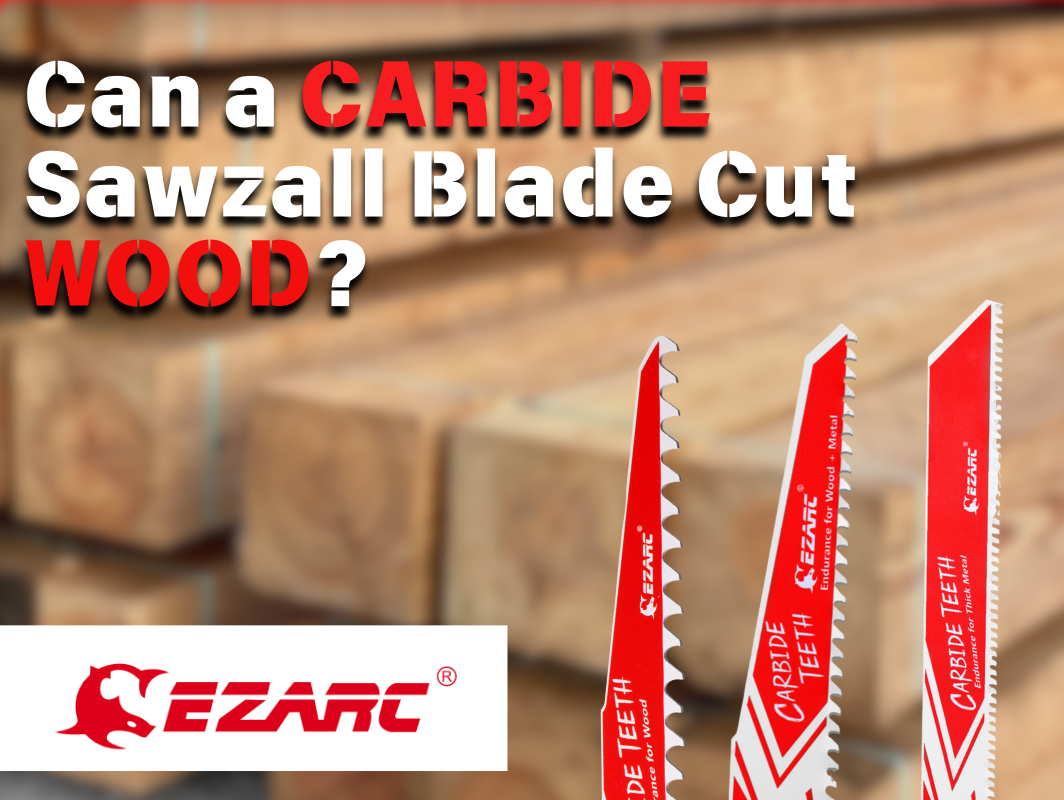
If you have ever stood in the tool aisle staring at a rack of blades, you are not alone. One of the most common questions professionals and serious DIYers ask is simple but important: can a carbide Sawzall blade really cut wood effectively? The short answer is yes, but the long answer depends on how Sawzall blades are designed, what type of wood you are cutting, and what you expect from the cut.
At EZARC Tools, we spend a lot of time engineering reciprocating saw blades for real-world use, not just ideal conditions. In this guide, we will break down how carbide blades work, when they make sense for wood cutting, and when another blade type may be the smarter choice.
- 1. Understanding Sawzall Blades
- 2. What Is a Carbide Sawzall Blade?
- 3. Can Carbide Reciprocating Saw Blades Cut Wood?
- 4. Pros of Using Carbide Reciprocating Saw Blades for Wood
- 5. Limitations to Be Aware Of
- 6. Choosing the Right Reciprocating Saw Blade for Wood
- 7. Practical Use Cases for Carbide Blades in Wood Cutting
- 8. Final Verdict: Should You Use a Carbide Sawzall Blade on Wood?
Understanding Sawzall Blades

Before diving into carbide specifically, it helps to understand how Sawzall blades differ from other cutting tools. Unlike circular saws or jigsaws, reciprocating saws cut with a straight, aggressive push-and-pull motion. That motion makes them ideal for demolition, pruning, rough framing, and remodeling work.
Most Sawzall blades are designed with flexibility, impact resistance, and versatility in mind. They are not precision tools. They are built to cut fast, tolerate nails and debris, and keep working even when conditions are less than perfect.
This is why blade material matters so much.
What Is a Carbide Sawzall Blade?

A carbide Sawzall blade typically uses carbide teeth, or carbide grit, bonded to a steel blade body. Carbide is significantly harder than high-carbon steel or bi-metal teeth. That hardness gives carbide Sawzall blades exceptional wear resistance, especially when cutting abrasive or mixed materials.
Carbide blades are commonly associated with:
- Metal cutting
- Demolition work
- Nail-embedded wood
- Composite materials
- Roofing and siding
But hardness alone does not automatically mean “better” for every wood-cutting task.
Can Carbide Reciprocating Saw Blades Cut Wood?
Yes, carbide reciprocating saw blades can absolutely cut wood. In fact, in certain scenarios, they outperform traditional wood blades by a wide margin.

However, the type of wood and the conditions of the cut matter more than most people realize.
Clean, Dry Wood
If you are cutting clean, dry lumber with no fasteners, a standard wood-cutting blade with aggressive, milled teeth will usually cut faster and leave a cleaner edge. Carbide blades will still cut, but they may feel slower because carbide teeth are optimized for durability, not razor-sharp bite.
Nail-Embedded or Dirty Wood

This is where carbide Sawzall blades shine.
When cutting framing lumber, pallets, fences, or demolition materials that contain nails, screws, staples, or grit, carbide teeth maintain their edge far longer than bi-metal blades. Instead of dulling after a few impacts, carbide keeps cutting.
For remodelers, contractors, and demolition crews, this durability often outweighs the slight loss in cutting speed.
Pressure-Treated and Outdoor Wood
Pressure-treated lumber, landscape timbers, and outdoor wood often contain sand, dirt, or chemical treatments that rapidly wear down conventional teeth. Carbide reciprocating saw blades resist abrasion, making them a practical option for outdoor projects and site work.
Pros of Using Carbide Reciprocating Saw Blades for Wood
Choosing carbide reciprocating saw blades for wood cutting comes with several clear advantages:
1. Exceptional Blade Life
Carbide blades last significantly longer than standard bi-metal blades, especially in rough conditions. Fewer blade changes mean less downtime and lower long-term cost.
2. Nail-Cutting Capability
Unlike traditional wood blades, carbide Sawzall blades are designed to cut through wood and metal without immediate tooth failure. This makes them ideal for renovation and teardown work.
3. Versatility
One carbide blade can often replace multiple specialized blades. If you frequently encounter mixed materials, a single carbide blade simplifies your tool setup.
4. Heat Resistance
Carbide maintains hardness at higher temperatures, reducing tooth deformation during long cuts or heavy use.

Limitations to Be Aware Of
Despite their strengths, carbide Sawzall blades are not a perfect solution for every task.
1. Slower on Clean Cuts
For clean woodworking where speed and finish matter, a dedicated wood blade will usually outperform carbide.
2. Higher Upfront Cost
Carbide blades cost more initially. While they often pay for themselves over time, the upfront price can be a factor for occasional users.
3. Less Flexible Cutting Feel
Some carbide blades feel stiffer or less forgiving during plunge cuts compared to thinner bi-metal blades.
Choosing the Right Reciprocating Saw Blade for Wood
For users working with hard wood, nail-embedded lumber, or demolition-grade projects, EZARC offers a purpose-built solution: the EZARC 3 TPI 9–12 inch Carbide Reciprocating Saw Blade for Hard Wood. This blade is engineered to handle the toughest cutting conditions, where standard wood blades fail prematurely.
Key features include:
- Low TPI design for fast material removal
- Durable carbide teeth for extended life on hard wood, pressure-treated lumber, and nail-contaminated wood
- Versatile performance for demolition, remodeling, and outdoor construction projects
This carbide blade aligns perfectly with unpredictable materials and challenging jobsite conditions. For projects that demand reliability, durability, and consistent performance, this blade ensures you get the cut done efficiently without constant blade changes.
To explore more of EZARC’s reciprocating saw blades and find the right fit for your projects, check out our complete range and detailed guide here.
Practical Use Cases for Carbide Blades in Wood Cutting
Here are a few scenarios where carbide Sawzall blades are often the best choice:
- Remodeling and demolition projects
- Cutting pallets or reclaimed lumber
- Fence and deck removal
- Roof tear-offs
- Outdoor construction with dirty or treated wood
In these environments, blade longevity and reliability matter more than a perfectly clean cut.
Final Verdict: Should You Use a Carbide Sawzall Blade on Wood?
Yes, when the situation calls for it.
Carbide Sawzall blades are not meant to replace every wood-cutting blade, but they excel where durability, versatility, and nail-cutting capability are required. For professionals and serious DIYers who frequently encounter mixed materials, carbide blades are often the most cost-effective and reliable option.
If your work involves clean woodworking, stick with dedicated wood blades. If your work involves reality(nails, dirt, surprises, and demolition), then carbide is the smarter choice.
At EZARC Tools, we believe the best blade is the one that keeps working when conditions are far from perfect. And that is exactly what our carbide Sawzall blades are built to do.



Hinterlasse einen Kommentar
Diese Website ist durch hCaptcha geschützt und es gelten die allgemeinen Geschäftsbedingungen und Datenschutzbestimmungen von hCaptcha.