
 Oscillating Multi-Tool Blades
 Reciprocating Saw Blades
 Cutting & Grinding
 Hole Saw
 Drilling
 Sanding & Polishing
 Socket & Driver Set
 Hand Tools
 Metal Worker & Fabrication
 Woodworking & Carpentry
 Electrical & Plumbing
 Automotive
 Concrete & Masonry
 Demolition
 NEW ARRIVALS
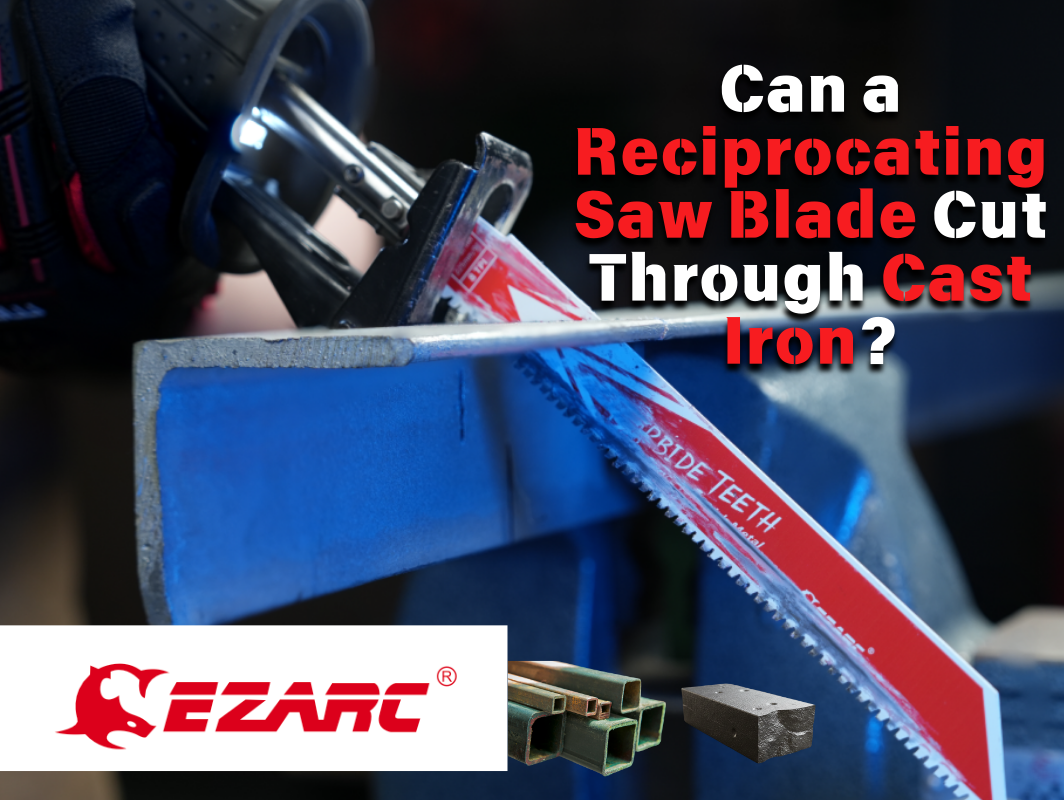
Cast iron is notorious for being tough, brittle, and unforgiving, which raises an important question for contractors, plumbers, metalworkers, and serious DIYers alike: can reciprocating saw blades cut through cast iron?
The short answer is yes. The longer and more important answer is only if you use the right reciprocating saw blade and the correct cutting approach. Cast iron is not like mild steel or aluminum. It demands purpose-built tooling, proper tooth geometry, and realistic expectations.
In this guide, we will break down how reciprocating saw blades perform on cast iron, what characteristics actually matter, and how to avoid the common mistakes that destroy blades prematurely. Toward the end, we will also show you what to look for in a professional-grade blade designed specifically for thick metal and cast iron applications.
- 1. Why Cast Iron Is So Difficult to Cut
- 2. Can Reciprocating Saw Blades Actually Cut Cast Iron?
- 3. Blade Types: What Works and What Does Not
- 4. Tooth Count (TPI) Matters More Than You Think
- 5. Technique Tips for Cutting Cast Iron with Reciprocating Saw Blades
- 6. Common Mistakes to Avoid
- 7. Choosing the Right Reciprocating Saw Blade for Cast Iron
- 8. A Blade Designed Specifically for Cast Iron and Thick Metal
- 9. Learn How to Choose the Right Blade for Every Job
- 10. Explore the Full Range of EZARC Reciprocating Saw Blades
- 11. Final Verdict: Is a Reciprocating Saw Blade Enough for Cast Iron?
Why Cast Iron Is So Difficult to Cut
Before choosing Sawzall blades for cast iron, it is critical to understand the material itself.
Cast iron contains a high percentage of carbon, which gives it excellent compressive strength but also makes it hard, brittle, and highly abrasive. Unlike steel, cast iron does not flex. It fractures. That brittleness can be an advantage when cutting, but only if the blade can withstand the abrasion and heat.
The challenges include:
- Rapid blade wear
- Excessive heat buildup
- Tooth chipping or stripping
- Slower cutting speeds
This is why standard wood or general-purpose metal blades almost always fail when used on cast iron.
Can Reciprocating Saw Blades Actually Cut Cast Iron?
Yes. Sawzall blades can cut through cast iron, but only certain types are up to the task.
A reciprocating saw delivers aggressive back-and-forth motion, making it ideal for demolition, pipe cutting, and retrofit work. When paired with the correct blade, it becomes one of the most practical tools for cutting cast iron pipes, drain lines, automotive components, and heavy metal structures in confined spaces.
However, not all Sawzall blades are designed for this level of abuse.
Blade Types: What Works and What Does Not

Standard Carbon Steel Blades
These are completely unsuitable for cast iron. They dull almost immediately and should never be used.
Bi-Metal Reciprocating Saw Blades
Bi-metal blades are a step up and are commonly marketed for metal cutting. They perform adequately on thin steel and non-ferrous metals but struggle with thick cast iron. Expect rapid dulling and inconsistent cuts.
Bi-metal reciprocating saw blades may work in a pinch on thin cast iron, but they are not a long-term or professional solution.
Carbide-Tipped Reciprocating Saw Blades
This is where cast iron cutting becomes realistic.
Carbide-tipped blades are engineered specifically for extreme materials. Carbide teeth are significantly harder than bi-metal and maintain their cutting edge under high heat and abrasion. For cast iron, this difference is decisive.
Professionals cutting cast iron regularly almost always rely on carbide Sawzall blades, not because they are trendy, but because they last longer, cut faster, and fail far less often.
Tooth Count (TPI) Matters More Than You Think

When cutting cast iron, tooth geometry is just as important as blade material.
- Too many teeth (high TPI) results in excessive heat and slow cutting
- Too few teeth (very low TPI) results in rough cuts and tooth damage
For thick cast iron, a moderate TPI around 8 TPI provides the best balance of material removal, heat control, and blade stability. This allows Sawzall blades to maintain consistent engagement without binding or skipping.
Technique Tips for Cutting Cast Iron with Reciprocating Saw Blades

Even the best blade can fail if used incorrectly. Follow these best practices:
1. Let the Blade Do the Work
Avoid forcing the saw. Excessive pressure increases heat and shortens blade life.
2. Use Controlled Speed
High speed generates heat. Moderate, steady strokes produce better results and cleaner cuts.
3. Stabilize the Workpiece
Cast iron fractures unpredictably. Secure the material to prevent vibration and chipping.
4. Consider Lubrication
A cutting lubricant can reduce heat and extend blade life, especially on thicker sections.
Common Mistakes to Avoid
- Using wood or demolition blades
- Expecting bi-metal blades to last on thick cast iron
- Running the saw at maximum speed continuously
- Ignoring early signs of blade wear
Avoiding these mistakes can double or even triple the usable life of your Sawzall blades.
Choosing the Right Reciprocating Saw Blade for Cast Iron
At this point, it should be clear that blade selection determines success. When evaluating reciprocating saw blades for cast iron, look for:
- Carbide-tipped teeth
- Optimized TPI for thick metal
- Reinforced blade body for stability
- Compatibility with standard reciprocating saws
This is where purpose-built blades begin to separate themselves from generic options.
A Blade Designed Specifically for Cast Iron and Thick Metal
For professionals and serious users who regularly cut cast iron, EZARC has developed a carbide reciprocating saw blade engineered specifically for this challenge.
The EZARC 8 TPI Carbide Reciprocating Saw Blade for Thick Metal and Cast Iron is built with individually welded carbide teeth designed to withstand extreme abrasion and heat. The optimized 8 TPI configuration allows for controlled, efficient cutting through cast iron, alloy steel, and other demanding materials, without the rapid wear associated with bi-metal blades.
This blade is particularly well-suited for:
- Cast iron pipe removal
- Demolition and renovation work
- Automotive and mechanical repairs
- Industrial metal cutting
Unlike general-purpose Sawzall blades, it is designed from the ground up for heavy-duty metal applications.
Learn How to Choose the Right Blade for Every Job
If you want a deeper breakdown of tooth count, materials, and application-specific blade selection, we recommend reading our detailed guide:
How to Select the Right Sawzall Blade – EZARC Tools Guide
This resource pairs perfectly with cast iron projects and helps ensure you are always using the most effective Sawzall blades for the task.
Explore the Full Range of EZARC Reciprocating Saw Blades
Cast iron is just one of many materials professionals encounter. From wood with nails to stainless steel and demolition work, EZARC offers a complete lineup of high-performance reciprocating saw blades engineered for durability and precision.


Final Verdict: Is a Reciprocating Saw Blade Enough for Cast Iron?
Yes. A reciprocating saw blade can cut through cast iron, but only when it is designed for the job. Carbide-tipped reciprocating saw blades with the correct TPI and construction transform a reciprocating saw into a powerful, reliable tool for cutting one of the toughest metals you will encounter.
When performance matters, blade choice is not optional. It is decisive.
With the right blade, the right technique, and the right expectations, cast iron is no longer a problem. It is just another material you can cut with confidence.

Hinterlasse einen Kommentar
Diese Website ist durch hCaptcha geschützt und es gelten die allgemeinen Geschäftsbedingungen und Datenschutzbestimmungen von hCaptcha.